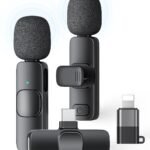
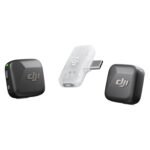
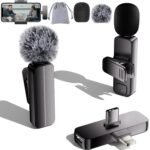
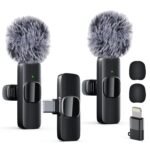
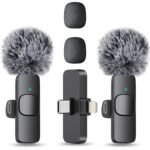
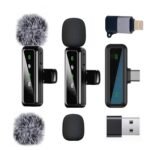
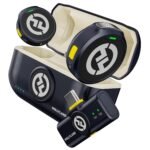
Mini Mic Pro review: for $24.99, this tiny wireless mic is worth it if you make videos with your phone and the built-in audio keeps letting you down. It cuts background noise, clips onto your collar, and starts in seconds. There are a couple of quirks, but nothing that changes the math.
Offers strong core features like noise cancellation and wireless convenience at a price well below typical competitors, making it a solid value for budget-conscious creators.
Price vs. rivals
Cheaper
CheaperTypicalPricier
Priced well below premium wireless mic systems and near the entry-level end of the market, making it a budget-friendly option compared with most popular alternatives.
Ease of use
Excellent 90/100
The Mini Mic Pro is highly user-friendly with simple setup and intuitive controls, making it accessible for most people.
Mini Mic Pro Review: Overview
The Mini Mic Pro is a wireless lavalier system built for phones. You clip the small microphone to your shirt and plug the receiver into your phone’s charging port. Your voice gets to the camera the way it should, not the way a phone mic captures it from across the room.
This is a wireless mini microphone review with a narrow focus: what it’s like to actually use the thing. The short answer is that it solves the biggest audio problem phone creators have (distance) for the price of a couple of pizzas. It’s not a tool for people who shoot with cameras; it’s a tool for people who shoot with phones.
Mini Mic Pro Review: Key Features
Plug-and-play receiver – The receiver connects to your phone’s Lightning or USB-C port with no pairing menu. You’ll be recording before the person you’re filming finishes asking if it’s on.
Noise cancelling mic – It filters out steady background hum like air conditioners and street traffic. Voices stay clear while the rumble disappears.
Clip-on lavalier design – The mic clips to a collar or lapel in a second and hides well on dark shirts. It only says “I’m wearing a mic” if you want it to.
iPhone and Android support – It’s a mini microphone for iPhone and Android alike, so it fits the phone you already own.
Rechargeable transmitter – The mic charges over USB-C and you’ll plug it in overnight, just like your phone. No tiny coin batteries to hunt down before a shoot.
Fit for You
Here’s where the Mini Mic Pro earns its keep:
You film TikTok videos in your living room and the refrigerator hums in every clip.
You do interviews in person and the subject keeps talking away from a big handheld mic.
You want to vlog on a walk but refuse to carry anything bigger than your phone.
You’ve been looking at $300 wireless kits and feel your wallet filing a complaint.
You need a backup mic for a guest and don’t want to match expensive gear.
Uses
The clearest use case is the reason this product exists: standing in front of a phone and talking. For a cooking video, a product review, or a short interview on a busy sidewalk, the Mini Mic Pro keeps your voice front and center.
As a noise cancelling mic for interviews, it won’t magically silence a construction site. It will knock down steady rumble so the other person comes through clearly. That’s the difference between a usable clip and a deleted one.
For TikTok and YouTube, the pitch is simple. You get crisp voice without pro equipment or a quiet room, which is more than most creators start with. You still need decent lighting, but bad audio stops being the thing people complain about.
Wind is the main outdoor enemy. In a stiff breeze, you’ll hear it in the track, so plan shoots with your back to the gusts or find a quiet spot.
Experience
Setup is about as close to zero as this category gets. Pull the receiver out, plug it into the phone, and the mic is already paired. The first time you record, you’ll probably check the footage twice because the audio sounds cleaner than you expected from something this affordable.
Daily use is straightforward: clip, plug, record. The annoyances are small but real. The receiver sticks out of the bottom of your phone, so you’ll hold the phone a little differently. There’s no way to charge the phone while you record, and with a thick case you may need to pop it off.
The noise cancelling is better at removing constant hum than sudden sounds. A neighbor’s air conditioner fades into the background; a car horn still gets through. Learn that split and you’ll stop expecting miracles from a $25 gadget.
Storage is easy because everything is small. A jacket pocket or a camera bag compartment is plenty. There’s no bulky case to sacrifice a drawer to. Keep the mic grille dry and you won’t have to think about cleaning it at all.
Mini Mic Pro Review: Pros and Cons
Pros
Price – At $24.99, it undercuts most wireless mic sets by a wide margin. You could buy two of these and still have change compared to one entry-level competitor.
Ease of use – There’s no app, no pairing ritual, no manual worth reading. Plug it in and your voice shows up in the video.
Noise cancelling – The steady background hum that ruins phone videos drops away, which does more for audio quality than any filter or EQ.
Clip-on size – It sits on your collar without pulling fabric and doesn’t turn you into a news anchor unless that’s the vibe.
Port flexibility – It works with iPhone and Android, so it’s not a one-brand gadget that locks you into a phone ecosystem.
Cons
Receiver bulk – The dongle sticks out of the phone’s bottom and makes one-handed recording feel slightly awkward.
No charging while recording – The receiver takes the charging port, so long livestreams may outlast your phone battery.
Wind handling – Outdoors, a decent breeze will make itself known in the audio. You’ll shoot with your back to the wind or suffer the consequences.
No audio monitoring – You can’t plug in headphones to hear what the mic is picking up. Problems show up at playback, not at the moment.
Plastic build – It feels fine in your hand, but you’ll notice it’s not a $500 professional kit when you clip it to a heavy coat.
Advantages
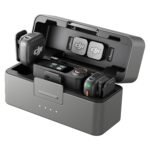
The comparison that comes up most is Mini Mic Pro vs Rode Wireless Go, and it’s honestly not a fair fight. The Rode costs around $300 and gives you a charging case, camera mounting, and backup recording. The Mini Mic Pro does the basics at $24.99.
For phone shooters, the Mini Mic Pro wins in three ways. It’s a fraction of the price. It’s built specifically for phones rather than cameras. And it’s small enough that you’ll forget it’s clipped on. The Rode is a more serious tool, but if your whole production is a phone on a tripod, the extra capability sits unused.
Who Should Buy
You should buy the Mini Mic Pro if you’re a phone-first creator who cares about audio and can’t justify a pro kit. It’s also the best wireless lavalier mic for TikTok at this price, and it’ll serve your channel better than a new ring light will.
Skip it if you record with a mirrorless or DSLR camera and need proper mounting options. Skip it if you regularly record hour-long sessions without stopping to charge. Skip it if you need backup recording in case a file corrupts; that’s exactly what the pricier systems build in. And skip it if you want to plug in headphones and monitor audio live, because this simply doesn’t offer that.
FAQ
Is the Mini Mic Pro worth it?
Yes. The Mini Mic Pro review bottom line is simple: you get clear voice, easy setup, and real noise cancelling for $24.99. It’s not a pro kit, but for phone creators it’s the best value in this corner of the market.
How long does the Mini Mic Pro battery last?
Expect a few hours of continuous recording per charge, which is standard for budget wireless mics. The transmitter takes USB-C and charges overnight. The receiver draws power from your phone, so there’s no second battery to manage. That routine takes about the same effort as charging your phone, which you’re already doing anyway.
Can you use the Mini Mic Pro while charging your phone?
No, because the receiver occupies the charging port. That’s the biggest practical catch for long livestreams or extended recording sessions. If you often record for over an hour, plan around the phone’s remaining battery before you start. It’ll do fine for clips, but think of it as a phone-first tool.
Does the Mini Mic Pro work with Android?
Yes, the Mini Mic Pro is built for iPhone and Android. Pick the connector that matches your phone and plug it in. The audio lands directly in your camera app, so there’s no separate app to fiddle with. That’s the whole setup process, which is why this category doesn’t need a manual.
Is the Mini Mic Pro a good noise cancelling mic for interviews?
Yes, in indoor settings it is. Clip the mic to the person’s collar and steady background hum drops away, leaving their voice clear. For outdoor interviews, wind and sudden noise still get through, so choose the location with that in mind.
How does the Mini Mic Pro compare to the Rode Wireless Go?
The Rode Wireless Go is a more rugged, feature-packed system with a charging case, camera mounting, and backup recording, but it costs around $300. The Mini Mic Pro is a $24.99 phone-first alternative that handles the core job well. Choose Rode for pro reliability; choose Mini Mic Pro for clean phone audio.
Final Verdict
This Mini Mic Pro review ends where it started: for $24.99, it’s an easy yes for phone creators. You get the thing that matters most: your voice, clear and close, without the setup pain that makes people abandon bigger gear.
The one thing to keep in mind is that it’s a phone mic. If all your video lives on your phone and you want better audio without studio money, buy it. If you need a professional broadcast tool, save up for the Rode. The 4.3-star average on Amazon tells you the same thing.
At $24.99, the Mini Mic Pro plants itself squarely in impulse-buy territory—a price that almost feels suspicious for a wireless lavalier. But it’s genuinely good for what it is: a dead-simple, noise-cancelling mic for your phone, especially if you’re making TikTok videos, quick interviews, or voice memos. It doesn’t try to be a pro filmmaker’s tool. That’s fine. The real question is whether its cheapness outweighs the drop in range and build quality compared to bigger-name rivals. Here’s how it stacks up against three real alternatives you’re probably comparing it to.
Product
Price Range
Key Strength
Key Weakness
Best For
Mini Mic Pro
$20 – $30
Tiny, lightweight, plug-and-play with iPhones and Androids
Plastic feel; unreliable clip; max range only 20 feet line-of-sight
Budget mobile creators, TikTok, quick on-the-go recording
Excellent noise cancelling, magnetic clip, USB-C + Lightning dongle included
Expensive; a bit more finicky to pair the first time
Semi-pro mobile shooters, podcasters who need clean audio outside
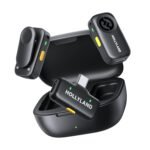
Hollyland Lark M2
$130 – $160
Solid metal build, long 40-foot range, simple USB-C/Lightning setup
No on-board recording; slightly larger transmitter
Mid-tier vloggers who want durability without going all the way to pro pricing
Mini Mic Pro vs Rode Wireless Go II
If you type “Mini Mic Pro vs Rode Wireless Go” into a search, you’re probably trying to justify spending ten times more. The Rode Wireless Go II is undeniably a better microphone—its 24-bit recording and internal backup storage mean you never lose audio to interference. But you’ll also carry a receiver the size of a matchbox, plus two transmitters, plus a special cable to plug into your phone. The Mini Mic Pro slips into your pocket like a lip balm. For a single talking-head TikTok filmed in your living room, the Mini Mic Pro’s audio is clear enough. For a wedding interview where a dropout would be a disaster, you want the Rode. That simple.
Mini Mic Pro vs DJI Mic 2
The DJI Mic 2 has this quiet trick: its noise-cancelling algorithm actually works in light wind and crowd noise, while the Mini Mic Pro’s “noise cancelling” is mostly just a low-cut filter that thins out your voice a bit. In a quiet room the Mini Mic Pro sounds fine—slightly plasticky, but usable. Outside near a busy street, the DJI Mic 2 lets your voice punch through. The Mini Mic Pro also doesn’t include a Lightning dongle in every package (check the listing), which is an annoying surprise if you have an iPhone 14 or older. The DJI does. If “best wireless lavalier mic for TikTok” means filming outdoors or in cafes, spend the extra money on the DJI. If you’re always indoors and on a strict budget, the Mini Mic Pro will do.
Mini Mic Pro vs Hollyland Lark M2
This is the most interesting comparison because the Lark M2 costs five times as much but is still in the “affordable” zone for most creators. The Lark M2 uses a proper metal clip that won’t snap off after three uses—the Mini Mic Pro’s tiny plastic clip feels like it could break if you breathe on it wrong. The Lark also reaches forty feet without cutting out, whereas the Mini Mic Pro starts glitching past twenty. On the other hand, the Mini Mic Pro’s transmitter is comically small, barely bigger than a nickel, which makes it invisible under a shirt. The Lark M2 is about twice the size. For a hidden mic look on a budget, the Mini Mic Pro wins. For sturdy daily use over a year, the Lark M2 is worth the jump in price.
So, is Mini Mic Pro worth it? If you need a super-cheap, ultra-compact wireless lavalier for quick mobile recordings—especially on iPhone or Android without extra adapters—this is your mic. It’s a fantastic first one, and you won’t cry if you lose it. But if you rely on audio quality for paid gigs, shoot outdoors frequently, or want something that won’t feel flimsy after a month of use, skip it and put your money into a Hollyland Lark M2 or even the Rode Wireless Go II. The Mini Mic Pro is a smart buy for the price, not for every situation.
Ready to decide on the Mini Mic Pro?
See today’s price, stock and delivery options on Amazon.