Offers core features of higher-priced models at a significant discount due to like-new condition, making it a strong value proposition.
Price vs. rivals
Cheaper
CheaperTypicalPricier
Priced slightly below typical new models of similar quality, reflecting its like-new condition and competitive positioning.
Ease of use
Excellent 85/100
The Ring Battery Doorbell is straightforward to install and operate through the app, but initial setup and battery maintenance may require some effort for an average user.
Overview
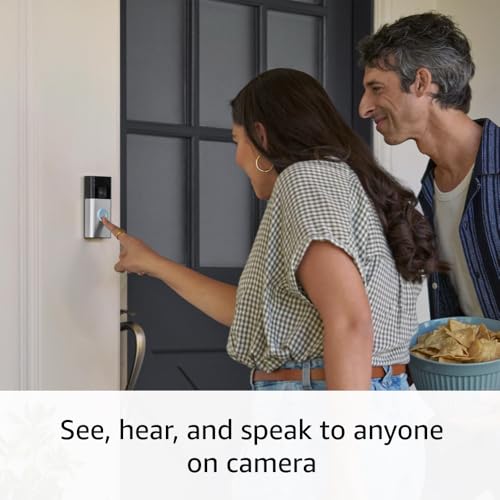
The Ring Battery Doorbell is a wireless video doorbell that runs on a rechargeable battery pack, meaning no doorbell wiring is needed. It solves the basic problem of seeing who’s at your door from your phone, whether you’re home or not. This is really for renters, apartment dwellers, or anyone who wants a quick security upgrade without calling an electrician.
At $89.99, it sits right in the middle of Ring’s lineup—not the cheapest, not the most feature-packed. You get 1080p video with a wide field of view, two-way talk, and motion alerts that actually let you adjust sensitivity. The satin nickel finish looks clean against most door frames, and the whole thing is weather-resistant enough for covered entryways.
Key Features
Head-to-Toe Video – The 150° vertical field of view lets you see packages on the ground, not just faces. That’s a real plus if you’re tracking deliveries or watching for a kid running up the steps.
Two-Way Talk – You can speak to visitors through the Ring app. The audio is clear enough to say “leave it by the door” without repeating yourself, though there’s a slight delay.
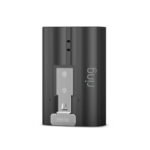
Battery Life – A single charge lasts three to six months depending on how much motion you capture. That’s typical for this category, and the battery pops out easily for recharging.
Motion Detection & Alerts – Customisable motion zones let you ignore the street and only get pings when someone steps onto your porch. You can set how sensitive it is, which cuts down on false alerts from cars.
Live View – Tap the app to see a live feed anytime. There’s a 10–15 second delay from the tap to first frame, but after that the stream is smooth on Wi-Fi.
Fit for You
You live in an apartment or rental and can’t drill into brick or run new wiring.
You want to see packages at your feet without a separate camera aimed at the ground.
You share your home with a roommate or family and need multiple people to get alerts on their phones.
You’re replacing a chime-only doorbell and don’t want to mess with transformer voltages.
You’re on a budget but still want the Ring ecosystem (compatible with Alexa and Ring alarms).
Uses
Picture this: you’re at work and a delivery arrives. The Ring sends a notification, you open the app, and you see the courier putting the box down in real time. You use two-way talk to say “thanks, just leave it.” That’s the core use case, and it works well.
Another common scene: you hear a knock while you’re in the shower. Instead of rushing to the door, you check the live view from your phone. It’s your neighbour borrowing a tool. You can talk through the doorbell without opening the door.
The head-to-toe video is especially handy at night. The infrared night vision is decent up to about 15 feet, so you can tell whether that shadow is a person or a cat before you even unlock the door.
Experience
Setup takes about 15 minutes if you follow the app’s step-by-step. You screw the mounting bracket into the door frame (two screws), snap the doorbell onto it, and connect it to your Wi-Fi. The hardest part is scanning the QR code with your phone camera.
Everyday use is mostly passive—you get alerts, you glance at them. The motion detection is good but not perfect. Expect a false alert now and then from a passing truck’s headlights. You can dial down the sensitivity, but it’s a trade-off: lower sensitivity means you might miss someone creeping up the side of the porch.
One real annoyance: the battery. It lasts long enough that you forget about it, but when it does die you have to physically take the doorbell off its mount to recharge it. That means a blank spot on your door frame for several hours. If you have a second battery you can swap it instantly, but that’s an extra $30.
Audio quality during two-way talk is clear in quiet environments. In wind or heavy rain, you get some distortion. Owners tend to mention that the speaker is loud enough to be heard through a storm door, but the microphone picks up wind noise more than voices.
Cleaning is straightforward—a damp cloth on the face, don’t spray water directly into the lens. The satin nickel finish shows fingerprints but wipes off easily.
Pros and Cons
Pros
Head-to-Toe Video – You see packages and ground-level activity, which most doorbell cameras at this price can’t do.
No Wiring Required – Truly wireless lets you install it anywhere with a screwdriver, even on a wooden fence or a wall without existing doorbell wiring.
Customisable Motion Zones – You can draw boxes in the app to ignore the sidewalk and only watch your porch. It cuts false alerts significantly.
Good App Experience – The Ring app is responsive, logs events, and lets you share access easily with household members.
Affordable Entry to Ring Ecosystem – If you later add a Ring alarm or floodlight, everything works together under one app.
Cons
Battery Charging Is a Hassle – You have to remove the unit and charge it indoors. For an apartment dweller, that means a few hours with no doorbell.
No 24/7 Recording – It’s motion-triggered only. If someone walks past slowly but stays outside the detection zone, you won’t get a clip.
Limited Field of View Horizontally – The vertical is generous, but the horizontal view is about 130°, which means you might not see someone standing far to the side of the door.
Requires a Ring Protect Plan for Video History – Without the subscription (starting at $4/month), you only get live view and notifications, no saved clips or timeline scrubbing.
Advantages
Where this doorbell really shines is the combination of head-to-toe video and battery operation. Most battery-powered doorbells have a narrow vertical view, forcing you to mount them higher and still miss packages. Ring’s head-to-toe design solves that without needing wiring.
It also beats many competitors on motion detection reliability. You can fine-tune zones and sensitivity per time of day in the app, something budget brands often lack. And the two-way talk is clear enough for short conversations—not garbled like some $50 models.
If you already use Alexa, this doorbell answers the door without you getting up. And if you ever decide to switch to a wired power source, Ring sells a plug-in adapter for $10.
Who Should Buy
Buy it if you’re in an apartment or condo where you can’t wire, and you care about seeing packages left on the ground.
Buy it if you want a budget-friendly doorbell that plays nice with Alexa and the Ring security system.
Skip it if you need 24/7 continuous recording—look at a wired Ring Video Doorbell Pro 2 instead.
Skip it if you can’t stand removing the battery every few months. In that case, consider the Ring Wired Doorbell for $64.99 (no battery, hardwired).
FAQ
Is the Ring Battery Doorbell worth it?
Yes, for most people who need a no-wire solution and want to see packages at their feet. The head-to-toe video is the standout reason to pick this over cheaper models.
How does the Ring Battery Doorbell vs Ring Video Doorbell 4 compare?
The Video Doorbell 4 has a higher resolution (1536p vs 1080p), pre-roll technology that captures four seconds before motion, and a removable battery pack. If you want sharper video and don’t mind paying $100 more, go with the 4. The Battery Doorbell is better for tight budgets.
Is this the best battery doorbell for apartments?
It depends on your needs. For seeing packages and having reliable motion alerts without wiring, it’s one of the top options at this price. But if you need a wide horizontal view (to see neighbours walking by), a 180° doorbell like the Eufy might be better.
What is the head-to-toe video on the Ring Battery Doorbell?
It means the camera sees from a person’s head down to their feet, covering a 150° vertical field. That’s enough to spot small packages, a pet, or a child standing on the stoop without angling the camera down.
How well does the Ring two-way talk doorbell work?
In quiet conditions, it’s clear. The speaker is loud enough for someone standing three feet away, and the microphone captures voices well. There’s a half-second delay, so you’ll sometimes talk over each other—common in all smart doorbells.
Is the motion detection doorbell review generally positive?
Yes, most user reviews highlight the customisable motion zones as a big plus. The main complaint is occasional false triggers from sunlight or shadows, but you can adjust the sensitivity and zone shapes to reduce that.
Final Verdict
If you want a wireless doorbell that does one thing very well—showing you the full picture from visitor to package—the Ring Battery Doorbell is a solid buy at $90. It’s not perfect: the battery charge routine gets old, and you’ll want the subscription for recorded history. But for the price, you get good video, reliable alerts, and the comfort of knowing what’s on your doorstep without getting off the couch.
One thing to keep in mind: if you live somewhere with extreme temperatures (below freezing or over 100°F), the battery life drops, and the camera may struggle with condensation. For most moderate climates, it’s a dependable everyday tool.
The Ring Battery Doorbell sits in a sweet spot: at $89.99 for a Like-New unit, you get the company’s signature head-to-toe video and two-way talk without paying the premium for the wired models. But rivals at similar prices offer different trade-offs, especially around subscription costs and motion detection range. Here’s how it stacks up against four real alternatives so you can pick the one that actually fits your door, your budget, and your patience.
Product
Price Range
Key Strength
Key Weakness
Best For
Ring Battery Doorbell
$89.99 (Like-New)
Head-to-toe video, two-way talk, easy setup
Requires subscription for recorded clips; battery life depends on activity
Renters & apartment dwellers wanting full body view without wiring
Higher price; still needs subscription for cloud storage
Homeowners wanting more control over detection and a wired power option
Eufy Security Video Doorbell 2K (Battery)
Around $150
Local storage (no monthly fee), 2K resolution
No head-to-toe view; app isn’t as polished for sharing clips
People who hate monthly subscriptions and want sharper daytime video
Arlo Essential Wire-Free
Around $130
Excellent motion detection range, integrated siren, works with Alexa/HomeKit
Bulky design; requires Arlo Smart plan for advanced alerts
Broad driveway or yard coverage, especially if you already own an Arlo system
Blink Video Doorbell
Under $60
Lowest upfront cost, long battery life (up to 2 years)
Only 1080p, no head-to-toe, basic motion detection
Budget-first buyers who just want a doorbell that rings and records occasionally
Ring Battery Doorbell vs Ring Video Doorbell 4
If you’re already in the Ring ecosystem, the natural question is whether to save with the Battery Doorbell or spend up for the Video Doorbell 4. The Battery Doorbell gives you the same head-to-toe video — that’s the feature that lets you see a package on the ground or a delivery person’s whole body. The Video Doorbell 4 lacks that vertical field of view; it’s wider but doesn’t show your feet. Where the Video Doorbell 4 pulls ahead is motion: you get customizable motion zones, pre-roll video that captures four seconds before the trigger, and support for 5 GHz Wi-Fi (the Battery model is stuck on 2.4 GHz). If your doorbell location is far from your router, the Video Doorbell 4’s faster connection helps. But if you just need a reliable doorbell for a small apartment porch and don’t mind a slightly slower video feed, the Battery model’s lower price and full-body view win.
Ring Battery Doorbell vs Eufy 2K Battery
The Eufy 2K Battery is the strongest alternative for anyone who refuses to pay a monthly subscription. At roughly $150, it stores video locally on a base station — no cloud fees, ever. Its 2K resolution means you’ll see license plates and shirt logos more clearly than on Ring’s 1080p. But here’s the catch: Eufy’s field of view is square and cuts off the ground. You won’t see a package at your feet unless you tilt the camera down (and then you miss the face). The Ring Battery Doorbell’s head-to-toe aspect ratio is genuinely useful for delivery tracking. Also, Eufy’s motion detection can be slower to trigger, and the app’s notification sounds are less urgent. So if you’re the kind of person who wants to review footage every few days and doesn’t mind a blind spot at your doormat, Eufy saves you $4/month. But if you want to see that Amazon box arrive in real time, stick with Ring.
Ring Battery Doorbell vs Arlo Essential Wire-Free
Arlo’s Essential Wire-Free doorbell excels where range matters. Its motion sensor picks up movement up to about 30 feet, compared to Ring’s roughly 15-20 foot default. That matters if your door looks out over a long path or a shared courtyard. Arlo also includes a built-in siren that you can trigger from the app — a nice deterrent for package theft. But Arlo’s design is bulkier, and the two-way talk audio can sound hollow in windy conditions. The Ring Battery Doorbell’s two-way talk is clearer out of the box, and the camera’s night vision is brighter. Plus, Arlo’s free tier only records when motion is triggered and you have to wait for the video to load on your phone. Ring’s free tier is similar, but the Ring app loads clips faster during Live View. For apartments, the Ring’s slimmer profile and better audio make it a more natural fit. For a long driveway or if you already use Arlo cameras for the back yard, the Essential is worth considering as a unified system.
So who should buy the Ring Battery Doorbell? If you live in an apartment, rent, or just have a standard front door with a short walkway, this is your best battery-powered option. The head-to-toe video is a real advantage for spotting packages, and the two-way talk works dependably. Yes, you’ll need a Ring Protect plan ($3.99/month or $39.99/year) to actually save clips — but you’d need something similar with most competitors anyway. Skip it if you want 2K resolution without a monthly bill — grab the Eufy 2K Battery instead. And if you have a long, motion-heavy path, the Arlo Essential Wire-Free covers more ground. But for the price, the Ring Battery Doorbell delivers the most useful feature set for typical apartment and condo life.
Ready to decide on the Ring Battery Doorbell?
See today’s price, stock and delivery options on Amazon.