If a friend asked me whether this Ring Doorbell 4K Pro review amounts to a $250 doorbell that’s actually worth it, I’d say: it depends on how much you care about seeing package thieves’ faces clearly at night and being able to zoom in on a porch without everything turning to pixel soup. It’s the sharpest wired doorbell Ring has made, but it’s a wired doorbell, so you’ll need existing low-voltage wiring. No battery backup. That’s the trade-off. Let’s walk through the details so you can decide.
Offers top-tier video quality and advanced features at a price that reflects its premium status, yet remains competitive within the high-end smart doorbell market.
Price vs. rivals
Pricier
CheaperTypicalPricier
Priced above average compared to typical video doorbells due to its 4K resolution and advanced features, yet remains below ultra-premium models in the same category.
Ease of use
Excellent 85/100
The high user rating suggests it is generally easy to set up and operate for an average person, though the advanced features like zoom and night vision may require a brief learning curve.
Overview
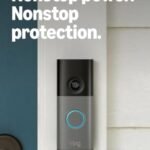
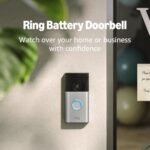
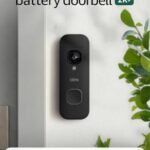
This is Ring’s top-of-the-line wired doorbell, launching at $249.99. It swaps the old chunky design for a slim, deep-silver wedge that sits flush against your door frame. The whole point: give you a 4K image wide enough to see deliveries from side to side, with night vision that actually shows color in low light, plus a zoom that doesn’t turn into a Vaseline smear.
It’s for people who already have doorbell wiring and want the highest resolution feed available from Ring. If you’re renting or don’t have wiring, skip this—look at the Ring Battery Doorbell Pro instead. But if you know you have a 16–24V transformer and you’re tired of grainy footage, this is the fix.
Key Features
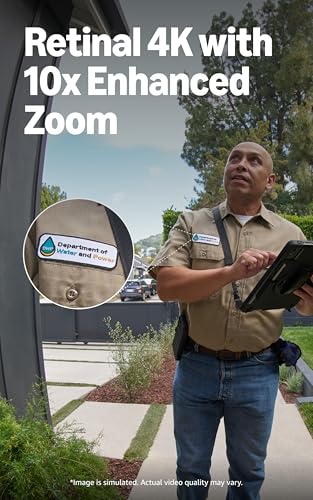
Retinal 4K video sensor – It’s not a marketing gimmick; the 1/1.8-inch sensor captures more light and detail than the 2K Ring cams. You’ll read a license plate at 15 feet if it’s well-lit.
Wide-angle 150° horizontal field of view – Ring 4K doorbell wide angle video means you see the full porch, not just a sliver. Packages left to the side won’t be cut off.
10x Enhanced Zoom – Digital zoom that stays usable up to about 8x. Beyond that it gets soft, but you can clearly see a face at the edge of a driveway. Ring Doorbell 4K Pro zoom review highlights: at 5x it’s still sharp enough to read a hat logo.
Color Night Vision – Uses a built-in spotlight that turns on automatically in darkness. You get full-color footage, not that greenish black-and-white look. Great for spotting what color coat someone wore.
Pre-roll recording (6 seconds) – Captures what happened just before motion was detected, so you see the mailman walk up, not just the moment he appears.
Fit for You
You live in a house with existing doorbell wiring and want the clearest feed Ring can deliver.
Your porch gets poor ambient light at night and you need to ID people, not just silhouettes.
You’ve had trouble with older doorbells missing packages left just outside the frame—the wide angle here fixes that.
You want to zoom in on a driver’s face or a license plate without losing all detail.
You already pay for Ring Protect Plus ($10/month) and want the best hardware to go with the cloud storage.
You’re comparing this to a battery doorbell and accept that wiring is permanent but means no recharging.
Uses
Evening pizza delivery: you’re in the backyard and get an alert. You open the live view, see the driver holding the box, and tell him “just leave it by the planter” through the two-way talk. The audio is clear enough that he nods and sets it down.
Package theft attempt at 3 a.m. The motion light kicks on, the camera records in full color on person’s dark hoodie. You zoom in to 5x and catch a partial side profile. Next morning you send the clip to neighborhood watch. It’s not forensic-level, but it’s way more than the old 1080p Ring could do.
UPS drops a box slightly to the left of the door. With a narrower doorbell you’d only see the edge. The Ring 4K doorbell wide angle video means the whole box is visible in the frame.
Experience
Setup is straightforward if you’ve wired a doorbell before: turn off breaker, connect two wires to the screws, screw the bracket to the wall, snap the unit on. The app guides you through Wi-Fi setup in about five minutes. The chime works with existing mechanical or digital chimes.
Daily use is mostly uneventful, which is good. The feed loads in under two seconds on a solid Wi-Fi network (5 GHz supported). Motion zones are adjustable in the app, though the fine-tuning slider could be more precise—you’ll end up drawing rectangles manually. A minor gripe: the lens picks up a lot of dust from the porch environment. You’ll want to wipe it with a microfiber cloth every couple of weeks to keep the 4K image sharp.
The spotlight is bright enough to light up a 6-foot radius, but it does attract insects at night. Not a dealbreaker, just something you’ll notice in summer. The audio quality is good for a doorbell—you can have a conversation without shouting, though wind noise can overwhelm it. No removable battery, so if power goes out you lose coverage until it comes back (no backup).
Pros and Cons
Pros
Exceptional detail in good light and decent light – The 4K sensor resolves faces, logos, and small text where 2K doorbells blur. It’s the clearest Ring has released.
Wide field of view catches the whole porch – 150° horizontal means fewer blind spots to the sides. Packages off-center are still visible.
Zoom holds up to around 8x – Really useful for checking a car parked at the curb.
Color night vision works well – The spotlight isn’t blinding, but it’s enough to get color footage of a person at 10 feet.
Pre-roll captures context – You see the cause of motion, not just the motion itself.
Cons
Wired only, no battery backup – If your power flickers or you lose the transformer, you get no recording. A battery doorbell at least continues until the battery dies.
Requires existing 16–24V wiring and a chime bypass (included) – If your transformer is older or weak, you may need to upgrade it. An extra $20–30.
Digital zoom above 8x gets soft – The 10x Enhanced Zoom is marketing; past 8x it’s a blurry mess.
Spotlight attracts bugs – Minor but can be annoying on summer nights.
No 24/7 recording without a subscription – Ring Protect ($3.99/month or $10/month for multiple cameras) is needed for cloud storage and video history.
Advantages
When you stack this against battery-powered 4K doorbells, the Ring Doorbell 4K Pro vs Eufy Dual Camera Doorbell comparison shows that Ring wins on integration with Alexa and Ring Alarm, while Eufy has local storage (no subscription) but a narrower field of view. The Ring’s 150° beats Eufy’s dual-lens 160° combined, but Eufy does have two cameras for package theft coverage.
For best video doorbell for night vision 2026, this Ring model is a strong contender because of the color night vision with active spotlight, though it’s not self-illuminating as well as the Google Nest Doorbell (battery) with built-in floodlight. That said, the Nest costs $80 more.
If you want Ring Doorbell 4K Pro features like pre-roll and wide-angle, there’s no other Ring that matches this resolution. The Doorbell Pro 2 is 1536p, so this is a meaningful step up.
Who Should Buy
Buy it if you have wired doorbell wiring, you value crisp video and zoom capability, and you’re okay with a monthly subscription for cloud storage. You want the best image quality in Ring’s lineup.
Skip it if you don’t have existing wiring or prefer a battery-powered doorbell for flexibility; look at the Ring Battery Doorbell Pro or Eufy S330 (which records locally). Also skip if you don’t want to pay a subscription—no local storage means no offline recordings.
Also skip if your transformer is under 16V—you’ll need to upgrade it, adding cost.
FAQ
Is the Ring Doorbell 4K Pro worth it?
Yes, if you prioritize image quality and already have doorbell wiring. The 4K resolution, wide-angle, and usable zoom make it the best wired doorbell from Ring, but the $250 price plus $10/month subscription adds up over two years.
How does the Ring Doorbell 4K Pro compare to the Eufy Dual Camera Doorbell?
The Ring offers a single wide-angle 4K lens with better color night vision, while Eufy has two lenses (160° combined) and local storage. Ring integrates with Alexa; Eufy works with HomeKit. Choose Ring for ecosystem, Eufy for no monthly fees.
What is the best video doorbell for night vision in 2026?
The Ring Doorbell 4K Pro is a top candidate for its color night vision via spotlight, but the Google Nest Doorbell (battery) with floodlight gives brighter illumination. For pure darkness, a dedicated floodlight camera like the Ring Floodlight Cam Pro is better than any doorbell.
Does the Ring Doorbell 4K Pro have a wide-angle view?
Yes, it has a 150° horizontal field of view. This is wider than the previous Ring Pro 2 (150° as well, but at lower resolution) and covers a full porch without cutting off package drops.
How good is the zoom on the Ring Doorbell 4K Pro?
The 10x Enhanced Zoom is a digital zoom that remains usable up to about 8x. At 10x it’s soft. Owners find it effective for reading license plates at 15 feet in daylight.
Does this work without a subscription?
You can see the live view and talk without a plan, but motion detection recording and video history require Ring Protect Basic ($3.99/month per camera) or Plus ($10/month for unlimited cameras). No local storage option exists.
Final Verdict
The Ring Doorbell 4K Pro is the sharpest wired doorbell Ring has made. It solves the problem of blurry porch footage, especially at night and when zooming in. But it’s not for everyone: you need existing wiring, a subscription for recorded clips, and you have to accept no battery backup. If that fits your setup, you’ll get the best video quality in Ring’s stable. If you want flexibility or no monthly fees, look at battery models or Eufy.
You are looking at a wired 4K doorbell that promises retinal-level detail, a wide 153-degree field of view, and a 10x enhanced zoom—on paper, the Ring Doorbell 4K Pro looks like the heavyweight champ. At $249.99 it sits squarely in the premium wired category. But the market hasn’t stood still. Eufy, Google, and Arlo all offer compelling alternatives that trade off resolution for convenience, storage flexibility, or a lighter price tag. Here is how the Ring stacks up against the real rivals you are probably browsing right now.
Product
Price Range
Key Strength
Key Weakness
Best For
Ring Doorbell 4K Pro
Premium (~$250)
True 4K with 10x zoom and wide angle; excellent night vision with color
Requires Ring Protect subscription for recording; wired only; no dual camera
People who want the sharpest video and already use Ring ecosystem
Eufy Security Dual Camera Doorbell (S330)
Mid-premium (~$200)
Dual cameras eliminate package blind spots; free local storage (no subscription)
Video maxes out at 2K; app feels slower; no 24/7 recording without SD card
Homeowners who hate monthly fees and want that lower-packages view
Google Nest Doorbell (Battery)
Mid-range (~$180)
Excellent HDR and facial recognition; deep Google Home integration; easy battery or wired install
Only 960 x 1280 resolution; zoom is digital and soft; subscription needed for events
Google smart home users who prioritze ecosystem over raw resolution
Arlo Essential Video Doorbell (Wired, 2K)
Budget-friendly (~$150)
Solid 2K video for the price; works with most smart hubs; no subscription for basic alerts
Narrower 152-degree field of view; night vision lacks color; no dual camera
Budget-conscious buyers who need a reliable, no-frills doorbell
Ring Doorbell 4K Pro vs Eufy Dual Camera Doorbell
The Eufy Dual Camera is the most interesting alternative right now, because it solves a real annoyance: packages left on the ground that a single doorbell camera can’t see. Ring’s 10x zoom helps you read a delivery label from across the porch, but if the box is sitting below the lens, you are still staring at the top of a cardboard flap. Eufy’s second downward-facing camera catches that dead zone. And then there is the subscription issue. Ring gives you a 30-day free trial of Protect, then you pay $3.99 a month or $39.99 a year for video history, person alerts, and snapshot capture. Without it, you get live view and motion alerts only—no recordings. Eufy stores everything locally on a microSD card (up to 128GB), no ongoing cost. On the other hand, the Eufy tops out at 2K resolution. Zoom in on a face at the end of the walkway, and it turns into a pixelated guess. The Ring 4K Pro, even with its tendency to oversharpen edges, delivers a still that you could actually use to identify someone. So the trade-off is simple: you want the best possible video quality and don’t mind a subscription? Ring. You want to avoid fees and see the package at your feet? Eufy.
Ring Doorbell 4K Pro vs Google Nest Doorbell (Battery)
Google’s Nest Doorbell is the smooth talker of the category. Its HDR handling is genuinely better than Ring’s—faces in harsh backlight don’t blow out into white blobs, and the skin tones look natural rather than plasticky. The integrated Google Home app also gives you familiar controls, especially if you already have a Nest Hub or Google speakers. But here is the letdown: the Nest Doorbell’s camera resolution is a paltry 960 x 1280. That’s not even 1.2 megapixels. Ring’s 4K is roughly nine times the pixel count. Yes, Google squeezes impressive detail out of its sensor through processing, but when you want to freeze a frame and zoom in on a license plate or a delivery driver’s badge, the Ring Doorbell 4K Pro wins handily. The Nest also suffers from a narrower 145-degree field of view compared to Ring’s 153 degrees—not a huge gap, but you will notice it if your porch is wide. And while the Nest can run on battery for a few months, you will still need to pull it off the wall to charge every 8–12 weeks. If you are already deep in Google’s garden, the Nest is the obvious choice. If you care about seeing the actual detail of who is at your door, get the Ring.
Ring Doorbell 4K Pro vs Arlo Essential Wired (2K)
Arlo’s Essential Wired doorbell is the sensible, budget-friendly alternative. It costs about a hundred bucks less than the Ring 4K Pro, and for that money you get decent 2K video, free motion alerts without a subscription, and compatibility with Alexa, Google Assistant, Apple HomeKit (via a separate hub). The big sacrifice is the field of view: 152 degrees sounds close to Ring’s 153, but Arlo’s lens distortion makes the edges noticeably blurry. People standing close to the doorbell look warped, and the night vision is purely black-and-white—Ring’s Pro uses a starlight sensor and a white LED to give you full color at night. If your porch is well-lit you might not care, but if you rely on the doorbell to see activity in the dark, the Ring’s color night vision is a genuine advantage. The Arlo also lacks the 10x enhanced zoom; its digital zoom gets crunchy fast. So if your budget is tight, the Arlo is a solid buy. But the two areas where the Ring edges ahead—zoom and night vision—are exactly the ones that matter most for a security device. You pay more, you get more.
So – Is the Ring Doorbell 4K Pro Worth It?
If you are the kind of person who wants the sharpest possible video, who doesn’t mind paying a small monthly fee to store that video, and who values being able to zoom in on a face or a package label without losing detail, then yes, the Ring Doorbell 4K Pro is the best video doorbell for you in 2026. The wide-angle video captures almost your entire porch, the 10x zoom review can actually catch a cap logo from twenty feet away, and the night vision is genuinely usable color—not the murky grayscale most rivals give you. But if you hate subscriptions, look hard at the Eufy Dual Camera. That second lens solves the drop-off blind spot that Ring can’t, and you never pay a cent for storage. If you live in a Google smart home and can live with lower resolution, the Nest Doorbell offers better HDR and tighter ecosystem hooks. And if you just need something that works for under $150, the Arlo Essential Wired is a capable, no-drama alternative. For sheer video fidelity, though, the Ring holds the crown—just be ready to pay for it, both upfront and every month after.
Ready to decide on the Ring Doorbell 4K Pro?
See today’s price, stock and delivery options on Amazon.