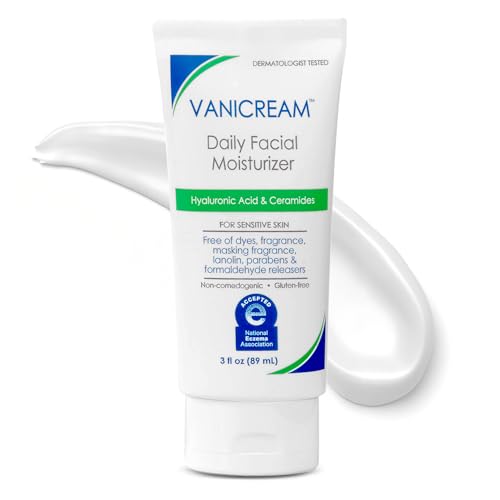
Offers a dermatologist-tested, gentle formula at a reasonable price point that aligns with its strong user satisfaction.
Price vs. rivals
Typical
CheaperTypicalPricier
Priced in line with other popular dermatologist-recommended daily moisturizers, offering a typical mid-range value for the category.
Ease of use
Excellent 93/100
Simple, lightweight, and non-greasy formula with easy pump application makes it very convenient for daily use.
Overview: A Full Vanicream Daily Facial Moisturizer Review
The Vanicream Daily Facial Moisturizer review you’re looking for gets straight to the point: this is absolutely worth trying if your skin reacts badly to most moisturizers. It’s a lightweight, non-greasy formula built for sensitive skin and acne-prone faces, and it does its job without any nonsense. At $13.97 for 3 ounces, you’re paying for what works, not for fancy packaging or fragrance marketing. This is the moisturizer for people who’ve given up on “gentle” labels because their skin didn’t get the memo. It solves the problem of finding something that hydrates without breaking you out or causing redness. The brand Vanicream has been making products for dermatologists and people with compromised skin barriers for decades. No hype, just a tube of stuff that does what it says.
Key Features of the Vanicream Daily Facial Moisturizer
Ceramides and squalane for moisture – These are the workhorses that actually restore your skin barrier. You get hydration that lasts through the day, not a flash of dampness that disappears in twenty minutes.
No fragrance, dyes, or common irritants – This is the whole reason to buy it. If your face turns red or bumpy from scented products, you skip that entire worry here. It’s stripped down to essentials only.
Lightweight, non-greasy feel – It sinks in within about thirty seconds and leaves no slick behind. You can put sunscreen or makeup on top right away and nothing pills or slides around.
Pump dispenser – The bottle has a pump that delivers a controlled amount. One or two pumps covers your whole face. No guessing, no gloppy squeeze-tube mess.
Free of common acne triggers – No oils, no silicones that clog pores, no fatty alcohols that make some people break out. It’s a clean base for anyone dealing with breakouts.
3 fluid ounces at a fair price – You get a decent amount for the cost. A bottle typically lasts two to three months with daily use, morning and night.
Fit for You: When Vanicream Makes Sense
You have rosacea, eczema, or contact dermatitis and your face throws a fit at most moisturizers.
You’re on prescription acne medication (tretinoin, adapalene, etc.) and need something that won’t sting or cause peeling to get worse.
You’ve tried “clean” or “natural” moisturizers and they either broke you out or did nothing. This is a different approach: clinical and minimal.
You live in a humid climate and hate the feeling of product sitting on your face. This dries down to nothing.
You’re looking for a non-greasy facial moisturizer for acne that won’t make your midday oil slick worse.
You want one moisturizer that works for both your face and your neck without needing a second product.
Uses: Where It Earns Its Keep
Morning routine after washing your face: two pumps, spread it around, done. You wait about sixty seconds and sunscreen goes on top without any weird balling. That alone is a small victory most moisturizers fail at. After a hot shower, when your skin feels tight and a little angry. The squalane soaks in fast and that tightness is gone in a minute. You don’t get that shiny residue that makes you look like you just applied cooking oil. During winter, when indoor heat turns your face into a dry, flaky mess. It’s not a heavy cream, so if you live in a place with brutal dry cold, you might want something thicker at night. But for daytime under makeup or sunscreen, it handles normal dryness just fine. Post-procedure, like after a mild chemical peel or laser treatment. The lack of irritants means no stinging. People recovering from skin treatments often use this because it’s safe when your skin barrier is compromised.
Experience: Living with the Vanicream Daily Facial Moisturizer
The first thing you notice is the texture. It’s a lotion, not a cream, and it feels thin when it comes out of the pump. You might think “that’s not enough moisture.” Then you spread it on your face and it disappears into the skin instead of sitting on top like a layer of grease. You’ll notice the lack of smell. No “fresh” scent, no “clean” scent, no scent at all. For people used to fragranced products, that first week feels weird. After that, you start noticing how much other stuff smells like a perfume counter and wonder why you put that on your face every day. The pump is a small joy. It doesn’t splurt, it doesn’t clog, and you get exactly what you need. Two pumps covers an average face. If you have a bigger face or a longer neck, three. The bottle stands on its base without tipping over, which is more than you can say for some. Small annoyance: near the end of the bottle, the pump can’t reach the last bit of product. You’ll unscrew the pump and scoop out maybe three or four uses from the bottom. Not a dealbreaker, but it happens. Owners tend to mention that it works best on damp skin. If you apply it to completely dry skin, it still absorbs but takes a little longer to sink in. Right after washing, when your face is still a bit wet, it spreads like a dream and locks in that extra hydration. One thing people don’t always expect: it’s not a barrier cream. If you have severely dry, cracked skin from something like eczema, this alone probably won’t cut it. It’s a daily moisturizer for normal-to-sensitive skin, not a thick ointment for compromised skin.
Pros and Cons of the Vanicream Daily Facial Moisturizer
Pros
Safe for the most reactive skin – Fragrance, dye, lanolin, paraben, formaldehyde-free. If your face hates everything, this is one of the safest bets you can make.
Dries down completely matte – No shine, no greasy feel. Makeup and sunscreen go on top without sliding around or pilling.
Affordable for what it is – Under $14 for a three-month supply puts it way below most “sensitive skin” products that cost twice as much for the same thing with a prettier bottle.
Ceramides and squalane do real work – These are proven ingredients for barrier repair, not filler. You get actual hydration, not just a wet layer on top.
Pump bottle is practical – Easy to use, hygienic, and you can see how much is left. No guessing, no wasted product.
Cons
Not enough for very dry or winter skin – If your face is genuinely dry, not just sensitive, you’ll need a thicker cream at night. This is a lightweight formula, and it knows it.
Texture can feel too thin at first – People used to rich creams might think it’s watery and ineffective. It works, but the feel takes getting used to if you’re accustomed to heavy moisturizers.
No SPF or extra bells and whistles – It moisturizes and that’s it. No anti-aging actives, no tint, no sunscreen. You need to layer those on separately.
Can pill if you apply too much or too fast – One pump too many or rubbing it in aggressively can cause small balls to form. Easy to avoid once you know, but annoying the first few times.
Last few days of the bottle are fiddly – The pump stops working with maybe a week’s worth left at the bottom. Unscrewing and scooping is a minor irritation that keeps it from being perfect.
Advantages Over Other Sensitive Skin Moisturizers
The obvious comparison is the Vanicream vs CeraVe moisturizer question everyone asks. CeraVe’s lotion is thicker, contains parabens, and uses a different ceramide blend that some people find break them out. Vanicream skips the parabens and uses a lighter base that tends to work better for acne-prone skin. CeraVe wins on richness and price per ounce. Vanicream wins on safety for the most reactive skin and a truly non-greasy finish.
Where it beats most other sensitive skin options is the complete lack of common irritants. Many “gentle” moisturizers still contain botanical extracts, essential oils, or preservatives that cause reactions in a small subset of people. Vanicream removes that possibility entirely. If you’ve ever had a moisturizer that “should have been fine” but wasn’t, this is the product that eliminates the variables.
Best moisturizer for sensitive skin when you need something that’s been vetted by dermatologists for decades. The ingredient list is short enough to read in five seconds.
Non-greasy facial moisturizer for acne that doesn’t rely on drying alcohols or harsh actives. It hydrates without feeding breakouts.
Works as a base for prescription acne treatments because it won’t interact or cause irritation on already sensitized skin.
Who Should Buy This Moisturizer
People with sensitive, reactive, or allergy-prone skin who have run out of things to try. This is your landing pad.
Anyone using tretinoin, adapalene, or other retinoids who needs a gentle, non-irritating daily moisturizer that won’t sting.
Acne-prone skin types who want hydration without the risk of clogged pores. The formula is designed to avoid common triggers.
Those who wear makeup or sunscreen and want a moisturizer that plays nice with layers. It dries matte and doesn’t cause pilling.
People who prefer unscented products and don’t want to pay for fragrance they’re just going to avoid anyway.
Skip this if you have extremely dry or mature skin that needs a rich, occlusive cream. Look for La Roche-Posay Lipikar or CeraVe Cream in the tub instead. Also skip it if you want a moisturizer with SPF, anti-aging ingredients, or any kind of tint – this does one thing and does it well, but that one thing is just moisture.
Yes, if you have sensitive or reactive skin that struggles with other moisturizers. At under $14 for a three-month supply, it’s one of the best values in the category. The only people who won’t find it worth it are those who need a richer cream or want extra features like SPF.
How long does a bottle of Vanicream Daily Facial Moisturizer last?
With once-daily use, a 3-ounce bottle lasts about three months. With twice-daily use, more like six to eight weeks. Two pumps covers the whole face, and you won’t be tempted to use more because it spreads so easily.
Is Vanicream Daily Facial Moisturizer safe for acne-prone skin?
Yes, it’s formulated without common acne triggers like oils, silicones, and fatty alcohols. It’s a non-greasy facial moisturizer for acne that hydrates without clogging pores. Many people using prescription acne treatments like tretinoin rely on this as their go-to moisturizer.
Can you wear makeup over Vanicream Daily Facial Moisturizer?
Yes, and it works well under most foundations and powders. The formula dries down completely matte, so makeup doesn’t slide around. Give it about sixty seconds to fully absorb before applying anything on top. It doesn’t cause pilling unless you use too much.
Is Vanicream Daily Facial Moisturizer non-comedogenic?
The product is labeled non-comedogenic, meaning it’s designed not to clog pores. The ingredient list backs that up with no oils, no pore-clogging silicones, and no heavy waxes. People with acne-prone skin generally do well with it, though individual results always vary.
How does Vanicream compare to CeraVe for sensitive skin?
Vanicream wins for the most reactive skin because it contains no common irritants at all. CeraVe is thicker and cheaper per ounce but uses parabens and a different ceramide blend that some find break them out. Vanicream is the safer bet for anyone who’s had reactions to “gentle” products before.
Final Verdict: Vanicream Daily Facial Moisturizer Review Bottom Line
The Vanicream Daily Facial Moisturizer review comes down to this: it’s the best option for people whose skin has rejected everything else. It’s not flashy, it doesn’t promise to reverse aging, and it won’t smell like a spa. What it does is moisturize your face without causing a reaction, and that’s harder to find than you’d think. If your skin is generally normal and you just want something cheap that works, there are other options that cost less per ounce. But if you’ve ever bought a moisturizer that made your face red, bumpy, or itchy within an hour, this is the one you should try next. At $13.97, the risk is low and the chance of it being exactly what you need is high. Keep in mind that if you need heavy moisture for very dry skin, you’ll want something richer for nighttime. For everything else, this is the quiet, reliable choice that doesn’t let you down.
Vanicream Daily Facial Moisturizer vs the Competition in 2026
The Vanicream Daily Facial Moisturizer sits at the sweet spot of the drugstore shelf—$13.97, no fragrance, no dyes, no nonsense. While it’s not the only lightweight option for sensitive skin, its ingredient philosophy is stricter than most. You’ll find cheaper creams, pricier ones, and gels that vanish on contact. The question is which one actually works for your face. Here’s the breakdown.
Product
Price Range
Key Strength
Key Weakness
Best For
Vanicream Daily Facial Moisturizer
~$14
Nearly zero irritants; dermatologist tested for eczema
Can feel a bit thick on very oily zones
Ultra-sensitive, reactive, or rosacea-prone skin
CeraVe PM Facial Moisturizer
~$12–16
Niacinamide + ceramides for barrier repair
Some people get stinging from niacinamide
Normal to combination skin wanting long-term barrier care
La Roche-Posay Toleriane Double Repair Face Moisturizer
~$18–22
Prebiotic thermal spring water; feels soothing
Can leave a slight residue that pills under makeup
Dry or mildly sensitive skin that loves a creamy finish
Neutrogena Hydro Boost Water Gel (Fragrance-Free)
~$14–18
Ultra-light gel texture; hyaluronic acid pulls in moisture
Not enough occlusives for very dry skin in winter
Oily, acne-prone skin that hates any greasy feel
Vanicream Daily Facial Moisturizer vs CeraVe PM Facial Moisturizer
Both are budget-friendly, both are fragrance-free, but they aim at different kinds of “sensitive.” CeraVe PM leans on niacinamide to strengthen your skin barrier over time. If that works for you, it’s great—it’s a bit thinner, sinks in fast, and costs about the same. Vanicream, though, strips everything back further. No niacinamide, no parabens, no formaldehyde releasers, no lanolin. That matters if your skin reacts to anything unusual. I’ve seen people who can’t tolerate CeraVe’s niacinamide turn to Vanicream and finally stop flushing. The trade-off is texture: Vanicream is slightly heftier. If you’re oily, CeraVe PM might feel lighter, but if you’ve got eczema or perioral dermatitis, Vanicream is the safer bet.
Vanicream Daily Facial Moisturizer vs La Roche-Posay Toleriane Double Repair
La Roche-Posay costs a few dollars more per ounce, and you pay for that soothing sensation—it has ceramides and that thermal spring water that genuinely calms heat-prone skin. The catch? It leaves a faint film that can ball up if you layer sunscreen or makeup on top. Vanicream doesn’t pull that trick; it absorbs evenly and sits quietly under a mask or tinted SPF. Yet if your skin feels tight and angry, LRP’s richer emollience is hard to beat. Vanicream is the boring, reliable friend who never lets you down. LRP is the one with the nice car that might stall in traffic. For dry skin that doesn’t wear face makeup, go LRP. For everything else, Vanicream wins on consistency and price.
Vanicream Daily Facial Moisturizer vs Neutrogena Hydro Boost Water Gel
Hydro Boost is the undisputed champ of “I can’t feel this on my face.” If you hate moisturizer—the weight, the tack, the shine—this gel delivers hydration without a trace. Vanicream, despite being lightweight compared to its own cream, still has a real lotion body. But here’s the rub: Hydro Boost’s gel formula relies heavily on glycerin and dimethicone, which isn’t ideal for everyone with ultra-sensitive skin. Some people get a mild tingle from hyaluronic acid. Vanicream is almost inert; it’s the moisturizer that does its job without introducing variables. If your main problem is acne or oiliness, Hydro Boost is better. If your main problem is “everything breaks me out,” Vanicream is the alternative you need.
Who Should Choose the Vanicream Daily Facial Moisturizer
Pick this if your skin is a minefield—eczema, rosacea, contact dermatitis, or a history of redness from random products. It’s not the most exciting moisturizer, and it won’t win a texture award against a gel. But for the $14 price, it delivers exactly what it promises: moisture without risk. If your skin is tougher, or you prefer a barely-there feel, the Neutrogena Hydro Boost is worth trying. If you want barrier repair along with hydration and your face handles niacinamide well, CeraVe PM is the smarter buy. Vanicream is for the people who are tired of playing roulette.
Ready to decide on the Vanicream Daily Facial Moisturizer?
See today’s price, stock and delivery options on Amazon.