An EltaMD UV Clear review usually comes down to one question: is it worth the cost? For most people with oily or acne-prone skin, yes. It’s a lightweight, oil-free SPF 46 that protects with zinc oxide and doesn’t cause breakouts. Just know you’re paying a premium for that comfort.
High rating and dermatologist trust justify a premium price, offering excellent sun protection without irritation.
Price vs. rivals
Pricier
CheaperTypicalPricier
This product is priced above most drugstore sunscreens, placing it in the mid-to-upper range of premium dermatologist-recommended brands.
Ease of use
Excellent 85/100
This sunscreen is generally easy to apply and incorporate into a daily routine, as reflected by its strong user rating.
EltaMD UV Clear Review: Overview
EltaMD makes this for people who have given up on sunscreen because everything else breaks them out, stings, or sits on the skin like a mask. It’s a daily face SPF built around zinc oxide, the ingredient that physically blocks UV instead of being absorbed by skin. The “Clear” part is the point: it finishes transparent, which is rare for a mineral sunscreen.
For anyone who wants an oil-free face sunscreen for sensitive skin, this has become a dermatologist favorite over the years. The formula is non-comedogenic, so it won’t clog the pores that lead to blackheads and breakouts, and there’s no fragrance to irritate already unhappy skin. In any EltaMD UV Clear review, you’ll see the same theme: it’s the one that actually works with your skin, not against it.
EltaMD UV Clear Review: Key Features
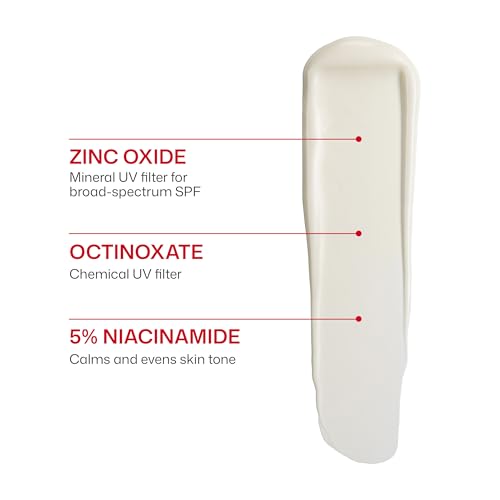
If you read the EltaMD UV Clear SPF 46 ingredients, you’ll see zinc oxide and niacinamide near the top. That combination is why this review keeps coming back to the same point: it protects without asking your skin to tolerate the usual sunscreen problems.
Zinc oxide SPF 46: A mineral filter that starts blocking UV immediately. You don’t have to wait 15 minutes before heading outside.
Niacinamide: A form of vitamin B3 that calms redness and helps fade post-acne marks. You get skincare benefits while wearing sun protection.
Oil-free, non-comedogenic base: It won’t clog pores, so it’s a reliable choice for congested skin and breakouts.
Fragrance-free and sensitive-skin friendly: No perfume, no stinging, no extra irritation. That’s why people with reactive skin tend to switch and stay.
Lightweight clear finish: It blends to a natural look without a white cast, even on medium and deeper skin tones.
Fit for You
You’ve skipped sunscreen for a week because the last one made your forehead look like an oil slick by lunch.
You’re on tretinoin or benzoyl peroxide, and your face turns red the second you apply a chemical sunscreen.
You wear foundation or tinted moisturizer most days and need an SPF that doesn’t pill underneath.
You have hyperpigmentation or post-acne marks and want a sunscreen that also helps fade them over time.
You’ve tried a dozen “clear” sunscreens and still got a white cast on your skin tone.
You want a morning routine you can finish in under two minutes without blotting or waiting.
Uses
On a normal workday, apply it after your moisturizer and before makeup. A nickel-sized amount spreads easily across your face, and it absorbs in about twenty seconds. You can walk out the door right away because the zinc oxide doesn’t need time to activate.
At the office, it holds up well if you’re just going desk to window and back. The finish stays mostly non-shiny, so you don’t have to powder your nose at 11 a.m. like you might with heavier SPFs.
For a long outdoor lunch or a day at the park, reapply every two hours, which is the rule for any sunscreen. The tube is small enough to fit in a tote or backpack. If you’re planning to swim or go for a hard run, pick something water-resistant instead.
Experience
The first thing you’ll notice is the texture. It comes out like a light lotion, not the thick white paste people associate with mineral sunscreens. It spreads smoothly and dries to a clear, soft-touch finish that feels like nothing.
The catch is how much that comfort costs. At $45 for 1.7 ounces, this is not a casual purchase. If you’re using the recommended amount on your face every day, a tube lasts roughly six to eight weeks, so you’re paying about a dollar a day to keep your skin calm and protected.
One small annoyance: pilling. If you apply a gel-based moisturizer right before, the sunscreen can ball up. The fix is to wait a minute between layers, and it takes a few tries to learn the rhythm.
The tube’s small opening also means the last few uses take a little work. You’ll be squeezing and scraping to get every drop, which feels especially unfair at this price.
Pros and Cons
Pros
Pore-friendly formula: Oil-free and non-comedogenic, so it doesn’t trigger breakouts like heavier sunscreens.
Mineral protection: Zinc oxide reflects UV right away, so there’s no waiting after application.
Clear finish: No white cast, which is rare for mineral sunscreens, especially on medium and deeper skin tones.
Calms skin: Niacinamide helps take down redness, so you end up calmer than you started.
Good under makeup: It layers under foundation and tinted moisturizer without pilling if you wait a minute.
Cons
Expensive: $45 for a small tube is steep, and the cost adds up when you use the proper amount daily.
Not water-resistant: This is a daily city sunscreen, not a beach or gym one. Sweat will move it quickly.
Small tube: 1.7 ounces is tiny, and it goes faster if you also cover your neck and ears.
Can pill with certain moisturizers: Gel-based products underneath make it ball up if you don’t give them time to dry.
Advantages
If you’re weighing EltaMD UV Clear vs Supergoop Unseen, the short version is this: both disappear into the skin and work under makeup, but they protect with different mechanisms. Supergoop uses chemical filters and a silicone-heavy gel that blurs pores and feels almost like a primer. EltaMD uses zinc oxide with niacinamide, which makes it a smarter pick for reactive skin, rosacea, or anyone who can’t handle chemical UV filters. That’s also its main advantage over most drugstore mineral SPFs: you get the sun protection of a zinc formula without the weight, the cast, or the stinging.
Who Should Buy
If you’re hunting for the best sunscreen for acne-prone skin, this is the one to measure others against.
You’ll love it if: You want daily SPF that doesn’t cause breakouts, leave a cast, or make you look shiny.
You’ll love it if: Your skin reacts to chemical sunscreens with redness or stinging, and you need mineral protection.
You’ll love it if: You’re on acne or anti-aging treatments that make your skin sensitive to almost everything.
Skip it if: You plan to swim, do hot outdoor sports, or spend long hours sweating. It’s not water-resistant, so a sport formula is a better fit.
Skip it if: Your budget is tight. A drugstore facial sunscreen with zinc oxide can work, but it will be heavier and less elegant.
FAQ
Is EltaMD UV Clear worth it?
Yes, for anyone with oily or acne-prone skin who has struggled to find a daily SPF that doesn’t break them out or look chalky. It’s an expensive product, so it’s worth it only if your skin actually needs that gentle, oil-free formula. For easy, low-maintenance skin, a cheaper SPF can work fine.
EltaMD UV Clear vs Supergoop Unseen: which is better?
For sensitive or acne-prone skin, EltaMD wins; for a pore-blurring silicone feel, Supergoop has an edge. EltaMD uses zinc oxide plus niacinamide, which makes it gentler for reactive skin. Supergoop’s gel texture blurs pores a little more, but chemical filters can sting if your skin dislikes them.
Does EltaMD UV Clear leave a white cast?
No, not the way classic mineral sunscreens do. The zinc oxide in the formula is milled finely enough that it blends down to a clear, natural finish. On very deep skin, you might see a faint cool tone for a minute, but it fades once the lotion sets.
Can you wear EltaMD UV Clear under makeup?
Yes, as long as you give it about one minute to dry before adding foundation or tinted moisturizer. Apply it after your skincare and before makeup. The finish is smooth enough that most people skip primer, which is a nice bonus in the morning.
Is EltaMD UV Clear good for acne-prone skin?
Yes, this is its main reputation, and it’s deserved. The formula is oil-free and non-comedogenic, so it doesn’t block pores, and zinc oxide is less irritating than chemical filters. The niacinamide also helps calm redness around breakouts, which is exactly what irritated skin needs.
How long does a tube of EltaMD UV Clear last?
A 1.7-ounce tube lasts about six to eight weeks with daily application to your face using the recommended amount. If you also cover your neck and chest, expect closer to four to six weeks. That’s a real cost, so factor it into your decision before you buy.
Final Verdict
An EltaMD UV Clear review that weighs the price against the performance lands on the same conclusion that most skincare people reach: this is the daily SPF for faces that can’t tolerate the norm. It’s not a beach sunscreen, and it’s not cheap, but for acne-prone or easily irritated skin, it solves the exact problem that makes people quit sunscreen altogether.
The one thing to keep in mind: buy it for your face, not your vacation. Pair it with a water-resistant option for swimming or heavy sweat, and you’ll have a routine that actually sticks.
When you have acne-prone or sensitive skin, buying sunscreen feels like a gamble. Will it clog pores? Sting your eyes? Leave you looking like a ghost? EltaMD UV Clear SPF 46 has been the dermatologist darling for years, but it’s not cheap. In this comparison, I’m putting it against three real rivals you’ll actually find on shelves: Supergoop Unseen Sunscreen, La Roche-Posay Anthelios Mineral, and CeraVe Hydrating Mineral Sunscreen. The goal is to help you decide whether the EltaMD price tag makes sense for your face — or if you’re better off with something else.
Product
Price Range
Key Strength
Key Weakness
Best For
EltaMD UV Clear SPF 46
Premium (~$45)
5% niacinamide + transparent zinc oxide that won’t break you out
Can pill over heavy moisturizers; pricey per ounce
Acne-prone, sensitive, or rosacea-threatened skin that wants a tint-free matte finish
Supergoop Unseen Sunscreen SPF 40
Upper-mid (~$38)
Invisible, weightless, works under makeup like a primer
No active acne-fighting ingredients; contains fragrance-masking scent
Oily skin that hates white cast and wants a smooth canvas for foundation
La Roche-Posay Anthelios Mineral SPF 50
Mid (~$33)
High SPF, gentle mineral formula, sheer tint that adapts to many skin tones
Tint can look chalky on deeper complexions; less cosmetically elegant than EltaMD
Sensitive skin that wants a mineral option with a little color correction
CeraVe Hydrating Mineral Sunscreen SPF 50
Budget (~$15)
Ceramides + niacinamide at a drugstore price; leaves a dewy finish
Heavy white cast on medium to dark skin; can feel greasy by midday
Normal to dry skin on a budget that doesn’t mind rubbing in a white layer
EltaMD UV Clear SPF 46 vs Supergoop Unseen
This is the fight between “actually treats your acne” and “disappears completely.” EltaMD UV Clear SPF 46 puts 5% niacinamide front and center, so if you’re dealing with persistent breakouts or redness, it pulls double duty. Supergoop Unseen doesn’t do that — it’s pure protection and zero skin-improving extras. What it does do is vanish. No white cast, no shine, no smell. If you’ve ever had a sunscreen leave your face looking like a greasy mirror by 11 a.m., Unseen is witchcraft. But the trade-off: it’s a chemical filter (avobenzone, octocrylene) that can irritate some sensitive types. For me, EltaMD wins on long-term skin health; Supergoop wins on pure cosmetic elegance for a night out where nobody knows you’re wearing SPF.
EltaMD UV Clear SPF 46 vs La Roche-Posay Anthelios Mineral
La Roche-Posay’s Anthelios Mineral SPF 50 is the closest cousin to EltaMD: same zinc-oxide-based protection, similar price-ish, both designed for reactive skin. The difference lands in texture and tint. La Roche-Posay’s version comes in a single tinted shade that works beautifully on fair-to-light-medium skin but can look ashy on deeper tones. EltaMD UV Clear (the SPF 46) is practically clear — a near-invisible white lotion that blends into any skin color without needing pigments. That’s a big deal if you’ve ever had a “universal” tint turn you orange. On the flip side, La Roche-Posay feels more hydrating and less likely to pill if you layer it over a rich serum. I’d give the edge to EltaMD for acne-prone folks who also have darker skin; La Roche-Posay for dry-skinned folks who want a bit of coverage.
EltaMD UV Clear SPF 46 vs CeraVe Hydrating Mineral
Here’s where the budget argument comes in. CeraVe Hydrating Mineral costs roughly a third of what EltaMD does, and it even packs niacinamide and ceramides. So why would anyone pay more? Application, mostly. CeraVe’s formula is thick and leaves a noticeable white cast that you have to rub in hard, then wait. On my combination skin it sits on top like a paste, and by the afternoon it’s a grease slick. EltaMD UV Clear spreads easier, dries down to a satin finish that doesn’t slide off, and never makes me look like a mime. If you’ve got very fair skin and don’t mind spending extra time blending, CeraVe is a steal. But for anyone with oiliness or a medium-to-dark complexion, the extra $30 for EltaMD is an investment in not looking like a ghost.
So, who should buy EltaMD UV Clear SPF 46? You, if your skin throws a fit at the drop of a hat — acne, rosacea, general sensitivity — and you’re tired of sunscreens that feel like punishment. It’s not cheap, but it works as a treatment and a protectant in one, and it sits under makeup or alone without making you shiny. Skip it if your main priority is invisible texture on a strict budget — grab Supergoop Unseen instead if you don’t need acne ingredients, or CeraVe if you’re fair-skinned and patient. But for the “best sunscreen for acne-prone skin” conversation in 2026, EltaMD UV Clear is still the name everyone else is trying to beat. Sometimes you get what you pay for, and your face is worth the forty-five bucks.
Ready to decide on the EltaMD UV Clear SPF 46?
See today’s price, stock and delivery options on Amazon.