Swiftlite Disposable Vinyl Gloves review – short answer: yes, if you’re prepping food or handling light tasks and don’t want to spend on nitrile. For heavy-duty cleaning or chemical work, skip them. But for $7.99 for a box that lasts weeks, they’re a practical, no-regret buy for most home cooks and casual DIYers.
This product combines a low price with exceptional user satisfaction, offering outstanding value for money in the disposable glove category.
Price vs. rivals
Cheaper
CheaperTypicalPricier
Priced below most similar food-safe vinyl glove options, offering strong value for budget-conscious buyers.
Ease of use
Excellent 95/100
Disposable vinyl gloves are extremely easy to use with a simple pull-on design and minimal effort required for an average person.
Overview
These are vinyl gloves, not latex or nitrile. That means they’re made from PVC, which is cheaper and less elastic. The trade-off is a looser fit and less puncture resistance. But for food prep – chopping garlic, mixing meatloaf, handling raw chicken – they’re more than fine.
Swiftlite targets the home cook who goes through a box of gloves every month. You’ll use them instead of washing your hands a dozen times while cooking. They’re also a solid option for light cleaning (wiping counters, washing dishes) and salon-style tasks like dyeing hair. Just don’t expect them to survive a sharp knife or a splash of acetone.
Key Features
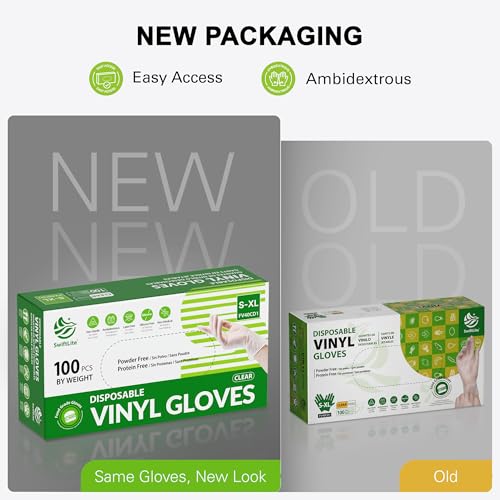
Food safe vinyl material – Compliant with FDA food-contact rules. You can handle raw meat, veggies, or cheese without worry. No powder inside, so no chalky residue on your hands afterwards.
Ambidextrous design – Fits either hand, which cuts down on fumbling. You grab one, it works. Saves that annoying “which finger goes where” dance during a busy recipe.
Textured fingertips – Light pebbling on the tips gives you grip on wet chicken or slippery avocado. It’s not clunky, just enough to keep a knife handle steady.
Latex-free – No latex protein, so no allergic reactions. If you’ve ever had itchy hands from latex gloves, these solve that problem entirely.
Powder-free interior – Some vinyl gloves come dusted with cornstarch to make them easier to slide on. These don’t. You’ll have to work a bit to get them on if your hands are damp, but you won’t get that powdery mess on your food.
Fit for You
You chop garlic, onions, or jalapeños and hate the smell lingering on your fingers for hours.
You prep raw meat or fish more than once a week and want a barrier between your hands and salmonella.
You dye your own hair at home and need gloves that don’t stain your skin and cost next to nothing to toss.
You clean bathrooms or kitchens with bleach spray and want a quick layer of protection without buying thick rubber gloves.
You run a small food business (food truck, home bakery) and need a bulk-friendly disposable that won’t eat your margins.
Uses
In the kitchen, these shine during multi-step recipes. You’ll wear them while forming burger patties, switch to slicing tomatoes, then peel off the gloves to answer the phone without washing up. No soap, no paper towel waste.
For cleaning, they’re fine for scrubbing a stovetop or wiping down refrigerator shelves. But if you’re dealing with oven cleaner or drain opener, upgrade to nitrile – vinyl can soften or degrade with strong solvents.
Another solid use: painting or staining small projects. You can roll paint on a cabinet door, toss the glove, and not have turpentine on your cuticles. Just be aware that vinyl tears easier than latex when you’re gripping a brush handle hard.
Experience
Right out of the box, the gloves feel thin – thinner than the medical-grade nitrile you see at the clinic. That’s by design. You’ll slide one on, and it’ll sit loose around the wrist and palm. If you’re between sizes, go down a size for a snugger feel. The material doesn’t snap back like latex; it stays where you put it.
Putting them on when your hands are dry is easy. Slightly damp from washing? You’ll need to tug a bit – the powder-free interior grabs moisture. No big deal, just something you learn to manage. Taking them off is straightforward: pinch the cuff and peel inside out. They don’t cling like nitrile, so they come off without snapping your fingers.
The noise is real. Vinyl gloves crinkle. You’ll hear it especially when you’re mixing ground meat or kneading dough. Some people don’t mind; others find it distracting. If you’re noise-sensitive, nitrile is quieter. But for a $7.99 box, the crinkle is a minor quirk.
Durability? Expect a glove to last through one heavy cooking session. If you’re shredding cooked chicken with forks, fine. If you’re deboning a fish and the bone pokes through, the glove will tear. Owners tend to mention that the thumb can rip when you’re twisting open a jar while still gloved. So don’t do that. Use common sense.
No scent. Some cheap vinyl gloves smell like plastic or chemicals. These don’t – a nice surprise. You can hold them up to your nose and only get a faint neutral smell. That matters when you’re handling something like butter or cheese that absorbs odors.
Pros and Cons
Pros
Price – $7.99 for a box of 100. That’s eight cents per glove. Hard to beat for everyday kitchen use.
Food safe – Clear FDA compliance. No worries about chemicals leaching into your meal prep.
Latex-free – Zero allergy risk. Safe for anyone with latex sensitivity, including family members or customers.
Easy to store – The box is small (similar to a shoebox). Slides into a pantry shelf or under the sink.
Discreet thickness – Thin enough to feel what you’re holding – you’ll still sense the doneness of a steak through the glove.
Cons
Low puncture resistance – Snag them on a sharp edge or a fish bone, and they tear. Not for heavy-duty tasks.
Loose fit – If you have slender hands, even the small size might feel baggy. Nitrile gloves offer a more tailored fit.
Crinkly noise – The vinyl sound is noticeable. If you’re recording a cooking video or have sensitive hearing, you’ll notice it.
Not for chemicals – Strong solvents (acetone, paint thinner, bleach concentrate) can weaken vinyl. Stick to water-based cleaners.
Single-use by nature – You can reuse them if you’re careful (rinse and air dry), but the material gets weaker after one use. Disposability is the whole point, but it’s not eco-friendly.
Advantages
Compared to latex gloves, these win on allergy safety and cost. Latex can cause reactions; vinyl doesn’t. Latex also costs more per box for comparable quality. Compared to nitrile, the Swiftlite vs Nitrile Gloves debate comes down to money vs. toughness. Nitrile is stronger and fits better, but you’ll pay two to three times more. For casual food prep, the price difference matters. If you’re breaking down a whole turkey, splurge on nitrile. For everyday chopping and mixing, Swiftlite works fine.
As best disposable gloves for food preparation under $10, these are hard to beat. Thicker vinyl gloves from other brands cost more and aren’t necessarily more food safe. Swiftlite keeps the simple stuff simple.
Who Should Buy
Home cooks – If you prep meals regularly and want to save time on hand-washing, these are for you.
Bakers and pastry makers – Great for handling sticky dough or rolling out sugar paste without messing up your nails.
People with latex allergies – Finally a glove you can wear for an hour without itching.
Food truck owners – Low cost per glove means you can keep a box in the van and change often. They’re Swiftlite vinyl gloves for cooking that won’t wreck your budget.
People who do occasional home hair dye – Cheap, disposable, and you can toss them after one color session.
Skip them if: you work with harsh chemicals, need gloves for medical exams, or regularly handle sharp tools. For those, grab a box of nitrile (like Gloveworks or Kimberly-Clark) instead.
FAQ
Are Swiftlite Disposable Vinyl Gloves worth it?
Yes, for everyday food prep and light cleaning. You get a full box for less than a fast-food meal, and they perform exactly as vinyl gloves should – no surprises, no hidden flaws.
Are Swiftlite gloves food safe?
Yes, they’re labeled food safe and meet FDA requirements for direct contact with food. You can safely use them with raw meat, vegetables, and ready-to-eat items.
How do Swiftlite vinyl gloves compare to nitrile?
Vinyl is thinner, looser, and cheaper. Nitrile is stronger, more elastic, and pricier. For tasks where you need puncture resistance (handling sharp bones or cleaning with strong solvents), choose nitrile. For general cooking, vinyl is fine.
Can you reuse Swiftlite vinyl gloves?
Technically you can rinse and air-dry them once, but they’re designed for single use. The material weakens after one use, and reusing increases the chance of tearing or contamination.
Are Swiftlite gloves latex free?
Yes, they contain no latex rubber or protein. Safe for people with latex allergies.
What size should I buy?
These are ambidextrous and come in small, medium, large, and extra-large. If you’re between sizes, go down. They run slightly loose, so a snugger size feels more secure.
Final Verdict
If you need a box of disposable gloves for cooking, prepping, or light cleaning and you don’t want to spend more than the cost of a lunch, the Swiftlite Disposable Vinyl Gloves deliver exactly what they promise. They’re food safe, powder-free, and priced so low you won’t hesitate to grab a fresh pair every time you step into the kitchen. Just remember they’re vinyl – thin, crinkly, and not for tough jobs. Treat them as the workhorse of quick, clean food handling, and you’ll be happy with the purchase.
Swiftlite Disposable Vinyl Gloves vs the Competition in 2026
If you’re sorting through the endless rack of disposable gloves at the supply store (or doom-scrolling product pages at 2 a.m.), Swiftlite lands somewhere in the sensible middle. It’s not the cheapest vinyl glove you can grab, nor is it trying to be a heavy-duty nitrile. At about $8 per box, Swiftlite sits squarely in the budget-to-mid vinyl lane, and its 4.5-star average suggests most people aren’t mad about it. The real question is whether those half-stars come from actual performance or just low expectations. Let’s pit them against three real alternatives and see who you should actually hand your cash to.
Product
Price Range
Key Strength
Key Weakness
Best For
Swiftlite Disposable Vinyl Gloves
~$8
Good puncture resistance for a vinyl glove; textured grip on fingers
Not as durable as nitrile; can feel flimsy on bigger hands
Quick kitchen tasks, light food prep, cleaning up without breaking the bank
Gloveworks Disposable Vinyl Gloves
~$6–$7
Thicker vinyl than most at this price; reliably food-safe
Less tactile sensitivity — you feel like you’re wearing mittens
Volume users who change gloves often and want to save a dollar per box
Ansell Microflex 93-260 Nitrile Gloves
~$15–$18
Exceptional snug fit; resists oils and solvents far beyond vinyl’s capability
Costs roughly double per box; can cause sweat buildup
Oily prep work, handling raw meat, anyone with latex sensitivities who needs real protection
Dynamico Clear Vinyl Gloves
~$5–$6
Dirt cheap; widely available at big-box stores
Thin material tears if you look at it wrong; zero grip when wet
One-off tasks, guest use, or when you just need a barrier for five minutes
Swiftlite Disposable Vinyl Gloves vs Gloveworks Disposable Vinyl Gloves
These two are the obvious head-to-head in the generic vinyl aisle. Gloveworks usually costs a dollar or two less per box, and they’re thicker — that sounds like an easy win, right? Well, the thickness comes at a cost: your fingers feel like they’re wrapped in a garden hose. Swiftlite’s vinyl is noticeably thinner, which actually helps you feel whether that onion slice is slipping or if you’ve got a grip on the knife handle. For quick chopping or tossing a salad, Swiftlite is more nimble. But if you’re the type who goes through three boxes a week at a catering gig, Gloveworks’ extra durability might save you from changing gloves every time you bump a counter edge.
Swiftlite Disposable Vinyl Gloves vs Ansell Microflex 93-260 Nitrile Gloves
Here’s where the “Swiftlite vs Nitrile Gloves” debate actually matters. The Ansell Microflex is in a different league — it stretches like a second skin, resists grease and oil that would turn a vinyl glove into a sticky mess, and won’t split when you’re deboning a chicken. So why would anyone pick Swiftlite? Price, plain and simple. For the cost of one box of Microflex, you can buy two boxes of Swiftlite and have change left over. If your job is slinging burgers or washing dishes, you don’t need nitrile’s chemical resistance. You need something that won’t make you cry at the register. The trade-off is real: Swiftlite will tear sooner, especially if you’re rough with your hands. But for most home cooks and light commercial use, vinyl is perfectly fine — and your wallet agrees.
Swiftlite Disposable Vinyl Gloves vs Dynamico Clear Vinyl Gloves
Dynamico is the absolute budget option — the glove you find in a gas station cleaning kit. It’s thin enough that you can nearly read a newspaper through it, and the lack of texture means wet hands become a game of slippery chicken. Swiftlite, by contrast, has a decent embossed grip pattern that actually works on damp plates and cutting boards. That little texture ridge along the fingers makes a genuine difference when you’re not trying to juggle a slippery avocado. If you only need a glove for five minutes of painting or picking up dog waste, Dynamico is fine. For anything involving water or food — that’s where Swiftlite earns its extra two bucks. It’s not a premium product, but it’s a proper one.
Who should choose Swiftlite — and who should grab something else
Pick the Swiftlite Disposable Vinyl Gloves if you do a fair amount of home cooking, basic food prep, or general cleaning where you want a glove that won’t fall apart mid-task but also won’t cost you a small savings account. They are food-safe, which is a real plus for anyone making sandwiches or handling raw produce. On the other hand, if you work with oily ingredients, raw meat all day, or have ever had a glove explode while stuffing a turkey, skip the vinyl and buy the Ansell Microflex nitrile gloves instead. And if you’re on a razor-thin budget and change gloves every thirty seconds, the Gloveworks vinyl offer better value per task — even if they feel like clumsy oven mitts. Everybody else: Swiftlite is your sweet spot.
Ready to decide on the Swiftlite Disposable Vinyl Gloves?
See today’s price, stock and delivery options on Amazon.