Offers a superior writing experience and long-lasting performance at a price that feels fair for everyday or professional use, without crossing into luxury territory.
Price vs. rivals
Typical
CheaperTypicalPricier
This 5-pack is priced near the typical mid-range for similar permanent markers from leading brands, reflecting an average cost for quality fine tip markers.
Ease of use
Excellent 95/100
Sharpie markers require no setup or instruction; simply uncap and write, making them highly intuitive for any average user.
Overview
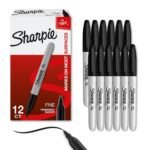
This Sharpie permanent markers review covers the Fine Tip, Black, 5 Count pack. It’s the classic black marker, and honestly, it’s usually all you need. These are for anyone who needs a signature, label, or mark that dries fast and refuses to fade, smudge, or wash away.
It solves a simple problem: making a permanent mark on stuff that other pens can’t handle. That means cardboard, plastic, metal, glass, and photos. You’re not buying art supplies here; you’re buying the tool that finishes the job and never lets go.
Key Features
Quick-drying ink: You can close a cardboard box or stack a signed photo within seconds. No waiting around, no smudged fingerprints.
Fade-resistant formula: That autograph on a baseball or the label on a storage bin will still be legible years from now, even in sunlight.
Fine point tip: It gives you a crisp, consistent line around 0.8mm. It’s precise enough for a clean signature but sturdy enough for normal wear and tear.
Durable acrylic tip: It doesn’t mush down or splay out like cheaper felt tips do. You’ll get a lot of writing out of one marker.
Odor, but the familiar kind: That classic Sharpie scent is there. It’s not pleasant, but it fades after a minute or two.
Fit for You
You need a signature to stick on a glossy photo or a team jersey without it rubbing off.
You’re labeling storage boxes in the garage and need writing that survives until next Christmas.
You work in a warehouse or shop and have to mark on plastic bags, tape, or metal surfaces.
You’ve had enough of ballpoint pens that skip or freeze at the worst moment.
You need a reliable backup marker in your desk drawer for odd jobs around the house.
Uses
Concert and book signings are where these earn their keep. The fine tip is ideal for getting a clean signature on a glossy album booklet or a dust jacket. The ink bonds to the slick paper almost instantly, so you won’t ruin a keepsake with a smudge.
Around the house, they’re the go-to for labeling Tupperware lids, freezer bags, and electrical cords. While the ink is permanent, it’s worth noting that it can still be scratched off on some very smooth plastics. For most household labels, though, it holds up great.
You’ll also find them useful for crafts and DIY. They mark on wood, metal, and glass. Owners tend to mention that a quick wipe with rubbing alcohol will clean them off surfaces, but water does nothing. That’s the trade-off you’re signing up for.
Experience
Living with these markers is dead simple. There’s no setup, no charging, and no click mechanism to fiddle with. You pop the cap, and it’s ready. The cap clicks on firmly when you’re done, which matters because a Sharpie left uncapped overnight is a ruined Sharpie.
One thing you’ll notice is the smell. It’s distinct and can be a bit much in a tiny, unventilated room. Keep a window cracked, and it’s fine. The ink also goes through cheap paper, so don’t use these for jotting notes in a thin notebook. They’re for surfaces, not paper pads.
The fine tip feels solid. It doesn’t flex like a brush pen, but it gives a little, which makes signing your name feel smooth. The line width is consistent, and you can press fairly hard without damaging the tip. It’s a no-drama tool. The only real annoyance is that you’ll keep losing the cap, that’s why it’s smart to buy a pack of five.
Pros and Cons
Pros
Permanent, for real: Once it’s dry, it’s not coming off with water or casual rubbing.
Dries fast: You can handle the item almost immediately, which is crucial for signing photos in a line.
Strong tip: It holds its shape, so every letter looks sharp until the ink runs dry.
Great price per marker: At around $4.87 for a five-pack, each marker is roughly a dollar. That’s fair for the durability.
Universal standard: Everyone knows what a Sharpie is. You hand one to a celebrity or a coworker, and they don’t need instructions.
Cons
Bleeds through paper: You can only use it on one side of a standard sheet of paper. The ink soaks right through.
Strong smell: The solvent odor is noticeable and lingers for a bit. It fades, but it’s there.
Not fully permanent on all plastics: Some smooth plastics will still let the ink scratch off with a fingernail. It’s not magic.
Dries out if capped loose: These markers are unforgiving. You have to press the cap on until it clicks, or you’ll find a dead marker in a week.
Advantages
The biggest advantage is brand consistency. Sharpies are the standard by which other markers are judged. When you pick one up, you know exactly what you’ll get: bold, solid ink that dries fast.
Compared to other felt tips like the Bic Mark-It, the Sharpie generally lays down a heavier, more opaque line. It also tends to feel more solid in the hand. For signing things, that opacity matters. A light scrawl from a weaker marker can look washed out.
They are a solid pick for the best permanent markers for autographs. The quick-drying, fade-resistant formula means your signed keepsake will stay legible. They are a reliable, no-nonsense choice that won’t let you down when a pen is being pushed in your face from a crowd.
Who Should Buy
You should buy these if you value reliability over variety. You want the brand that always works.
You should buy these if you’re preparing for a convention or event where you might get a chance to meet someone famous.
You should buy these if you’re tired of labeling things with pens that fade in a month.
You should skip these if you need a marker for arts and crafts on regular paper. The bleed-through is a dealbreaker there.
You should skip these if you hate the smell of solvents. There are low-odor alternatives, but they usually don’t work as well.
FAQ
Is the Sharpie Fine Tip Markers worth it?
Yes, it is absolutely worth it for the price. You are getting a durable, fade-resistant marker that works exactly as intended. It’s a smart buy for household labeling, and a must-have if you are into collecting autographs.
How long does it last?
The ink life depends on how much you write, but a single marker can last for months of regular use. The bigger risk is drying out from a loose cap, not running out of ink.
Is it safe for kids to use?
Sharpies are not recommended for young children. They contain solvents that produce strong fumes, and the ink is hard to wash off skin. They are fine for older kids and teens with proper supervision.
Is it safe for signing photos?
Yes, it’s excellent for that. The ink dries quickly on glossy photo paper and doesn’t smudge. That’s why it’s a top choice for best permanent markers for autographs.
How does it compare to Bic Mark-It?
If you are looking at Sharpie permanent markers vs Bic Mark-It, the Sharpie usually wins on ink opacity and vibrancy. Bic Mark-It has a finer point and less smell, but the Sharpie’s mark is just bolder and more permanent.
Final Verdict
At a street price of under $5, you’d be hard-pressed to find a more reliable everyday marker. They are the benchmark for a reason. The ink is dense, fast, and stays put. That’s the whole job.
Just keep the cap clicked on tight. If you can manage that, these five markers will last you a long, long time.
Sharpie Permanent Markers Review: Sharpie Fine Tip Markers vs Alternatives in 2026
Sharpie Fine Tip Markers sit in a weirdly comfortable spot: cheap enough to buy in a five-pack, reliable enough for the drawer by the door, and the default for anyone who needs the quick drying fade resistant permanent markers that actually survive contact with a damp bottle. In the comparison below, you’ll see where the Fine Tip wins, where it makes compromises, and which rival you should reach for when it doesn’t fit the job.
Product
Price Range
Key Strength
Key Weakness
Best For
Sharpie Fine Tip Markers
Budget (about $5 for a 5-pack)
Quick drying, fade resistant ink that stays readable on glossy photo paper
Fine tip is less precise than the Ultra Fine for tiny signatures
Signing photos, package labels, general marking
Bic Mark-It Permanent Markers
Budget (often cheaper per marker)
Works on rough cardboard and wood without skipping
Ink bleeds through thin paper; smell is stronger
Workshop marks, big labels, crafts
Sharpie Ultra Fine Tip Markers
Mid (slightly more than the Fine Tip)
Sharper, more controlled line for tidy signatures
Smaller nib and reservoir; runs out faster
Detailed autographs, writing on awkward surfaces
Staedtler Lumocolor Permanent Fine
Premium (more per pen)
Low-odor, durable metal tip, precise on film and metal
Costs more and harder to find locally
Drafting, industrial marking, long-term labels
Sharpie Fine Tip Markers vs Bic Mark-It
Sharpie Fine Tip Markers vs Bic Mark-It comes down to how the ink behaves. Bic Mark-It is the budget option, and it feels like it: on corrugated cardboard or bare wood, it’s just as happy as the Sharpie, and you won’t feel guilty burning through a few in the workshop. But on coated paper, photo paper, or anything glossy, the Bic tip drags a little and the ink takes longer to set. The Sharpie permanent markers vs Bic Mark-It gap shows up when you sign a photo and then close a book over it. The Sharpie is dry by the time you finish; the Bic is still smudging.
Sharpie Fine Tip Markers vs Sharpie Ultra Fine Tip
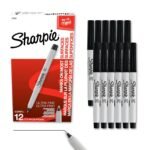
Sharpie fine tip vs ultra fine tip is a control question. The Fine Tip makes a noticeably thicker line, so a signature on an 8×10 comes out bold and readable from across a room. The Ultra Fine Tip behaves more like a pen, which matters when you’re signing over a busy part of the image or trying to fit your name between printed text. The trade-off is that the Ultra Fine’s smaller nib can feel scratchy if you press hard, and you’ll replace it sooner. For most everyday marking, the Fine Tip is the better balance. For tiny, careful work, the Ultra Fine is worth the extra cost.
Sharpie Fine Tip Markers vs Staedtler Lumocolor
Bringing Staedtler Lumocolor into the comparison shows what the Sharpie gives up. Lumocolor permanent pens have a metal tip that stays precise longer, and the low-odor ink is friendlier in a studio. They cost more per pen, and you often have to order them online. If you’re marking metal panels or drafting on film, the Lumocolor is a genuinely better tool. If you just want a marker that works without a special order, the Sharpie is the one you’ll grab.
Are Sharpie permanent markers worth it? For most people, yes, especially if you’re looking for the best permanent markers for autographs. The Fine Tip hits the sweet spot: it dries fast, stays readable on glossy photo paper, and a 5-pack costs $4.87. Buy these for signing photos, labeling boxes, and marking stuff around the house. If your signings involve extra-fine details, pay the small premium for the Sharpie Ultra Fine Tip instead. If you mainly mark rough cardboard and don’t mind a stronger smell, get the Bic Mark-It and save some money. For drafting film or metal fabrication, the Staedtler Lumocolor is the better choice.
Ready to decide on the Sharpie Fine Tip Markers?
See today’s price, stock and delivery options on Amazon.