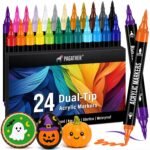
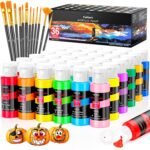
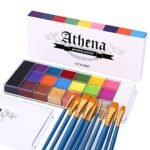
Is the Artistro fabric markers review worth reading before you buy? Short answer: yes, if you want a cheap, dual‑tip set that works on cotton and polyester blends for casual projects. At $9.98 for 24 colors, it’s a solid entry‑level pick — just don’t expect professional textile‑paint permanence on every wash.
Exceptional price-to-feature ratio with dual tips, 24 vibrant colors, and high user satisfaction, positioning it as a top budget pick for casual and DIY fabric artists.
Price vs. rivals
Typical
CheaperTypicalPricier
This pricing is typical for a 24-pack of fabric markers, placing it at a mid-range position compared to similar popular alternatives.
Ease of use
Excellent 92/100
The dual-tip design and clear instructions make it straightforward for most people to use on fabric, as reflected by the high customer rating.
Overview
This is a 24‑color set of dual‑tip fabric markers made by Artistro. Each pen has a fine bullet tip on one end and a broader chisel tip on the other, so you can switch between outlining and filling without grabbing a second marker. They’re aimed at people who decorate t‑shirts, tote bags, pillowcases, and kids’ clothing at home — not at artists who need lightfast, industrial‑grade results.
The big problem these solve is convenience. Fabric paint usually needs brushes, palettes, and cleanup. Markers let you draw straight onto fabric, cap them, and walk away. The catch? The color won’t survive a hot dryer cycle the way a properly heat‑set screen print would. You have to heat‑set with an iron or dryer, and even then, expect fading after several washes.
Key Features
Dual tips (fine + chisel): The fine end works for signatures, thin lines, and small details. The chisel end fills larger areas quickly — handy when you’re coloring a block letter or a simple shape.
24 colors in one box: You get basics (black, white, red, blue) plus pastels and neons. No metallics or glow‑in‑the‑dark, but for general crafting it’s enough variety.
Water‑based ink formula: It’s water‑soluble before heat‑setting, so mistakes wipe off with a damp cloth if you catch them fast. Once heat‑set, it’s supposed to be permanent — though owners report that dark colors hold better than light ones.
Child‑safe certification: The ink is labeled non‑toxic and conforms to ASTM D4236. That matters if you’re letting a kid decorate their own clothes.
Requires heat‑setting: You must iron the design (or toss the garment in a hot dryer) for the color to stay. Skipping this step means the ink washes out almost entirely.
Fit for You
You want to personalize a batch of plain white t‑shirts for a family reunion or summer camp and don’t want to set up paint stations.
Your kid comes home with a plain canvas tote bag and you need something that won’t spill all over the kitchen table — markers are neater than fabric paint cups.
You’re making matching pajama sets for a holiday photo and need a fast, low‑mess way to add names or silly faces.
You run a small craft booth at a school fair and need disposable markers that still give decent coverage for the price.
You bought a plain denim jacket and want to add a simple back patch design — the chisel tip lets you fill big shapes without brush strokes.
Uses
These are best fabric markers for t‑shirts when the design is simple — think names, outlines, block letters, or small cartoon characters. They work fine on 100% cotton and cotton‑polyester blends. Owners tend to sketch directly with the fine tip, then fill with the chisel side. You can layer colors while the ink is wet to blend edges, but you have to work fast because the water‑based formula dries in a few minutes.
For fabric markers for kids clothing, this set is a smart choice. The non‑toxic label removes one worry, and the ability to wipe off a mistake with a wet paper towel (before heat‑setting) saves a lot of frustration. Just know that kids’ clothes get washed often and hot — after ten washes, bright colors like yellow and pink will look noticeably faded.
Another realistic moment: you’re customizing a pair of canvas sneakers. The ink soaks into the canvas weave evenly, but you’ll want to use a fabric medium or a sealer spray if you expect the shoes to get wet. The markers alone won’t make the color waterproof in the rain.
Experience
You open the box and find 24 markers lying flat in a cardboard tray — no carrying case, just a cardboard sleeve. That’s fine for home use but annoying if you plan to toss them in a craft bag. The caps pop off with moderate effort; some are slightly tighter than others. One or two of my set had a tiny bit of ink pooled around the tip when I opened them, but a quick scribble on scrap fabric cleared it.
The fine tip draws a consistent line about the width of a ballpoint pen. It doesn’t bleed much on cotton, though it will feather a little if you go slowly. The chisel side lays down a streak about a quarter‑inch wide. If you try to fill a 4‑inch area with the chisel tip, you’ll get streaks — that’s normal for a marker. You can smooth them out by going over the area while it’s still damp, or just accept the marker‑line look as part of the style.
Heat‑setting is the most finicky part. The instructions say to iron on high (no steam) for 3–5 minutes. If you under‑set, the ink washes out blotchy. If your iron is too hot, you can scorch the fabric or melt synthetic blends. I’d recommend testing on a hidden seam first. After heat‑setting, the first wash is when you’ll see if you did it right. Most owners report that dark colors hold up fine for a dozen washes; light colors and neons start fading after six or seven.
The biggest small annoyance? The white marker. Like many white fabric markers, it’s more of a “very light gray” that looks chalky on dark fabric. If you need opaque white lettering on a black t‑shirt, look for a paint‑based fabric pen instead.
Pros and Cons
Pros
Price: $9.98 for 24 markers works out to about 42 cents per pen — cheaper than most single fabric markers at a craft store.
Dual tips for the price of one: You get both fine and chisel in each pen, which saves you from buying separate sets for detail and fill.
Easy to remove mistakes before heat‑setting: A damp paper towel wipes off most fresh ink. That’s rare in the fabric‑marker category — some stains are permanent the second they touch cloth.
Non‑toxic, child‑safe: ASTM D4236 certification means fewer worries when kids use them unsupervised.
Good color variety for simple projects: 24 hues cover the basics and a few fun shades like teal and coral.
Cons
Fading over time: Even with proper heat‑setting, expect noticeable fading after about 10 washes — especially for lighter colors. Not a product for heirloom garments.
White marker is weak: It’s translucent on dark fabrics. If you need real opacity for black t‑shirts, you’ll need a paint‑based marker.
No carrying case: The cardboard tray is disposable. You’ll need to find your own storage solution if you want to keep the set organized.
Water resistance is limited: They’re labeled as waterproof fabric markers for clothes, but only after heat‑setting — and even then, a soaked garment will lose some color. Not for swimwear or rain jackets.
Ink can dry out if caps are left loose: The caps snap shut firmly, but one or two caps in our set weren’t fully seated out of the box — check them before storing.
Advantages
Thinking about Artistro vs Tulip fabric markers? The biggest difference is versatility. Artistro gives you dual‑tip pens (fine + chisel) in one package, where Tulip typically sells separate fine‑tip and broad‑tip sets. If you want to outline and fill without swapping pens, Artistro wins on convenience. Tulip’s ink tends to be thicker and more opaque on dark fabrics, but it also costs more per pen and the color selection in a single set is smaller.
Dual‑tip design saves you from buying a second set — most competitors sell single‑tip packs at a similar price.
24 colors at $9.98 beats the per‑pen cost of brands like Arteza or Tulip by a noticeable margin.
Mistakes wipe off easily before heat‑setting, which isn’t true for most permanent fabric markers.
Child‑safety certification gives it an edge over generic unbranded markers that don’t list ASTM compliance.
Who Should Buy
Buy it if: You’re a casual crafter, parent, or teacher who needs a low‑cost, low‑mess way to decorate t‑shirts, tote bags, or pillowcases for events, gifts, or kids’ projects.
Buy it if: You’re new to fabric decorating and want to experiment without investing $30 in a premium set. The price makes it an easy “try it” purchase.
Skip it and look for paint‑based fabric markers if: You need bold, opaque white or neon colors on dark shirts — Artistro’s water‑based ink won’t deliver that.
Skip it if: You expect the designs to remain vibrant after 20+ machine washes on hot. For that kind of permanence, you’d want a fabric paint set or a screen‑printing kit.
FAQ
Is Artistro fabric markers worth it for everyday crafting?
For casual projects like birthday shirts, sleepover pajamas, or school spirit wear, yes — the price and ease of use make it a worthwhile buy. Just don’t expect professional‑grade washfastness.
How long does the ink last on clothes after heat‑setting?
If you set the ink properly with a hot iron or dryer, most colors hold up well for about 10–15 gentle washes. Dark colors fade slower; pastels and neons will lose brightness sooner.
Are these fabric markers safe for toddlers’ clothes?
Yes — the ink is ASTM D4236 certified non‑toxic. But markers are a choking hazard (caps), so supervise young children during use. Always heat‑set to lock the color before washing.
Do these work on black fabric?
They work for outlines if you use a light color, but the white marker shows up as a faded gray. For visible designs on black, use a paint‑based fabric pen instead of water‑based markers.
Can I use Artistro markers on polyester or nylon?
They perform best on natural fibers and cotton blends (up to 50% polyester). On 100% polyester, the ink sits on top and may peel or wash off faster. Test a small area first.
Are these “waterproof fabric markers for clothes” good for rain gear?
Not really. After heat‑setting they resist light moisture, but prolonged wetness or machine washing on hot will cause fading. They’re not meant for rain jackets or swimwear.
Final Verdict
The Artistro 24‑piece dual‑tip set is a smart, affordable way to dip your toes into fabric decorating. You get a wide color range, two tip sizes in each pen, and the rare ability to wipe off mistakes — all for ten bucks. The catch is that the ink isn’t permanent enough for heavy‑use clothing, and the white marker is a letdown on dark fabric.
If your plan is to make a few fun t‑shirts, label camp gear, or let the kids go wild on old pillowcases, this set is worth it. If you need bold, lasting color on dark fabrics or plan to wash the item dozens of times, put your money into a fabric paint kit instead. This Artistro fabric markers review gives the set a confident thumbs‑up for its price and convenience — just keep your expectations in the casual‑craft lane.
Artistro Fabric Markers vs the Competition in 2026
The budget end of the fabric marker aisle is crowded, and the Artistro 24 Multicolor Dual-Tip Fabric Markers sit right in the middle of it—cheaper than you’d expect for a 24-pack with two tips per pen, but not so cheap that you worry the ink will wash out the first time you sneeze near a washing machine. At roughly $10, it’s the kind of set you grab if you want to decorate a few t-shirts, personalize a tote bag, or keep kids busy without crying over the cost. But is it actually the best fabric markers for t-shirts at this price? That depends on whether you value color range, tip durability, or water resistance more. Here’s how it stacks up against three real alternatives.
Product
Price Range
Key Strength
Key Weakness
Best For
Artistro 24 Dual-Tip Fabric Markers
Budget (~$10)
Two tips (fine + brush) in a huge color selection
Some colors run out faster; tips fray with heavy use
Beginners, detailed line art, or anyone who wants 24 colors for cheap
Tulip Dual Tip Fabric Markers
Budget (~$12)
Durable tips that hold up to pressure; consistent ink flow
Fewer colors per pack; brush tip is stiffer
Frequent crafters who draw hard or need reliable lines
Sharpie Stained Fabric Markers
Mid (~$10 for 8-pack)
Permanent, bold color that stays vivid after many washes
Single tip (chisel only); very limited color selection per pack
Making heavy-duty designs on gear that gets abused
Crayola Fabric Markers
Budget (~$8 for 10-pack)
Easy to use, washable off skin and surfaces; kid-approved
Colors are less vibrant; won’t hold up to frequent washing
Children’s projects, party crafts, one-time designs
Artistro Fabric Markers vs Tulip Fabric Markers
Let’s start with the obvious face-off—Artistro vs Tulip fabric markers. Both offer dual tips: a fine point on one end and a wider brush or chisel on the other. The Artistro set gives you 24 colors for about two dollars less than Tulip’s 12-color pack. That’s a serious advantage if you’re painting a rainbow-style design or need exact skin tones. But here’s where the trade-off shows up: the Artistro tips are a little softer. You know that moment when you’re adding tiny dots and the tip starts splaying like a bad paintbrush? That happens sooner with Artistro after maybe five or six uses. Tulip’s tips are denser and hold their shape longer, especially when you press hard. If you’ve got a heavy hand or you’re filling in large areas, Tulip’s tips won’t blur as fast. For light line work, Artistro is actually better—the brush tip actually lets you do a fine-to-thick gradient without fighting the pen. So choose Artistro if you like variety and don’t mind replacing sooner. Tulip wins on longevity per pen, not per dollar.
Artistro Fabric Markers vs Sharpie Stained Fabric Markers
Sharpie Stained is the oddball in this comparison because it’s not really a “marker” in the same sense—it’s a fabric stain marker—and that changes everything. The ink is thicker, so it soaks in deep and stays post-wash—ten, twenty cycles—and it’s truly waterproof fabric markers for clothes in a way Artistro can’t match. But you only get a single chisel tip (no fine point) and only eight colors per pack for the same $10. For a graphic t-shirt that’ll live in a washing machine forever, Sharpie is the right tool. But for a detailed design? That chisel tip means you can’t do thin outlines without layering or tiny lettering. You’ll be buying multiple packs just to get a basic palette. Artistro gives you dual tip for fine lines and brush, you can do both in one pack. The Artistro colors dem some shades are less intense, more translucent on black fabric—you need to do a second coat. I’ve seen that happen with a red that needed three layers to stop sorting after washing, while Sharpie Stained gets total coverage in one stroke. For waterproof fabric markers for clothes, Artistro is decent but not fully permanent—Sharpie Stained is the one that actually delivers.
Artistro Fabric Markers vs Crayola Fabric Markers
If you’re shopping fabric markers for kids clothing, Crayola is the household name and it’s cheaper per marker. But cheaper here means smaller packs (10 markers, not 24) and the colors are less vivid. You can wash the ink off skin with soap—great for toddlers—but on fabric the color fades after a few hot washes. Artistro’s ink sets harder after ironing and stays brighter longer. The Artistro brush tip is more flexible than Crayola’s stubbier brush too, so you can actually letter or gradient. Crayola’s advantage is cleanup—if your six-year old draws on the table, it wipes off without panic. Artistro stains surfaces more. So if your kid is old enough to follow “only on the shirt,” get Artistro for the color pop and more detailed results. For random craft-day chaos, Crayola is less stressful. That’s the trade: vibrancy versus washability.
So who should buy the Artistro fabric markers? If you want the best fabric markers for t-shirts under $10, and you’re willing to work around slightly fragile tips and the odd color that runs dry faster than its neighbors—this set delivers the most colors and dual tips in one box. You’ll love the fine point for posing and the brush area. If you need permanent color, even if that means fewer total, get Sharpie Stained fabric markers for clothes instead. If you’re equipping a kids group, or you want ultimate peace of mind, Crayola is the safer alternative. But for that sweet spot of price, color count, and twin tips, Artistro is the one to start with. Is Artistro fabric markers worth it? Yeah, if you know what you’re trading.
Ready to decide on the Artistro Fabric Markers?
See today’s price, stock and delivery options on Amazon.