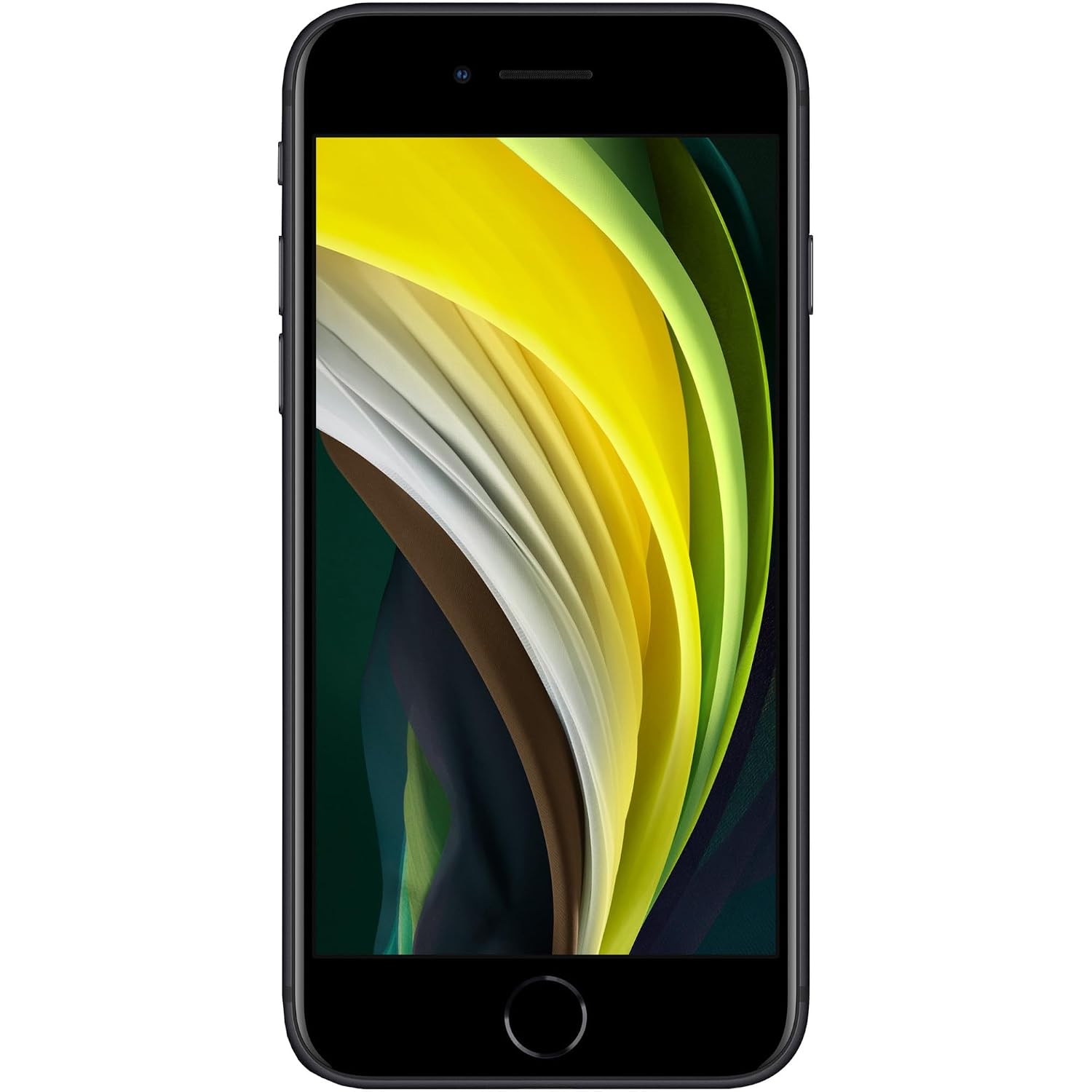
At this price point, the iPhone SE 2 delivers solid Apple performance and ecosystem access, offering exceptional value for budget-conscious buyers.
Price vs. rivals
Cheaper
CheaperTypicalPricier
This renewed iPhone SE 2nd Gen is priced well below most current-generation iPhone alternatives, reflecting its older model status and renewed condition, making it a very budget-friendly option.
Ease of use
Excellent 90/100
The iPhone SE 2nd Generation is easy to use due to its familiar iOS interface, compact size, and reliable performance, though it lacks some modern features like Face ID.
Overview
The Apple iPhone SE 2 review you’re about to read is straightforward: for around $100 renewed, this is a compact phone with the same main processor as the iPhone 11, stuck inside a body that looks like an iPhone 8. It solves the problem of wanting a fast, modern iPhone without paying flagship prices, and it’s really for people who miss smaller screens, physical home buttons, and don’t need three cameras.
The catch is the battery isn’t great, the screen is small by today’s standards, and it’s an older design. But if those trade‑offs sound fine, this phone might surprise you.
Key Features
A13 Bionic chip – Same processor as the iPhone 11. That means apps open fast, games run smoothly, and iOS updates will keep coming for a few more years. You won’t feel lag doing everyday stuff.
4.7‑inch Retina HD display – Small and sharp enough for reading texts, maps, and web pages. It’s not OLED so blacks aren’t perfect, but it’s clear outdoors and uses less battery than a bigger screen.
Single 12MP camera with portrait mode – The camera is the same sensor as the iPhone 8, but the A13 chip adds software tricks like Portrait Lighting and Smart HDR. Photos in good light look great. Low light is merely okay.
Touch ID home button – Works in masks, gloves, and wet conditions. You press it to go home and rest your finger to unlock. No fumbling with Face ID.
IP67 water resistance – Survives a splash, a quick rain shower, or a drop in the sink. Not meant for swimming, but nice peace of mind.
Wireless charging – Works with any Qi charger. Plop it on a pad at night and you’re done fiddling with cables.
Fit for You
You prefer one‑handed phone use and your current phone feels like a tablet.
You need a reliable daily driver for calls, texts, and a few apps—and you don’t care about bezels or notches.
You want to hand a phone to a parent or grandparent who hates learning new gestures. The home button and simple iOS setup make this the best budget phone for seniors.
You’re looking for a second phone for a work line or travel, and you don’t want to spend more than the price of a nice dinner out.
You have an old iPhone 6 or 7 that’s slowing down and won’t get the next iOS. The SE 2 feels like a straight upgrade without changing how you hold or use it.
Uses
You’re on a train, one hand holding the pole, the other thumbing through emails. The SE 2 fits in your palm without your thumb straining to reach the top of the screen. That’s its superpower—it’s small enough to use anywhere without a case pop‑socket.
Taking a quick photo of your dinner or your dog? Open the camera by swiping left on the lock screen—that same old gesture. The photo looks clean, colors are natural, and portrait mode on people (not pets, really) creates a decent fake background blur. You’re not going to shoot a wedding with it, but for Instagram it’s fine.
Running low on battery at 4 p.m.? This is where it hurts. Owners tend to mention that with moderate use—a mix of streaming music, navigation, and social apps—you’ll be hunting for a charger before dinner. Light users get through the day, but if you’re on YouTube for an hour, that drain is real.
Experience
Setting up a renewed SE 2 is like unwrapping a time capsule. You slide the SIM tray, hold the power button, and follow the same iOS setup process on a 4.7‑inch screen you remember from 2017. Everything feels snappy because of that A13 chip—no waiting for apps to load, no stutter in the keyboard.
Day to day, the small annoyances are: the battery. You’ll likely pack a charger for a full day out. The LCD screen is fine indoors but struggles in direct sunlight—you’ll need to shade it to read texts. And that single speaker at the bottom is loud enough for podcasts but tinny for music. The home button, though… it’s so satisfying to press. No swiping up, no accidental gesture fails. It just works.
Cleaning is easy—wipe the glass front and back with a microfilter cloth. The renewed models generally come in good cosmetic shape, but expect some micro‑scratches on the screen if you buy from a third‑party seller. That’s the trade‑off for $107.
Pros and Cons
Pros
Insane performance for the price – The A13 chip makes it feel like a phone that costs four times as much. No lag, no stutter.
Compact and light – 148 grams and a 4.7‑inch screen. You can use it one‑handed, put it in a small pocket, and not even feel it.
Long software support – Apple updates phones for at least five years. The SE 2 will likely get iOS 18, maybe 19. That’s rare at this price.
Touch ID still works great – In a world of face unlocking that fails with sunglasses or masks, this is refreshingly reliable.
Wireless charging – A feature you’d normally only see on more expensive phones. Works with any standard Qi pad.
Cons
Battery life is mediocre – Expect to charge it before dinner if you use it moderately. Heavy users will need a top‑up mid‑afternoon.
Single camera limits low‑light shots – Night mode is missing. Indoor photos in dim light turn out grainy and soft.
Small screen for media – Watching a movie or reading a PDF feels cramped. You’ll zoom and scroll a lot.
Outdated design – Thick bezels, no notch, and a home button that takes up space. It looks like a 2017 phone because it is one.
No headphone jack – You’ll need Lightning‑connected ear buds or a dongle. Another dongle to lose.
Advantages
In the iPhone SE 2 vs iPhone 8 comparison, the SE 2 is basically an iPhone 8 with a faster processor and better camera processing. Same size, same weight, same screen. The SE 2 runs circles around the 8 in speed, gets more years of iOS updates, and adds portrait mode. If you’re choosing between a used iPhone 8 for $70 and a renewed SE 2 for $107, the SE 2 is worth the extra $30 because you’ll get at least two more years of software.
Performance – The A13 chip beats every Android at this price point easily.
Software updates – You’ll get new iOS versions years after most budget Android phones stop.
Resale value – iPhones hold value much better than Android alternatives. Sell it in two years and you’ll get maybe half back.
Who Should Buy
Buy it if: you’re on a tight budget, want a fast phone for everyday tasks, and value a small size. Also perfect as a first phone for a kid or a simple phone for a senior who doesn’t want face ID.
Skip it if: you watch a lot of video, need all‑day battery life, or want to take night photos. Instead, consider an iPhone 11 (bigger screen, better battery, ultra‑wide camera) for around $200 used.
Also skip it if: you’re used to a large screen and hate bezels. Look at an iPhone XR or 11 for similar money with a bigger display.
FAQ
Is the Apple iPhone SE 2 worth it?
Yes, for anyone who prioritizes speed and size over screen real estate and battery life. At $107 renewed, it’s the cheapest way to get modern iOS performance in a palm‑friendly package.
How long does the battery last?
With light use (calls, texts, some web), you’ll get through a full day. Moderate use (music streaming, maps, social media) will likely need a charge around 5‑6 p.m. Heavy use (video, gaming) might require a mid‑afternoon top‑up.
Is the iPhone SE 2 camera quality good?
The iPhone SE 2 camera quality is solid in good light—sharp, natural colors, decent portrait mode. In low light it falls behind modern phones because it lacks night mode. It’s comparable to an iPhone 8 but with software improvements.
Does the iPhone SE 2 have 5G?
No. This phone only supports 4G LTE. If you need 5G, look at the iPhone SE 3 (same design, faster chip, 5G) or a newer model.
Is it safe for seniors to use?
Yes. The home button, larger‑than‑modern text options, and simple iOS gestures make it the best budget phone for seniors. Set up magnifier and larger font in accessibility, and they’re set.
Can the iPhone SE 2 run the latest apps and games?
Absolutely. The A13 chip handles all current apps, including demanding games like Genshin Impact, though graphics may run at medium settings. It’s far more powerful than any new Android phone at this price.
Final Verdict
The Apple iPhone SE 2 is a contradiction: a phone that feels old in the hand but runs as quickly as a modern flagship. If you can tolerate the battery anxiety and the small screen, you get a device that will stay fast and updated for years for just over a hundred dollars. That’s a rare deal.
One thing to keep in mind: buy a renewed model from a seller with a good rating and a return policy. At this price, a scratch or a slightly reduced battery is a gamble worth taking—but you want the option to send it back if it’s not as described.
The Apple iPhone SE 2—that 2020 throwback with a Home button and a top-tier A13 chip—sits in a weird spot today. At roughly $107 for a renewed unit, it undercuts almost everything with an Apple logo, but it’s also a 6-year-old design. The battery is small. The screen is 4.7 inches. If you want Face ID, a bigger display, or Android’s flexibility, you’ll look elsewhere. This comparison lines up the real choices: older iPhones that cost similar, newer iPhones that cost more, and two Android phones that offer different trade-offs. You’ll see exactly where the SE 2 wins and where it gets outclassed.
Product
Price Range
Key Strength
Key Weakness
Best For
Apple iPhone SE 2 (Renewed)
~$100–$130
Fastest processor under $150; familiar Home button; iOS updates still coming
Tiny 4.7″ LCD; abysmal battery life; single camera lacks night mode
Seniors wanting one-handed use; budget iOS fans who don’t game or watch video
Apple iPhone 8 (Renewed)
~$80–$110
Cheapest Home-button iPhone; wireless charging; same look as SE 2
A11 chip is slower, misses latest iOS features; camera worse in low light; no Portrait mode on front
Extreme budget iOS users who only call and text
iPhone SE 3 (Renewed)
~$150–$180
Same design but A15 chip and 5G; slightly better battery than SE 2
Still a 4.7″ LCD; front camera is the same 7MP sensor
Someone who needs 5G and a bit more speed but hates big phones
Google Pxel 6a (Renewed)
~$130–$160
Excellent camaera for the price; 6.1″ OLED; all-day battery; three years of OS updates left
Slower Tensor chip than A13 in raw CPU; no headphone jack; plastic back
Photo lovers on a budget; people who want a modern Android experience
Samsung Galaxy A14 5G (New)
~$150–$200
Larg 6.6″ 90Hz display; expandable storage; 5,000 mAh battery; new warranty
Mediocore MediaTek processor lags in multitasking; camera is fine but not great
Heavy video watching, long battery life needed; budget Android users who want a big screen
Apple iPhone SE 2 vs iPhone 8 — The Sibling Rivalry
The iPhone 8 and SE 2 share the same body, same 4.7-inch screen, same Touch ID. But the SE 2’s A13 chip blows the 8’s A11 out of the water. Open a heavy app like YouTube or load a webpage with images—the 8 stutters; the SE 2 doesn’t. The SE 2 also gets iOS 17 and 18; the 8 is stuck on iOS 16, missing features like Lock Screen widgets and livesticker. That means apps will drop support for the 8 sooner. On the other hand, the 8 has wireless charging out of the box (the SE 2 does too, but some people forget). And if you truly only make calls and send texts, the iPhone 8 is $20 cheaper and still works fine. But for anyone who uses a phone for more than a dumbphone, the SE 2 is the real pick.
Apple iPhne SE 2 vs Google Pixel 6a — iOS vs Android, Compact vs Compact-ish
The Pixel 6a is the closest Android rival in size and price. It’s 6.1 inches versus 4.7—still one-handed usable, but not tiny. The SE 2 wins on raw speed and app loading; that A13 is a rocket even in 2026. But the Pixel’s camera? No contest. The SE 2’s single 12MP sensor is fine in bright sun, but inside a dimly lit kitchen the shots turn grainy and flat. The Pixel 6a’s main sensor with Google’s computational magic pulls detail out of shadows and handles portraits naturally. Also, the SE 2’s battery struggles to get through a full day with moderate use—you’ll be hunting for a charger by 6 PM. The Pixel 6a easily lasts a day and a half. So if selfies, nighttime photos, and battery life matter, the Pixel 6a is the better $130–$160 spend. If you’re locked into iMessage, FaceTime, or have an Apple Watch, the SE 2 is the only sensible choice.
Apple iPhone SE 2 vs Samsung Galaxy A14 5G — Worlds Apart in Size and Battery
The Samsung Galaxy A14 5G is a completely different philosophy: a huge 6.6-inch screen, a 5,000 mAh battery that lasts two days, and a headphone jack. The SE 2’s screen is so small that watching a whole YouTube video on it is a cramped, eye-straining experience. The A14 doesn’t have the crispest display (it’s 1080p, but a 90Hz refresh makes scrolling feel smooth), and the processor is noticeably slower—scrolling through Instagram or switching apps feels laggy. But the trade-off is battery stamina: you can leave the house at 8 AM, stream music all day, and still have 40% left at night. The SE 2 would be dead by lunch. The A14’s camera is mediocre; the selfie camera in low light produces mushy skin tones. If your priority is media consumption, battery, or having a big screen for aging eyes, the A14 is the better deal at around $150 new (with warranty vs a renewed SE 2). If you want a pocketable phone that just works without lag, the SE 2 wins on speed and iOS polish.
If you’re a senior who just wants a simple phone that fits in a small hand, the Apple iPhone SE 2 is the one. The tactile Home button makes you feel at home, voiceover works well, and the processor keeps the phone snappy for years. For someone who texts, calls, and uses a few apps, it’s a fine little machine at $107. But if you take photos often, need all-day battery, or want a bigger display for reading recipes or watching grandkids’ videos, skip the SE 2 and get the Google Pixel 6a for about the same money—or even the iPhone SE 3 if you absolutely need 5G and iOS. The SE 2 is still worth buying, but only if its two-inch-up trade-offs fit your actual life.
Ready to decide on the Apple iPhone SE 2?
See today’s price, stock and delivery options on Amazon.