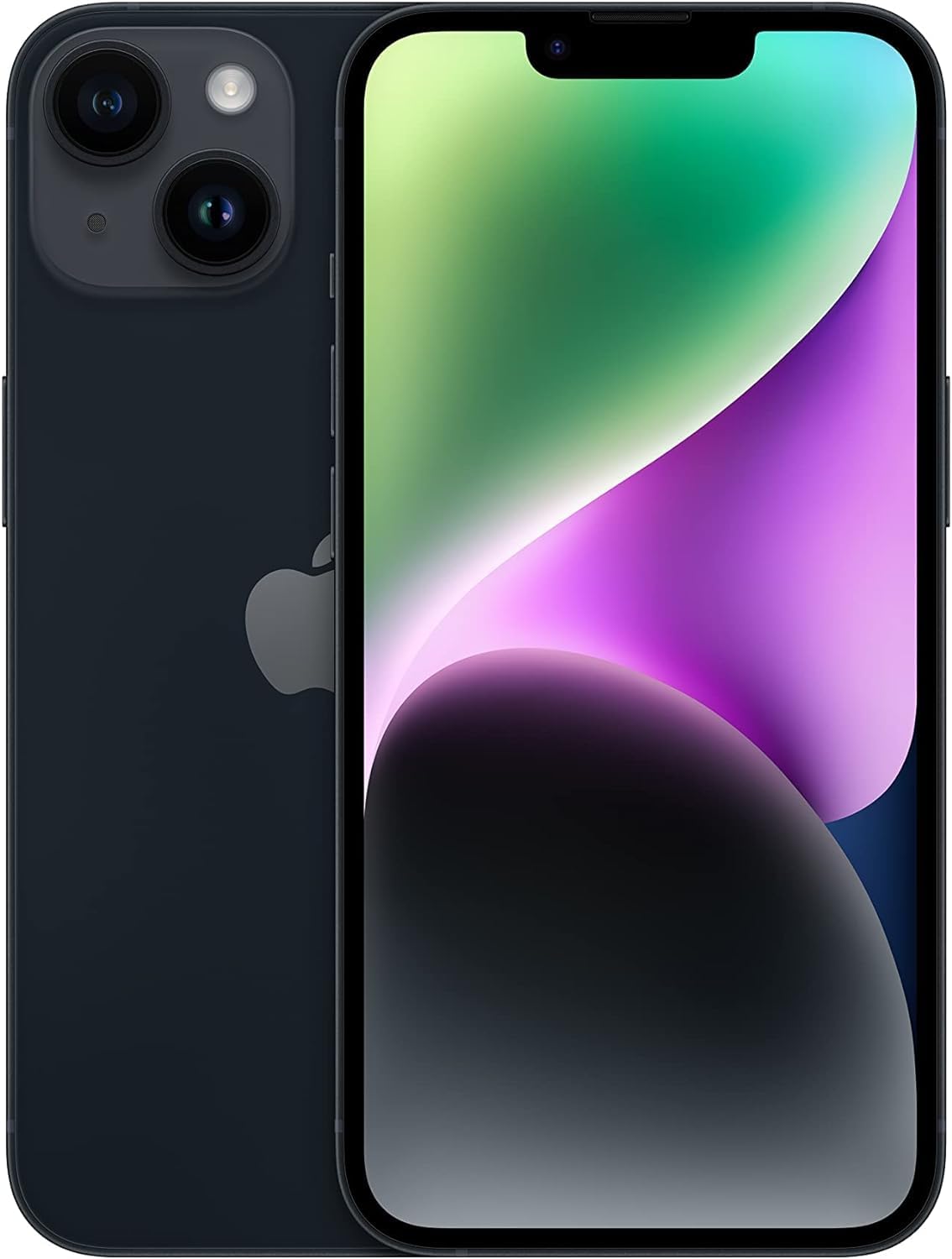
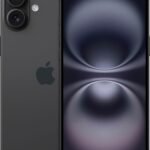
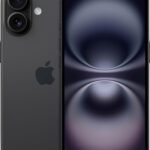
This Apple iPhone 14 review gets straight to the point: for someone who wants a new-looking phone without paying new prices, this renewed model at $309.99 is a genuinely smart buy. The question “is iPhone 14 worth it” comes down to this: you get a fast, reliable phone that handles everything the average person needs, and the only reason to spend more is if you absolutely need the newest camera tricks or a 48-megapixel sensor from the Pro line.
Offers strong value as a renewed flagship iPhone at a price well below typical market rates for this model.
Price vs. rivals
Cheaper
CheaperTypicalPricier
Priced below typical renewed iPhone 14 models, offering a noticeable discount relative to most similar-condition listings, but not at the extreme low end.
Ease of use
Excellent 90/100
The iPhone 14's intuitive iOS and familiar design make it very easy for average users, though being renewed may introduce minor variability.
Overview
The iPhone 14 is the standard-bearer of Apple’s 2022 lineup. It takes the familiar flat-edged design from the iPhone 12 and 13 and refines it, adding better thermal management and a slightly improved internal layout. For most people, this is the phone that does everything well without making you pay for features you’ll never use.
It solves a simple problem: you want a phone that gets fast updates, takes good photos in everyday situations, and won’t slow down after a year. It’s really for anyone who values reliability over novelty. The renewed 128GB model hits a sweet spot where you get a near-new phone for about half the original price.
Key Features
A15 Bionic chip with a 5-core GPU – This is basically the same brain found in the iPhone 13 Pro. It chews through demanding apps and games without breaking a sweat, and it’ll stay snappy for years of iOS updates.
6.1-inch Super Retina XDR display – Bright enough to read in direct sunlight, colorful for watching videos, and with true blacks that make OLED worth having. It’s not 120Hz, but most people won’t miss it unless they’ve been spoiled by a Pro model.
Advanced dual-camera system with Photonic Engine – Low-light photos look noticeably better than the iPhone 13’s, especially in dim restaurants or evening walks. The front camera also gets autofocus, so your selfies aren’t soft blurs.
Ceramic Shield front cover – This isn’t marketing fluff. You’ll still want a screen protector, but drops on concrete that would shatter older phones often leave this one with just a scratch.
Crash Detection and Emergency SOS via satellite – Hopefully you never need it, but it’s there. The satellite feature works when you’re off the grid, which is more useful for hikers than city commuters.
Unlocked iPhone 14 features – Buy it once and switch carriers whenever you want. No bloatware, no carrier locks, no hassle. Pop in any compatible SIM and you’re set.
Fit for You
You’ve been holding onto an iPhone X or XR and finally feel the battery draining before lunch.
You’re a student on a tight budget who needs a phone that lasts through classes, study sessions, and the occasional late-night scrolling without looking outdated.
You want a used phone but hate the gamble of unknown battery health and scratched screens that come with private sellers.
You’re switching to an unlocked carrier plan and want a phone that doesn’t tie you to one company for two years.
You take a lot of photos of moving subjects, like kids or pets, and need a camera that catches them without the blur.
You want the Apple ecosystem benefits—iMessage, AirDrop, seamless AirPods pairing—without paying flagship prices.
Uses
Picture this: you’re at a dimly lit dinner with friends. The iPhone 14 quietly takes a shot that captures the mood without blowing out the faces or turning the background into a noisy mess. That’s the Photonic Engine doing its thing, and it’s a real upgrade over the iPhone 13.
During a long day on campus, the battery comfortably lasts from an 8 AM lecture through afternoon study sessions and a quick YouTube break before dinner. You won’t be hunting for an outlet until well into the evening.
If you travel, the unlocked nature means you can grab a local SIM at the airport and avoid roaming fees. And if you ever get stuck somewhere without cell service, the satellite SOS feature could be the difference between a scary story and a real emergency.
Experience
Setting up a renewed iPhone 14 is straightforward. You power it on, bring your old phone nearby, and the migration tool moves everything over in about twenty minutes. The one annoyance: this model still uses a Lightning port, so you’ll need a separate cable if you’ve already switched to USB-C for other devices.
Day to day, it’s smooth. Apps open instantly, multitasking feels effortless, and iOS just works. The battery health on most renewed units sits around 85-95%, meaning you’ll still get a full day of moderate use. After a year, expect it to drop to needing a top-up by late evening.
Small annoyances: the notch is still there, and while you stop noticing it after a day, it’s bigger than what you’ll find on newer phones. The screen is 60Hz, so scrolling through long web pages has that slight stutter compared to the silky smooth Pro models. And the aluminum sides scratch more easily than the stainless steel on Pro phones, so a case is a good idea.
Cleaning is simple—a microfiber cloth deals with fingerprints on the glass back. Storage fills up faster than you’d think; 128GB is fine for average use, but if you shoot a lot of 4K video, you’ll be clearing space within months.
Pros and Cons
Pros
Excellent performance for the price – The A15 chip is still blazing fast in 2025 and will handle the next several iOS versions without a hitch.
Camera is genuinely good – It’s not a pro setup, but the main and ultrawide lenses handle everything from portraits to landscapes with consistent color and decent low-light ability.
Build quality that feels premium – The aluminum and glass construction has a solid, expensive feel that belies the lower price point.
Long software support – Apple typically delivers updates for 5-6 years after release, so this phone has a good run ahead of it.
Unlocked and flexible – No carrier restrictions means you can use it on T-Mobile, AT&T, Verizon, or any MVNO that supports it.
Cons
60Hz display feels dated – Once you’ve used a phone with 120Hz, scrolling on this one feels laggy. If you haven’t, you won’t mind, but it’s worth knowing.
Lightning port instead of USB-C – Apple has moved on, and you’ll need to carry a separate cable if you’ve already adopted USB-C for everything else.
No telephoto lens – Zooming past 2x gives you digital crop that looks soft. If you frequently take photos of distant subjects, consider a Pro model.
Renewed unit battery health is variable – You might get one at 95% or one at 85%. Check immediately and return if it drops below 80% within the return window.
Storage fills fast – 128GB disappears quickly with a few games, a music library, and regular photo taking. You’ll need iCloud or regular cleanup.
Advantages
Compared to a new iPhone 13, this renewed iPhone 14 offers the same performance with a better camera, a brighter screen, and crash detection for roughly the same cost. The Photonic Engine alone makes low-light shots noticeably cleaner. And since it’s renewed, you get a price that undercuts even discounted new units while still coming with a warranty from the seller.
Versus the iPhone 15, you save over $200 and lose only the Dynamic Island, USB-C, and a slightly better camera. For most people, that trade-off makes sense—especially if you have Apple’s MagSafe charger for Lightning at home.
If you’re comparing it to Android phones in the same price bracket, the iPhone 14 wins on software updates, app quality, and ecosystem integration. Android phones might offer higher refresh screens or more megapixels, but they rarely get updates beyond a couple of years.
Who Should Buy
Buy it if you’re a student who needs a reliable phone that’ll last through college without breaking the bank. This is genuinely the best budget smartphone for students right now because you get flagship performance at half the price of a new model.
Buy it if you’re switching from Android and want to try iOS without a huge commitment. The lower entry cost makes the risk minimal.
Skip it if you’re a mobile photographer who needs a dedicated telephoto lens or raw shooting capabilities. Look for a used iPhone 14 Pro or a later model.
Skip it if you absolutely need USB-C and the latest charging speed. The iPhone 15 is the better fit there.
FAQ
Is the iPhone 14 worth it in 2025?
Yes, especially at this renewed price. The performance and camera are still competitive with current mid-range phones, and you get many more years of software updates than a comparably priced Android.
What’s the real difference in the iPhone 14 vs iPhone 13?
It’s mostly the camera—the 14 has a slightly larger sensor and the Photonic Engine for better low-light shots. You also get Crash Detection and satellite SOS. Performance is nearly identical because both use the A15 chip.
How’s the battery life on this renewed model?
Expect a full day of moderate use—social media, messaging, photos, and some video. If you’re a heavy gamer or constantly on 5G, you might need a charge by dinner. Check the battery health percentage in settings when it arrives.
Is it safe to buy a refurbished iPhone 14?
Yes, provided you buy from a reputable seller with a good return policy. This renewed unit should have a new battery or one in good condition, be fully tested, and include a warranty. Return it fast if the battery health is under 80% or if there are visible scratches.
What’s a refurbished iPhone 14 128GB like for storage?
Sufficient for most people. You’ll fit hundreds of apps, thousands of photos, and a decent music library. If you shoot lots of 4K video or download many games, you’ll need to offload to iCloud within a few months.
Does the unlocked iPhone 14 work with all carriers?
It works with AT&T, T-Mobile, Verizon, and most MVNOs like Mint Mobile or Visible. It supports both physical SIM and eSIM. Just check that your specific carrier uses compatible bands—but in the US, that’s almost never an issue.
Final Verdict
The iPhone 14 renewed at this price is one of the most sensible phone purchases you can make right now. You get a phone that’s fast enough, takes great photos, and will stay updated for years—all while saving a significant amount over buying new. The only real caution is the 60Hz screen and Lightning port, but those are trade-offs, not dealbreakers.
If you want a phone that just works, costs less than the latest model, and doesn’t force you into carrier contracts, this is it. Grab it, check the battery the day it arrives, and enjoy having a flagship experience without the flagship price tag.
The iPhone 14 was never a dramatic leap forward. Four years later, sitting on the refurbished shelf at roughly $310, it’s a phone that makes sense only in the right context. You get a reliable camera, the A15 chip, and Apple’s ecosystem glue. You also get a 60Hz screen that mid-range Androids have moved past, a design that’s essentially three years old, and a Lightning port. This comparison stacks it against three real alternatives: the cheaper iPhone 13, the screen-focused Samsung Galaxy A54, and the camera-first Google Pixel 7a. Each one forces the iPhone 14 to defend its price.
Product
Price Range
Key Strength
Key Weakness
Best For
iPhone 14 (Renewed 128GB)
~$310
iOS polish, solid camera, 6GB RAM
60Hz screen, Lightning port, dated look
Budget-minded iPhone buyers who want longevity
iPhone 13
~$260
Near-identical experience for less cash
One fewer year of OS updates, 4GB RAM
Shoppers who want the cheapest capable iPhone
Samsung Galaxy A54
~$380
120Hz AMOLED, microSD slot, headphone jack
Slower chip, ads in system apps
Android users who want a modern, feature-rich screen
Google Pixel 7a
~$400
Best still camera under $450, clean Android
Smaller battery, slower charging
Photo enthusiasts on a tight budget
iPhone 14 vs iPhone 13: The Twenty-Dollar Question
The iPhone 13 and 14 share the same A15 chip. Same 60Hz display. Same general shape. So what did the 14 actually add? Crash detection, satellite SOS, a slightly better main sensor, and a jump from 4GB to 6GB of RAM. That extra RAM is the only upgrade you’ll feel daily. Apps reload less often. Safari tabs stay put. If you can find a clean iPhone 13 for around $260, the iPhone 14 at $310 isn’t offering much for that extra $50 — the camera is genuinely better in low light, sure, but the 13 still takes excellent photos. The real reason to pick the 14 over the 13 is longevity. That extra year of OS support matters if you plan to keep the phone for three or four years. If you upgrade every two years, save the cash and get the 13.
iPhone 14 vs Samsung Galaxy A54: Two Philosophies
This is ecosystem versus raw features. The Galaxy A54 costs a bit more new (around $380), but you get a 120Hz Super AMOLED screen that makes the iPhone 14’s 60Hz panel feel last-gen. Scrolling on the A54 is noticeably smoother. It also has a microSD slot for expandable storage and a headphone jack — two things Apple killed years ago. The A54 uses the Exynos 1380 chip, though, which trails the A15 in raw performance. Apps open slower. Games drop frames more often. And Samsung’s One UI serves you ads in the weather app and settings menu. That’s annoying. The iPhone 14 just works without that clutter. If you value a silky screen and expandable storage over raw speed and clean software, the A54 is the better pick. If you want a phone that stays fast for years without weird ads, stick with the iPhone 14.
iPhone 14 vs Google Pixel 7a: The Camera Fight
The Pixel 7a costs roughly $400, which puts it at a premium over the renewed iPhone 14. But the Pixel’s camera is genuinely the best you can get at this price. Google’s computational photography pulls details out of shadows that the iPhone 14 simply misses. Night shots are cleaner. Portrait mode has better edge detection. The Pixel also runs a clean version of Android with guaranteed updates direct from Google. The iPhone 14 fights back with video — it records better video than any Android in this price range. Smoother, more stable, more natural color. If you shoot a lot of clips, the iPhone wins easily. For still photos and AI features like real-time transcription, the Pixel 7a is the better camera phone. For video and overall polish, the iPhone 14 edges ahead. So is the iPhone 14 worth it in 2026? If you’re a student hunting for the best budget smartphone that will last through four years of college, yes — this renewed 128GB model hits a sweet spot of price and longevity. The iPhone 14’s unique features like satellite SOS and crash detection are nice bonuses you hope never to need. But if photography is your main hobby, get the Pixel 7a instead. If you just want a cheap iPhone, grab the 13. And if you want Android with a modern screen, the Galaxy A54 is waiting. This Apple iPhone 14 review section should help you see where the trade-offs actually land.
Ready to decide on the iPhone 14?
See today’s price, stock and delivery options on Amazon.