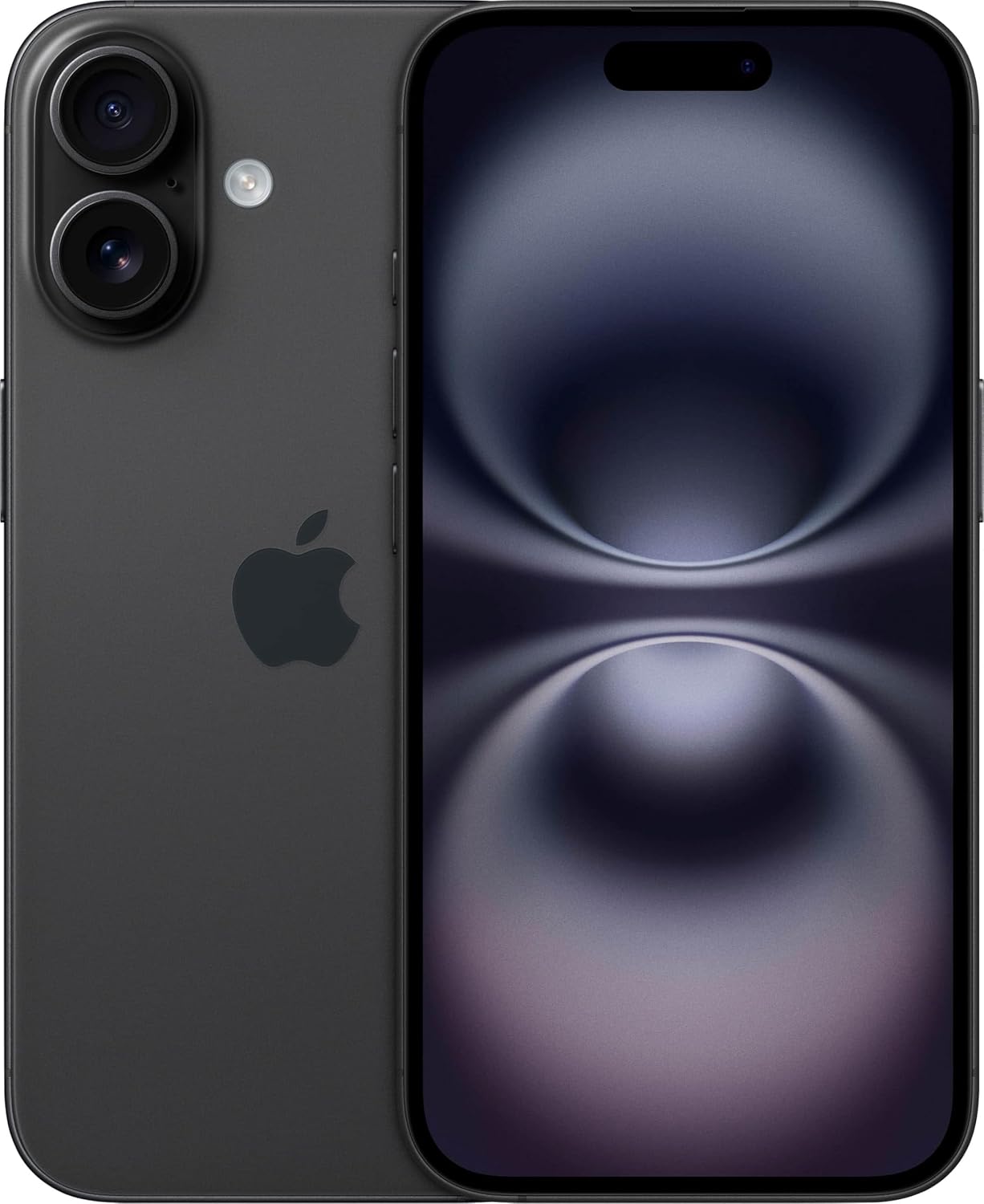
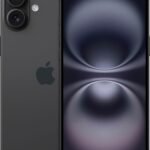
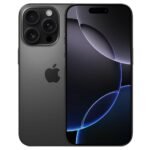
Delivers flagship-level performance and features at a significantly reduced cost in renewed condition, offering strong value despite potential cosmetic or battery trade-offs.
Price vs. rivals
Typical
CheaperTypicalPricier
Priced moderately high among renewed flagships, reflecting strong brand demand while undercutting new retail significantly.
Ease of use
Excellent 90/100
The iPhone 16 offers a highly intuitive and polished user experience, though the renewed condition may introduce minor variations in performance or battery life.
Is the iPhone 16 Worth It? (The Quick Answer)
This Apple iPhone 16 review cuts straight to it: if you want a fast, modern iPhone without paying $800+, this renewed model is an excellent deal at $577. You get the A18 chip, a solid 48MP camera, and USB-C charging. The trade-off? You’re buying renewed, not new, so expect minor cosmetic signs of use. For everyday reliability, it’s hard to beat at this price.
Overview
The iPhone 16 is Apple’s base-model phone for 2024. It replaces the iPhone 15 with a faster processor, a new camera button, and a slightly redesigned rear camera layout. If you’re tired of your phone stuttering during simple tasks or taking mediocre photos in low light, this solves both problems cleanly. It’s not a radical leap, but it’s a confident step forward.
This renewed version is really for anyone who wants the latest iOS features and solid performance but doesn’t care about an unblemished box or a factory-fresh sticker. You’re getting a phone that works like new, but it might have a micro-scratch or two. For most people, that’s a smart trade.
Key Features
A18 chip – This is the same core processor found in the Pro models. It handles heavy multitasking, photo editing, and even console-quality gaming without getting warm or slow.
48MP main camera with 2x telephoto – You get sharp, detailed photos in good light, and the 2x zoom is genuinely useful for portraits. It’s not a telephoto lens, but the crop is clean enough to fool most people.
USB-C port (not MagSafe) – Charge with the same cable as your iPad, MacBook, or Android friend’s phone. No more Lightning cable hunting.
Camera Control button – A new capacitive button on the side lets you launch the camera and adjust zoom or exposure with a half-press. It’s neat, but you’ll probably still use the screen most of the time.
Ceramic Shield front glass – The screen is tough. Dropping it onto pavement from a pocket is a risk, but this glass survives more than previous models.
128GB of storage – That’s enough for a couple thousand photos, a few games, and your essential apps. If you shoot a lot of video, you’ll want the 256GB version.
Fit for You
You’re coming from an iPhone 12 or older and your battery barely lasts until 4pm.
You take pictures of kids or pets that never sit still, and you need a camera that locks focus fast.
You’ve already switched your other devices to USB-C and want one less cable type in your bag.
You want Apple Intelligence features (like smart writing tools and image generation) when they arrive later this year.
You’re on a budget but refuse to buy a phone that feels slow out of the box.
You hand down your old phone to a family member, and the renewed version saves you a full $200.
Uses
You’re at a dimly lit dinner and want a decent photo of the pasta. The iPhone 16’s Night mode kicks in automatically, and the result is usable—not breathtaking, but far better than the blurred mess your old phone would produce. The new Camera Control button lets you launch the camera and snap a shot without fumbling for the screen unlock.
During a long commute, you’re juggling maps, music, and a Slack thread. The A18 chip handles all three without a stutter. You’ll notice the screen stays at 60Hz (no ProMotion), so scrolling won’t feel buttery smooth to anyone used to a 120Hz display. But it’s never janky.
You’re out all day and forgot your charger. Expect the iPhone 16 battery life to comfortably last from morning to bedtime with moderate use. Stream video for a couple hours, check email, reply to texts, shoot some photos – you’ll end the day with 15-20% left. Heavy gamers or video editors might need a lunchtime top-up.
Experience
Setup is the usual Apple simplicity: turn it on, bring your old phone close, and it transfers everything in about 20 minutes. The renewed model arrives in a plain white box with the phone and a USB-C cable. No charger brick or headphones. You probably already have both, but if not, factor $15 into your budget.
The first thing you’ll notice is the weight. It’s 170 grams – noticeably lighter than the iPhone 15 Pro. You can hold it one-handed while walking without your pinky straining. The black finish is a fingerprint magnet on the back glass. A case solves that, and you’ll want one anyway, because the glass back is still slippery on a car dashboard.
Here’s an annoyance: the Camera Control button is easy to press by accident. You’ll be holding the phone for a call and suddenly you’re in the camera app. It happens a couple times a week. You get used to it, but it’s a small design miss. Also, Face ID works well but doesn’t handle an angled desk mount great – you’ll lean forward to unlock it a bit.
Cleaning is straightforward. A microfiber cloth and a drop of water handle the screen. The aluminium sides show scratches more readily than stainless steel, but that’s a trade-off for the lighter weight. After a month of pocket carry, expect a few faint micro-scratches on the aluminium if you don’t use a case.
Gaming performance is surprising. Call of Duty Mobile runs at a smooth 60fps, and the phone stays cool even after 30 minutes. The speakers are loud enough for a small room, but there’s no bass. Fine for YouTube, not for a movie night.
Pros and Cons
Pros
Exceptional processor speed – The A18 chip keeps everything snappy, whether you’re editing video or loading heavy apps. No lag.
Excellent camera for the price – The 48MP main sensor with 2x zoom takes photos that compete with phones costing $300 more, especially in good light.
USB-C convenience – One cable for laptop, tablet, and phone. Travel becomes simpler.
Battery lasts a full day – Moderate users get 18+ hours of mixed use. You won’t panic by 3pm.
Long software support – Apple usually provides iOS updates for 5-6 years. Buy this now, and it stays secure through 2030.
Light and comfortable to hold – At 170 grams, it’s easy to use one-handed for long periods.
Cons
60Hz screen only – Scrolling feels noticeably less smooth than on a 120Hz display. You’ll see the difference when you switch from a friend’s Pro model.
No telephoto zoom lens – The 2x zoom is a crop, not optical. Photos at 3x or more look soft and noisy.
Camera Control button is prone to accidental presses – You’ll launch the camera by mistake at least once a week until you adjust your grip.
Charging is capped at 27W – Full charge takes about 1 hour 40 minutes. That’s slower than many Android rivals at half the price.
Renewed models may show minor cosmetic wear – Expect light scuffs on the aluminium edges or a small scratch on the back glass. Function is perfect, but the look isn’t pristine.
No charger brick included – If you don’t already own a USB-C power adapter, you’ll need to buy one separately.
Advantages
Vs. new iPhone SE (2024) – The iPhone 16 has a much better camera, a larger display, and USB-C. The SE has a home button and an older design. Unless you hate Face ID, the 16 is the better buy.
Vs. a new iPhone 15 – The iPhone 16 has a faster chip, the Camera Control button, and slightly better battery efficiency. If the price difference is under $50, get the 16. If the 15 is on sale for $100 less, the 15 is still a great phone.
Vs. high-end Android phones (e.g., Galaxy S24) – The iPhone 16 matches or beats the S24 in processor speed and app ecosystem polish. The S24 has a 120Hz screen and a telephoto lens, but the iPhone 16 wins on software updates and resale value.
Vs. other renewed iPhones – A renewed iPhone 15 costs about $50 less but lacks the A18 chip and Camera Control. For most people, the performance jump and future-proofing justify the extra cash. Owners tend to mention that the iPhone 16 feels noticeably faster in games and heavy apps.
Who Should Buy
You’re currently on an iPhone 11 or 12 and want better battery and camera without spending $800.
You need a reliable secondary phone for travel or work that uses the same charger as your other devices.
You want the best refurbished iPhone for everyday use – balanced performance, camera, and battery at a reasonable price.
You’re an Android switcher who wants to try iOS without committing to the premium tier.
You hand me down your phone often and value long-term software support for resale or family transfer.
Skip it if you must have a 120Hz screen or an optical zoom lens. In that case, look for a renewed iPhone 15 Pro or a Galaxy S24 instead. Also skip if the idea of a scratched aluminium edge bothers you enough that you’d obsess over it. Buy new if pristine condition is non-negotiable.
FAQ
Is the Apple iPhone 16 worth it?
For most people, yes. You get the fastest chip in a non-Pro phone, a very capable camera, and USB-C. At around $577 renewed, it’s a strong value compared to the $799 new price. The main sacrifices are a 60Hz screen and no telephoto lens.
How is the iPhone 16 vs iPhone 15?
The iPhone 16 has a faster A18 chip (vs. A16), a new Camera Control button, and slightly better battery life. The camera hardware is identical, but the 16 processes images a little faster. If you already own an iPhone 15, the upgrade isn’t worth it.
What is the iPhone 16 battery life like?
This iPhone 16 battery life review finds it comfortably lasts a full day. Expect 8-10 hours of screen-on time with mixed use like web browsing, social media, and music streaming. Heavy video streaming drains it faster, but most owners report charging only once daily.
What are the iPhone 16 camera features?
The iPhone 16 camera features include a 48MP main sensor with 2x optical-quality zoom and a 12MP ultra-wide. You get Night mode, Smart HDR 5, and Photographic Styles. The new Camera Control button lets you launch the camera quickly and adjust zoom with a half-press.
How does the renewed iPhone 16 perform?
Renewed iPhone 16 performance is identical to a new unit in daily use. The A18 chip handles all modern apps and games with ease. The only difference is cosmetic: the renewed phone may have light scuffs. Functionally, it’s the same device for $200 less.
Is the iPhone 16 good for gaming?
Yes. The A18 chip handles demanding games like Genshin Impact and Call of Duty Mobile at high settings without lag or overheating. The 60Hz screen means you won’t get ultra-smooth motion, but frame rates stay solid. The battery holds up well during extended sessions.
Should I buy the iPhone 16 or wait for the iPhone 17?
If you need a phone now, buy the 16. The iPhone 17 won’t arrive for another year, and you’ll pay more. If your current phone works fine and you can wait 12 months, the 17 will likely have a redesigned camera and an even faster chip. For most people, the 16 is good enough today.
Final Verdict
The iPhone 16 is the smart middle ground. It doesn’t have the Pro’s 120Hz screen or telephoto lens, but it delivers the core experience – fast, reliable, with a great camera – at a price that doesn’t hurt. This renewed version is a particularly good deal if you can live with a few small scratches on the outside.
Buy it if you want a phone that will stay smooth and secure for years without breaking the bank. The one thing to keep in mind: you’re not getting a pristine unit. But for $577, you’re getting a phone that performs like it’s brand new. That’s a trade-off worth making.
iPhone 16 vs the Competition: Which One Should You Actually Buy?
The renewed iPhone 16 sits in an oddly competitive spot. At roughly $580, it’s not the budget king, but it’s also not the latest and greatest. For anyone hunting for the “best refurbished iPhone for everyday use”, it’s a solid bet. But the question is whether you should drop that cash on the iPhone 16, save money with last year’s model, or jump ship entirely. Here’s the honest breakdown of where it wins and where it loses.
Product
Price Range
Key Strength
Key Weakness
Best For
iPhone 16 (Renewed)
~$580
Action Button + Camera Control; reliable A18 performance
60Hz screen feels sluggish in 2026
iOS loyalists wanting the newest features without paying full price
iPhone 15 (Renewed)
~$480
Same core iOS experience for $100 less
No Camera Control; slightly weaker battery life
Budget-conscious upgraders who don’t need the latest gimmicks
Samsung Galaxy S24 (Renewed)
~$550
120Hz LTPO display; Galaxy AI features; 7 years of updates
Inconsistent chipset performance depending on region
Power users who want a smooth screen and flexible software
Google Pixel 8a (Renewed)
~$400
Best camera in this price bracket; clean, fast software
Slow charging; weaker gaming performance
Photography lovers who want AI tools like Magic Eraser
iPhone 16 vs iPhone 15: The Real Cost of “New”
The iPhone 16 vs iPhone 15 is the most obvious comparison, and it boils down to what you actually value. You’re paying roughly $100 extra for the Camera Control button and the Action Button. If you take a lot of photos, that shutter button is genuinely nice — a tactile little press that makes you feel like you’re using a real camera. The Action Button is handy for silencing your phone instantly. But if you just want a USB-C iPhone that works, the iPhone 15 does every single core task the 16 does. The “iPhone 16 battery life review” numbers are better (maybe an extra hour of screen time), but not drastically so. If you are coming from an iPhone 13 or older, the “renewed iPhone 16 performance” jump to the A18 chip is huge. If you have an iPhone 14 or 15, just keep your money.
iPhone 16 vs Samsung Galaxy S24: Ecosystem vs. Display
This one hurts the iPhone 16. A renewed Galaxy S24 often sells for around $550. The S24 has a 120Hz LTPO screen. The iPhone 16 is stuck at a standard 60Hz. Once you start scrolling on a high refresh rate display, picking up the iPhone 16 feels like you’re dragging your finger through water. It’s a real annoyance, especially at this price. The Galaxy also brings Galaxy AI features that genuinely work well for note-taking and photo editing. On the flip side, the “iPhone 16 camera features” like Smart HDR 5 produce more consistent, natural-looking photos than the Galaxy’s tendency to oversharpen faces. If you live in Apple’s ecosystem (iMessage, AirDrop, Mac), the iPhone 16 is the easy choice. If you just want the best screen and most features for your $600, get the S24.
iPhone 16 vs Google Pixel 8a: The Smart Money Alternative
The Pixel 8a is the “best refurbished iPhone for everyday use” alternative if you are willing to ditch iOS. It’s around $400 renewed. That’s a $180 saving over the iPhone 16. You are giving up raw gaming power — the A18 chip crushes the Tensor G3 if you are playing heavy games or editing 4K video. For normal use (Instagram, Chrome, Spotify), the Pixel feels just as fast. Where the Pixel wins outright is the camera. The iPhone 16 takes solid photos, but the Pixel’s Magic Eraser and Best Take features are tools you will actually use to fix real-world photos. The trade-off is battery life. The iPhone 16 battery life easily lasts a full day with heavy use. The Pixel 8a will be begging for a charger by 9 PM if you are on it constantly. If photography matters most, buy the Pixel. If you need endurance and gaming speed, stick with the iPhone 16.
So, is Apple iPhone 16 worth it at $577? Yes — if you specifically want the Camera Control button, need the A18 chip for heavier work, or just prefer iOS. But be honest about your habits. If you don’t game, the Pixel 8a is smarter and cheaper. If you want a buttery smooth screen, get the Galaxy S24. And if you just want a reliable iPhone without paying extra, save your $100 and grab the iPhone 15 instead. The iPhone 16 is a great phone, but it’s not the obvious winner in every situation.
Ready to decide on the iPhone 16?
See today’s price, stock and delivery options on Amazon.