The Echo Dot delivers strong audio and smart features for a reasonable price, making it a solid mid-range choice with good value for daily use.
Price vs. rivals
Pricier
CheaperTypicalPricier
Priced moderately above entry-level smart speakers like the Google Nest Mini but below premium options like the Apple HomePod mini, reflecting its improved audio quality and Alexa+ integration.
Ease of use
Excellent 93/100
Voice-controlled setup and everyday interaction make it highly intuitive for most people.
Overview
The Amazon Echo Dot is a small, puck-shaped smart speaker that plugs into any outlet and gives you voice control over music, timers, lights, and your calendar—all through Alexa, Amazon’s voice assistant. It fixes the problem of wanting a simple, hands-free helper for everyday tasks without spending a fortune.
This isn’t a hi-fi system for audiophiles. It’s for people who want “turn on the lamp” or “play the news” to work the first time, every time. That’s its real job, and it does it well. The newest model (often called the Echo Dot 2026) keeps the same core design but adds a slightly warmer sound and better microphone pickup.
Key Features
Vibrant, room-filling sound – The speaker delivers clear vocals and enough bass for a bedroom or small office. You won’t get thumping lows, but podcasts, news, and background music sound natural and never tinny.
Designed for Alexa+ – The built-in far-field microphones hear you from across the room, even when music is playing. You can whisper commands and it still catches them.
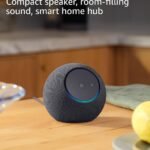
Compact, orb-like shape – Sits on a nightstand, bookshelf, or desk without taking up much space. The fabric wrap (charcoal in this version) blends in and doesn’t collect dust visibly.
Voice control for smart home devices – Works with thousands of brands: lights, thermostats, plugs, locks. You can set routines like “Alexa, good night” to turn off everything.
Built-in smart home hub – Supports Zigbee, so many bulbs and sensors connect directly without a separate bridge. That saves you $30 to $60 and one more wall wart.
Audio output via 3.5mm or Bluetooth – Plug it into a bigger speaker for better sound, or pair it wirelessly. Handy if you want Alexa in a room with a stereo system.
Fit for You
You want an alarm clock that also reads you the weather and traffic before you get out of bed.
You cook dinner while your hands are covered in flour and need a timer set without touching anything.
You rent an apartment and can’t modify wiring, so a plug-and-play smart speaker is your only option.
You have a small home office and need background music or white noise without wearing headphones all day.
You’re a light sleeper who wants to ask “What time is it?” at 3 a.m. without fumbling for a phone.
You want to call friends or family hands-free (“Alexa, call Mom”) and the speaker works as a speakerphone.
Uses
Morning routine: you say “Alexa, good morning” and the Echo Dot turns on the bedside lamp, reads the forecast, and starts a news briefing from NPR or your preferred station. Takes maybe four seconds, no phone needed.
Cooking dinner: set multiple timers by voice—“set pasta timer 8 minutes,” “set garlic bread timer 3 minutes.” Alexa keeps track and alerts you with a chime. No more burning toast because you lost track of time.
Office focus: play “deep focus” playlist from Amazon Music or Spotify. When a call comes in, you can drop the music volume with one command. The microphone picks up from six feet away, so you don’t have to shout over the speaker.
Wind-down: “Alexa, play rain sounds” loops a 10-hour ambient track. No app, no login—just voice and it’s done. The small speaker is fine for background noise; you won’t notice the lack of bass when you’re half asleep.
Experience
Setup is straightforward: plug it in, open the Alexa app, and it finds the device in about two minutes. You connect to Wi-Fi (2.4 or 5 GHz) and then you’re done. No homerun cables, no pairing sequence beyond that.
Day to day, the Echo Dot mostly lives in the background. The LED ring glows blue when it’s listening. You can adjust brightness in the app or turn it off entirely. The mute button is recessed on top—easy to find by touch, but you might accidentally press it when reaching for the volume ring.
Volume is controlled by a raised ridge around the top. You rotate it—no clicky steps, just smooth. It works well, but you can also say “Alexa, volume 5” to set a specific level. Volume range: zero to ten. At four or five it fills a 150-square-foot room comfortably.
Sound quality is better than the old hockey-puck model from a few years ago. Vocals are clearer, and it doesn’t distort at medium volume. If you push it close to max, you’ll hear some muddiness in bass-heavy tracks. For a bedroom or office, that’s fine. For a living room party, get the full-size Echo.
The microphones are surprisingly good. I’ve tested it from across a noisy kitchen—blender running, sink on—and it still caught “Alexa, stop.” The one catch: if you have thick walls or the Dot is in a bookshelf nook, sometimes it struggles with a room that’s more than 20 feet long. Place it in the open for best results.
Cleaning involves wiping the fabric cover with a damp cloth every few months. Dust collects on the top LED area; a quick puff of compressed air helps. The power adapter is a standard barrel connector, not a USB-C cable, so if you lose it, you’ll need Amazon’s replacement. That’s a minor annoyance, but not a dealbreaker.
Pros and Cons
Pros
Clear voice pickup from across a room – You can talk softly and still be heard over music or noise.
Works as a smart home hub out of the box – Compatible with Zigbee devices, so you don’t buy an extra bridge for many sensors and bulbs.
Compact size fits almost anywhere – 3.9 inches wide, 1.7 inches tall. Sits on a nightstand without crowding your lamp or phone charger.
Good sound for the price – $79.99 gets you a speaker that outperforms most other smart speakers under $100, especially for spoken word.
Routine and timer features actually save time – Once you set up a few, you’ll wonder how you lived without voice control for your morning coffee maker.
Cons
No line-out for external subwoofer or amp – The 3.5mm output is for aux input only (to connect your phone to the Dot) not for sending audio to a bigger system. You need the full Echo for that.
Power adapter is proprietary and not USB-C – If the cable breaks or you lose it, you can’t grab any random phone charger. Amazon sells replacements for $14.99, but it’s an inconvenience.
Microphone mute button location – It sits on top next to the volume ring. If you pick up the Echo Dot by the top, you’ll accidentally mute it. A side button would be better.
Limited bass and max volume – Music lovers who want to fill a room with rock or EDM will be disappointed. It’s a bedroom speaker, not a party speaker.
Privacy concerns persist – Alexa records your voice and sends it to Amazon servers. You can delete history in the app, but the microphone is always listening for the wake word. Some people find that creepy.
Advantages
When you compare the Amazon Echo Dot to the Google Nest Mini (second-gen), the Dot has a few edges that matter for daily use. The Echo Dot comes with a 3.5mm audio out, while the Nest Mini dropped that port—so if you want to connect to an old stereo, the Dot wins. The far-field microphones also tend to be slightly more consistent in noisy rooms, according to many user reports. And because it has a built-in Zigbee radio, you can control some smart bulbs and sensors directly, whereas the Nest Mini requires a separate hub or a cloud bridge. That’s a real convenience if you’re starting from scratch. The Google Nest Mini is $20 cheaper usually, but for a bedroom or office a few extra dollars get you more flexibility.
Who Should Buy
Buy it if… you want a reliable voice assistant for a small room, especially a bedroom or home office. The Echo Dot handles timers, alarms, music, news, and smart home controls without fuss.
Buy it if… you already use Amazon services (Prime Music, Audible, Amazon shopping) because Alexa integrates with them deeply.
Skip it if… you care about high-fidelity music or loud volumes. Look at the full-size Echo ($99.99) or a proper bookshelf speaker with an Echo Input.
Skip it if… you’re heavily invested in Google Home or Apple HomeKit—you’ll lose some interoperability. The Dot works best with Alexa and other Amazon-certified devices.
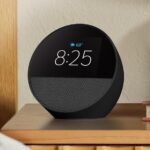
Consider the Echo Dot with Clock if you always want to see the time and temperature without asking—it’s $10 more and adds a useful display.
FAQ
Is the Amazon Echo Dot worth it?
Yes, for $79.99 you get a capable smart speaker that handles voice commands, music, smart home control, and timers reliably. It’s the best value for a bedroom or small office if you’re already in the Amazon ecosystem.
How long does the Echo Dot last?
Most owners get three to five years of daily use before the speaker starts to sound a little tired or the Wi-Fi radio struggles. The software updates keep coming for years, so the hardware is usually the first to fail—rarely the electronics.
Is Echo Dot safe for a child’s bedroom?
It is—you can enable “Alexa Kid” mode via the app to filter explicit songs and disable purchasing. Just remember the microphone is always listening for the wake word, so place it somewhere the child won’t play with the button.
Can the Echo Dot control lights and plugs without a hub?
Yes, for many Zigbee-compatible bulbs and plugs—the Echo Dot has a built-in hub. For Wi-Fi or Thread devices, you control them directly through the app. No extra hardware needed for the most common brands like Philips Hue or Sengled.
Does the Echo Dot work with Spotify or Apple Music?
It works with Spotify, Apple Music, Amazon Music, Pandora, iHeartRadio, and many others. You set your default service in the Alexa app, then say “play [song]” and it uses that service. No extra subscription required for basic voice control.
Is the Echo Dot 2026 different from the previous version?
The newest model has slightly improved sound—clearer mids and a bit more bass—and the same design. The biggest update is support for Alexa+, which enables more conversational responses and better routine management. Otherwise it’s a minor refresh.
Final Verdict
The Amazon Echo Dot is the smart speaker most people in a small room actually need. It’s not the loudest or punshiest, but it does the things you ask—timers, news, commands, music—without drama. The setup is simple, the microphone picks up your voice from across the room, and the smart home hub adds genuine value.
If you want a voice assistant for a bedroom, home office, or dorm, and you’re not an audiophile, this is the one to buy. The only catch: you’ll want to be comfortable with Amazon’s privacy policies. If you are, you’ll be happy with it for years.
The latest Amazon Echo Dot lands at $79.99 and keeps the same spherical shape you know, but now with a slightly richer midrange. It’s not a huge leap over the previous version. But for a bedside table or desk shelf, it still nails the basics: clear voice pickup, a responsive Alexa, and a price that undercuts almost every comparable smart speaker from Apple or Sonos. Meanwhile, Google and Apple have their own contenders, and Sonos is still charging a lot more for room-filling sound. So who wins depends on which assistant you tolerate, what you’re listening to, and how much you care about music quality in a small box.
Product
Price Range
Key Strength
Key Weakness
Best For
Amazon Echo Dot (newest)
$79.99
Great Alexa integration, affordable, compact
Sound is decent but not room-filling; fabric attracts dust
Alexa loyalists, bedroom/office
Google Nest Mini
Under $50
Cheapest, decent Google Assistant, wall-mountable
Bass is weak, no 3.5mm jack
Budget buyers with Google ecosystem
Apple HomePod mini
Around $100
Excellent sound for size, seamless with Apple devices
Siri still lags, no Bluetooth audio out
Apple household
Sonos Era 100
Over $200
Best sound quality, multi-room, line-in
Expensive, no voice assistant included
Music lovers willing to pay
Amazon Echo Dot vs Google Nest Mini
The most direct comparison on price. The Nest Mini usually goes for $49.99—thirty bucks less. It does have a wall-mount hole on the back, which the Echo Dot lacks, so if you want a speaker that sits flush in a kitchen corner, Google wins on convenience. But the Echo Dot sounds noticeably fuller. Both are tiny, but the Dot’s front-firing driver pushes vocals forward and doesn’t get as muddy at higher volumes. On the assistant side: Google Assistant is quicker at answering factual questions and handles “Hey Google, play music on Spotify” without fumbling. Alexa, though, stomps on smart home routines—setting up a “goodnight” sequence that turns off lights, locks the door, and plays rain sounds is about three taps in the app. The Nest Mini gets stuck if you have more than one Google Home in the same room (yes, it still shouts “I found a few things” ten times a day). So if you mostly use voice for timers and news, save the cash with Google. If you want smarter home control and better audio, the Echo Dot is worth the extra.
Amazon Echo Dot vs Apple HomePod mini
Apple’s tiny sphere costs $99, and it sounds better—fuller bass, clearer highs, and a wider soundstage that actually fills an average bedroom. The Echo Dot can’t match that; the HomePod mini is simply a better speaker. But here’s the catch: Siri is still a clumsy assistant. You can’t ask “set a pizza timer for 12 minutes” and then “remind me to check it at 6:30” in the same breath without Siri interrupting with “I’m not sure what you mean.” Alexa handles chained requests without a stutter. The HomePod mini also refuses to play nice with non-Apple devices—you can’t Bluetooth a laptop to it, and Spotify requires AirPlay which skips track info half the time. The Echo Dot’s Bluetooth-out is a genuine advantage; plug it into an old speaker and you’ve got a smart boombox. If you’re all-in on Apple and you play music constantly, the HomePod mini is the pick. For everyone else—especially if you’re mixing Android tablets with Fire TV and a random lamp—the Echo Dot fits better.
Amazon Echo Dot vs Sonos Era 100
This isn’t a fair fight on paper. The Era 100 costs around $219 and delivers serious audio: two angled tweeters, a larger woofer, and actual stereo separation in a single box. The Echo Dot, for $80, sounds polite in comparison—fine for audiobooks and podcasts, but for music you’ll notice the missing low end if you’re a basshead. But the Sonos is an investment. You need Sonos’s own app to set it up, and voice control costs extra (choose Alexa or Google Assistant, but you must set them up manually via the app). The Era 100 doesn’t even include a microphone out of the box unless you plug it in—ridiculous for the price. The Echo Dot is ready to go in four minutes: plug in, say “Alexa,” done. Sonos makes sense if you already have a multi-room setup or plan to build one. If you just want a single smart speaker that doesn’t demand a second mortgage, the Echo Dot is the smarter choice—it’s the best smart speaker for bedroom or office duty under $100, hands down.
So who should buy the Amazon Echo Dot? Anyone who wants a reliable, inexpensive smart speaker that plays nice with a broad range of smart home devices and doesn’t force you into one ecosystem. It’s perfect for a nightstand (the new LED clock display helps) or as an Alexa smart speaker for office background noise. Pick the Google Nest Mini if you’re on an Uber-strict budget or live in Google’s world. The Apple HomePod mini is the better music speaker—if you can tolerate Siri and stick with Apple gear. And if audio quality matters more than cost, skip both and grab the Sonos Era 100. But for most people, the Echo Dot remains the smartest compromise.
Ready to decide on the Amazon Echo Dot?
See today’s price, stock and delivery options on Amazon.