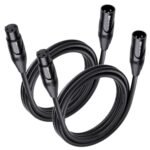
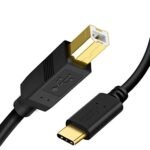
This cable delivers reliable, all-copper performance at an entry-level price point, offering excellent value for budget-conscious users seeking dependable connectivity.
Price vs. rivals
Cheaper
CheaperTypicalPricier
Positioned below the average price point for XLR microphone cables, offering a budget-conscious option without sacrificing essential performance features.
Ease of use
Excellent 92/100
Plug-and-play cable with standard XLR connectors, requires no setup or technical skill, though average users may need to match male/female ends.
Overview
The Amazon Basics XLR Cable review gets a pretty simple answer right out of the gate: yes, it’s worth it. For $10.80, you’re getting a 10-foot balanced audio cable that does the job for a home studio, a podcast setup, or a small PA system. It’s not exotic gear, and it doesn’t pretend to be.
This cable solves a basic problem. You need to get a clean signal from a microphone to a mixer or interface, and you don’t want to spend a fortune doing it. It’s aimed at people who need a reliable, no-drama cable without the boutique price tag.
Key Features
All-copper conductors: This matters for signal integrity. Copper conducts better than cheaper steel or aluminum alternatives, which helps keep your audio clean over the cable’s length.
Low noise design: The shielding does its job here, so you won’t pick up hum and interference from nearby power cables or electronics. It’s a real plus for recording at home.
10-foot length: It’s a versatile size. Long enough to give you some freedom of movement, but short enough that you’re not coiling up a snake of cable on your desk.
Balanced XLR connectors: Standard 3-pin male to female. You’ll have no trouble plugging into virtually any mic, interface, or mixer out there.
Durable PVC jacket: It feels sturdy enough to handle being stepped on occasionally or getting a bit of a tug. Not armored, but fine for studio use.
Snag-free connector design: The connectors have a grip that lets you plug and unplug without wrestling with the cable itself.
Fit for You
You’re setting up a home recording studio on a budget and need several cables without blowing your whole budget on one.
You’re a podcaster who needs a dependable cable for your dynamic mic and interface setup.
You run a small PA system for acoustic gigs or speaking events and need spare cables that work when you need them.
You’re tired of cheap cables that crackle when you move them and want something that keeps a solid connection.
You’re a musician who needs a durable cable for stage use and doesn’t want to cry if it gets walked on.
Uses
Picture a simple home studio. You’ve got a condenser mic on a stand, an audio interface on your desk, and you need to connect them. This cable is the bridge. You’ll appreciate that it lies flat and doesn’t have a ton of memory from being coiled, so it doesn’t kink up on your desk.
For a PA system at a small venue, this cable is the workhorse you’ll grab first. It runs from the mic to the mixer, and its low-noise shielding means you won’t get that annoying buzz when the venue’s lighting rig is on the same circuit. It just passes the signal through.
Experience
Living with this cable is a lesson in no-nonsense utility. You’ll unbox it and likely find it coiled with a simple twist tie. The jacket has a slight rubbery feel that’s neither stiff nor flimsy. When you plug it in, the connection clicks into place securely, with no wobble.
You’ll notice the cable has a bit of weight to it, which is actually a good sign. It suggests the shielding and copper inside are substantial. This isn’t a cable you’ll need to handle with care; it’s the one you can toss in a gig bag without a second thought.
The small annoyances are few. If you’re used to premium cables, you might find the connectors a little basic. There’s no metal barrel or sturdy strain relief – just the standard molded plastic. It works, but it doesn’t feel like a piece of heirloom gear. However, for the price, this is a trade-off most are happy to make. You might also notice that the cable is slightly stiff out of the box for the first few days, but it loosens up with use.
Pros and Cons
Pros
Price: At just over ten dollars, it’s hard to beat. You can buy a few of these for what one premium cable costs.
Low noise: The shielding is effective. For home recording, you won’t be chasing ground loops or hums caused by this cable.
Reliability: It makes a solid, secure connection. Once it’s plugged in, it stays put.
Build quality for the price: The copper conductors and sturdy jacket are better than what you’ll find in a dollar-store special.
Versatility: It’s a standard XLR cable. It works with mics, mixers, speakers, and any other XLR gear you own.
Cons
Connector design: The plastic molding and lack of a heavy-duty strain relief mean it’s not built for extreme abuse or constant touring.
No right-angle option: If you need a low-profile 90-degree connector to fit in a tight space, you’re out of luck here.
Average flexibility: It’s not the most supple cable on the market. It can hold a slight coil memory for the first few uses.
Length limitation: It only comes in a limited set of lengths. For long runs across a stage, you’d need a different, longer cable.
Advantages
Here’s where it beats the typical alternatives. If you’re asking about an Amazon Basics XLR cable vs Monoprice, the difference is mostly in the price and the branding. Both are solid budget choices, but the Amazon Basics one often comes with faster shipping if you have Prime, which can be the deciding factor when you need it right now.
It also beats the no-name cables you find at an electronics swap meet or in a random bin at a pawn shop. Those are often thin, poorly shielded, and fail at the worst moment. This one has a level of quality control you can trust from a major brand. You’re buying a known quantity, not a pig in a poke.
Who Should Buy
Home studio owners: You need a few good cables and want to save money for a better mic or interface. This is your pick.
Budget-conscious podcasters: You don’t need gold-plated connectors. You need a cable that delivers a clean signal for a fair price.
Live performers: For a gigging musician who might lose a cable or have one fail, these are great backups.
Who should skip it? If you’re a touring professional who needs gear that can survive being coiled, thrown, and driven over by a van, invest in a heavier-duty cable with a much stronger strain relief. Also, if you need the best possible audio quality for critical mastering sessions in a professional studio, you might look at higher-end cables with different capacitance characteristics. For everyone else, this is a strong choice.
FAQ
Is the Amazon Basics XLR Cable worth it?
Yes, it’s absolutely worth the ten dollars. For a standard 10-foot XLR cable, you’re getting a reliable, shielded, all-copper cable that performs exactly as you’d expect, without any of the premium markup.
How long does it last?
With normal home studio use, you can expect it to last for years. The connectors are the most vulnerable part, so avoid stepping on the barrel or putting excessive strain on the joint where the cable meets the plug.
Is it safe for a PA system?
Yes, it’s safe. You can run a line-level or mic-level signal through it without issues. The low-noise shielding is a bonus when you’re near other electrical gear, which is common on a stage.
Is this cable good for a home recording studio?
It’s a great fit. It delivers a clean, low-noise signal, which is the primary job of a studio cable. The 10-foot length is usually enough to connect a vocal mic to an interface on a desk nearby.
What is the difference between this and a more expensive XLR cable?
More expensive cables often use heavier-duty connectors with metal barrels, tighter tolerances on the soldering, and more flexible or durable outer jackets. In terms of audible difference, with a cable this short, you’re unlikely to hear any difference at all in a home studio.
Final Verdict
The Amazon Basics XLR Cable is the sensible choice. It’s a straight-up, honest cable that does what it’s supposed to do. It doesn’t promise magic audio improvements, but it delivers a clean, reliable connection every time, which is the whole point.
The one thing to keep in mind is the build quality trade-off. If you treat it with a bit of respect and don’t roll your chair over it repeatedly, it will serve you well for a long time. For the price, it’s the best XLR cable for a home studio and the one you should grab without overthinking it.
Amazon Basics XLR Cable vs the Competition in 2026
This Amazon Basics XLR Cable review stays practical. At $10.80 for a 10-foot cable, it’s the cheapest option here and also one of the quietest. It doesn’t have the road-tough build of a premium brand, but for a home studio desk or a fixed PA speaker line, that trade-off is easy to accept. The real Amazon Basics XLR cable alternatives are Monoprice, Hosa, and Mogami, and they answer three different needs.
Product
Price Range
Key Strength
Key Weakness
Best For
Amazon Basics XLR Cable
Budget (about $10.80 for 10 ft)
All-copper conductors and low noise at a price that beats almost everything
Basic connectors and soft PVC jacket; not made for repeated rough handling
Stationary studio mic lines, simple PA speaker runs, first XLR cable
Monoprice Premier XLR Cable
Budget (slightly more for a 10 ft cable)
Thicker jacket and molded strain reliefs for extra durability
Stiffer and less pleasant to coil after every session
Gigging musicians, live sound, cable bags that get moved
Hosa Pro REAN XLR Cable
Mid (roughly double the Amazon Basics for similar lengths)
REAN connectors lock tight and stay tight; cable is serviceable
Stiff cable that scuffs and creases if you treat it badly
Premium (several times the Amazon Basics for 10 ft)
Low capacitance, plus quiet shielding in a flexible jacket
High price and bulky connector; overkill for simple mic lines
Critical recording sessions, long runs, sensitive condenser mics
Amazon Basics XLR Cable vs Monoprice
At a desk, the Amazon Basics cable wins. $10.80 for a 10-foot cable with all-copper conductors and low noise is hard to argue with. The Monoprice Premier XLR Cable costs a little more and brings a thicker jacket, which matters if you’re stuffing cables into a shared gig bag. You won’t hear a difference between the two on a mic at three feet. You will feel the Amazon Basics when coiling it. It’s softer and easier to wrap than most budget cables, which sounds like a small thing until you’re packing up at midnight.
Is Amazon Basics XLR Cable Worth It for a Home Studio?
The best XLR cable for home studio is the one that adds no noise and doesn’t fail in a year. At $10.80, the Amazon Basics does that for most interfaces and mics. A low noise XLR cable for recording matters more when your cable runs near power strips; this one handles that fine. The weak point is the connector. The barrel is metal, but the internal contacts aren’t as tight as Hosa’s REAN connectors, so if you unplug the mic every day, you might feel more play over time. Leave one plugged in and you’ll get more than your money’s worth before you ever think about it.
Amazon Basics XLR Cable vs Hosa Pro REAN
Hosa Pro REAN cables are the kind of thing studio patchbays use because REAN connectors lock tight and stay tight. If you’re looking for an XLR cable for PA system use, Hosa is the safer bet. The Amazon Basics XLR cable uses a no-name connector that’s acceptable for a desk but less reassuring when it’s holding signal for a speaker from a mixer ten feet away. Hosa also has a stiffer jacket, so it lays flat on stage but coils awkwardly. For rack wiring and semi-permanent installs, spend the extra money. For a simple mic line at home, stick with Amazon Basics.
The short version: buy the Amazon Basics XLR Cable if you want a cheap, quiet 10-foot cable for a home studio, a podcast mic, or a fixed PA line. If you need more jacket toughness on a budget, choose the Monoprice Premier XLR Cable. If you’re wiring patchbays or live sound, the Hosa Pro REAN is worth its higher price. And if you’re tracking with sensitive mics over long runs, the Mogami Gold Studio XLR Cable is the alternative that actually sounds cleaner. Everyone else can pocket the difference and buy that better mic.
Ready to decide on the Amazon Basics XLR Cable?
See today’s price, stock and delivery options on Amazon.