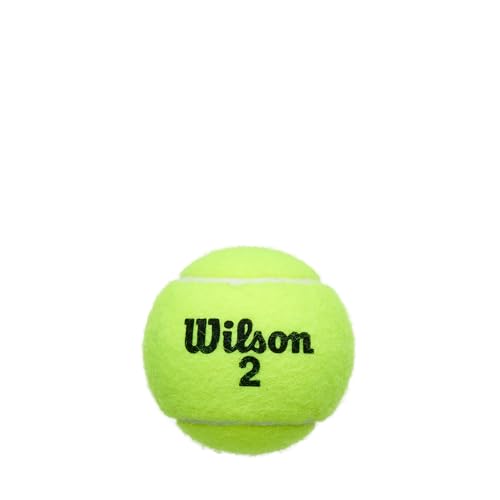
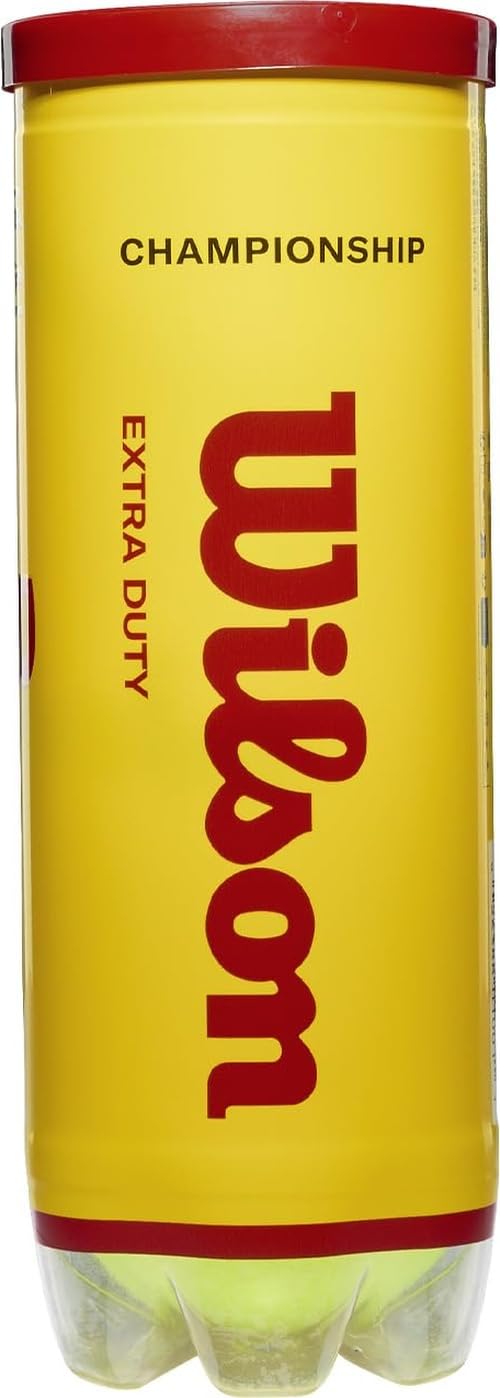
Wilson Championship tennis balls review: when you want a dependable ball for practice, drills, or casual matches, this is the can to grab. At around $3.59 per can, they give you a clear performance upgrade over no-name brands without forcing you into premium pricing. For most recreational players, they’re absolutely worth it.
Combines trusted Wilson quality with dependable everyday performance at an accessible price.
Price vs. rivals
Typical
CheaperTypicalPricier
Priced near the middle of the pack for standard tennis balls, comparable to common alternatives.
Ease of use
Excellent 95/100
Tennis balls are ready to use straight from the can, requiring no setup or instructions, though opening the pressurized can may take a little effort.
Overview
The Wilson Championship is a regular-duty tennis ball, built for play on clay and indoor courts. That’s the first thing to understand, because a lot of people buy them, play on hard courts, and then complain when the felt shreds. On the right surface, they’re a fantastic everyday option.
This can solves the main problem casual players face: finding a ball with good bounce, predictable flight, and enough durability to survive a few honest sessions. They won’t impress your club’s advanced players, but that’s not who Wilson built them for.
Key Features
Regular-duty felt – These are optimized for indoor courts and clay, where the surface doesn’t grind the fabric as aggressively. They hold their nap well through multiple sessions.
Consistent bounce – Wilson keeps the pressure and core quality reliable, can to can. You won’t find one ball hopping high while another sits flat after just a week of use.
Standard 2.5-inch diameter – Regulation size and weight, so they’ll play the same as any tournament ball. That’s quiet reassurance for someone trying to groove a serve.
Pressurized core – They start bright and lively. The liveliness is what you pay for; it’s the reason they serve and rally with more energy than pressureless balls.
Affordable per-can price – Around $3.59 means you can keep a few cans in your bag and not feel guilty when one gets lost in the bushes.
Fit for You
You play weekly recreational doubles or clinics and want a fresh can that won’t break your wallet.
You’re a developing player working on consistency, and you want a ball that flies true stroke after stroke.
You play mostly on indoor hard courts or clay, where regular-duty felt will last its full lifespan.
You’re packing a bag for social tennis and want a can you can hand to anyone without hesitation.
You run group lessons or coaching sessions and need a bulk supply of solid, affordable balls.
You keep a hopper for practice and want balls you can replace in batches without feeling the pinch.
Uses
Picture a Saturday morning doubles match at your local indoor club. The morning session expects a lively ball that still has some freshness left. The Championship holds its bounce through three tight sets, though you’ll notice them slow down by the third.
For solo practice, these are a natural choice for a serving basket. You’re not striking them hard enough to wear them out quickly, and the consistent flight helps you read your toss and ball toss errors with cleaner feedback.
On clay, the regular-duty felt is actually the right call. The surface grips the ball gently, keeping it from fluffing up prematurely. Expect a solid, even bounce that lets you slide into your shots while the ball behaves.
One scene to avoid: a hot outdoor hard court in midsummer. On rough asphalt or concrete, the felt will tear and fuzz quickly. If that’s your main venue, look for an extra-duty ball instead, or accept that you’ll be opening a new can sooner.
Experience
Popping the cap off a fresh can of Wilson Championships feels right. You get that satisfying hiss, then a distinct, fresh rubber smell. They roll out glossy and bright, and the first few bounces have that crisp, zingy bounce that makes even a lazy warm-up feel like real tennis.
You’ll notice they play a touch faster than some competitors right out of the can. The felt is compact, not fluffy, which means the ball cuts through the air cleanly. That suits a player with a bigger inside game, but it can be a surprise if you’ve been rallying with heavier, softer balls.
Owners tend to mention the sound. There’s a sharp, satisfying thwack when you connect with the sweet spot, which gives you clear auditory feedback on where you’ve struck the ball. Miss the middle and the sound dulls just enough to tell you something was off.
Day-to-day, they behave well inside the can and after a couple of sessions. They hold pressure decently for the first week, then gradually soften. The trade-off is that they go on you after more frequent play.
The small annoyance is storage. Like any pressurized ball, they’ll lose air if you leave the can open. A tennis ball saver or just remembering to put them back in the tube makes a real difference. If you’re the type to leave balls sitting in a gym bag for a month, expect them to come out on the flat side.
Pros and Cons
Pros
Reliable consistency – Can after can, the bounce and speed stay predictable, which is rare at this price.
Strong initial freshness – A fresh can has a lively pop that many casual players won’t notice in cheaper brands.
Great for indoor and clay – They’re built for these surfaces, and they perform there without excess wear.
Easy on the budget – You can stock up and never stress about using a new can for practice.
Good feedback for learning – Visual and sound cues make them forgiving for stroke work and serve practice.
Cons
Short lifespan on hard courts – Regular-duty felt gets torn up on asphalt and acrylic hard courts; expect fuzzing within one or two sessions.
Not for competitive match play – Tournament players will want a higher-tier ball for official matches; these are a recreational tool, not a competition-grade one.
Pressure drops with storage – They go flat in a few months if you leave them uncapped, which is par for the course with pressurized balls but a minor hassle.
Lightweight feel for some – Players who prefer a heavier, plush ball might find them too fast and springy at first.
Advantages
Compared to no-name brands, the Wilson Championship has one big edge: quality control. You won’t find a dead ball in the middle of a can, and the consistency from one can to the next is something budget brands don’t match.
They also have a recognizable reputation. If you hand a can to a friend, they won’t wince at the brand. There’s a quiet confidence in Wilson’s name that matters at a club where people notice details.
Against the higher-end Wilson US Open, the Championship trades a bit of durability for a lot of savings. For most people, that trade is worthwhile, because you rarely need the extra lifespan that pro-level balls provide.
Who Should Buy
Recreational players who play once or twice a week and want a decent ball without spending on premium options.
Coaches and teaching pros who buy in bulk for lessons and group drills.
Indoor club members on clay or cushioned hard courts.
Parents setting up a practice basket for a junior who’s still building basics.
Skip them if you’re a hard-court-only player looking for maximum durability, or if you’re entering a tournament and want the same ball the pros use. In those cases, try an extra-duty ball like the Wilson US Open or Penn extra-duty. If you aren’t sure, compare Wilson Championship vs Penn tennis balls: Penn tends to offer a slightly harder core, while Wilson feels a touch softer and more forgiving at impact.
FAQ
Is the Wilson Championship tennis balls worth it?
Yes, for recreational players on clay or indoor courts. They give you a consistent, livable bounce at a price that lets you replace them often without guilt.
How long do Wilson Championship tennis balls last?
With twice-weekly play on a suitable surface, expect a can to stay fresh for about two weeks of play. After that, they become increasingly soft and heavy.
Can I use Wilson Championship tennis balls on hard courts?
You can, but they aren’t the right choice. The regular-duty felt wears much faster on hard courts, so they’ll lose their bounce and develop a fuzzy surface quickly.
Is the Wilson Championship tennis balls good for serves?
They’re fine for serving practice, especially if you’re working on placement and consistency rather than heavy spin. They respond well to pace without getting too unpredictable.
How do Wilson Championship tennis balls compare to Wilson US Open?
The US Open is an extra-duty premium ball built for durability on hard courts. The Championship is a regular-duty ball that costs less. The US Open lasts longer but also costs more per can.
What is the best tennis ball for recreational play?
For most recreational players, the Wilson Championship hits the sweet spot: reliable, affordable, and easy to find. If you play mostly on outdoor hard courts, look for an extra-duty version instead.
Final Verdict
The Wilson Championship is a solid, no-drama tennis ball that does exactly what it promises for the casual player. It keeps the bounce true, the price forgiving, and the experience consistent. As long as you understand the regular-duty limitation, you’ll be happy.
The one thing to keep in mind: play these on the surface they were built for. Use them indoors or on clay, and you’ll get your money’s worth. Use them on a hot, rough outdoor hard court, and you’ll be shopping for extra-duty balls sooner than you’d like. Whether you’re practicing your serve or joining a weekend doubles game, these are a safe, useful choice for any bag.
Wilson Championship Tennis Balls vs the Competition in 2026
The Wilson Championship sits at a specific sweet spot most tennis ball makers ignore completely. It’s priced to tangle with the budget club options, but it’s built with a pressurized core and a nylon weave that usually costs a lot more. This makes it the default answer when someone asks are Wilson Championship tennis balls worth it for regular hitting. The rivals are sharp in their own ways, but the decision usually comes down to how much you value a can that doesn’t die on you mid-session.
Product
Price Range
Key Strength
Key Weakness
Best For
Wilson Championship
Mid ($$)
Durable felt that survives hard court abuse without going bald quickly.
Heavier feel off the string; lacks the soft pop of premium balls.
Players on rough surfaces who buy their own cans.
Penn Championship
Budget ($)
Lowest price for a familiar brand in a three-pack.
Flat can loses bounce and texture after about an hour of play.
Stocking a ball machine or supplying a busy public court.
Wilson US Open
Premium ($$$)
Lively, responsive impact that gives you excellent feedback.
Softer felt means noticeably shorter lifespan than the Championship.
Serving on clay courts where feel matters more than cost per can.
Babolat Gold
Premium ($$$)
Superb consistency from the first can to the last in the pack.
Price is punishing for casual hitting, especially on hard courts.
Competitive players on pristine surfaces who hate surprises.
Wilson Championship tennis balls vs Penn Championship
This is the most common face-off. The Penn Championship is the baseline — it’s what fills the ball hopper at most municipal courts. It works. But the Penn is a flat can, and flat cans start showing wear after a couple of aggressive sets on a hard court. The Wilson Championship is pressurized. The difference is simple: you can play an entire afternoon on one Wilson can without feeling the felt turn slick. With the Penn, the Wilson Championship tennis balls durability gap becomes obvious as the second hour rolls around. If you are supplying the balls for your regular group, the Wilson is the smart investment. If you are emptying a case into a bucket for a summer camp, buy the Penn.
Wilson Championship tennis balls vs Wilson US Open
The US Open is the premium sibling. It uses a softer felt that gives you that precise, plush pop when you make clean contact. It feels fantastic. The problem for most players is that you pay more for a ball that wears out faster. On the hard courts where most recreational tennis happens, the Championship is the better tool. It handles the grit better and lasts two or three times as long. The trade-off is a slightly stiffer, heavier hit. The US Open is for the player who can feel the difference in the fuzz and accepts the shorter lifespan for that extra feedback. The Championship is for the player who wants the best tennis balls for recreational play without the premium consumable cost.
Wilson Championship tennis balls vs Babolat Gold
Babolat Gold is the luxury pick. It’s undeniably good: the bounce is consistent, the felt is fine, and the can-to-can reliability is strong. It is also, for most people, overkill for a weekend hit-about. The price makes you wince when a rally goes over the fence or a dog grabs it. On hard courts, the Babolat wears down at roughly the same rate as a tournament-level ball, meaning it doesn’t survive the rough stuff any better than the US Open. The Wilson Championship, meanwhile, is built for exactly this surface. If you are choosing between the two, ask yourself how many balls you lose in a season. The Babolat is worth it for perfect clay courts. The Championship is the smarter choice if you want a ball that actually lasts.
You should pick the Wilson Championship tennis balls if you play on a hard court, buy your own equipment, and want a pressurized ball that earns its keep over a full session. It is the best compromise for recreational players who need durability without paying the premium markup. You should pick the Wilson US Open if you play on clay and care about the feel of every strike. And if you just need something to keep the ball machine running for a season without sweating the wear, the Penn Championship is a functional, cheaper alternative.
Ready to decide on the Wilson Championship tennis balls?
See today’s price, stock and delivery options on Amazon.