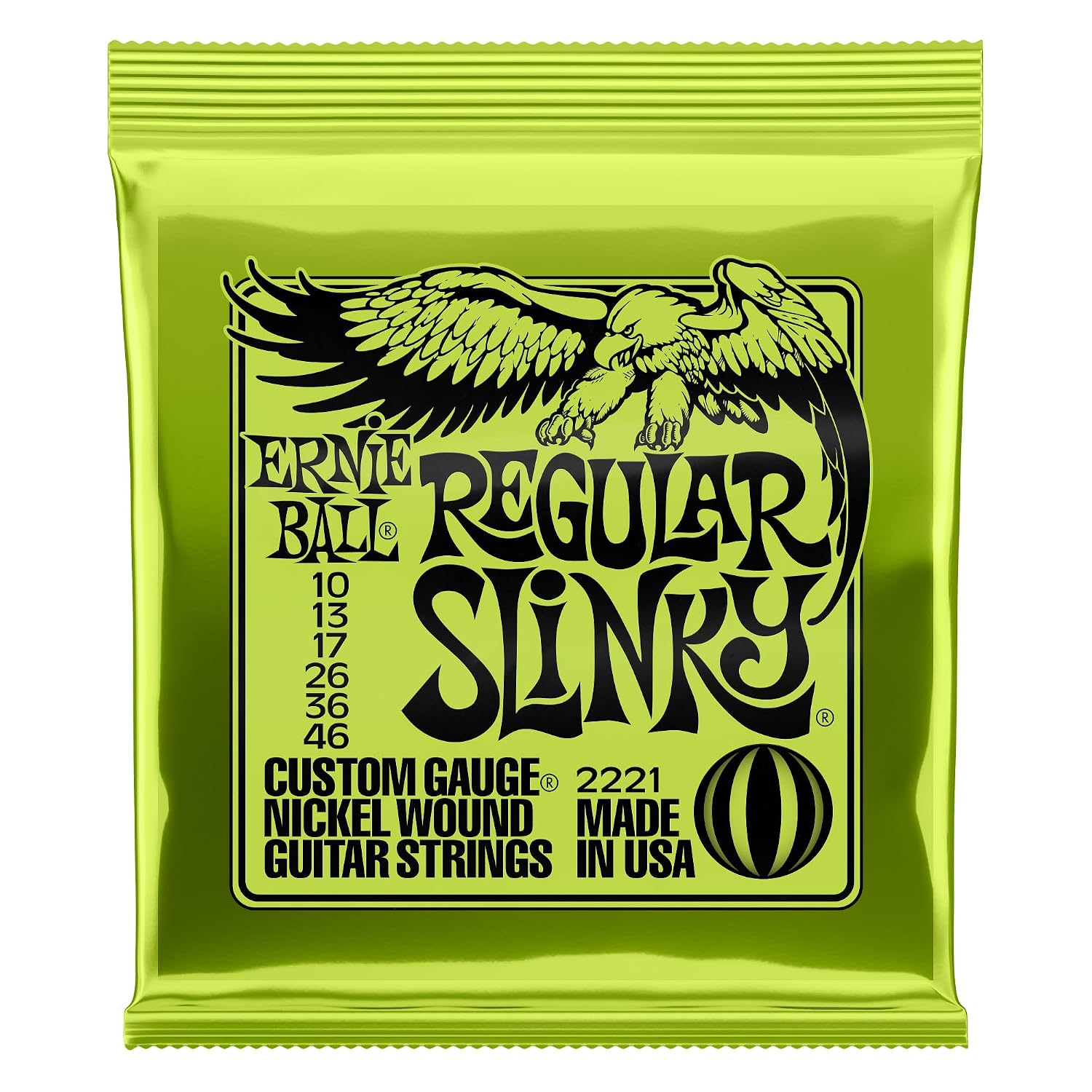
The Ernie Ball Regular Slinky review in one line: these are the strings that defined the sound of rock radio for decades, and at under nine dollars, they’re still worth trying even if you’re happy with another brand. They’re the 10-46 set that bends easily, sounds familiar, and pairs with almost any electric guitar.
Combines trusted industry-standard quality and a near-perfect reputation with a price that is approachable yet not the cheapest, offering outstanding consistency and tone for the money.
Price vs. rivals
Typical
CheaperTypicalPricier
Priced near the middle of the typical range for popular electric guitar string sets, reflecting its standard, widely used positioning.
Ease of use
Great 75/100
Installing these guitar strings is straightforward for someone with basic knowledge, but an average person may need some practice to achieve proper tension and tuning.
Overview: Ernie Ball Regular Slinky Review
The Ernie Ball Regular Slinky review starts with a simple claim: this is the set that sat on the bridge of countless Les Pauls and Strats before you learned your first power chord. It’s a nickel-wound set in 10-46, which is the comfortable middle zone between light and medium. For most players, that means a classic rock voice without thinking about tension charts.
It solves choice paralysis. Instead of reading spec sheets about core-to-wrap ratios, you put on the set that has been the default for generations of guitarists. It’s not the fanciest string on the shelf, and that’s exactly the point.
Key Features: What the Ernie Ball Slinky Set Gives You
Nickel-plated steel wound strings give you a balanced, slightly warm attack that sits naturally in a rock mix. They’re not as ice-picky as pure steel or as dark as pure nickel, just right in between.
10-46 gauge is the bend-friendly middle ground. The top strings are light enough for expressive vibrato, and the bottom strings hold tuning well enough for standard and drop-D.
Brass-plated ball ends seat firmly in most bridges, so you don’t get the shifting feel you sometimes get with cheap strings.
Plain steel unwound strings on the high E, B, and G give you the bright cut you need for solos to pop out of a busy mix.
Simple paper packaging means no plastic clamshell to fight with on a rushed restring. Just tear, open, and put them on.
Fit for You: Where the Ernie Ball 10-46 Gauge Fits
You play rock, blues, or indie and want a set that sounds right without dialing your amp for hours.
You’re a beginner looking for nickel wound electric guitar strings for beginners that won’t punish your fingertips.
You bend strings constantly and want a 10-46 set that lets you hit pitch with a gentle push.
You want a set of Ernie Ball 10-46 gauge strings that sounds the same every time you restring, so your tone stays consistent.
You keep a spare pack in your guitar case; at this price, that’s an easy habit.
Uses: Regular Slinky at Work
Saturday afternoon. You’re learning a new solo and the bends in the bridge feel stiff on your older strings. The Regular Slinky’s lighter top gauges let you push into a bend without wrenching your forearm, so you can focus on the phrase, not the physics.
Band practice. Your rhythm guitar needs to cut through a loud room without turning into a treble storm. The nickel-wound tone sits in that sweet spot between warm and bright, which is why so many players call these the best electric guitar strings for rock.
Last-minute gig. You snap a string during soundcheck and only have one set in your bag. The replacement sounds close enough to the older strings that you won’t sound like a different guitarist after the swap.
Experience: Living with the Ernie Ball Regular Slinky
A serious Ernie Ball Regular Slinky review has to spend most of its time on feel. Restringing is simple, and the ball ends are standard; on a snug bridge, you’ll feel them click into place with a firm push. The paper envelope doesn’t reseal, so if you don’t finish the set, keep the gauge in your head or stick the envelope in your case.
Fresh out of the pack, the strings sound bright, almost aggressive. After a few hours of play, they calm into that familiar rock tone you hear on old records. Fresh strings also squeak a little when you slide between positions; it fades as they wear in.
The 10-46 gauge is forgiving enough for beginners and expressive enough for players who like a little resistance when they dig in. The small annoyance is that these are uncoated. If you have sweaty hands, the plain steel strings, especially the high E, will lose their zing faster than a coated set. Wipe them down after playing and you’ll get more life out of them, but don’t expect a coated-string lifespan.
Pros and Cons: The Honest Trade-offs
Pros
Price: At $8.99, this is one of the cheapest reliable sets you can buy, so you can afford to change strings often.
Feel: The 10-46 gauge is the sweet spot for bends, with enough tension on the low strings to stay stable.
Tone: Nickel-wound gives you the classic rock voice, not too bright and not too dark, that sits well in a mix.
Consistency: A fresh set feels just like the one you bought last month, which is more than some boutique brands offer.
Availability: Every guitar store has them, so you’re never stranded without a known-good option.
Cons
Not coated: They dull quicker than premium coated strings, especially if you sweat or play every day.
Light for drop tunings: If you play down in drop C or lower, a 10-46 set gets floppy and harder to keep in tune.
Plain paper envelope: It’s a nice touch environmentally, but it won’t protect the spare string from a hard knock in your case.
Bright to mellow shift: The tone changes noticeably after the first week, so if you’re chasing pristine treble, you’ll be restringing more often.
Advantages: Ernie Ball Regular Slinky vs D’Addario and the Rest
The classic debate is Ernie Ball Regular Slinky vs D’Addario EXL110. D’Addario’s set feels a touch brighter and tighter right out of the pack, so many players think of it as the more modern, precise option. The Ernie Ball set has a looser, rounder feel under the fingers, which is a big part of why so many rock and blues players pick it.
In other words, the Regular Slinky’s advantages are straightforward: they’re cheaper than most comparable sets, they’ve got a tone that is instantly familiar, and they’re everywhere. You can’t say that about every premium string that costs twice as much. If you want a guaranteed good result with no fuss, pick these.
Who Should Buy: The Right Player for These Strings
Players who want the best electric guitar strings for rock without spending $15 a pack. These deliver that classic voice for $8.99.
Beginners who want a familiar, forgiving set to learn bends and vibrato, and who don’t want to overthink gauge choice.
Working guitarists who restring every couple of weeks and want a dependable, cheap option that sounds right out of the pack.
Anyone who plays standard tuning or drop-D and wants a set that stays balanced across all six strings.
Skip these if you play jazz or prefer a heavier feel; try a 11-49 set or flatwound strings for that darker, stiffer response.
Ernie Ball Regular Slinky Review: FAQ
Is the Ernie Ball Regular Slinky worth it?
Yes, for most electric guitarists, the Ernie Ball Regular Slinky is one of the best values in the string aisle. It’s a proven nickel-wound set with a tone that has shaped countless rock records, and at about nine dollars, it’s easy to stock up. The only reason to skip it is if you need coated strings or a heavier gauge.
How long does an Ernie Ball Regular Slinky set last?
A Regular Slinky sounds its best for the first couple of weeks of regular play, then starts to mellow out. If you play every day or have sweaty hands, the plain strings will go dull sooner. Wipe them down after playing to stretch the life.
Are Ernie Ball Regular Slinky strings good for beginners?
Yes, they are. The 10-46 gauge is a common recommendation for new players because it’s not too stiff and not too floppy. You’ll be able to bend strings without aching fingers while still getting a full enough tone for rock and blues.
Do Regular Slinky strings fit my electric guitar?
They fit most solid-body and semi-hollow electric guitars with standard bridges and tailpieces. If your guitar uses a vintage-style tremolo or a locking nut system, you may want to check the string compatibility first, but the vast majority of players won’t have any issue.
What gauge is an Ernie Ball Regular Slinky set?
It’s a 10-46 set, meaning the high E is 0.010 inches and the low E is 0.046 inches. That middle-of-the-road gauge is why the Ernie Ball Regular Slinky is so popular; it balances easy bends with enough tension to keep the low strings from feeling rubbery.
What are the best electric guitar strings for rock?
For most players, the Ernie Ball Regular Slinky is on the short list of the best electric guitar strings for rock. The nickel-wound 10-46 set produces the balanced midrange and slight warmth that suits everything from classic rock rhythm to modern lead playing.
Ernie Ball Regular Slinky Review: Final Verdict
The Ernie Ball Regular Slinky review ends with a simple verdict: buy these if you want a proven rock tone, easy bends, and a price that lets you keep a spare set in your case. They won’t last as long as coated strings, and they’re not built for ultra-low drop tunings, but they do the daily job better than almost anything else at this price.
If you’re still deciding between these and a more expensive set, get these first. The money you save will buy you a couple of extra packs, and after a month of playing, you’ll know exactly why so many guitarists never switch.
Ernie Ball Regular Slinky vs the Competition in 2026
The Ernie Ball Regular Slinky set is the default answer for a lot of guitar players, and it got that reputation for a reason. At around $9 a pack, it sits squarely in the budget-to-mid range, but its influence on rock tone is disproportionate to its price. It’s the string you find on a Squier in a teenager’s bedroom and on a vintage Les Paul in a studio. The market has caught up, though, and D’Addario, GHS, and even the premium brands are all angling for your next string change. The real question isn’t whether Slinkys are good; it’s whether they’re the right fit for your hands and your amp.
Product
Price Range
Key Strength
Key Weakness
Best For
Ernie Ball Regular Slinky (10-46)
Budget ($)
Bright, immediate attack that cuts through a mix
They lose their “new string” zing faster than coated sets; can feel stiff for bending
Rock, blues, and indie players who want a classic, uncoated sound
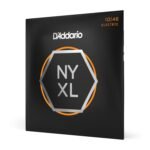
D’Addario NYXL (10-46)
Mid-priced ($$)
Superior tuning stability and a higher carbon steel content for output
Noticeably more expensive; that extra tension makes them feel less “loose” than Slinkys
Gigging musicians who need reliability and a fatter low-end punch
GHS Boomers (10-46)
Budget ($)
Round-wound punch with a very warm, almost compressed low end
The winding is rougher; they can be squeaky on new frets and wear out finish faster
Players after a heavier, classic rock tone (think late 70s hard rock) on a budget
Elixir Optiweb (10-46)
Premium ($$$)
Coating keeps them sounding fresh for months, not weeks
That coating feels slick and slippery under the fingers; higher price per pack
Players who hate changing strings or have acidic sweat that kills uncoated sets
Ernie Ball Regular Slinky vs D’Addario NYXL
This is the heavyweight fight for most players. The core difference isn’t the gauge; it’s the metal. D’Addario uses a higher carbon content in the steel for the NYXL line, which translates to a slightly stiffer feel and a bigger low-end response. When you hit a power chord on the NYXL, you get a thump that the Slinky doesn’t quite match. The Ernie Balls, by contrast, feel springier. They give you that immediate, sassy bite on the high E and B strings that makes single-note riffs sound articulate. The trade-off is tuning stability. The NYXLs hold their tuning through aggressive whammy bar use and heavy string bending much better than the Slinkys. If you’re a player who torments the tremolo arm, the Ernie Ball Regular Slinky vs D’Addario debate ends quickly in D’Addario’s favour. But if you rely on touch and want the classic feel of a string that bends with minimal force, the Slinky is the cheaper, more expressive option.
Ernie Ball Regular Slinky vs GHS Boomers
Where the Slinky is bright and snappy, the GHS Boomer is fat and gritty. Boomers have a distinct, slightly rough outer wrap that produces a darker, more aggressive tone. They are the best electric guitar strings for rock if your idea of rock is driven by downtuned riffs and high-gain pedal stacks that need a thick low-end. The Slinky, on the other hand, shines in a cleaner or slightly overdriven context — think indie rock, pop-punk, or classic blues where you need the note to pop out without a lot of distortion. The physical difference is significant, too. Boomers feel rougher and can chew through your fretwire faster if you bend aggressively. Slinkys are smoother and easier on your fretboard, but they don’t have that raw, unpolished grunt. You’d pick the Boomer for pure muscle; you’d pick the Slinky for finesse and clarity.
Ernie Ball Regular Slinky vs Elixir Optiweb
The Elixir comparison is a lifestyle choice as much as a tonal one. The Optiweb coating on the Elixirs is thin, but it still changes the tactile response — it feels slightly slippery, almost like there’s a thin layer of silicone between your pick and the string. The Slinky has that bare, slightly sticky feel of exposed nickel, which many players find provides better grip and a more organic connection. The real issue is longevity. An uncoated Slinky starts to sound dull and dead, often within two to three weeks of heavy playing, depending on how sweaty your hands are. The Elixirs will still sound close to fresh after a month or more. Is Ernie Ball Regular Slinky worth it if you’re sick of changing strings? Probably not. But the Elixirs cost almost twice as much per pack. You’re paying a premium for convenience and longevity, while the Slinky gives you the raw sound and feel that many classic recordings were made with, at a price that makes regular changes painless. If you’re the type of player who obsesses over the touch of the string under your fingers, who plays a lot of bluesy bends and wants that immediate, slightly gritty top-end sparkle, the Ernie Ball Regular Slinky is still the benchmark. It’s the best electric guitar strings for rock when you want a straightforward, honest 10-46 gauge nickel wound tone without any gimmicks. The fact that a 3-pack costs less than a single set of premium rivals just seals the deal. But if you gig every weekend, sweat a lot, and hate the ritual of changing strings, skip the Slinky and grab the D’Addario NYXL instead — the tuning stability alone saves you from mid-set headaches, and the higher output will push your amp a little harder. And if you’re a studio musician who needs a perfectly even, consistent response across every session, the Elixir Optiweb is the more pragmatic alternative. The Slinky, for all its glory, is a bit of a wildcard; it sounds great, but it doesn’t last forever, and that’s very much the point.
Ready to decide on the Ernie Ball Regular Slinky?
See today’s price, stock and delivery options on Amazon.