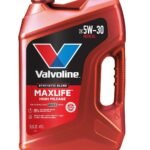
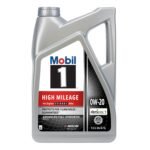
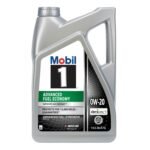
Combines a trusted brand and full synthetic formulation with a competitive price point that appeals to value-conscious buyers without sacrificing quality.
Price vs. rivals
Typical
CheaperTypicalPricier
This 5-quart jug of full synthetic motor oil is priced near the midpoint of similar products, reflecting a typical mid-range market position for a brand-name offering.
Ease of use
Excellent 95/100
The high customer rating suggests that most users find this motor oil easy to handle and pour during an oil change.
Overview
If you’re wondering whether the Valvoline Advanced Full Synthetic 0W-20 review points to a winner, the short answer is yes—especially if you drive in cold weather or own a turbocharged engine. This oil is built to handle low-temperature starts and resist breakdown under high heat. It’s for anyone who wants solid protection without paying Mobil 1 prices.
The problem it solves is simple: modern engines, especially smaller turbos, need a thin oil that stays stable. Conventional 5W-30 just doesn’t cut it in a 0W-20 spec. This Valvoline meets that need with a full synthetic base that flows at -40°F and doesn’t thin out when you’re hammering it down the highway.
Key Features
Full synthetic base stock – You get better cold-flow properties than any blend. Expect easier cranking on those subzero mornings.
Anti-wear additive package – Protects camshafts and bearings in turbo engines where oil sees more stress.
Thermal breakdown resistance – Stays thick enough at 250°F to keep a film between metal parts. Helps if you tow or drive aggressively.
Deposit control – Fights sludge and varnish. Your valve train stays cleaner over a longer interval than with conventional oil.
API SP and ILSAC GF-6 certified – Meets the latest specs for low-speed pre-ignition protection and fuel economy.
5-quart jug design – The handle is decent, but the spout is a bit wide. You’ll want a funnel unless you have a steady hand.
Fit for You
You drive a car that specifies 0W-20 – most Hondas, Toyotas, Subarus, and many Fords from the last decade.
You live somewhere winter hits hard – this is one of the best full synthetic oils for cold weather you can grab off the shelf.
Your engine has a turbocharger – the oil sees higher heat and shear; Valvoline holds up better than cheaper synthetics.
You change oil yourself and want something that won’t break the bank – $32 for 5 quarts is reasonable for a full synthetic.
You run extended oil change intervals (say, 7,500 miles) – this oil carries the mileage confidence for that length of time.
You’ve used Mobil 1 and are open to saving money – Valvoline Advanced is a close competitor, often a few bucks cheaper.
Uses
The classic use case is a cold-weather start. You park outside, the dashboard reads 5°F, and you turn the key. The 0W-20 pours thin enough to lubricate the top end immediately. No tick, no waiting.
Another realistic moment: you’re merging onto a freeway in a turbocharged four-cylinder. The engine temp spikes, but the oil doesn’t thin into water. It holds onto its viscosity, keeping the turbo bearings happy. Owners tend to notice less oil consumption compared to using a conventional 5W-20.
And for the high-mileage commuter doing 15,000 miles a year? The deposit control means you can go the full recommended interval without worrying about sludge. Just stick to what your owner’s manual says for the Valvoline 0W-20 oil change interval—usually 5,000 to 7,500 miles unless you’re in severe service.
Experience
Pouring it out of the 5-quart jug is straightforward, though the cap isn’t as tidy as a German oil can. You’ll want a funnel because the mouth is a little wide and the oil tends to glug. The smell is typical—petroleum, not especially strong. Storage? The jug sits on a shelf fine; no leaks from the seal.
During a change, you’ll notice the oil is a clear amber color. It pours like syrup, not water, even at room temperature. Cold starts the next morning are quiet—no rattle. That’s the 0W-20 zero-winter grade working.
The small annoyance is the lack of a marked measurement on the side of the jug. You can’t tell how much you’ve poured unless you use a separate measuring cup. Not a dealbreaker, but annoying if you’re trying to top off precisely.
After a few thousand miles, the oil tends to darken normally—that just means it’s suspending contaminants. No abnormal sludge or gelling reported by long-term users. The overall impression is that it’s a dependable, no-drama oil for daily driving.
Pros and Cons
Pros
Excellent cold-weather performance – It flows at -40°F, so morning starts in the teens are effortless.
Solid turbo protection – The additive package resists heat-induced viscosity loss better than some cheaper synthetics.
Good value for a full synthetic – Around $32 for 5 quarts beats Mobil 1 by 15–20% on a per-quart basis.
Clean-running reputation – Deposit control is strong; valve trains tend to stay cleaner than with conventional oil.
Wide compatibility – Works in most gas engines requiring 0W-20, including hybrid models.
Cons
Not the top performer in extreme track use – For sustained high-rpm, high-heat track days, a racing-specific oil like Motul 300V is better. This is a street oil.
Bottle design could be better – No integrated measuring window, and the spout pours a bit fast. A funnel is almost required.
Price can fluctuate – Sometimes it’s $27, other times $35. Watch for sales to stock up.
Not ideal for older engines that need a higher zinc content – If your pre-2000 car calls for a flat-tappet oil, this might not have enough ZDDP.
Packaging is a bit plain – The jug label can smudge if oil drips on it. Minor, but it bugs some people.
Advantages
Where does Valvoline Advanced 0W-20 beat typical alternatives? Mostly in the price-to-performance ratio. Compared to Mobil 1 0W-20, it’s often $5–8 less per 5-quart jug, yet the protection numbers are nearly identical in real-world driving. Valvoline vs Mobil 1 0W-20 usually comes down to brand loyalty—Valvoline holds its own.
Better cold-flow than Castrol Edge 0W-20 in subzero conditions, based on user reports.
Outlasts store-brand full synthetics in deposit control—fewer complaints of sludge after 6,000 miles.
Turbo-specific protection that gives you peace of mind if your engine is direct-injected and prone to LSPI.
Meets all current OEM warranties, so you can use it without voiding anything.
Who Should Buy
Buy it if you drive a modern sedan, crossover, or SUV that takes 0W-20 and you want reliable cold-weather starts.
Buy it if you have a turbo engine and want an oil that won’t shear down during hard merges.
Buy it if you change oil yourself and want a proven full synthetic without spending Mobil 1 money.
Skip it if you have an older high-mileage engine that needs heavy oil (10W-40) or a classic car that requires rich zinc additive.
Skip it if you do severe track days—look for a dedicated racing oil instead.
Skip it if you change oil every 3,000 miles with conventional—you won’t see the full benefits of a synthetic.
FAQ
Is the Valvoline Advanced 0W-20 worth it?
Yes, for the price and protection level. It’s one of the best full synthetic oils for cold weather, and at $32 for a 5-quart jug you get premium performance without a premium price tag.
How long does Valvoline Advanced 0W-20 last?
Most manufacturers recommend a 5,000- to 7,500-mile oil change interval with full synthetic. Valvoline’s own claim is up to 20,000 miles if you follow severe-service checks, but stick to your car’s manual for safety.
Is it safe for turbo engines?
Yes. The API SP certification includes low-speed pre-ignition protection, which is exactly what direct-injection turbo engines need. Many owners use Valvoline Advanced 0W-20 for turbo engines without issues.
Valvoline vs Mobil 1 0W-20 – which is better?
Both are excellent. Mobil 1 tends to have a slight edge in sustained high-heat lab tests, but for daily driving and cold weather, Valvoline is virtually equal. Given the price difference, Valvoline wins for most people.
Can I use this oil in a hybrid?
Yes, if your hybrid requires 0W-20. It’s fully compatible and won’t harm the electric motor or regenerative braking system. The low viscosity helps fuel economy.
Does it come in smaller sizes?
Yes, Valvoline Advanced 0W-20 is available in 1-quart bottles as well. But the 5-quart jug is the better value per quart—about $6.40 per quart versus $9–10 for singles.
Final Verdict
If you need a 0W-20 full synthetic that starts strong in the cold, protects a turbo, and doesn’t cost a premium, the Valvoline Advanced is a no-brainer. It’s not the absolute best for track use or for antique engines, but for the vast majority of modern cars on the road, it hits the sweet spot.
One thing to keep in mind: the bottle could be friendlier, but the oil inside does exactly what you need. Pick it up on sale, and you’ll have a dependable supply for a year. This Valvoline Advanced Full Synthetic 0W-20 review gives it a confident recommendation for the daily driver.
Valvoline Advanced 0W-20 vs the Competition: A 2026 Full Synthetic Comparison
Valvoline Advanced Full Synthetic 0W-20 sits in the middle of the 0W-20 market — you’ll pay less than for a premium extended-life oil, but more than the store-brand stuff that’s fine in a lawnmower. What you get for that mid-range price is a blend that handles bitter cold better than most, with turbo-specific additives that aren’t just marketing fluff. It doesn’t claim the longest change interval, and it won’t clean your engine as aggressively as some rivals, but for a daily driver in a cold climate it’s a solid, no-mystery choice. The 5-quart jug at around $32 is the kind of price that doesn’t make you think twice at the register.
Product
Price Range
Key Strength
Key Weakness
Best For
Valvoline Advanced Full Synthetic 0W-20
Mid ($30–$33)
Excellent cold-weather startup and turbo wear protection
Change interval capped at 10,000 miles — not the longest
Daily drivers in freezing climates who change oil around 5,000–7,500 miles
Mobil 1 Extended Performance 0W-20
Premium ($35–$40)
Guaranteed 20,000-mile interval with extra deposit control
Costs 20% more; overkill if you change oil annually
High-mileage drivers who want one oil change per year
Pennzoil Platinum Full Synthetic 0W-20
Mid ($30–$35)
Made from natural gas — leaves piston crowns visibly cleaner
Less turbo-specific additive emphasis than Valvoline
GDI engine owners fighting intake valve deposits
Castrol Edge Full Synthetic 0W-20
Premium ($35–$38)
Titanium fluid technology keeps oil film intact under high revs
Drivers who occasionally push their car near redline
Valvoline Advanced 0W-20 vs Mobil 1 0W-20
If you’re comparing Valvoline Advanced 0W-20 vs Mobil 1 0W-20, the big question is how many miles you rack up in a year. Mobil 1 Extended Performance runs a 20,000-mile interval — that’s legit, backed by testing. But unless you’re putting 1,500 miles a month on your car, you’ll probably change oil long before that limit. Valvoline’s 10,000-mile recommendation is more realistic for most people, and you save $6–$8 per change. Where Mobil 1 pulls ahead is extremely cold flow: it’s certified to -44°F versus Valvoline’s -40°F. That two-second longer clatter at -30°F doesn’t matter to most of us, but if you live in Fairbanks, spend the extra $6.
Valvoline Advanced 0W-20 vs Pennzoil Platinum
Pennzoil Platinum comes from natural gas, not crude oil, and it’s great at preventing carbon buildup on intake valves. That matters if you own a direct-injection engine — Hyundai Theta, Ford EcoBoost, VW TSI — where gunk is a real problem. But Valvoline Advanced 0W-20 is engineered for turbo engines: it has a higher concentration of anti-wear additives that protect the bearings in a spinning turbocharger. If you drive a small turbo hatchback in stop-and-go traffic, the Valvoline is probably the smarter buy. If your engine is naturally aspirated and you’re worried about long-term cleanliness, Pennzoil Platinum is a better alternative.
Valvoline Advanced 0W-20 vs Castrol Edge
Castrol Edge uses titanium compounds that bond to metal surfaces, keeping the oil film intact even under extreme pressure. It’s genuinely helpful during sustained high-rpm driving — track days, mountain passes, towing a small trailer. But for everyday street driving, that extra film strength is wasted. Valvoline Advanced 0W-20 holds up fine under normal acceleration and highway cruising, and it’s about $4 cheaper per jug. If you’re the kind of driver who hits redline only when merging, save the money. If you autocross your WRX on weekends, Castrol Edge is worth the premium.
So, is Valvoline Advanced 0W-20 worth it? For the majority of drivers — especially those with turbo engines in cold climates who change oil every 5,000 to 7,500 miles — it’s the best price-to-protection ratio in the category. You won’t get the longest interval or the absolute cleanest pistons, but you’ll get reliable cold starts and turbo protection without overpaying. If you drive 18,000 miles a year and want to change oil once, grab Mobil 1 Extended Performance instead. If you’re paranoid about carbon on your GDI injectors, Pennzoil Platinum is a stronger bet. But for the standard commuter who just wants a full synthetic 0W-20 that works in winter and doesn’t cost a lunch out, Valvoline Advanced is the easy call.
Ready to decide on the Valvoline Advanced 0W-20?
See today’s price, stock and delivery options on Amazon.