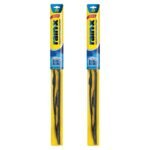
Combines effective water repellency with high ratings at a competitive price for a two-pack.
Price vs. rivals
Pricier
CheaperTypicalPricier
Priced slightly above typical mid-range wiper blades, reflecting the brand's water repellent technology and reputable quality, but still within a competitive range for specialty blades.
Ease of use
Excellent 85/100
Installing these wiper blades is straightforward for most people, and the water repellency provides clear visibility with minimal effort, though aligning the attachment can be slightly tricky for first-time users.
Overview
So, is a Rain-X repellent wiper blades review going to end with you clicking “buy” or moving on? Short answer: if you drive in regular rain and hate how normal blades smear before clearing, these are worth the trade-off. They put a water-repellent coating onto your windshield as they wipe, which means rain beads up and flies off at speed. The catch is that coating wears off, and the rubber isn’t as quiet as some competitors. That’s the honest trade.
These Rain-X Water Repellent Wiper Blades (the 22-inch, two-pack version) are for people who want visibility without constantly spraying washer fluid. They’re not magic—they’re a beam-blade design with a special rubber compound that deposits a thin layer of Rain-X’s familiar hydrophobic formula. If you already use a separate Rain-X treatment and just want a blade that lasts, these might not be your best bet. But if you want an all-in-one solution that works from the first wipe? They deliver.
Key Features
Built-in water repellency – The blade’s rubber contains Rain-X’s coating agent. Every time it wipes, a tiny amount transfers to the glass. You’ll notice water beading up and rolling off after a few wipes, even in a light drizzle.
Beam-style design – No external frame with hinges. A single curved piece of rubber sits inside a flexible spine. That means fewer points where ice or debris can jam, and the blade stays pressed evenly across curved windshields.
Pre-installed adapters – They come with a universal fitting that snaps onto most top-lock, side-pin, and J-hook arms. You don’t have to mess with a bunch of loose plastic pieces—just click them on.
Synthetic rubber compound – It’s a blend that’s supposed to resist tearing and UV damage better than natural rubber. Owners tend to mention that in sunny climates the blade lasts longer than cheap store-brand options, but not as long as a premium Bosch.
Size options – The 22-inch length is common for many sedans and SUVs. This two-pack gives you two exact matches, which is handy if your car takes the same size on both sides. Just check your owner’s manual first—some cars use different lengths.
Fit for You
You live somewhere where it rains a few times a week and you’re tired of switching between wipers and a manual Rain-X spray treatment.
You drive on highways at 55+ mph where normal blades smear, and you want the speed to push rain right off the glass.
You don’t mind a quiet “rubber chatter” sound on a dry windshield for the first few weeks, because the trade-off is better visibility in wet conditions.
You’re replacing blades on a car that uses beam-style already, so the fit and pressure are similar to what you’re used to.
You’re looking for a two-pack that costs about $36 total, not $40–50 for a premium pair—you value the extra weather protection over a quieter wipe.
Uses
Picture a regular highway commute in March. Rain is steady but not a downpour. With a standard blade, you get that annoying smear before the next wipe clears it. With the Rain-X blade, the first few wipes deposit the coating, and then the water beads up like little marbles. At 60 mph, the beads fly upward off the glass. You don’t need the wipers to run constantly; you can let them pulse every 10 seconds and still see clearly.
Night driving in heavy rain? That’s where the repellent effect really earns its keep. Streetlights and headlights don’t scatter off a solid water film—they pass through the beads cleanly. Less glare, fewer squinting moments.
Snow is a different story. These are not winter blades. The beam design doesn’t have a rubber boot to prevent ice buildup, and the repellent coating doesn’t do much for frozen slush. If you get heavy snow, you’ll still have to scrape. But in light, wet snow that melts on impact? The water beads off before it can refreeze, so you get a few extra seconds before the next swipe. It’s a small help, not a magic fix.
Experience
Installation takes about five minutes. The adapter system is simple: you pull the old blade off, snap the new one onto the arm—a solid click tells you it’s seated. The blade feels light, about half the heft of a traditional frame blade. The rubber has a slight give to it, not stiff like budget ones.
First use on a dry windshield? Expect a squeak. That rubber chatter is common with any new beam blade, but with the Rain-X it can last a little longer because the coating is being deposited and the rubber is “conditioning” the glass. Give it a few wipes with washer fluid, and the noise fades. Or just use it in the rain from the start.
After about two weeks, the repellent effect becomes noticeable. You’ll see water beading up from the moment it hits the glass. The blades themselves remain streak-free as long as the glass is clean. If your windshield has any oil or wax residue (like from a car wash), the first few passes might smear before the coating bonds. A quick clean solves that.
Durability? Owners tend to mention that the rubber starts to harden after about six months in hot climates. The coating effect also fades after that same period. If you use your wipers daily, expect to replace them around the 8-month mark. That’s shorter than a Bosch Clear Advantage (which lasts 12–18 months for many people), but the repellent benefit is the trade-off.
Pros and Cons
Pros
Water repellency is real – After a few wipes, rain beads up and runs off. You’ll use less washer fluid and rely on high-speed air to clear the glass.
Easy to install – One adapter fits almost any arm. No fiddling with different clips for different cars.
Good price for what you get – $36 for two 22-inch blades with the coating built in. A separate bottle of Rain-X costs $8, and a regular premium blade costs $15–20, so the math works if you’d buy both.
Beam design conforms well – On curved windshields, pressure is even edge-to-edge. You won’t get a lifted corner in a strong crosswind.
Cons
Rubber is noisy on dry glass – Chirps and squeaks for the first week or two. If you drive in a dry area, that’ll bother you. Use washer fluid liberally.
Coating wears off after a few months – The repellent effect is strongest for about 3 months, then gradually fades. By 6 months, you’re back to a standard beam blade. You’re paying for the coating, and it has a limited lifespan.
Not great in heavy snow or ice – The beam design lacks a hinged frame that can snap off packed snow. In a blizzard, these blades can freeze to the windshield. A winter-specific blade handles that better.
Shorter overall lifespan than some competitors – Expect 7–10 months before the rubber starts to crack or leave streaks. A Bosch Icon lasts twice as long for about $10 more per pair.
Advantages
This blade leads the water repellent wiper blades comparison for convenience. You don’t have to wait for a coating to cure or reapply it every few weeks. The Rain-X system delivers a fresh layer each time you wipe. That’s the main advantage over a separate treatment or a blade that doesn’t deposit anything.
Compared to other beam blades in the same price range (like the Trico Force or Michelin Stealth), these are better in rain but noisier in the dry. If you prioritize visibility on long, wet drives, the Rain-X blades are the better pick.
When you look at Rain-X vs Bosch wiper blades, the choice is about priorities. Bosch (Icon or Clear Advantage) is quieter, lasts longer, and handles snow better. Rain-X gives you that immediate repellent effect without extra work. There’s no “better” overall—only what matches your weather and your patience for noise.
One more thing: these are often the best wiper blades for rain repellent if you want a do-it-all solution that doesn’t require a separate product. If you’re willing to spend $10 more and don’t mind applying Rain-X yourself, go with a Bosch Icon and a bottle of the original Rain-X. But if you want a single purchase that just works from the day you install them, these win.
Who Should Buy
Buy if you drive in rain multiple times a week and want better visibility without extra steps.
Buy if you have a curved windshield and current blades lift at the edges during fast driving—the beam design helps.
Skip if you live in a dry desert climate. The squeaking won’t stop, and the coating won’t get used enough to matter.
Skip if you park outside and get major snowstorms. Look for a winter blade with a rubber boot, like the Bosch Snow Series or Goodyear Composite.
Skip if you’re the type who wants a blade to last 18 months and doesn’t mind reapplying Rain-X every month. A regular premium blade plus a separate bottle is a better deal long-term.
FAQ
Is Rain-X water repellent wiper blades worth it?
Yes, if you want the convenience of built-in water repellency without a separate coating step. They’re worth the $36 for someone who drives mostly in rain and doesn’t mind replacing them a bit sooner than a premium standard blade.
How long do Rain-X Water Repellent Wiper Blades last?
Expect the rubber to stay effective for about 8 months in temperate climates, maybe 6 in hot sun. The water-repellent coating is strong for the first 3 months, then gradually fades. By the time you replace them, you’re back to plain wiper action.
Do these blades work well in snow?
Only in light, wet snow that melts on contact. The repellent effect helps water drain off, but the beam design lacks a boot or hinged frame to handle heavy, packed snow. For winter driving, a dedicated snow blade is a better fit.
Are Rain-X wiper blades 22 inch review comparisons fair against Bosch?
Fair, but the trade-offs are clear. Bosch blades are quieter and last longer; Rain-X blades deposit a coating that sheds rain better. Choose based on your weather: more rain? Rain-X. More noise sensitivity or longer life? Bosch.
Is it safe to use these on all windshields?
Yes, they’re safe on factory glass and aftermarket windshield glass. The coating may cause a temporary haze if applied to a very oily windshield, but a clean glass avoids that. Don’t use on plastic or polycarbonate windshields (rare, but some motorcycles use them).
Can you use Rain-X wiper blades performance in snow with washer fluid?
You can, and it’s fine. The washer fluid doesn’t interfere with the coating. In fact, using a winter washer fluid with de-icer helps the blades in snowy conditions, but it won’t improve ice removal. The blade still needs manual scraping for heavy frost.
Final Verdict
The Rain-X 810363 Water Repellent Wiper Blades are a solid pick for anyone tired of juggling a separate Rain-X bottle and waiting for it to dry. They do exactly what they promise: repel rain and improve visibility in wet conditions. The price is fair, installation is easy, and the improvement in rain and night driving is real. The trade-off is noise on dry glass and a shorter lifespan than a premium Bosch. If your windshield sees more rain than dust, Rain-X Water Repellent Wiper Blades are worth the buy. Just be ready to replace them a little more often, and you’ll be happy with the view.
Rain-X Water Repellent Wiper Blades vs the Competition in 2026
The Rain-X 810363 2-pack sits at $36.36, which puts it in the mid-range for a pair of branded blades. What makes it different—the integrated water repellent that lets you see clearly without constantly running the wipers—is also what makes it divisive. For someone who commutes in Pacific Northwest drizzle or Florida cloudbursts, that feature can feel like a cheat code. But if you deal with heavy snow or just want a blade that lasts two years with no fuss, the trade-offs start to show. This comparison takes the three most common alternatives head-on, so you can match the blade to the actual driving you do.
Product
Price Range
Key Strength
Key Weakness
Best For
Rain-X Water Repellent (22″ 2-pack)
Mid ($36 for pair)
Built-in repellent works from first wipe
Snow buildup on rubber; repellent fades after weeks
Expensive; occasional chatter until the coating wears in
Cold-weather drivers who want permanent repellent
Trico Force (22″)
Budget ($14–20 each)
Decent wipe for a low price; widely available
Plastic frame feels flimsy; no repellent
Budget-minded or occasional drivers
Rain-X Water Repellent Wiper Blades vs Bosch Icon
If you search for “best wiper blades for rain repellent”, you’ll usually see these two near the top. The Bosch Icon is legendary for its tension spring that keeps the blade pressed evenly against aggressively curved glass—think late-model Mustangs or Acuras. The Rain-X blade uses a simpler beam design that works fine on most windshields, but it doesn’t conform as tightly on severe curves. You might get a thin streak at the top edge. The bigger gap is durability: a set of Icons often goes 18 months without streaking, while the Rain-X blades start losing their repellent edge after roughly six to eight weeks. That said, the Rain-X pair costs about the same as a single Icon. For the price of two Icons you can buy this 2-pack and a spare set. So who wins depends on whether you value long-term consistency (Bosch) or immediate rain performance at a lower total cost (Rain-X).
Rain-X Water Repellent Wiper Blades vs PIAA Super Silicone
PIAA is the only real alternative if “water repellent” is a non-negotiable for you. The difference is in the material. Rain-X coats standard rubber with a repellent layer that slowly wears off—you’ll notice it stop beading after a few weeks of regular use. PIAA uses silicone throughout the entire blade, so the repellent property is intrinsic and lasts as long as the rubber itself, often multiple years. That makes PIAA a better choice if you live somewhere with heavy winter weather, because silicone handles snow and ice better than coated rubber. The Rain-X blade in snow: snow accumulates on the rubber, and the repellent does little to stop it. The PIAA sheds snow more like a true winter blade. The catch is price—a pair of PIAAs can run $60–75—and an initial break-in period where they might chatter against dry glass. The Rain-X 2-pack is roughly half the cost and works perfectly straight out of the box. So if you’ve ever asked “is Rain-X water repellent wiper blades worth it” for mild climates and occasional rain, the answer is yes. For snow country or long-term repellent, save for the PIAAs.
Rain-X Water Repellent Wiper Blades vs Trico Force
This is the “water repellent wiper blades comparison” for someone on a strict budget. The Trico Force is a perfectly fine budget blade—it wipes clean, it’s quiet enough, and it fits most cars. But it does nothing to repel water. You’ll still have to run your wipers at speed in a moderate rain. The Rain-X blade lets you slow the wipers down to intermittent in conditions where the Trico would need constant wiping. That matters more than you’d think: less wiper motion means less distraction, less noise, and a clearer view on long highway stretches. The Trico Force with a separate Rain-X spray treatment is a valid combo, but you have to reapply the spray after every few washes. The integrated blade saves you that chore. For an extra $10–12 over a pair of Tricos, the Rain-X 2-pack delivers a genuinely different driving experience in wet weather. Only choose the Trico if rain is rare where you drive and you simply cannot stretch the budget.
The Rain-X Water Repellent Wiper Blades make the most sense for someone who drives primarily in warmer climates with frequent rain and wants to reduce wiper use on the highway. The 22-inch pair fits the most common modern cars, and the initial performance out of the box is genuinely impressive. But if you face real snow, or you want a blade you can forget about for a year, the PIAA Super Silicone is the smarter long-term investment despite the higher price. For everyone else who cares more about all-season reliability than water beading, the Bosch Icon remains the default recommendation.
Ready to decide on the Rain-X Water Repellent Wiper Blades?
See today’s price, stock and delivery options on Amazon.