Balances reliable brand quality with accessible pricing for crafting enthusiasts.
Price vs. rivals
Typical
CheaperTypicalPricier
This price is typical for a branded liquid fabric dye in this size, falling in the middle of the range for similar products.
Ease of use
Great 80/100
The liquid dye is fairly easy to use for an average person, especially with included gloves and clear instructions, though it requires some care to avoid stains.
Overview
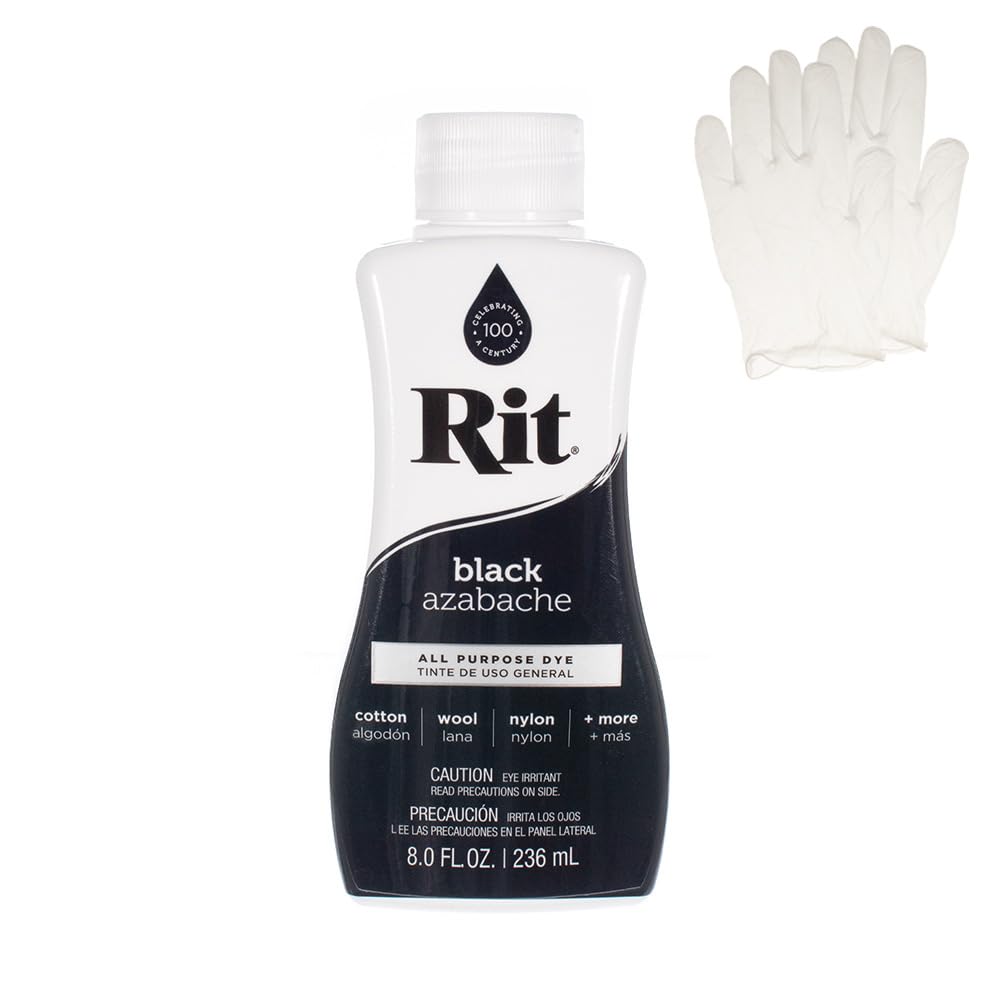
This Rit Dye review answers the question you actually care about: is the bottle worth the nine bucks? Short version—yes, if you’re dyeing natural fibers and don’t expect miracles on polyester. It’s a liquid all-purpose dye that works in a washing machine, a stovetop pot, or a bucket. You get an 8 oz bottle of black dye plus a pair of gloves, which is a nice touch because the first time you dye something you’ll forget gloves and your hands will look like you lost a fight with a printer cartridge.
Rit has been around since 1918, so they know fabric dye. But that also means their formula hasn’t changed much. It’s a trusted workhorse, not a fancy new polymer. Who is it for? Anyone who wants to refresh faded clothes, deepen black jeans, or turn old white sheets into something moody. Not for synthetics unless you’re willing to boil them for an hour and still get a pastel.
Key Features
All-purpose liquid formula – Works on cotton, linen, silk, wool, rayon, and nylon. You don’t need to buy separate dye for different natural fibers. One bottle handles a pound of fabric (roughly a large shirt or a pair of jeans).
Machine-washable after setting – Once you’ve dyed and rinsed, the color stays through regular laundry cycles. No special detergents or cold-water-only nonsense.
Gloves included – The 8 oz bottle comes with a pair of disposable gloves. That’s rare in this price range. You’ll still want to wipe up spills fast—dye stains countertops and nails easily.
Works cold or hot – You can use the stovetop method for deep, even color, or the sink/bucket method for a more casual, slightly uneven look that some people actually prefer for tie-dye.
8 oz concentrated – That’s enough for a standard load in a washing machine if you follow the directions. For darker results on dark clothing, you’ll want the whole bottle plus salt or fixative.
Fit for You
You own a black cotton T-shirt that’s faded to charcoal gray and you want it black again without buying a new shirt.
You’re trying to match a fabric swatch for a DIY upholstery project and need a dye that blends well—Rit’s color chart helps you mix shades.
You bought a white linen tablecloth at a thrift store and want it navy for your dining room.
You’re doing a tie-dye session with kids and need something that doesn’t require boiling big pots on the stove. Rit liquid dye for tie dye works fine in squirt bottles at room temperature.
You have a faded pair of black rayon pants that are otherwise in great shape and you’d rather dye them than toss them.
Uses
Rescuing old dark clothes is where this dye shines. You know that black hoodie that went gray after ten washes? A Rit black dye bath brings it back to near-new darkness. The catch: if the fabric has any polyester blend, the dye will take unevenly. 100% cotton or linen gives the richest, most even result. For best fabric dye for dark clothing, you’ll want to pre-wash the garment, add salt to the dye bath (Rit recommends 1 cup of salt for cotton), and use the hottest water the fabric can handle.
Rit Dye for upholstery works, but only if the fabric is a natural fiber and you can remove the cover or treat the piece in place. Expect a softer, more vintage look rather than a crisp factory finish. It’s great for reviving a faded slipcover on a cotton sofa. Not great for polyester velvet or acrylic blends—those will end up splotchy.
If you’re doing a craft project and need multiple colors, the liquid formula mixes easily. You can eyeball it. One drop of black into yellow gives olive; half a bottle of scarlet plus a splash of brown gives a deep brick. The colors tend to come out a shade lighter than the bottle suggests, so go a little darker than you think.
Experience
Using Rit liquid dye is straightforward but messy. You’ll want to dedicate an old pot or use a plastic bucket. The smell is mild—like hot water with a faint chemical edge—but not overwhelming. Setup takes about ten minutes: fill the pot or machine with hot water, add dye, add salt or fixative (sold separately), wet the fabric, and submerge. Stirring every 10 minutes is the boring part, but skipping it gives you streaks.
For machine dyeing, you pour the dye into the washer’s drum, add the wet fabric, and run a full hot cycle. It’s easy, but the machine will have a faint dye residue for a couple of loads afterward. Run an empty hot wash with bleach to clear it. The gloves they include are thin, but they keep your hands clean through the initial pour. You’ll still want to rinse the bottle cap under water before closing it—dried dye on the threads makes it impossible to open next time.
The real annoyance: color variations batch to batch. Two bottles of black from different batches can be slightly different. If you’re dyeing a set of matching pieces, buy all the bottles at once. Also, the dye settles in the bottle. Shake it well before pouring or the first quarter of the bottle will be light.
Pros and Cons
Pros
Works on many natural fibers – One formula for cotton, linen, silk, wool, and nylon saves you from buying a cabinet full of specialized dyes.
Easy machine method – Pour in, run a cycle, rinse. Takes less effort than a stovetop batch and gives even results on small loads.
Gloves included – A small courtesy that means you don’t have to dig through the junk drawer for pink dishwashing gloves.
Affordable per use – $9.10 for an 8 oz bottle that dyes a pound of fabric. That’s about the cost of a cheap takeout coffee for a revived garment.
Wide color range – Rit has dozens of colors and a mixing guide online. You can make almost any shade except true bright white (obviously).
Cons
Poor on synthetics – Polyester, acrylic, and spandex barely take the dye, even with boiling water. If your garment has more than 15% synthetic, you’ll get a pale, uneven result.
Fades over time – Expect noticeable fading after 10-15 washes, especially on dark colors. You can slow it with vinegar in the rinse, but it’’t permanent like fiber-reactive dye.
Batch variation – Color can differ between production runs. Annoying if you’’re trying to match an existing dyed item or need two identical bottles.
Requires hot water for best results – The stove method uses boiling water, which is a burn risk if you’re clumsy. The machine method uses your hot water heater, so you’ll need a good supply.
Not the best for tie-dye precision – For crisp, bright tie-dye patterns on cotton, fiber-reactive dyes (like Tulip) give sharper lines and more vibrant colors. Rit is better for solid colors or muted marbling.
Advantages
Compared to other fabric dyes at this price, Rit is the most available—you can find it at craft stores, grocery stores, and online without special ordering. Rit Dye vs Tulip fabric dye is a common comparison. Tulip is great for tie-dye because it’s a fiber-reactive powder that bonds with cotton at room temperature and stays bright. But Tulip has fewer colors for solid shades and doesn’t work as well in a washing machine. Rit is the better all-around choice for one-color projects on clothing and upholstery.
Rit also offers a color remover (Rit Color Remover) that lets you strip existing dye before redyeing—Tulip doesn’t have that. That makes Rit better for drastic color changes, like turning a dark navy shirt into black.
Who Should Buy
Someone who wants to extend the life of cotton, linen, or rayon garments without spending $20 on a new shirt.
DIY upholstery hobbyists working with natural-fiber slipcovers or curtains.
People who like tie-dye but prefer muted, vintage tones rather than neon brights.
Anyone trying to match a color that’s close to an existing Rit color on their swatch chart.
Who should skip it? If you mainly own synthetic workout clothes, look for a dye formulated for polyester (like iDye Poly). If you want ultra-bright, long-lasting tie-dye results, Tulip or Procion MX dyes are better. And if you need to dye a huge item like a king-size duvet, you’ll need multiple bottles and a very large pot or a front-loading washer that can handle the weight.
FAQ
Is the Rit Dye liquid dye worth it?
Yes, for natural-fiber projects where you want an easy, inexpensive way to refresh or change color. It’s not permanent forever, but it holds up well for months of regular wear. You get what you pay for—a reliable, old-school dye that’s simple to use.
What is the difference between Rit Dye and Tulip fabric dye?
Rit is an all-purpose dye that works hot or cold, on many fibers, and is ideal for machine dyeing solid colors. Tulip is a fiber-reactive dye that works only on plant-based fibers at room temperature, giving brighter, more wash-fast colors—best for tie-dye. Choose Rit for versatility, Tulip for vivid patterns.
Is Rit Dye the best fabric dye for dark clothing?
It depends on the fabric. For 100% cotton or rayon dark clothing, yes—Rit black dye can restore faded black to near-original richness. For dark clothing with polyester blends, you’ll get a lighter, uneven result. For solid dark shades, Rit works well; for deep blacks on synthetics, look for dye specifically for that fiber.
Can you use Rit Dye for upholstery?
Yes, on natural-fiber upholstery like cotton, linen, or wool slipcovers. You can dye them in a washing machine or in a large tub. Expect a softer, slightly faded look—it won’t match a factory-dyed fabric. For synthetic upholstery, skip it—the dye will wash off or stain unevenly.
How do you use Rit liquid dye for tie dye?
Mix the liquid dye with water in squirt bottles according to the bottle directions (roughly 1 part dye to 3 parts water for normal intensity). Apply to damp, tied fabric. Let it sit for 6–8 hours, then rinse in cold water until clear. Results are more muted than fiber-reactive dyes, but the process is the same.
<3>How long does Rit dye last on clothing?
Expect noticeable fading after 10 to 15 machine washes, especially if you use hot water and strong detergent. To extend the color, wash dyed items in cold water with mild soap and add a cup of white vinegar to the rinse cycle. The dye won’t last forever, but a bottle costs $9—you can always re-dye.
Final Verdict
Rit liquid dye is a straightforward, affordable fix for dull clothes and faded home textiles. It’s not magic—it won’t work on polyester, it fades over time, and you need to follow the steps. But if you have a pile of cotton T-shirts, linen pants, or cotton sheets that have lost their mojo, this bottle will give them a solid second life. For $9.10, plus a bit of salt and hot water, you’ll save money and keep stuff out of the landfill. Just remember: shake the bottle, stir often, and don’t expect a perfect match on the first try. It’s worth the effort.
Rit Dye liquid dye is the familiar face on the craft store shelf – the one you grab when you want to turn a faded black shirt dark again or experiment with tie-dye on a rainy afternoon. At about $9 for an 8 oz bottle (gloves included), it sits in the comfortable middle ground of fabric dye pricing. But the category has gotten crowded. Tulip, Dylon, and Jacquard all offer different approaches, and the “best fabric dye for dark clothing” or “best for upholstery” answer changes depending on what you’re actually trying to do. Here’s where each one earns its keep – and where Rit might leave you wishing you’d grabbed something else.
Product
Price Range
Key Strength
Key Weakness
Best For
Rit Dye Liquid Dye (8 oz, Black)
Mid (~$9)
Ready-to-use liquid, easy mixing, comes with gloves
Weak on synthetics; needs hot water and salt; color can fade
Quick tie-dye projects, refreshing cotton or linen, small batches
Tulip One-Step Fabric Dye
Mid (~$8–$10)
Spray bottle option; works on more synthetic blends; no heat required
Limited color range (mostly tie-dye kits); spray can oversaturate unevenly
Works in washing machine; deep, lasting color; great for upholstery
One pod per load; can’t spot-dye; less control over shade
Large items like curtains, sofa covers, whole loads of dark clothing
Jacquard Procion MX Dye (Powder)
Premium (~$12–$15 per 2 oz jar)
Professional-grade colorfastness; works on natural fibers; mix custom colors
Requires separate activator (soda ash); powder can be messy; longer process
Serious fabric artists, batch dyeing with repeatable results, cotton/linen
Rit Dye liquid dye vs Tulip fabric dye
If you’re looking for “Rit Dye liquid dye vs Tulip fabric dye” to decide which tie-dye kit to buy, the real split is in how you want to apply it. Rit’s liquid needs a hot water bath and a splash of salt to set – classic stovetop or bucket method. Tulip’s One-Step comes in a spray bottle that you squirt directly onto dry fabric, then let sit for eight hours. No heat, no pot, no mess. For a low-energy Sunday afternoon with the kids, Tulip wins. But that spray delivery makes it hard to get an even, deep black on a whole garment – you’ll see streaks. Rit’s immersion method gives you a uniform color, especially if you’re after solid black. So for tie-dye? Both work. For best fabric dye for dark clothing that actually looks store-bought? Rit’s liquid is more predictable, but only on natural fibers – Tulip handles polyester blends better.
Rit Dye liquid dye vs Dylon Permanent Fabric Dye
This is the comparison that tells you whether you want a craft project or a real solution. Dylon’s machine pods are absurdly simple: toss a pod in the drum with your damp clothes, run a hot cycle, done. The color is stubborn – I’ve dyed an old beige sofa cushion cover with Dylon Black and it came out looking factory-fresh three washes later. Rit’s liquid, applied the same way, tends to bleed and fade faster, especially on heavy fabrics. But Dylon is a one-shot deal – you get one shade per pod, no mixing, no tweaking. And you can’t use it for small spot jobs or tie-dye because it’s designed for full loads. If you need “Rit Dye for upholstery” and you own a washing machine, skip Rit. Dylon is cheaper, easier, and more permanent. On the other hand, if you want to do a controlled small batch – say, dye a single pair of jeans a custom purple – Rit’s liquid gives you that flexibility. “How to use Rit Dye” has a hundred YouTube tutorials; Dylon’s method is “put pod in, press start.” Pick your level of involvement.
Rit Dye liquid dye vs Jacquard Procion MX Dye
This is a heavyweight fight that comes down to how serious you are about color. Jacquard Procion MX is a powder you mix with water and a soda ash activator. It’s fussy – you need good ventilation, you measure everything, and you have to keep the fabric in the dye bath for an hour with constant stirring. But the results are brilliant, even, and they last. Rit’s liquid dye is the convenience king here: pour into hot water, stir, dunk, rinse. No measuring soda ash, no guesswork. For a quick “is Rit Dye worth it” test, yes – if you’re dyeing a t-shirt for fun or refreshing a pair of cotton shorts. But if you’re dyeing a wedding dress to reuse or a set of linen napkins you want to last years, Jacquard is the better investment. It’s also the best fabric dye for dark clothing if that dark is black you want to stay black after ten washes. Rit’s black tends to shift toward charcoal over time; Jacquard’s stays onyx. The trade-off: time, cost, and a steeper learning curve.
So who should grab the Rit Dye liquid dye? You, if you’re doing small craft projects, tie-dye with friends, or just want an easy weekend fix for a faded cotton piece. The gloves are a nice touch, and the price is fair. But if you’re dyeing upholstery or a full load of dark clothing and want it to stay dark, skip Rit and grab Dylon – it’s cheaper, machine-friendly, and more permanent. And if you’re a fabric nerd who wants museum-grade color, Jacquard Procion MX is worth the extra effort. Rit is the all-rounder that does a lot of things okay – but for specific jobs, one of the alternatives will do it better.
Ready to decide on the Rit Dye liquid dye?
See today’s price, stock and delivery options on Amazon.