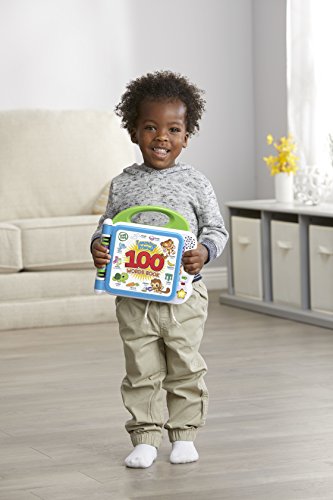
Wondering if the LeapFrog 100 Words Book is worth buying? For most parents of toddlers, the answer is a clear yes. This LeapFrog 100 Words Book review gets straight to the point: it works. Priced around $15 with a 4.8-star average, this sturdy interactive book keeps little hands busy and introduces first words without a screen.
Exceptional value at an accessible price point with outstanding user satisfaction.
Price vs. rivals
Typical
CheaperTypicalPricier
This product is priced at a typical mid-range point for interactive educational books for toddlers, aligning closely with similar popular alternatives.
Ease of use
Excellent 95/100
The book is very easy for an average person to use due to its simple touch-and-hear design, making it intuitive for both children and adults.
Overview
It’s a chunky, interactive board book aimed at kids aged 18 months to 4 years. Each spread covers a different category—animals, food, getting dressed, that sort of thing. Kids touch a picture, the book says the word out loud, and sometimes adds a sound effect or a simple fact.
The problem it solves is the “five more minutes” problem. You need a break, and they need stimulation that isn’t an iPad. If you’re looking at interactive toddler books in 2026, this one still sets the standard for the category. It’s self-contained, has no small parts to lose, and demands zero setup time.
LeapFrog 100 Words Book Features That Actually Matter
100 touch-sensitive word buttons spread across 12 categories. You get animals, vehicles, food, colors, and more. It provides enough variety to hold attention without overwhelming a toddler.
Bilingual mode with a physical slider switch lets you toggle between English and Spanish instantly. No menus, no apps. Slide it left or right, and the book switches languages on the fly.
A light-up star on every page plays two learning songs. It’s a simple reward system that encourages kids to explore the whole page instead of camping on one section.
Volume control and an auto shut-off that kicks in after about a minute of inactivity. The shut-off saves batteries (it takes 2 AAAs, check your box), and the volume knob keeps things bearable for everyone in the room.
Cardboard construction with coated pages that wipes clean. It’s not waterproof, but it survives juice spills, drool, and the occasional thrown tantrum better than a paper-page book ever could.
Fit for You
You want a screen-free activity that actually holds a toddler’s attention for longer than 90 seconds.
You’re looking for a gift under $20 that doesn’t feel cheap or disposable.
You’re tired of losing puzzle pieces and toy parts—this is a single object, nothing to vacuum up.
You want to introduce a second language casually, through play, rather than formal lessons or videos.
You need something that fits in a diaper bag without taking up the whole main compartment.
Uses
Throw it in the diaper bag for a restaurant outing. It buys you enough time to eat your food while it’s still hot. The car ride is the killer app for this book. It keeps them busy while you deal with traffic, and the handle cut-out makes it easy for them to hold.
Doctor’s waiting rooms are another prime spot. This is the nuclear option for avoiding a meltdown when the wait runs long. It also works as a quiet-time activity after lunch, giving you a predictable window of calm. Some parents use it during diaper changes to distract a squirmy kid. It works about 80% of the time, which is a better hit rate than most toys.
Experience
Setup is simple. You unscrew the battery compartment, pop in two AAAs, and slide the language switch to where you want it. That’s it. No wifi, no pairing, no account setup.
The first thing you’ll notice is how much kids love pressing the pictures. They aren’t always precise—they’ll mash a spot near the word they want. The book registers most presses reliably, but sometimes a toddler’s random slap hits a different spot, and you get “Apple” when they were aiming for “Bus.” It doesn’t seem to bother them.
The sound quality is surprisingly clear. There’s no static or distortion, just a warm recorded voice saying each word. The music mode plays two songs. One is the Learning Friends theme, the other is a counting song. You will hear them hundreds of times. The auto shut-off is your friend. It kicks in after about a minute of inactivity, which is just long enough for them to walk away and forget they were playing with it.
The volume knob is a tiny plastic slider on the upper edge. It’s stiff enough that kids can’t easily crank it to max on their own. The pages are thick cardboard, but they aren’t indestructible. A determined 2-year-old can crease the corners. Spills wipe off, but you want to catch them quickly. Overall, it feels designed for the chaos of real family life.
Pros and Cons
Pros
Durable build. It has survived being dropped down stairs, used as a seat, and dunked in a cereal bowl. The pages wipe clean and the electronics keep ticking.
Excellent value. For $15, you get a toy that lasts for years and actually teaches something. Hard to beat that ratio.
Bilingual option is legit. The Spanish mode uses native speakers and accurate pronunciation. It’s a real learning tool, not an afterthought tacked on for marketing.
Battery life is strong. A set of batteries lasts months with regular use. The auto shut-off helps a lot here.
Independent play. Once they figure out how to press the buttons, they don’t need you to sit next to them and guide it. That’s a real gift for a parent.
Cons
Gets repetitive for adults. Your kid will love pressing the same four buttons. You will hear “Dog” and the subsequent bark 50 times in a row. That’s the trade-off for their engagement.
No headphone jack. If you need silence, this isn’t the toy for that. The volume can go low, but it can’t go completely quiet.
Some word groupings feel loose. The categories are broad, so “Learning Friends” includes some words that don’t connect perfectly. It doesn’t bother kids, but adults notice the inconsistency.
Pages can warp. If a kid sits on the book or bends it backwards, the cardboard spine can start to separate. It holds up well overall, but it’s not indestructible.
Advantages
How does it stack up against the main competition? The LeapFrog vs VTech Touch and Teach Word Book debate comes down to style. VTech packs more sound effects and interactive gimmicks per page, which is great for kids who need lots of stimulation. But the LeapFrog 100 Words Book focuses on clarity and a book-like experience. The voice audio is warmer, the layout is cleaner, and it mimics the page-turning motion of a real book, which helps reinforce the “this is reading” concept.
Better audio quality. Words are clearer and less robotic than most competitors in this price range.
Cleaner page layout. Less visual noise means kids focus on the word and the picture instead of flashing lights everywhere.
More categories. 12 themes gives it longevity. A kid can outgrow the “Animals” page and discover the “Colors” page a month later.
Who Should Buy
This is for you if…
You have a toddler between 18 and 36 months who is starting to talk or showing interest in words.
You want a gift that parents will actually thank you for—it’s durable, educational, and doesn’t need an app.
You’re putting together a list of the best educational toys for 2 year olds and need something offline and proven.
Skip it if…
Your kid is already reading independently. They will outgrow this fast.
You hate toys that make noise. All sound toys are annoying. This one is just less annoying than most.
You need something fully washable. The pages wipe down, but you can’t run it under a faucet.
FAQ
Is the LeapFrog 100 Words Book worth it?
Yes, for most families. It earns its spot on the best educational toys for 2 year olds lists by delivering clear, engaging vocabulary practice without a screen. The 4.8-star rating from thousands of buyers backs that up.
How long does the LeapFrog 100 Words Book last?
Physically, expect it to survive at least one toddler and into a sibling’s turn. The cardboard holds up well to normal use. Batteries, depending on playtime, last about 2-3 months. The educational content lasts until the child outgrows it, usually around age 4.
Is it safe for a 1-year-old?
It is marketed for 18 months and up. The pages are thick, but a younger toddler might chew the corners. It does not have small parts that detach, which is good. Supervise younger toddlers, but it is generally considered safe for the 12-month age range.
Can you change the language mid-use?
Yes. There is a physical switch on the top edge of the book. Slide it left for English, right for Spanish. The change is instant, even while the kid is pressing buttons. No need to reset or power cycle the device.
Does it come with batteries included?
It depends on the specific package you buy. Many versions ship with demo batteries for try-me mode. Check the listing details carefully. It requires 2 AAA batteries, and you will need a small Phillips-head screwdriver to open the back compartment.
How does it compare to the VTech Touch and Teach Word Book?
LeapFrog vs VTech Touch and Teach Word Book comes down to preference. LeapFrog focuses on clear word pronunciation and a calmer, book-like feel. VTech adds more sound effects and game-like elements. For pure vocabulary building and a more traditional reading experience, LeapFrog is the better choice.
Final Verdict
Buy it. If you have a toddler or know someone who does, this is one of the safest bets in the toy aisle. This LeapFrog 100 Words Book review comes down to a simple judgment: it does its job well. It does not promise to make your kid a genius. It just connects pictures to words with enough polish and durability to earn a permanent spot in the diaper bag.
The only real catch is longevity. A child who starts using it at 18 months will likely outgrow it by their fourth birthday. For a $15 toy, that is a reasonable lifespan. It is a well-built tool for a specific developmental stage. If that stage matches your child, stop researching and buy the book.
LeapFrog 100 Words Book vs the Competition in 2026
The LeapFrog Learning Friends 100 Words Book sits in a comfortable middle ground: $14.99, which is neither cheap nor expensive for an interactive toddler book. It’s not the only choice, and the differences between it and rivals matter more than the sticker price. Here’s how the main alternatives stack up for someone trying to pick one for a two-year-old who will use it daily.
Product
Price Range
Key Strength
Key Weakness
Best For
LeapFrog Learning Friends 100 Words Book
$14.99
Real photos, bilingual (English/Spanish), solid page count
AAA batteries included, but they drain fast if left on
Parents who want a straightforward, screen-free word book with both languages
VTech Touch & Teach Word Book
Around $20
More interactive games, music, and a carrying handle
Plastic cover feels cheaper; some buttons require hard presses
Kids who need extra engagement (sounds, quizzes) and don’t mind the bigger size
Budget pick or a first electronic book for a child who loves Elmo
LeapFrog 100 Words Book vs VTech Touch & Teach Word Book
Right off the bat, the VTech Touch & Teach Word Book looks more like a toy: it has a plastic handle for carrying, a few game modes, and music that plays after you turn a page. The LeapFrog book feels more like an actual book—thick cardboard pages with real photographs of animals, food, and objects instead of cartoon drawings. That matters more than you’d think. A two-year-old who is still learning what a dog looks like will benefit from seeing an actual golden retriever, not a round blue dog shape. The VTech book relies on illustrations, and they’re bright but generic. On the other hand, VTech’s question mode (“Where is the cat?”) keeps some kids engaged longer than simple touch-and-hear. The trade-off: the LeapFrog 100 Words Book costs about $5 less, runs on two AAA batteries (VTech uses three), and doesn’t have a handle your kid will try to swing around. If your child already knows basic words and needs a vocabulary boost with real images, go LeapFrog. If they need more auditory feedback and mini-games, VTech.
LeapFrog 100 Words Book vs Fisher-Price Laugh & Learn Smart Stages Book
Fisher-Price’s entry in this category leans hard on the Smart Stages feature: slide a switch and the book changes what it says and asks. At stage 1, it just names objects. At stage 2, it adds simple sentences (“The ball is red”). At stage 3, it asks questions. That’s a real advantage if you’re planning to keep the same toy for a year or two. The downside? The Fisher-Price book only has ten pages spread across its two “stories,” so you’re getting fewer unique words (roughly 60) versus LeapFrog’s 100. It also plays music every time you open a page, and after the twentieth play of “Old MacDonald” you might be tempted to hide it. The LeapFrog 100 Words Book keeps things quieter—no songs, just word names and simple sound effects. For a toddler who is easily overstimulated, that’s a plus. For a family that wants a toy that adapts as the child grows, the Smart Stages Book wins. But if your two-year-old just needs to build vocabulary without the musical distractions, the LeapFrog is the better buy and costs less.
LeapFrog 100 Words Book vs Playskool Sesame Street Touch & Learn
Playskool’s Sesame Street book is a good example of “you get what you pay for.” At roughly $12, it’s the cheapest interactive word book on this list. It’s also the flimsiest. The pages are thin cardboard, the touch spots are large but sometimes unresponsive, and there’s no volume control—so every tap is either too loud or not loud enough. The big draw is the characters: Elmo, Cookie Monster, Big Bird. If your kid is obsessed with Sesame Street, this might hold their attention for a while. But the vocabulary is limited to around 30 words across five pages, and there’s no option for Spanish or any second language. Compared to the LeapFrog 100 Words Book, which has twelve pages, bilingual mode, and a real off switch (not just a timer, thank goodness), the Playskool feels like a toy from the bargain bin. That said, it’s a fine backup for a car trip or a grandparent’s house where you don’t want to risk the more expensive LeapFrog. For everyday learning, spend the extra three bucks.
The LeapFrog 100 Words Book is an easy recommendation if you value clear, uncluttered presentation and a solid set of real images paired with English and Spanish. It’s not the most feature-packed—the VTech offers more games, the Fisher-Price adapts to skill levels—but it does the one thing a word book should do: let a kid hear and say a lot of real words. If your child is under 18 months, the Fisher-Price Smart Stages book gives you more longevity. If you’re pinching pennies and the toddler already loves Elmo, the Playskool is a fine stopgap. For everyone else, the LeapFrog is the best educational toy for 2 year olds in this specific category, and it’s worth the modest investment.
Ready to decide on the LeapFrog 100 Words Book?
See today’s price, stock and delivery options on Amazon.