High customer satisfaction combined with abundant content makes this sticker book a strong value for its price tier.
Price vs. rivals
Typical
CheaperTypicalPricier
Priced slightly above typical sticker and activity books, reflecting the extra content and high rating, but still within a competitive mid-range.
Ease of use
Excellent 95/100
The sticker book's simple peel-and-stick activities and clear themes make it very easy for an average person to use.
Overview
The Cupkin Animal Habitats Sticker Book is a 12-page activity set that pairs coloring pages with over 500 stickers organized by ecosystem. It solves the problem of “I’m bored” on a rainy afternoon or during a long car ride — without handing a kid a screen. This one is really for the 3-to-6 crowd, especially toddlers and preschoolers who still put things in their mouths (more on safety later).
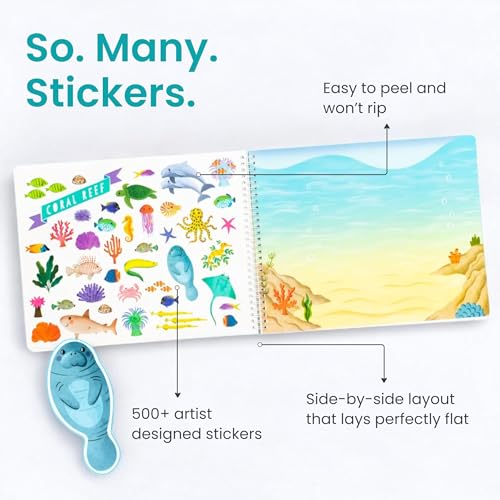
Each page focuses on a different habitat — ocean, savanna, forest, arctic, and so on — with a background scene to color and a tray of stickers to place. The book is spiral-bound, lies flat, and the stickers are repositionable, which means you can peel and restick a few times before they lose grip. That buys you a surprising amount of peace.
Key Features
500+ stickers across 12 habitats – That’s a lot of animals, and they’re split by scene so your kid doesn’t dump everything at once. Each page has its own sticker sheet tucked in a pocket, which helps keep the chaos contained.
Spiral-bound, lay-flat design – No wrestling with the spine. The book stays open on a car seat tray or a kitchen table, and little hands don’t have to hold it down while they stick.
Coloring pages on the same spread – The background is a line drawing ready for crayons. So it’s two activities in one: color the tree, then stick the monkeys. That stretches the playtime.
Repositionable stickers – They aren’t full-on removable like a window cling, but they lift cleanly off paper for one or two repositions. That matters when a three-year-old insists the penguin belongs in the desert.
Thick, glossy paper stock – The pages won’t tear the first time a sticker is yanked off, and crayon marks don’t bleed through. Parents of heavy-handed colorers will notice the difference.
Portable size – About 8.5 x 11 inches, thin enough to slide into a diaper bag. It’s not a tiny travel book, but it’s not a poster board either.
Fit for You
You’re driving more than 45 minutes with a toddler and need something that doesn’t involve batteries.
You have a preschooler who loves animals but loses interest in plain coloring books after three pages.
You’re looking for a gift that won’t get returned — something that works for both a 3-year-old and a 5-year-old without feeling babyish to the older one.
You’re a daycare teacher or babysitter who needs a quiet activity that multiple kids can share (just buy extra crayons).
You tried a cheap sticker book from the dollar store and spent the afternoon peeling stickers off the couch.
Uses
Picture a Saturday morning. Your kid wakes up early, you’re still on coffee number one, and they want to “do something.” This book buys you twenty minutes of quiet while they figure out which sticker goes on which page. The crayons stay in the box unless they want to color, so you can offer it as a choice without a big setup.
For restaurants: the spiral binding means it fits on a high-chair tray or a booth table. You hand over a single page (tear it out or just flip to it) and keep the rest in reserve. The stickers are small enough to be interesting but not so tiny they’re a choking hazard for a 3-year-old — though you still watch the little ones.
Longer car trips: each habitat is a new world. You can narrate: “we’re in the jungle now, what animal lives here?” It turns a sticker book into a low-key learning moment. No pressure, just sticking and talking.
Experience
Out of the box, the first thing you notice is the smell of fresh print and the weight of the spiral coil. The sticker sheets are perforated and slide out of a clear plastic pocket on each page — that pocket is a smart touch because it keeps stickers from migrating to your floorboards. The repositionable quality is real, though after three lifts the glue gets tired. Accept that and you’re fine.
The coloring side is standard: thick outlines, not overly detailed. A 2-year-old can scribble inside the lines, a 5-year-old might want more intricate drawings. That’s the trade-off — the book leans toward younger kids. The stickers themselves are glossy and cut cleanly; no ragged edges that peel wrong.
Annoyances: the sticker pockets can be a little tight at first. You have to wiggle the sheet out, and a toddler might crumple the corner trying. Also, the book has 12 habitats, but some kids will zoom through all the stickers in one sitting if you let them. The makers assume you’ll dole it out, so there’s no “slow release” mechanism — that’s up to you.
Cleanup is minimal. Stickers that fall off (they will) are easy to spot because they’re glossy on a matte page. Crayon marks wipe off the cover with a damp cloth. The book lives in a ziplock bag in our car now, and it’s held up for two months with moderate use.
Pros and Cons
Pros
Keeps kids busy without a screen – The combination of coloring and sticking gives a sense of completion per page, which cuts down on “I’m done” whining.
Good sticker quality – They don’t tear when peeled, and the adhesion is strong enough to stay put on paper but light enough to reposition once or twice.
Educational without being preachy – Each habitat teaches animal names and ecosystems naturally as the child places stickers. You don’t have to lecture.
Durable construction – Spiral binding, thick cover, glossy pages. It can survive being dropped, stepped on, and tossed into a bag.
Great value for the price – At $16.98, you get 12 distinct scenes and over 500 stickers. Compare that to a single sticker book from the drugstore that costs $8 and has 30 stickers. This lasts longer.
Cons
Stickers lose stickiness after a few repositions – If your child is a perfectionist who peels and re-peels twenty times, you’ll be frustrated. The glue is good, not magical.
Not ideal for older kids (6+) – A kindergartener who is already reading may find the scenes too simple. They’ll finish it in one afternoon and want more.
Sticker pockets are a bit stiff – Younger toddlers might need help pulling the sticker sheet out. You’ll be doing that part for a while.
Once stickers are used, it’s just a coloring book – The stickers are single-use in practice (except for the repositioning). After that, the pages are just line drawings. Not a huge con, but worth noting if you want something reusable.
No storage pouch for leftover stickers – You’ll want a ziplock or envelope for loose stickers after the sheet is partly used. The plastic pocket is only for the full sheet.
Advantages
Where does this book beat the alternatives? First, it’s more organized than a typical sticker pad. Many sticker books just throw all the stickers in the back and let you hunt — Cupkin groups them by habitat, so the activity has a natural flow. Second, the coloring element adds longevity. A pure sticker book is done when the stickers are gone; this one still has the coloring pages to finish. Third, the subject matter is broader than many competitors: you get ocean, desert, forest, mountain, arctic, savanna, and more, so it covers a lot of curiosity.
Compared to the big name in the space — the Melissa & Doug Reusable Sticker Pads — the Cupkin book is less expensive per page and includes the coloring component. Melissa & Doug pads are fully reusable (stickers peel off a glossy background), but they don’t have coloring, and the scenes are simpler. If you want an animal habitats sticker book that combines art and play, Cupkin’s approach is pretty unique in this price range.
For parents searching for the best sticker book for toddlers, the Cupkin ticks safety boxes: the stickers are nontoxic, and the pages are thick enough to resist tearing. It’s not a reusable book, but for the price, the trade-off is reasonable.
Who Should Buy
Parents of 3- to 5-year-olds – This is the sweet spot. Enough detail to hold attention, simple enough for independent play.
Traveling families – If you’re facing a flight or a road trip, this is a reliable quiet-time tool that doesn’t need Wi-Fi.
Grandparents buying a gift – It’s sturdy, it’s affordable, and it won’t be duplicated because most grandparents grab the usual toy trucks. This feels more thoughtful.
Skip it if you need a fully reusable activity (look at the Melissa & Doug reusable pad instead), or if your child is already 6+ and wants complex puzzles or crafts. Also skip if you’re on a very tight budget — the $17 price is fair, but a pack of crayons and printer paper is free.
FAQ
Is the Cupkin Animal Habitats Sticker Book worth it?
Yes, for the target age of 3 to 5 years old it’s a solid buy — you get 12 different scenes, over 500 stickers, and coloring in a package that survives being tossed into a diaper bag. The only caveat is the limited repositionability.
How long does it last?
Depends on how your kid paces it. If they use one or two pages per session, expect a couple of weeks of occasional play. If they burn through all stickers in one go, the coloring pages extend the life a bit longer.
Is it safe for toddlers under 3?
The stickers are nontoxic and the pages are thick, but small parts are a consideration — some stickers are about the size of a dime. For a 2-year-old who still mouths objects, supervise closely or wait until they’re past that stage.
How does Cupkin sticker book vs Melissa & Doug compare?
The main difference is reusability. Melissa & Doug pads are fully reusable because stickers stick to glossy scenes; Cupkin stickers are paper-based and lose stickiness after a few repositions. Cupkin wins on variety of scenes and the addition of coloring pages.
What if my kid finishes all the stickers fast?
You can buy a refill pack separately from Cupkin? No, they don’t sell sticker refills for this book. Your best bet is to let the kid color the remaining pages, or look for a Cupkin sticker book alternative like the Peaceable Kingdom sticker pads that offer reusable options.
Can this be used as a sticker activity book for kids on a plane?
Absolutely. The spiral binding lays flat on a tray table, and the pages are compact enough to not crowd the seat. Just pack a small bag of crayons and you’re set.
Final Verdict
The Cupkin Animal Habitats Sticker Book is a dependable, low-fuss activity for the preschool set. It combines two things kids love — stickers and coloring — into one package that’s organized enough to keep you sane and varied enough to hold their attention. The price is right, the production is solid, and the only real letdown is that the stickers aren’t truly reusable. But if you’re okay with that trade-off, it’s a smart purchase.
For a parent looking for a gift or a travel companion that doesn’t involve a screen, this is one of the better options at this price point. Just keep an envelope handy for loose stickers and you’ll be fine.
Cupkin Animal Habitats Sticker Book Review: vs the Alternatives in 2026
The Cupkin Animal Habitats Sticker Book sits in a useful middle spot in the sticker activity book category. It costs around $17, which is more than most sticker pads, but you get a real book with 12 coloring and activity pages and more than 500 stickers. If you’re browsing for the best sticker book for toddlers in 2026, this is one of the options that keeps showing up in recommendations. The animal habitats sticker book shelf isn’t huge, so the real comparison is between Cupkin’s all-in-one approach and three cheaper, more focused books.
Product
Price Range
Key Strength
Key Weakness
Best For
Cupkin Animal Habitats Sticker Book
Around $17
500+ stickers plus 12 coloring and activity pages in one book
Stickers are one-time use; the little habitat pieces will end up on the floor
Toddlers and preschoolers who want to color and stick in the same sitting
Melissa & Doug Reusable Sticker Pad – Habitats
Around $10
Stickers peel off and reattach to the glossy scenes
No coloring pages; the scenes start to feel repetitive
Younger kids who love doing the same habitat over and over
National Geographic Kids Animal Habitats Sticker Activity Book
Around $9
Real photos and habitat facts; stickers feel more educational
Thin paper and no coloring; better for older kids
Curious 5- and 6-year-olds who want facts with their stickers
Usborne First Sticker Book Animals
Around $7
Simple, clear animal scenes with labeled stickers
Short, no coloring, and the stickers are gone once placed
Toddlers who like direct sticker placement without extra steps
Cupkin Animal Habitats Sticker Book vs Melissa & Doug Reusable Sticker Pad – Habitats
This is the question most parents ask. The Melissa & Doug pad costs less, and its stickers are reusable, which is a huge deal for a 2-year-old who wants to place the same giraffe in the same spot twenty times. But the Cupkin sticker book vs Melissa & Doug comparison is not really about stickers alone. Cupkin gives you a coloring page for each habitat, plus enough stickers to fill that page. The Melissa & Doug pad has no crayon element at all, and its glossy scenes are built to take repeated peeling rather than crayon pressure. You choose based on the child’s attention span: if they need to start over, buy the reusable pad. If they want to make something, buy the Cupkin.
Cupkin Animal Habitats Sticker Book vs National Geographic Kids: Facts or Free Play?
The National Geographic book is the smarter pick for a kindergartner who already knows what a habitat is and wants to learn more. The stickers are photographs, not drawings, and the page margins are full of real details about each animal. But it’s not a coloring book, and the paper is lighter than Cupkin’s. There’s no room to build a scene your way. Cupkin’s animals are cute and simple, and the pages are designed to be decorated, not just read. For a 4-year-old who wants to put a polar bear in an ocean and call it a day, Cupkin wins. For a 6-year-old who asks what a meerkat eats, National Geographic is the better answer.
Usborne First Sticker Book Animals: A Simpler Cupkin Sticker Book Alternative
Usborne is the budget option. It costs about half as much as Cupkin, and you can feel it in the size. It’s a slim, portable book with cheerful animal scenes and stickers that match each page, but there’s no coloring, no activity, and not much room for improvisation. So if a friend has been asking for a Cupkin sticker book alternative because they want that all-in-one coloring and sticking project, Usborne’s First Sticker Book Animals is the one to suggest when money is tight or the child is very young. The trade-off: your kid might finish the whole Usborne book in one calm morning, while the Cupkin book will stretch across a few afternoons.
So is Cupkin sticker book worth it? For a 3- or 4-year-old who likes both crayons and stickers, yes. This is the sticker activity book for kids that gives you the most play per page under $20. Pick the Cupkin Animal Habitats Sticker Book if you want one book that covers coloring, sticking, and talking about animals. Pick the Melissa & Doug reusable pad if your child just wants to stick and restart. And pick the National Geographic or Usborne book if you need a lighter, cheaper option for a specific mood.
Ready to decide on the Cupkin Animal Habitats Sticker Book?
See today’s price, stock and delivery options on Amazon.