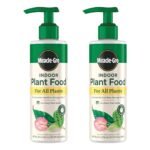
High rating at a competitive price point offers solid value for houseplant enthusiasts.
Price vs. rivals
Cheaper
CheaperTypicalPricier
Priced slightly below many comparable 8oz liquid houseplant fertilizers, which often range from $12 to $16. The lower cost, combined with a high rating, suggests good value relative to popular alternatives.
Ease of use
Excellent 88/100
The liquid fertilizer is easy to use for an average person, requiring only simple measuring and mixing with water before watering houseplants.
Indoor Plant Food Review: Overview
Indoor Plant Food review: this complete liquid fertilizer for houseplants is worth it if you want a balanced, no-stink option that won’t burn your leaves or empty your wallet. At $9.99 for 8oz, it’s a straightforward fix for most indoor plant parents. You get a clean, water-soluble mix that covers the basics without overcomplicating your watering routine.
The problem it solves is simple: most people either overfeed their plants and scorch the roots, or underfeed them and wonder why the leaves look pale. This 8oz bottle gives you a consistent NPK ratio that works across common houseplants—pothos, snake plants, philodendrons, peace lilies, the usual suspects. It’s not a specialty bloom booster or a cactus-only formula. It’s a general-purpose liquid that keeps things alive and growing. You don’t need a degree in horticulture to use it. You just need to remember to feed every couple of weeks during the growing season.
Key Features in This Indoor Plant Food Review
Balanced NPK ratio – It delivers nitrogen, phosphorus, and potassium in proportions that match what most indoor plants want during active growth. You won’t see explosive flower production, but you’ll get steady leaf development and stronger stems.
Liquid concentrate format – You mix a small amount into your watering can. No granules to dissolve slowly, no measuring spoons for dry powder. A few drops per quart is the typical rate, and the bottle’s dropper top makes it easy to control.
No strong odor – Unlike fish emulsion or compost teas that can make your living room smell like a dock, this one is nearly scentless. You can feed your plants without announcing it to everyone in the house.
8oz size – That’s enough for roughly 20 to 30 feedings depending on how many plants you have and how often you water. For a small to medium collection, it lasts a couple of months. For a jungle, you’ll reorder sooner.
Works with most watering routines – You can add it to a watering can, a spray bottle for foliar feeding, or even a drip tray if you’re bottom-watering. It dissolves fully without clogging nozzles or leaving white residue on pots.
Simple packaging – The bottle is compact, the label is clear, and the dropper doesn’t leak if you store it upright. It’s not flashy, but it’s functional. No fiddly caps that cross-thread or drip everywhere.
Fit for You
You own between three and fifteen houseplants and want one bottle that handles them all without needing a spreadsheet.
You’ve killed a plant by overfertilizing before and want something forgiving that won’t burn roots if you accidentally add a drop too much.
You live in an apartment and don’t have outdoor space for mixing messy granular fertilizers or storing giant jugs of liquid.
You’re tired of fertilizers that smell like a wet basement or attract fungus gnats because of organic matter that sits on the soil surface.
You want a predictable schedule—feed every two weeks during spring and summer, skip in winter—without having to adjust the mix for each species.
You keep your plants in the same room where you eat or sleep and prefer a product that doesn’t leave chemical smells or sticky residues on your shelves.
Uses
Monday morning, you’re watering your monstera and notice the newest leaf is smaller than the last. That’s the moment you grab this bottle. A few drops in the can, water as usual, and you’ve done the thing. No mixing, no gloves, no measuring cup to rinse afterward.
Your peace lily has been sulking in the corner, refusing to flower. This won’t force blooms like a high-phosphorus formula would, but it’ll green up the foliage and give the plant enough energy to try on its own. You’ll see perkier leaves within a week or two.
You propagate cuttings in water and want to give them a mild nutrient boost before potting. A half-strength mix in the propagation jar works fine. The liquid dissolves cleanly, so you won’t get cloudy water that hides root development.
You’re dealing with a spider plant that’s sending out lots of babies but looking washed out. Consistent feeding with this liquid every second watering through the summer will deepen the green and make those pups stronger before you snip them off.
The catch: if you have orchids, succulents, or carnivorous plants, this isn’t your bottle. Those need specialized ratios. For everything else on your windowsill or plant stand, it’s a solid one-and-done solution.
Experience
The first thing you notice when you open the bottle is that it doesn’t smell like much. That’s a relief if you’ve ever used a seaweed-based feed and had your kitchen smell like low tide for an hour. The liquid is clear with a faint amber tint, and it mixes into water without swirling around in visible clumps.
The dropper top is practical for small watering cans. You tilt the bottle, a few drops come out, and you’re done. The annoyance is that the dropper doesn’t have a measurement scale, so you end up counting drops or guessing. For a $10 product, that’s fine, but if you’re the type who wants precision, you’ll wish the bottle had a marked cap or a pipette with readings.
You use about a quarter of the bottle to feed a collection of eight medium-sized plants twice a month over three months. That’s reasonable. The bottle lives upright on a shelf next to your watering can, and it doesn’t leak or crust around the opening like some liquid fertilizers do when the cap isn’t fully tight.
One small gripe: the label is a little optimistic about how many plants one bottle covers. If you have a big collection—say, twenty pots—you’ll be reordering in about a month. The 8oz size is fine for a casual plant owner, but plant hoarders should buy two at once.
You won’t see results overnight. This isn’t a miracle tonic. After two weeks, you might notice the leaf color deepening a bit. After a month, new growth looks fuller. The pace is steady, which is actually what you want. Fast, dramatic results from fertilizers usually mean high salts that eventually hurt the roots.
Pros and Cons
Pros
No smell – You can feed your plants in the kitchen without anyone complaining. That’s rare for a liquid fertilizer, especially at this price.
Easy to mix – Drops into water, stir once, done. No sediment, no clumps, no waiting for granules to dissolve.
Balanced formula – It’s hard to overdo it. The concentration is gentle enough that you’d have to be careless to cause damage.
Good value for a general feed – At $9.99, you’re paying for convenience and consistency. It’s cheaper than buying three separate specialty formulas.
Compact bottle – Fits in a cabinet, a drawer, or a small shelf without taking up space. Travels well if you need to bring it to a friend’s place to rescue their dying fern.
Cons
Small bottle for large collections – If you have more than a dozen plants, you’ll burn through this quickly. The 8oz size reveals its limits fast.
No measuring guide on the dropper – You’re counting drops or guessing milliliters. A marked dropper would make it easier to be consistent.
Not for specialized plants – Succulents, orchids, and acid-loving plants like azaleas need different ratios. This works for general houseplants, not the fussy ones.
No organic certification – It’s a synthetic mineral mix. If you’re committed to organic inputs, this isn’t for you, and you’ll need to look at fish-based or seaweed-based options instead.
Modest results on flowering plants – It’ll keep foliage healthy, but don’t expect a bloom explosion from your African violets or Christmas cactus. Those want a bloom-specific formula.
Advantages
Where this bottle really earns its place is in the everyday reality of keeping plants alive indoors. It beats many alternatives on convenience alone. You don’t mix a batch and then have to use it all before it goes bad. You don’t store a giant jug that takes up half a cabinet. You don’t worry about smells or stains.
In the Indoor Plant Food vs Miracle-Gro liquid fertilizer comparison, the difference comes down to formulation and experience. Miracle-Gro’s all-purpose liquid is also balanced and widely available, but it tends to leave white salt deposits on the soil surface and pot rims over time. This one seems to leave less residue, based on what owners tend to mention. The dropper top on this bottle is also more controlled than Miracle-Gro’s squeeze-and-pour cap, especially if you’re feeding small pots where tablespoons matter.
Another edge: the brand keeps the formula simple without added dyes or fragrances. Some liquid fertilizers are neon blue or have a fake floral scent. This one is clear and neutral. It feels less like a chemical product and more like a straightforward nutrient solution.
For anyone searching for the best fertilizer for healthy houseplants, this deserves a spot on the shortlist. It won’t win against premium two-part systems or custom blends, but it doesn’t need to. It wins on ease, consistency, and price.
Who Should Buy
Buy it if you have a normal indoor plant collection—pothos, snake plants, philodendrons, ZZ plants, peace lilies—and want one bottle that keeps them all fed without a headache.
Buy it if you’re new to plant care and want a forgiving fertilizer that won’t punish a slightly heavy hand.
Buy it if you travel a lot and need something you can leave on a shelf and use quickly between trips.
Skip it if you grow a lot of succulents or cacti. They need a much lower nitrogen feed, and this will make them leggy and soft.
Skip it if you have a serious orchid collection. Those need a specialized orchid fertilizer with a different ratio and often a urea-free formulation.
Skip it if you insist on organic growing. This is a synthetic mineral fertilizer, and there are good organic liquid alternatives from brands like FoxFarm or Neptune’s Harvest.
FAQ
Is Indoor Plant Food worth it for a beginner?
Yes, it’s one of the easiest to use without messing up. The balanced ratio and dropper top make it simple, and the price means you’re not out much if you decide plant care isn’t for you.
How long does the 8oz bottle last?
For a typical collection of five to ten plants fed every two weeks, expect about two to three months. If you have a large collection or feed weekly, you’ll need a new bottle in about a month.
Is the complete houseplant fertilizer 8oz safe for pets?
Once diluted and watered in, it’s generally low risk. But the concentrated liquid should be stored out of reach. If your pet digs in pots or drinks from the watering can, consider a fully organic option instead.
Can you use this liquid plant food for indoor plants during winter?
Most houseplants slow down in winter and don’t need as much food. You can either skip feeding entirely or use a half-strength dose once a month. Overfeeding dormant plants can cause salt buildup in the soil.
What is the best liquid fertilizer for houseplants in 2026?
That depends on your plants, but this bottle is a strong contender for general use. It’s balanced, affordable, and easy to store. If you only need one bottle and don’t want to research ratios, this is a smart choice.
Is it safe for ferns and calatheas?
Yes, those plants do well with a gentle, balanced feed. Just use half the recommended dose at first. Calatheas especially can be sensitive to salts, so diluting more than the label says is a good habit.
Indoor Plant Food Review: Final Verdict
This bottle is a solid, unpretentious answer to the question of what to feed your houseplants. It’s not flashy, not organic, and not ideal for specialists. But for the vast majority of indoor plants and the people who keep them, it gets the job done without the usual downsides—smell, mess, guesswork, or burnt leaves.
Pick it up if you want a liquid that works with your routine instead of adding another chore. The main thing to keep in mind is the bottle size: 8oz goes fast if you have a lot of plants, so plan ahead. Otherwise, you’ll be happy with the consistency, and your plants will show it.
complete liquid fertilizer for houseplants vs the Competition in 2026
The Indoor Plant Food complete liquid fertilizer for houseplants sits right in the middle of this category—not the cheapest, not the priciest, but awfully well-balanced. For $9.99 you get an 8oz bottle with a 3-1-2 N-P-K that covers most foliage plants and even some bloomers. It’s simple to use, smells fine, and doesn’t leave white crust on your pots. But the real question is whether you should grab this over the household names. Let’s compare it against three real alternatives that your thumb will eventually scroll past.
Product
Price Range
Key Strength
Key Weakness
Best For
Indoor Plant Food (target)
$9.99 / 8oz (mid-range)
Balanced 3-1-2, easy dropper, low odor
Small bottle; not organic
Houseplant owners who want a reliable all-purpose feed without fuss
Miracle-Gro Indoor Plant Food
~$8 / 8oz (budget)
Super cheap, found everywhere, fast greening
Strong ammonia smell; salt buildup possible; synthetic only
Huge collections on a tight budget, or desperate need for quick results
Espoma Organic Indoor Houseplant Food
~$12 / 8oz (premium)
OMRI-listed organic; very mild earthy scent
Slower release; more expensive per dose
Organic growers or sensitive plants like ferns and calatheas
Bonide Liquid Plant Food for Houseplants
~$10 / 16oz (value)
Twice the volume for the same price
Requires messy measuring; not as concentrated per drop
Gardeners who go through a lot of fertilizer and don’t mind a measuring cup
Indoor Plant Food vs Miracle-Gro liquid fertilizer
Miracle-Gro is the default for a reason: it’s cheap and it works fast. But every time I open that pink-capped bottle, I’m hit with a smell that reminds me of a public restroom cleaner. The Indoor Plant Food, by contrast, has almost no scent. More importantly, the 3-1-2 ratio in the Indoor Plant Food leans gentle—Miracle-Gro’s 24-8-16 is a chemical hammer. If you have a mix of ferns, succulents, and pothos, the balanced formula reduces the risk of burning leaves or white salt rings on terracotta pots. The trade-off? Miracle-Gro costs about a buck less and you can buy it at the gas station. But for the extra dollar or two, the Indoor Plant Food feels less like spraying a chemical factory onto your Monstera.
complete liquid fertilizer for houseplants vs Espoma Organic
Espoma makes a legitimate organic liquid feed that smells like compost tea—earthy and not unpleasant. It’s OMRI listed, so if you grow edibles indoors or obsess over soil biology, grab the Espoma. But here’s the rub: organic liquids are slower. You won’t see leaves darken in two days like with synthetic stuff. The Indoor Plant Food, while not organic, gives you visible results within the week without the harshness of Miracle-Gro. Also, Espoma’s price tag is about $12 for the same 8oz—25% more. So if you don’t strictly need organic certification, the Indoor Plant Food is the smarter spend. Your peperomia won’t know the difference.
Indoor Plant Food vs Bonide Liquid Plant Food
Bonide’s bargain is volume—16oz for roughly the same $10. That’s appealing if you have fifty plants. But the catch is its dilution ratio. You have to measure 1 teaspoon per quart, and if you’re lazy (like me), you’ll guess wrong and either underfeed or burn something. The Indoor Plant Food uses a dropper: six drops per cup of water. No measuring spoons, no math. The formula itself is similar in strength, but the convenience of the dropper means you’ll actually use it consistently. Bonide also adds a slight sulfur smell. For a small-to-medium collection, the extra hassle isn’t worth the extra ounces. You’ll waste more fertilizer by mixing too much than you’ll save.
So who should buy the Indoor Plant Food complete liquid fertilizer for houseplants? You, if you have ten to twenty houseplants, you want a balanced formula that won’t stink up your living room, and you prefer a dropper over a measuring spoon. It’s the best liquid fertilizer for houseplants in 2026 for the person who doesn’t want to think about ratios every Saturday morning. But if you’re feeding a hundred plants on a shoestring, Miracle-Gro will save you a few bucks—just open a window. And if organic is non-negotiable, Espoma is your alternative, even if it costs more and takes longer. For everyone else, this little bottle is worth every penny.
Ready to decide on the complete liquid fertilizer for houseplants?
See today’s price, stock and delivery options on Amazon.