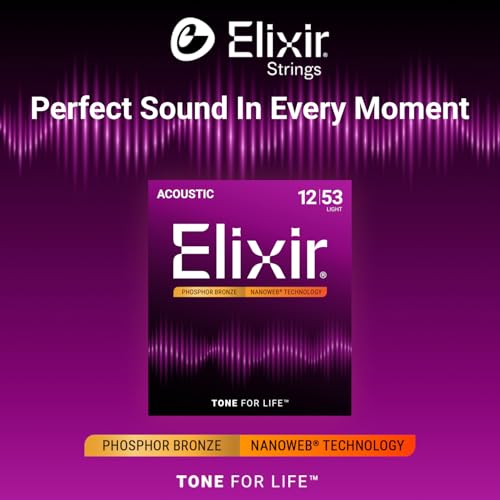
This Elixir Phosphor Bronze review gets straight to it: the Nanoweb strings cost more, but they last so long that the price per hour of good tone is actually lower than normal strings. For anyone tired of dead strings after a week of practice, this set is the practical fix.
Elixir NANOWEB strings command a premium price due to their exceptional durability and smooth feel, but the high rating suggests most users find the trade-off worth it.
Price vs. rivals
Pricier
CheaperTypicalPricier
Priced above typical acoustic string sets due to the premium NANOWEB coating technology, but still within a competitive range for high-end coated strings.
Ease of use
Excellent 95/100
High customer satisfaction indicates easy installation and comfortable use for guitar players.
Overview: The Elixir Phosphor Bronze Review
The Elixir Phosphor Bronze Nanoweb set solves a specific problem: dying tone. Standard acoustic strings sound great for a few days, then they mellow out, then they go dead. These strings hold their voice for a month or more. The whole point is longevity without sacrificing the clarity you need for fingerpicking or flatpicking.
They are for the player who wants to pick up the guitar and play without wondering if the tone is holding the performance back. The coating does the work, you just play.
Key Features: What the Nanoweb 12-53 Gauge Offers
Nanoweb Coating – A thin polymer layer over the windings that seals out the sweat and dirt that kills string tone. It is lighter than the older Polyweb coating and lets the string vibrate more freely.
Phosphor Bronze Wrap – Warm, balanced tone with plenty of overtones. It avoids the excessive brightness of 80/20 bronze while keeping good cut and projection.
12-53 Standard Light Gauge – The Elixir Phosphor Bronze 12-53 gauge is the most popular light set for a reason. Easy to bend, enough tension to drive a dreadnought, and comfortable for barre chords.
Reduced Squeak – The coating cuts down the sliding noise on the wound strings. A bigger deal for recording than most people expect.
Consistent String Life – Every string in the set dulls at roughly the same rate. No single string dying early and making you guess whether to change the whole set.
Fit for You: Is This Your Next Set of Strings?
You play a lot of fingerpicking and need every note to ring clearly without picking up excess finger noise.
You record at home and want to avoid the squeaky slide sound that ruins a good vocal take.
Your sweat happens to be acidic and kills standard bronze strings in a few days.
You are tired of changing strings every two weeks just to keep the tone fresh.
You play live and need a set of strings to survive a few sweaty gigs without going dull halfway through the night.
Uses: Elixir Acoustic Guitar Strings for Fingerpicking and More
Elixir acoustic guitar strings for fingerpicking are a frequent recommendation, and the 12-53 gauge is a big reason why. The balanced tension lets you articulate individual notes without the high end jumping out too much. The reduced squeak is a real bonus for quiet parts.
On a dreadnought for flatpicking, these strings hold up to heavy strumming. They don’t lose their core tone after an hour of hard playing. The coating keeps the punch alive.
Drop them on a smaller parlor guitar and the light gauge doesn’t choke the top. You get good projection and the strings keep their character even in damp rooms.
Throw them on a guitar you keep in an open tuning. The wound strings hold their intonation well and don’t show wear as quickly as uncoated sets when you move between tunings.
Experience: The Honest Elixir Phosphor Bronze Review
Out of the package, the Nanoweb coating feels different. Smooth, almost slick. Not in a bad way, just noticeably less grabby than a raw bronze string. Your fingers glide over the surface. Some people hate this feeling immediately. Most get used to it in a day and stop thinking about it.
Stringing them up is normal. The coating doesn’t flake or peel at the bridge pins or tuning posts. The strings seat quickly and stay in tune well.
The first hour of play is bright. Standard fresh-string brightness. After a couple of hours, they settle into a sweet spot. That sweet spot lasts. Weeks. You keep waiting for the tone to drop off and it just doesn’t.
The main difference from other strings is what doesn’t happen. They don’t suddenly go grey and dead. The third string keeps its ring. The plain strings don’t get that rough, corroded feel.
If you listen critically, you might notice the very top-end shimmer is a hair less than a brand new D’Addario. But the Elixirs are still shimmering a month later. The trade off is obvious: a slight compromise in raw edge for a massive gain in usable lifespan.
The only real annoyance is the price of a mistake. Snap a high E string during installation and you are out the cost of the whole pack, unless you buy single strings. Keep a cheap backup set for emergencies.
Pros and Cons of the Elixir Nanoweb
Pros
Longevity. The main event. A single set lasts a month of solid playing, often longer. That is three to five times longer than standard uncoated strings.
Reduced squeak. The coating makes slides nearly silent. A huge help for recording or quiet practice.
Consistent tone. The sound fades evenly across all six strings. You don’t get one strong string and three dead ones.
Corrosion resistance. Blocks sweat, humidity, and the general grime of playing.
Cons
Higher upfront cost. Over twenty dollars for a pack stings. The value comes from not buying strings for three months.
Slick texture. If you learned on raw bronze and love the grippy feel, the coated surface can feel plastic or slippery.
Tonal trade-off. The coating very slightly dampens the microscopic attack of a fresh uncoated string. Not a deal breaker, but a reality.
Breaking a string hurts. The high cost per pack is painful if you snap one early and have to replace the whole set.
Advantages: Elixir vs D’Addario Phosphor Bronze
The classic comparison is Elixir vs D’Addario phosphor bronze. The D’Addario EJ16s sound a little more raw and open on day one. The Elixirs sound about ninety percent as good right out of the box, but they hold that tone for a month. The D’Addarios lose their edge in a week.
If you search for the best acoustic guitar strings for tone longevity, the Elixir Nanoweb is the set every other string gets measured against. No one else has matched the combination of coating durability and natural feel.
If you are comparing Elixir Nanoweb vs Polyweb acoustic strings, the choice is simpler. Nanoweb uses a thinner coating. It feels closer to a normal string and vibrates more freely. Polyweb is thicker, feels more plastic, and lasts even longer but sounds warmer and less bright. Nanoweb is the standard for a reason.
Who Should Buy the Elixir Nanoweb Set
Buy them if: you play more than a few hours a week and hate changing strings. The longevity will make you a loyal customer.
Buy them if: you record at home and want consistent tone without string noise ruining takes.
Buy them if: you have naturally corrosive sweat that eats standard strings in days.
Skip them if: you love the raw, grippy feel of uncoated strings and change them weekly anyway.
Skip them if: you are on a tight budget and cannot justify spending twenty dollars on a single pack of strings.
FAQ: Elixir Phosphor Bronze Review – Your Questions
Is the Elixir Phosphor Bronze Nanoweb worth it?
For most players, yes. The extended lifespan makes the cost per hour of good tone significantly lower than cheaper strings that require frequent changes.
How long does it last?
You can expect a solid month of clear, vibrant tone from a single set. Many players stretch it to two or three months before it sounds as dead as a standard string after a week.
Are Elixir Nanoweb strings good for fingerpicking?
Yes. The smooth coating cuts down finger squeak, and the even response across all six strings gives each note clear definition. The 12-53 gauge provides a comfortable balance for fingerstyle work.
What gauge is the Elixir Phosphor Bronze 12-53 set?
It is a standard light gauge. The high E is .012 inches and the low E is .053 inches. It is the most popular gauge for acoustic guitars, balancing playability and volume.
What is the difference between Nanoweb and Polyweb?
Nanoweb uses a thinner coating that feels and sounds closer to an uncoated string. Polyweb is thicker, feels slicker, and lasts longer but sounds slightly warmer and less bright.
Is it safe for my guitar’s finish?
Perfectly safe. The polymer coating is harmless to modern finishes and nitrocellulose lacquer. No more worry than any other set of strings.
Final Verdict: The Elixir Phosphor Bronze Review Wrap Up
The bottom line of this Elixir Phosphor Bronze review is simple. They cost more, they feel different, and they last much longer. If you can accept the slick feel and the upfront price, you are looking at the most practical set of acoustic strings on the market.
Buy them if you value consistency and hate changing strings. Skip them if you are a tone purist who changes strings every week. Either way, the value proposition is clear: you pay more now to play longer without the dull tone creeping in.
Elixir Phosphor Bronze Nanoweb vs the Competition in 2026
If you’re shopping for acoustic strings, you’ve likely noticed the price gap between a standard pack of phosphor bronze and the coated stuff. Elixir sits at the top of that pyramid, and for good reason — they own the “longevity” market. But longevity isn’t the only metric that matters. Tone, feel, and outright cost per month all play a part. This comparison looks at how the Elixir Phosphor Bronze Nanoweb 12-53 set stacks up against D’Addario, Martin, and a couple of other coated alternatives, so you can decide where your money actually goes further.
Product
Price Range
Key Strength
Key Weakness
Best For
Elixir Phosphor Bronze Nanoweb (12-53)
Premium ($20+)
Exceptional lifespan; slick, fast-feeling coating; balanced tone that lasts
Brighter players may find the coating dulls top-end sparkle; pricier upfront
Players who hate changing strings and want a consistent, mid-scooped voice
D’Addario EJ16 Phosphor Bronze (12-53)
Budget-friendly ($6-$9)
Uncoated, open, and lively tone; classic phosphor bronze zing
Corrodes and dulls quickly, especially if you sweat a lot
Tonally purist players who change strings every few weeks
Martin MA540 Authentic Acoustic Phosphor Bronze (12-54)
Mid ($10-$15)
Warm, rich lows with a vintage-style voicing; no coating, natural feel
Lifespan is average; not as resilient as coated options
Fingerpickers and folk players who want warmth over aggression
D’Addario XS Phosphor Bronze (12-53)
Premium ($15-$19)
Coated but feels closer to uncoated; clear, punchy trebles
Not as long-lasting as Elixir in our experience; coating can wear at contact points
Players who dislike Elixir’s slickness but still want protection
Elixir Polyweb Phosphor Bronze (12-53)
Premium ($20+)
Warmer, rounder tone; thicker coating feels softer to some
Can sound muffled on bright guitars; coating builds up gunk faster
Those who find Nanoweb too bright or metallic
Elixir Phosphor Bronze Nanoweb vs D’Addario EJ16
The biggest question is usually this one: why pay three times as much for a coated string? Here’s the honest trade-off. The D’Addario EJ16 set sounds fantastic out of the box — that uncoated phosphor bronze attack is crisp, dynamic, and alive. It’s the tone you hear on countless records. But within two weeks of regular playing (say, an hour a day), that sparkle starts to fade. By week three, they feel rough under your fingers, and intonation can drift as corrosion builds up on the winding.
The Elixir Nanoweb set, on the other hand, barely changes. The coating prevents the oxidation that kills uncoated strings, so the tone you get on day one is roughly the tone you’ll have in month three. The catch is that initial tone. The Nanoweb has a slightly compressed, “velvet” quality — it’s not as raw or breathy as uncoated bronze. If you’re a studio musician tracking a solo acoustic part, you might prefer the D’Addarios for that session. If you’re gigging every weekend and don’t want to restring before every show, the Elixirs win by a landslide. It’s not about which is “better” — it’s about whether you value fresh tone or sustained tone.
Elixir Phosphor Bronze Nanoweb vs D’Addario XS
D’Addario’s XS line is the closest direct rival to Elixir, and it deserves a serious look. The XS coating is thinner, which means the strings feel more like traditional uncoated bronze under your fingers. They’re less slick than the Elixirs, which some players prefer — the Nanoweb can feel almost slippery, especially if you’re used to bare metal. Tonally, the XS sets have a bit more top-end zing and punch, making them excellent for strumming hard or recording with a pick.
However, the longevity comparison is where Elixir still holds the crown. The XS coating tends to wear at the fret contact points and around the soundhole edge if you rest your palm there. Over months of playing, the XS strings can develop dull spots and start to sound inconsistent. The Elixir Nanoweb coating is tougher and more resistant to flaking. The downside: Elixir’s tone stays consistent, but it’s also consistently less bright. So, if you want coated strings that act like uncoated ones for a few months, go XS. If you want a set that will still feel and sound decent a year later, the Elixir is the safer bet.
Elixir Nanoweb vs Polyweb acoustic strings
Within Elixir’s own lineup, the choice is between Nanoweb and Polyweb. Quick breakdown: Nanoweb has a thinner coating, which preserves more of the string’s natural brightness and attack. It’s the better choice for fingerpicking, where you want each note to define itself clearly. Polyweb has a thicker coating that makes the strings feel softer and warmer, cutting some of the metallic edge. It’s great on bright-sounding dreadnoughts or if you find Nanoweb a little too articulate for your style.
For the 12-53 gauge specifically, I’d point most players toward Nanoweb. The heavier gauge already brings plenty of body and volume, so you don’t need Polyweb to fatten the tone. You want the clarity to shine through, especially if you’re doing fingerstyle or complex chord work. The Polyweb can get a bit murky in the mids on a rosewood guitar, where Nanoweb lets the wood’s natural character come through.
Alternatives to consider and who should skip Elixir
If you’re a player who changes strings every two to three weeks regardless of condition — because you love that fresh-bronze crackle — then buying Elixirs is a waste of money. You’re paying a premium for a lifespan you’ll never use. Stick with D’Addario EJ16 or Martin MA540 for that ritual. The Martins, in particular, have a wonderful, mellow warmth that suits solo fingerpicking and old-time folk, and they’re a strong alternative if Elixir’s coating feels too synthetic to you.
That said, for the majority of players who want to forget about string changes for six months and still have a playable, good-sounding set, the Elixir Phosphor Bronze Nanoweb is the best acoustic guitar string for tone longevity in 2026. The upfront cost is real, but if you divide $21.99 by the number of months they last versus a $7 pack that dies in three weeks, the Elixirs come out ahead in cost-per-day. They’re worth it if your time matters more than a few dollars.
Ready to decide on the Elixir Phosphor Bronze Nanoweb?
See today’s price, stock and delivery options on Amazon.