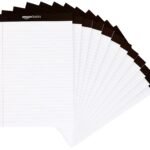
Amazon Basics index cards review: If you need a stack of ruled 3×5 cards for studying, note-taking, or flashcards, these heavy weight ones are worth it. For about $5.84, you get 300 cards that feel sturdier than the price suggests. The catch? They’re not fancy, but they don’t need to be.
The product delivers exceptional durability and utility for an extremely low cost, outperforming typical budget index cards in thickness and quantity per dollar.
Price vs. rivals
Cheaper
CheaperTypicalPricier
Priced well below most branded index card multipacks, consistent with Amazon Basics' value positioning while offering comparable quality.
Ease of use
Excellent 98/100
Index cards are intuitive to use for writing and organizing notes, with no learning curve or complex setup required.
Overview: Amazon Basics index cards review
This is a pack of three 100-count decks, each card 3×5 inches, ruled on one side. They’re made from heavy weight paper, so they resist bending and don’t turn to mush if you drop a coffee cup near them. The problem they solve is simple: you need a cheap, reliable way to capture information that you’ll sort, shuffle, and review.
Who is this really for? Students, first and foremost. But also anyone who likes to plan by hand, cooks who want to organize recipes, or professionals who still prefer a physical stack over a notes app. If you’re the type to lose a single card down the sofa, the 300 count here gives you plenty of room for error.
Key Features: Amazon Basics index cards review
Heavy weight paper – Heavier than your average cheap index card. You’ll notice the difference when you flip through a deck—no flimsy edges that bend in your backpack.
Ruled on one side – The blue lines keep handwriting neat enough to re-read later, while the blank back leaves room for diagrams or a second thought.
3×5 inch size – Fits in standard card holders, photo boxes, and your shirt pocket if you’re brave. It’s the classic study size for a reason.
300 count – Three packs of 100. That’s enough for months of flashcards or a solid semester of lecture notes.
White, uncoated finish – Takes pen, pencil, and highlighter without smearing—though heavy marker might ghost through to the back.
Fit for You
You’re studying for the bar, medical boards, or just a comps exam that has an unreasonable amount of vocabulary.
You like to write quick reminders and want a card durable enough to survive your back pocket for a day.
You’re a teacher or tutor who hands out study sets and wants a reliable supply that won’t eat your whole budget.
You run a bullet journal or planner system that uses 3×5 cards as portable task lists.
You keep a recipe box and need cards that stand up to frequent flipping and the occasional flour dusting.
Uses
Study sessions are where these cards earn their keep. Spread a deck on your desk, write a question on the ruled side, and the answer on the back. Shuffle them into a random order, then run through until you stop hesitating. That’s the classic spaced repetition loop, and it works better with a card that doesn’t tease you with a semi-transparent view of the answer.
Another good use: kitchen planning. Write a simple recipe on one side and the shopping list on the back. Prop the card against the salt shaker while you cook. Heavy weight means it won’t droop into the burner if you crowd the stove.
At work, they’re useful for managing daily standup notes. List your tasks on one card, the day’s blockers on another. At the end of the day, the pile tells you exactly where your time went. That’s a lot more satisfying than a forgotten app.
Experience
The first thing you’ll notice when you open the box is that the cards feel denser than the ones you remember from office supply stores. That’s the heavy weight doing its job. They slide out of the pack cleanly—no stuck corners from humid storage. The ruled lines are a soft blue, not a harsh navy, so they’re easy to see but don’t compete with your writing.
A small annoyance: the pack of three is held together with a paper wrapper, and if you’re not careful, you’ll pull the first card and get a little glue residue on the edge. It wipes off, but it’s there. Also, the cards have a slight tooth to them, which is great for pencil but means a very inky fountain pen might bleed slightly at the edge of your letters. Ballpoint and gel pens are fine.
Storage is simple—they fit perfectly in a standard index card box, or you can split the three packs between your desk, your bag, and the kitchen. No need for a dedicated holder if you don’t want one. Just be aware they’re not as slick as some premium brands, so they don’t shuffle quite as smoothly when you’re dealing out a big pile.
Pros and Cons
Pros
Price – $5.84 for 300 heavy weight cards is hard to beat. That’s under two cents per card.
Durability – The heavy weight paper survives backpacks, kitchen counters, and the occasional coffee spill.
Good surface for writing – Takes pencil, ballpoint, and gel pen well. The ruled lines are easy to follow.
Blank back – Leaves room for answers, diagrams, or a second thought without distracting lines.
Packaging – Three 100-count decks let you stash one in each of the places you actually study.
Cons
Not coated – These are uncoated cards, so heavy marker or a wet fountain pen can bleed or ghost. Stick to fine-tip pens.
Wrapper glue – The paper wrapper around each deck can leave a bit of residue on the first card. Easy to ignore, but annoying for the ultra-neat.
No ruled lines on the back – The back is completely blank, which is fine, but if you expected double-sided ruling, you’ll be disappointed.
Not as slick as premium cards – They have a bit of tooth, so they don’t shuffle as freely. For studying, that’s fine. For card tricks, get a deck of playing cards.
The white finish shows smudges – A day of handling in a hot room and the edges might look a little gray. It doesn’t affect writing, just looks.
Advantages
When you compare Amazon Basics vs Oxford index cards, the main difference is weight. Oxford’s standard cards are lighter—fine for mild use, but they bend more in a backpack. Amazon Basics heavy weight cards feel closer to Oxford’s premium line, but at a price that’s usually a couple of dollars less. If you only need a few cards for a week, Oxford’s everyday quality is fine. For a semester of serious studying, the extra stiffness here wins.
Cost per card – Typical standard cards run around three to five cents each; these heavy weight ones are below that.
Consistent quality – Buyer feedback points to even cuts and no bent corners across the whole 300-card stack.
Multi-pack practicality – Three decks let you split them up without buying three separate boxes.
Who Should Buy
If you’re a student, these are close to the best index cards for studying you’ll find under six bucks.
You’re a student – Flashcards, vocabulary lists, term definitions: this pack has the volume and stiffness you need.
You’re a planner person – The heavy weight stands up to frequent handling and stays flat on a desk.
You’re a tutor or teacher – You can hand out a pack to each student without feeling the budget pinch.
Skip these if you need double-sided ruling or prefer a very smooth, coated finish for brush pens. In that case, look for a coated brand with a higher price per pack.
FAQ
Is the Amazon Basics index cards worth it?
Yes, for most people. At $5.84 for 300 heavy weight cards, you’re getting durability and volume at a lower per-card cost than many regular-weight brands. The only people who shouldn’t buy these are those who want a glossy premium finish or double-sided lines.
How long does this pack last?
For a typical student using 20 cards per week, a 300-count pack lasts about 15 weeks—that’s a full semester plus break. If you’re going through 50 cards a week, expect around six weeks. The cards themselves don’t wear out quickly; you’ll run out of blank space before you run out of card.
Are these cards safe for fountain pens?
They’re safe, but not ideal. A dry or fine nib fountain pen works fine, but a very wet nib can bleed through slightly because the paper is uncoated. Stick to ballpoints, gel pens, or pencil for the best results. If you love fountain pens, look for a coated card instead.
Can you use them in a printer?
Not recommended. The heavy weight paper is thicker than standard cardstock, so it might jam in a printer or curl during printing. These are designed for handwriting, not printing. If you need printable index cards, check for a lightweight version specifically made for feed-through.
Do the cards hold up to highlighters?
Yes, with a caveat. A standard highlighter will mark the surface without smearing much, but the color can bleed to the blank side if you press hard. Use a fine-tip marker or underline sparingly if you want to keep the back clean for answers.
What’s the difference between heavy weight and regular index cards?
Heavy weight cards are thicker and stiffer, usually around 110 lb paper, compared to regular cards around 100 lb. That extra thickness means less bending, a more solid feel, and better durability in a backpack or on a busy desk. The trade-off is a slightly rougher surface and a higher price per card.
Final Verdict
If you want a big stack of dependable 3×5 cards without paying for a brand name, the Amazon Basics heavy weight ruled index cards are a smart buy. They’re not the smoothest or the most elegant, but they’re honest, sturdy, and cheap enough to use without guilt.
The one thing to keep in mind: they’re made for pens and pencil, not heavy marker or wet fountain pens. Respect that and you’ll get through hundreds of study sessions without a problem.
Amazon Basics ruled index cards vs the Competition in 2026
The short version of this Amazon Basics index cards review comparison: they’re a better deal than standard classroom cards, but not a premium writing surface. The Amazon Basics 3×5 index cards 300 count pack is the one to beat. It’s a budget pick with a heavier card, which matters more than you’d think when you’re shuffling a deck of flashcards. The alternatives below all shift the trade-off in a different direction.
Product
Price Range
Key Strength
Key Weakness
Best For
Amazon Basics Heavy Weight Ruled Index Cards (3×5, 300 count)
$5.84 for a 3-pack
Thick stock with a low per-card cost
Plain card stock, so ink can feather
Students who need a big stack of study cards
Oxford Ruled Index Cards (3×5, 100 count)
Usually $2–$4 per pack
Smooth standard paper, sold everywhere
Thin and easy to bend
Quick notes and low-stakes lists
Levenger Superior Index Cards (3×5, 100 count)
Usually $12–$15 per pack
Coated surface that handles fountain pen ink
Expensive, and the pack is far smaller
Permanent notes, ink users, long-term files
Staples Heavyweight Ruled Index Cards (3×5, 100 count)
Around $3–$5 per pack
Sturdy heavy cardstock in local stores
Fewer cards per dollar than Amazon Basics
Last-minute office supply runs
Rite in the Rain 3×5 Ruled Index Cards
Around $9–$12 per pack
Water-resistant paper built for field work
High price and a waxy writing feel
Field notes, outdoor work, wet environments
Amazon Basics ruled index cards vs Oxford index cards
When you look at Amazon Basics vs Oxford index cards, the main difference is paper weight. Oxford ruled index cards are the default in dorm rooms and office supply aisles. They’re fine, and the ruling is clean. But put one next to the Amazon Basics heavy weight index cards and the Oxford card feels flimsy. You notice it when you write on both sides and when a card sits in a stack for a week. If you’re comparing the best index cards for studying, the Amazon Basics pack wins because you get three times as many cards for roughly the same money it takes to buy Oxford cards in bulk online.
Amazon Basics ruled index cards vs Levenger Superior Index Cards
Levenger makes the premium version. The Superior Index Cards have a coated surface that handles fountain pens and gel ink without feathering. Amazon Basics heavy weight index cards are thick, but the surface is plain card stock, so fountain pen ink can look ragged. If you write with a ballpoint or pencil, that won’t matter. If you’re building a topic index or a recipe collection and want cards that feel substantial and keep ink crisp, Levenger is the better pick. The trade-off is obvious: more than twice the price for a third of the cards.
Amazon Basics ruled index cards vs Staples Heavyweight and Rite in the Rain
Staples heavy weight index cards are the closest in-store alternative. They’re also 3×5, ruled, and made of solid cardstock. The difference is mostly math: Amazon Basics gives you 300 cards for a little over what Staples charges for 100. Buy Staples if you need cards today and don’t want to wait for delivery. Rite in the Rain is a different story. It’s not a study card; it’s a field card. Waterproof pages matter when you’re taking notes outside or near a splashing faucet, but you pay a lot for that protection, and the coating can feel waxy under a pencil. Unless your flashcards need to survive a dunking, the Amazon Basics heavy weight index cards are the smarter everyday choice.
Bottom line: choose the Amazon Basics heavy weight ruled index cards if you want lots of sturdy 3×5 cards for studying, note taking, and general list-making at a sensible per-card price. They’re the best value in this comparison. If your writing tool is a fountain pen, or you need cards that stay crisp for years, spend the extra money on Levenger Superior Index Cards. If you need a single pack immediately, Oxford or Staples will still get the job done. Is Amazon Basics index cards worth it? At $5.84 for 300 heavy-weight cards, yes, unless you have one of those specific needs. And if you’re considering Amazon Basics ruled index cards alternatives, take Levenger only when the paper surface matters more than the card count.
Ready to decide on the Amazon Basics ruled index cards?
See today’s price, stock and delivery options on Amazon.