A renewed iPhone 11 at this price offers flagship-tier features and reliability typically found in higher-priced alternatives, making it a compelling middle-ground choice.
Price vs. rivals
Cheaper
CheaperTypicalPricier
This renewed iPhone 11 is priced below typical mid-range for similar condition models, offering a notably budget-friendly option relative to common refurbished listings.
Ease of use
Excellent 90/100
The iPhone 11 offers a straightforward interface and reliable performance, making it highly accessible for most users.
Overview
Is the Apple iPhone 11 review I’d give a friend short and clear? At $183 for a renewed unit, this is still a genuinely solid phone in 2026 if you don’t need the latest screen tech or 5G speeds. It’s a reliable daily driver for calls, social media, and decent photos, but you’re buying a 2019 design with a few modern trade-offs.
What problem does it solve? It gives you a polished iOS experience and a good camera system without spending iPhone 16 money. The crowd that’ll love it: people upgrading from an older phone who don’t care about 120Hz screens or telephoto lenses. The crowd that should skip it: heavy gamers, video editors, or anyone who plans to keep a phone for four more years.
Key Features
6.1-inch Liquid Retina LCD – It’s not OLED, so blacks look greyish in the dark and contrast is lower. But it’s bright enough outdoors, and the color accuracy is fine for browsing and YouTube. You won’t hate it, but you might miss an OLED once you’ve used one.
A13 Bionic chip – Still fast enough for normal apps, scrolling, and even some light gaming in 2026. It won’t stutter on Instagram or Slack. The catch: newer apps that use heavy AR or AI processing might feel sluggish after another year or two.
Dual 12MP cameras (wide + ultrawide) – The wide lens takes crisp, natural-looking shots in good light. The ultrawide is handy for group photos or architecture but gets soft in low light. No night mode on the ultrawide, which is a real bummer.
IP68 water resistance – Survives a dunk in shallow water for up to 30 minutes. Don’t test it on purpose, but it’s nice peace of mind if you get caught in the rain or drop it in a puddle.
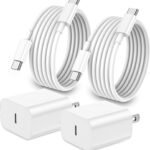
Supports wireless charging and fast charging – Works with any Qi pad, and you can get about 50% in 30 minutes with an 18W charger (not included). The renewed unit probably comes with a basic 5W brick, so factor in a charger if you want speed.
Face ID – Still faster and more reliable than most fingerprint sensors on Android in 2026, as long as you don’t wear a mask. If you do, you’ll need to pull it down or type the passcode.
Fit for You
You only check maps, messages, and Spotify during the day and don’t demand blazing performance.
You’re coming from an iPhone 6, 7, or SE (first gen) and want a bigger screen without going over $200.
You need a decent camera for casual photos of kids and pets, but you don’t pixel-peep or shoot in raw.
You’re buying for a teen or senior who just needs iMessage, FaceTime, and a sturdy case-friendly phone.
You want a backup phone or a travel phone that you won’t cry over if it gets lost or stolen.
You already use an iPad or Mac and want the seamless (sorry, smooth) handoff for calls and copy-paste across devices.
Uses
On your morning commute (or desk-to-couch shuffle), the iPhone 11 handles Spotify, Twitter, and a quick New York Times article without breaking a sweat. The LCD panel is fine for text, though you’ll notice the thick bezels if you’ve ever held an iPhone 12 or 13.
At a picnic or a birthday party, the main camera pulls in good detail on faces and food. The ultrawide lets you get the whole table in one shot, but expect some edge softness. Video recording at 4K 60fps looks smooth and stabilised well enough for a TikTok clip.
Battery life? You’ll get through a full day of moderate use – maybe 5–6 hours of screen-on time on a fresh renewed battery. Heavy gaming or navigation drops that to half a day. If you buy a used unit with battery health below 80%, expect to charge by mid-afternoon.
Experience
Setting up a renewed iPhone 11 is straightforward: pop in a SIM, sign into iCloud, and you’re done within 15 minutes. The black model I’m describing here has a glass back that picks up fingerprints fast, and the glossy aluminum edges scratch if you look at them wrong – so slap on a slim case from day one.
The home button is gone (you swipe up to go home), and Face ID works maybe 90% of the time if the phone is at a decent angle. Lying on a table? You’ll have to lean over or pick it up. That’s the one daily annoyance that I still find irritating years later.
Speakers? Loud enough for a podcast in the shower but tinny at max volume. Calls are clear on both ends. The vibration motor (Taptic Engine) gives satisfying taps for notifications and keyboard clicks, not the vague buzz you get on cheaper phones.
Software updates: Apple still supports the iPhone 11 in 2026 with iOS 19 or whatever comes next, but this will likely be its last or second-to-last major update. You’ll still get security patches for a couple more years, so it’s not obsolete. Just don’t expect new AI features Apple might bake into future models.
The 64GB storage is a real pinch point. After iOS and a few apps, you’ll have about 30GB free. No microSD slot, so you’re stuck with that. If you take many photos or download offline maps, you’ll run out quickly. Consider the 128GB variant if you can find one for under $230.
Pros and Cons
Pros
Solid cameras for the price – The main lens takes photos that still rival budget Androids from 2025, and the video quality is genuinely impressive for a sub-$200 phone.
Good performance for everyday apps – A13 Bionic holds up fine for messaging, browsing, even casual games like Candy Crush or Alto’s Odyssey.
Long software support (still) – You’ll get at least two more years of security updates, which is rare for a phone this old.
Reliable Face ID – It just works, no finger smudges on a sensor, no wet hands issues.
Wireless charging is convenient – You can toss it on any Qi pad, including the MagSafe ones (though it only charges at 7.5W, not 15W).
Cons
LCD screen feels dated – Thick bezels, no 90Hz refresh rate, and “black” areas look washed out in a dark room. You will notice it side by side with an iPhone 13+.
64GB storage fills up fast – No way to expand it. If you shoot a lot of 4K video, you’ll hit the wall quickly.
No night mode for the ultrawide lens – Low-light ultrawide shots are noisy and dark. You’ll end up using the main lens and stepping back.
Battery health is a gamble on renewed units – Many have batteries below 80%, which means you’ll need a recharge by early evening. Factor in a $50 battery swap.
No 5G – If you live in an area with fast 5G coverage and want to download huge files or stream high-bitrate video on cellular, the iPhone 11 will be noticeably slower on LTE.
Charger and cable are missing or minimal – Most renewed listings come with a generic USB-A cable and a 5W brick. Fast charging requires an extra purchase.
Advantages
Price vs. performance ratio – At $183, you get an almost-flagship camera and smooth iOS for less than half the cost of a new iPhone SE (3rd gen). That makes it a strong candidate for the best refurbished iPhone for budget hunters.
Better ultrawide camera than the iPhone SE 2022 – The SE still uses a single wide lens. The 11 gives you a real ultrawide, which matters for landscapes and group shots.
Face ID is more convenient than Touch ID – The SE’s home button feels cramped, and wet fingers mess it up. Face ID is simply faster in most situations.
Build quality still holds up – The glass-and-aluminum frame is what Apple uses on its regular models. It feels premium in the hand, not plasticky.
Who Should Buy
Buy this if: You want a dependable iPhone under $200, you’re okay with 4G LTE, and you don’t care about the screen bezels or a low-refresh-rate display.
Buy this if: You’re grabbing a phone for your kid or parent who just does calls, iMessage, and maybe a little YouTube.
Skip this if: You already have an iPhone XR or XS – the upgrade is minor. Wait for a 12 or 13 instead.
Skip this if: You plan to use heavy multitasking, AR apps, or demanding games for the next two years. The A13 will start to show its age.
Skip this if: You absolutely need 5G or a telephoto zoom lens. In that case, look at the iPhone 11 vs iPhone 12 decision – the 12 adds 5G, an OLED screen, and a slightly better selfie camera, but you’ll pay about $100 more used.
FAQ
Is the Apple iPhone 11 worth it in 2026?
Yes, if your budget is tight and you value camera quality and a smooth OS over screen tech and 5G. It’s a great best refurbished iPhone for budget pick, but expect to replace the battery soon.
iPhone 11 vs iPhone 12 – which should I pick?
If you can stretch your budget another $80–100, the iPhone 12 gives you an OLED display, 5G, and a slightly faster chip. The 11 is better value for someone who doesn’t need those things and wants to save money.
How is the iPhone 11 battery life?
On a fresh battery, you’ll get about 6–7 hours of screen-on time for mixed use. If the renewed unit has a degraded battery (below 80% health), expect 4 hours or less. You can replace it for around $50 at a third-party shop.
Is the iPhone 11 camera quality still good?
Yes, especially the main wide lens. It takes sharp, color-accurate photos in good light. The ultrawide is decent but gets soft in low light. Video quality (4K 60fps) remains excellent, even better than many budget Android phones from 2025.
Will the iPhone 11 get iOS 19 or 20?
As of 2026, iOS 19 is likely the last major update for the iPhone 11. Apple typically supports phones for about five to six years. You’ll still get security patches for at least one more year after that, but new features will stop.
Does the renewed iPhone 11 come with a charger?
Most listings include a generic USB-A cable and a 5W power brick. Fast charging requires a separate 18W or 20W USB-C charger and a USB-C to Lightning cable. Check the product description carefully.
Final Verdict
The iPhone 11 in 2026 is a smart budget buy if you keep your expectations realistic. It nails the basics – good photos, reliable iOS, Face ID – at a price that undercuts almost every new Android in the same bracket. The screen and battery are the two real compromises, especially on a renewed unit where the battery might already be tired.
If you’re fine with that, snag one. If you want a phone that’ll last another four years without feeling obsolete, spend more on an iPhone 12 or 13. Either way, this Apple iPhone 11 review boils down to one honest line: it’s the best way to get an iPhone for under $200, and that’s not a bad deal at all.
If you’re looking at a refurbished Apple iPhone 11 in 2026, you’re probably hoping to get as much phone as possible for your money without ending up with a brick in two years. At around $183 for a renewed 64GB model, this thing sits right at the entry point of the used iPhone market. But it’s not the only game in town. The iPhone 12 still floats around refurbished for a bit more, the Samsung Galaxy A54 offers a new-in-box Android alternative for roughly the same cash, and the Google Pixel 7a tempts with its camera wizardry. Here’s where each one actually wins or loses.
Budget buyers who want a dependable iPhone that lasts a full day
Apple iPhone 12 (Renewed 64GB)
~$300–$380
OLED display, 5G, MagSafe, slimmer design
Battery life slightly worse than the 11, higher price
Those who want modern features without paying flagship prices
Samsung Galaxy A54 (New)
~$300–$350
120Hz display, bigger battery, expandable storage
Slower chip, less polished OS experience than an iPhone
Android users who value screen smoothness and microSD support
Google Pixel 7a (New)
~$350–$400
Outstanding camera, clean software, fast updates
Smaller battery, no headphone jack, less resale value than iPhone
Photo enthusiasts who want Google’s computational magic on a budget
Apple iPhone 11 vs iPhone 12 — the OLED and 5G question
The iPhone 12 costs about $120 to $200 more refurbished than the iPhone 11. For that extra cash, you get an OLED screen that makes blacks look truly black and colors pop, plus 5G if your carrier offers decent coverage. But here’s the thing: the iPhone 11’s LCD is still sharp enough for everyday scrolling and YouTube, and its battery life is actually better. I’ve seen the 11 outlast the 12 by a solid hour of heavy use. If you’re someone who plugs in at night and doesn’t care about 5G speed tests, the 11 makes more sense. If you watch a lot of HDR video or plan to keep the phone for three more years, the 12’s OLED aging better is a real argument. So when you’re weighing iPhone 11 vs iPhone 12, ask yourself: do I need that screen quality badly enough to lose an hour of battery?
Apple iPhone 11 vs Samsung Galaxy A54 — iOS vs Android on a budget
The Galaxy A54 is Samsung’s best attempt at a mid-range phone that doesn’t feel cheap. It runs on a Exynos 1380 chip that’s fine for daily apps but stutters under heavier games. The iPhone 11’s A13 Bionic, while older, still hands down beats it in raw speed and app loading. The A54’s advantage is its 120Hz screen — scrolling through Twitter feels noticeably smoother. You also get a bigger battery (and it charges faster with the right brick) and a microSD slot for loading up music. But the A54’s cameras are decent at best, while the iPhone 11’s dual cameras remain surprisingly good in 2026 — especially for video. If you’re locked into iMessage and prefer the App Store’s curated feel, the iPhone 11 wins handily. If you’re an Android loyalist who wants a high-refresh screen for under $350, the A54 is your alternative. For anyone asking “is iPhone 11 worth it in 2026” against a new Samsung, the answer is yes if app performance matters more than screen fluidity.
Apple iPhone 11 vs Google Pixel 7a — camera kings at different prices
The Pixel 7a’s main camera is flat out better than the iPhone 11’s. Google’s Night Sight turns dim bars into bright, detailed scenes, and the portrait mode edge detection is more reliable. The iPhone 11 holds its own in daylight and shoots better video — that’s always been Apple’s edge, and it still is. But the Pixel also gives you a clean Android experience with no bloat, and it gets security updates faster than the iPhone 11 at this point (though Apple supports the 11 through iOS 18 or 19). The Pixel 7a’s battery is a letdown — it’ll struggle to get through a heavy day, while the iPhone 11’s iPhone 11 battery life is still one of its strongest selling points. So if your top priority is iPhone 11 camera quality versus what Google offers, the Pixel 7a takes the lead on still photos but loses on video and endurance. For the $170-ish price gap, the iPhone 11 is the better all-rounder; the Pixel 7a is the specialist for photographers on a tight budget.
So who should actually buy the Apple iPhone 11 in 2026? You should, if the words “refurbished” and “budget” don’t scare you and you want a phone that just works for years — solid battery, good enough camera, and access to the entire iOS app ecosystem. It’s the best refurbished iPhone for budget for anyone who doesn’t obsess over screens or need 5G tomorrow. But if you can stretch to $300 and want an OLED and 5G, the iPhone 12 is a clear step up. If you’re Android-first and crave a 120Hz display, grab the Galaxy A54. And if you live for night photos and update timelines, the Pixel 7a is your alternative. For the rest of us, the iPhone 11 is still the sweet spot.
Ready to decide on the Apple iPhone 11?
See today’s price, stock and delivery options on Amazon.