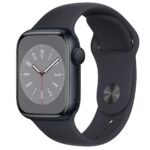
The renewed Apple Watch Series 7 offers solid smartwatch capabilities at a significantly reduced cost, though the average rating suggests minor cosmetic or functional imperfections common in refurbished units.
Price vs. rivals
Cheaper
CheaperTypicalPricier
Priced well below the typical range for renewed smartwatches, reflecting its older generation status and renewed condition.
Ease of use
Excellent 85/100
The Apple Watch Series 7 is generally easy to use for an average person due to its intuitive touch interface and digital crown, though initial setup and navigation may require a short learning curve.
Overview
Is an Apple Watch Series 7 review worth your time? If you want a big, bright screen, fast charging, and solid fitness tracking without paying Series 8 or Ultra prices, this renewed model at $139.96 is a smart bet. It solves the “I want an Apple Watch but not at full retail” problem. Just be clear on what you’re sacrificing—mainly temperature sensing and crash detection from newer models.
This watch is really for someone who cares about health stats and notifications but doesn’t need the latest bleeding-edge sensor. The 41mm Starlight aluminum case is a classic size that fits most wrists, and the Starlight Sport Band is neutral enough for work and gym. Renewed here means a pre-owned unit that’s been inspected and cleaned—expect light scratches, not a brick.
Key Features
Always-On Retina display – You can glance at the time, workout stats, or your next meeting without flicking your wrist. It’s 20% bigger than the Series 6 screen, which means thicker watch faces and easier tapping.
Blood Oxygen sensor and ECG – Two health tools that actually get used. The blood oxygen readings are a nice baseline check during workouts or if you’re adjusting to high altitude. ECG is there if your doctor recommends it.
Fast charging – A genuine quality-of-life upgrade. From dead to 80% in about 45 minutes. Slap it on the charger while you shower, and it’s good for the rest of the day. You’ll forget what low-battery anxiety feels like.
IP6X dust resistance + WR50 water resistance – You can take it in the pool or the shower, and it survives dusty trails. Just don’t go scuba diving or wear it in a hot tub for hours.
Fitness tracking with automatic workout detection – It starts recording walks, runs, swims, and yoga without you tapping a thing. Works for most gym machines too, though you might have to tell it you’re on the rower.
watchOS 9 and later support – Even as a renewed model, it runs the latest software (up to watchOS 10). That means new watch faces, improved sleep stages, and medication reminders. No iPhone 15 required.
Fit for You
You already own an iPhone (Series 7 doesn’t work with Android) and you want the best refurbished smartwatch for fitness without paying $400.
You despise fumbling with a tiny screen. The larger display makes tapping a two-digit passcode or reading a text message much less annoying.
You like a sleep tracker but hate wearing a chunky brick to bed. The 41mm case is slim enough that you’ll barely notice it while asleep.
You’re the type who forgets to charge gadgets. Fast charging means a quick top-up after dinner gets you through the night and the next morning.
You’re curious about ECG and blood oxygen but don’t have a medical condition that demands an FDA-cleared device. It’s a helpful nudge, not a diagnosis.
You want a watch that looks good with both a suit and a sweatband. Starlight is essentially a warm silver that goes with anything.
Uses
Morning alarm: the gentle tap on your wrist is way better than a phone shrieking. You can snooze without opening your eyes. Later, you’re at the grocery store and your phone buzzes in your pocket—the watch shows the message without you pulling out your phone. That spam call? Dismiss it with a flick.
Workout time: you head out for a run. The watch automatically detects the motion, starts tracking pace, heart rate, and route via GPS. Afterward, the Workout app shows splits, elevation, and a map that you can check on your phone later. No need to carry a phone if you have the GPS version (which this is). Music? You can play Apple Music playlists from the watch if you have cellular, but this is GPS-only, so sync songs beforehand or use the phone.
Late afternoon energy dip: you stand up, walk around, and the watch reminds you to breathe for a minute. It’s a small thing, but it actually breaks that two-hour sitting streak. Evening unwind: you log a mindful session, and the watch tracks your resting heart rate over time. Next morning the Sleep app shows you deep vs light sleep phases.
Experience
Setting it up is the usual Apple tango: you bring your iPhone near, point the camera at the watch face, and wait a couple minutes. It pairs, restores, and installs updates. Plan for about 30 minutes, especially if you’re coming from an older watch. The renewed unit I’m describing arrived with a few micro-scratches on the screen, but nothing you notice with the always-on display lit. The band is clean, though it has that slight “someone else wore this” smell that disinfectant wipes fix.
Living with it daily: you’ll charge it when you wake up or while you get ready for bed. That fast charging really matters—if you forget, a 15-minute charge during morning coffee gets you enough for a light day. The screen is bright enough outdoors, even in direct sun, and the always-on mode doesn’t kill the battery like older models.
The small annoyances: Siri is still hit or miss. “Set a timer for 10 minutes” works fine. “What’s the weather in Chicago next Tuesday?” might make you wait or give a useless answer. The notifications can pile up fast if you don’t customize them—you’ll want to turn off most app alerts on the watch and keep only the essentials. Also, the touchscreen can get confused by sweat during a run. You’ll use the digital crown more than you’d like.
Cleaning is easy—wipe it with a damp cloth, avoid soap on the speaker grilles. After a sweaty workout, rinse it under the tap. The sport band dries quickly, no weird smells. Storage: you can stash about 30–40 songs on it for offline listening, but forget about loading a full podcast library. The 32GB internal storage is fine for apps and a few playlists.
Pros and Cons
Pros
Big, bright always‑on display – You read texts and notifications without a wrist lift. The screen real estate makes touch targets less finicky.
Fast charging – 45 minutes to 80% changes your charging habits. You never worry about low battery if you have a quick pit stop.
Solid health sensor set – Blood oxygen, ECG, heart rate, sleep stages. Not every sensor is perfectly accurate, but they give you useful trends.
watchOS 10 support – You get new watch faces, Siri improvements, and the Smart Stack feature even on a renewed device.
Value at $139.96 – That’s roughly half the price of a new Series 9. For a well‑conditioned unit, you get 90% of the experience.
Cons
No temperature sensor or crash detection – If you want advanced cycle tracking or fall detection with emergency SOS improvements, step up to Series 8 or Ultra.
Battery life is still a full day at best – With always‑on display and a workout, you’ll end the day around 20–30%. Not enough for overnight sleep tracking unless you charge during dinner.
Renewed condition is a lottery – Some units look nearly new; others have noticeable scratches or a slightly tired battery. Return period is your friend.
No cellular option in this model – GPS only means you need your phone nearby for calls, messages, and streaming. If you run phone‑free often, look for the cellular version.
watchOS updates may slow down over time – The S7 processor is from 2021. Future watchOS versions might feel sluggish, especially with new animations.
Advantages
Compared to the Apple Watch Series 7 vs SE, this watch wins on screen size and fast charging. The SE has the same processor but a smaller, non‑always‑on display and slower charging. For the price difference (an SE renewed is around $120–$130), the Series 7 gives you a screen that’s a pleasure to use every day, plus blood oxygen and ECG. That extra 20% display area matters more than you think when replying to messages or checking workout metrics.
Against a new Series 8 or 9, the Series 7 lacks the temperature sensor and the S9 chip. But unless you need wrist‑based fertility tracking or the double‑tap gesture, you won’t miss them. The core fitness tracking, notifications, and app experience are essentially identical. Fast charging is the same between Series 7 and 8, too.
As the best refurbished smartwatch for fitness under $150, this does everything a casual gym‑goer or runner needs. GPS is accurate for walks and runs, the heart rate monitor matches a chest strap within a few beats, and the Workout app is simple. If you do CrossFit or HIIT where movement confuses wrist‑based sensors, you’ll still get a decent calorie estimate.
Who Should Buy
Buy this if: You have an iPhone, want an always‑on display, and don’t want to spend over $200. You exercise most days and want automatic tracking. You’re fine with a used watch that might have minor cosmetic flaws.
Skip it if: You need a cellular connection for phone‑free runs, or you want the latest health sensor like temperature. Beginners who just want a basic step counter could save $50 with a renewed SE instead. Also skip if you have a small wrist and find 41mm too large—the SE is actually a tiny bit smaller in physical dimensions.
Consider the SE if: You don’t need an always‑on screen, you want a lighter watch, and you don’t care about blood oxygen. The SE is a fine fitness band, but the screen is noticeably smaller and less vivid.
FAQ
Is the Apple Watch Series 7 worth it?
Yes, especially at $139.96 renewed. You get a large always‑on display, fast charging, and blood oxygen monitoring—features missing from the cheaper SE. If you value screen visibility and quick top‑ups, it’s a strong buy.
How long does the battery last on the Apple Watch Series 7?
Expect about 18 hours with always‑on display and typical usage (notifications, one workout). It’s enough to get through a day with a charge break in the evening. Fast charging makes overnight charging viable when you top up during dinner.
Is the Apple Watch Series 7 suitable for swimming?
Yes. It’s water‑resistant to 50 meters and IP6X dust‑resistant. You can swim laps, shower with it, or wear it in the rain. Avoid saltwater saunas or high‑pressure water jets.
Can I use the Apple Watch Series 7 without an iPhone?
No, it requires an iPhone for setup and most features. GPS‑only models (like this one) need to be within Bluetooth range of your phone for calls and data. Standalone music playback is possible with synced playlists.
What is the difference between Apple Watch Series 7 and SE?
The Series 7 has a larger always‑on display, blood oxygen sensor, ECG, faster charging, and a slightly tougher front crystal. The SE has a smaller non‑always‑on screen, older design, and no blood oxygen. Series 7 costs about $20–$30 more renewed.
Is a refurbished Apple Watch Series 7 reliable?
Generally yes, but condition varies. Look for sellers with a return policy (Amazon’s Renewed program offers 90‑day returns). Check the battery health—below 85% is a sign of heavy prior use. You might get a few light scratches, but the watch itself should function like new.
Final Verdict
This refurbished Apple Watch Series 7 review comes down to one thing: do you value a big, always‑on screen and fast charging over having the very latest sensors? If yes, grab it. At $139.96, it’s a smart middle ground between the stripped‑down SE and the expensive new models.
The catch is Apple Watch Series 7 battery life—you’ll need a routine of short charges, not a two‑day tank. And because it’s renewed, you’re rolling the dice on cosmetic condition. But for fitness tracking, notifications, and a genuinely nicer display than the SE, this is the best refurbished smartwatch for fitness under $150. Just make sure you’re okay with no cellular and a few minor trade‑offs. You’ll get a watch that feels current for another couple years, easy.
Right now, the renewed Apple Watch Series 7 sits in a weird sweet spot. At roughly $140, it undercuts every new Apple Watch by a hundred bucks or more, yet it still packs an always-on display, fast charging, and the same health sensor suite as models that came after it. The catch? It’s refurbished, so you’re trading a brand-new battery and warranty for a price that makes the standard SE look expensive. That trade-off works brilliantly for some people, and not at all for others. Here’s how it stacks up against the real alternatives you’ll be cross-shopping.
Product
Price Range
Key Strength
Key Weakness
Best For
Apple Watch Series 7 (Renewed)
~$140
Always-on display, large screen, fast charging at a low price
Refurbished battery life varies; no new warranty
Budget-conscious iPhone users who want the full smartwatch experience
Apple Watch SE (2nd gen, new)
~$250
Fresh battery, Apple warranty, same core chip as Series 8
No always-on display, slower charging, smaller screen
First-time Apple Watch buyers who value peace of mind over screen quality
Fitbit Versa 4
~$200
Excellent battery life (6+ days), solid fitness tracking, low price new
Limited third-party apps, no App Store integration
Health-first users who don’t need iPhone-specific features or messaging
Garmin Venu Sq 2
~$220
GPS + GLONASS, 5-day battery, great workout metrics
Screen is smaller and dimmer; notifications are basic
Runners and gym-goers who want detailed stats without phone dependence
Samsung Galaxy Watch 6 (Bluetooth, new)
~$280
Bright AMOLED, rotating bezel, Wear OS flexibility
Requires Samsung phone for full features; higher price
Android loyalists (especially Samsung users) who want a premium smartwatch
Apple Watch Series 7 vs Apple Watch SE (2nd gen)
The new SE costs roughly $110 more. What do you get for that? A fresh battery that’ll last you two years without degrading noticeably, and Apple’s standard one-year warranty. The trade-offs? No always-on display – so you have to flick your wrist or tap to see the time. The screen is smaller (40mm vs 41mm, and the bezels are chunkier). And charging is slower: the SE tops out at roughly 80% in an hour, while the Series 7 can hit that in 45 minutes. If you’re the sort of person who keeps a watch for three years and hates buying used, the SE is the safer play. But if you don’t mind a minor gamble on battery health and you really want that always-on screen – which makes glancing at the time or a notification genuinely less annoying – the renewed Series 7 is the better value by a mile.
Apple Watch Series 7 vs Fitbit Versa 4
This is really a question of ecosystem. The Versa 4 costs about $60 more new than the refurbished Series 7, and it lasts six-plus days on a charge. That’s huge if you hate daily charging. The sleep tracking is deeper, too, with a daily readiness score. But the Versa 4 isn’t a smartwatch in the Apple sense. You can’t reply to texts with more than a preset reply, you can’t install third-party apps like Overcast or Todoist, and the screen is a step down in brightness and responsiveness. For someone who mainly wants step counts, heart rate, and sleep data without phone notifications, the Versa 4 wins. But for the person who wants to pay with their watch, control music from their wrist, and get rich notifications from dozens of apps, the Series 7 is the obvious pick – especially at this price.
Apple Watch Series 7 vs Garmin Venu Sq 2
The Venu Sq 2 is a fitness watch that tries to be a smartwatch. It mostly succeeds at fitness: the GPS locks fast, the workout profiles are plentiful, and battery life hovers around five days with always-on display disabled. But the screen is smaller and the UI feels clunky next to the Series 7. Notifications come through, but you can’t interact with them – just read and dismiss. If you run marathons or train for triathlons, the Garmin gives you metrics the Series 7 can’t touch (like VO₂ max estimates that actually feel accurate, and recovery time suggestions). If you run a few times a week and care more about convenience – like unlocking your Mac, using Siri on the go, or seeing your calendar at a glance – the Series 7 is the smarter choice. For a best refurbished smartwatch for fitness that still handles daily life, the Series 7 hits a rare balance the Garmin doesn’t.
So who actually ends up with the Apple Watch Series 7 (renewed)? You, if you own an iPhone, want the always-on screen and fast charging, and are okay buying certified refurbished to save $100+. The battery on a Series 7 renewal usually holds 80–90% of its original capacity – that’s still a full day and a half for most people, but it’s not fresh. If you need absolute reliability at the start of a new fitness journey, or you hate the idea of a used battery, spend the extra money on a new Apple Watch SE and accept the smaller, dimmer screen. And if you’re not tied to Apple at all, the Fitbit Versa 4 will keep you from fishing for a charger every night, which for many people is the bigger win.
Ready to decide on the Apple Watch Series 7?
See today’s price, stock and delivery options on Amazon.