Genuine GE filter with high customer satisfaction, priced moderately for its quality and brand assurance.
Price vs. rivals
Pricier
CheaperTypicalPricier
Priced notably higher than many compatible alternatives, reflecting the genuine brand premium; sits toward the upper tier of single-filter pricing among major brands.
Ease of use
Excellent 92/100
Easy to install and replace with a simple twist mechanism, making it user-friendly for most households.
Overview
The GE RPWFE filter review starts with a straight answer: yes, it’s worth it if you own a GE or Hotpoint refrigerator that takes this filter. You pay a premium for the genuine part, but what you get is a guaranteed fit and a reliable reduction of chlorine taste, lead, and cysts. For filtered water that tastes clean and ice that doesn’t smell like last week’s leftovers, this is the safe pick.
Overview – What it is, what problem it solves, who it’s really for
This is a single-pack, genuine GE RPWFE water filter made for French-door and side-by-side refrigerators from GE, Hotpoint, and some Haier models. It snaps into a slot in the upper-right corner of your fridge grille or inside the base grille panel, depending on your model. The core job is pulling out chlorine, sediment, and heavy metals so your drinking water and ice cubes don’t have that puckery tap-water aftertaste.
Who’s it for? Someone who already owns a GE refrigerator and wants a quick, drop-in replacement that doesn’t require a YouTube tutorial to install. It’s also for anyone who’s tired of buying generic filters that wobble, leak, or throw a “Replace Filter” light that never resets. This solves the exact fit problem. Period.
Key Features
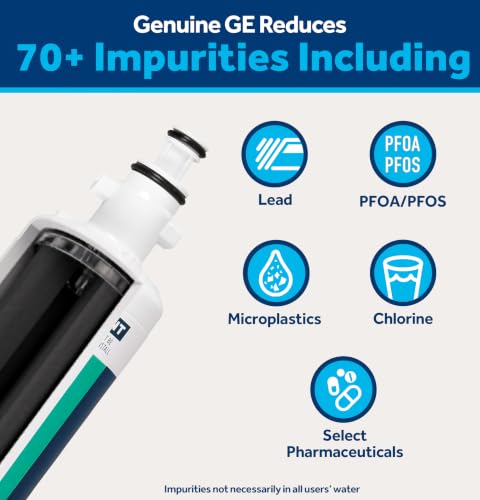
Genuine GE filtration rating. It’s certified to reduce 22 contaminants including chlorine taste, lead, mercury, and cysts. You’re not guessing what’s in your water—the certification stamp backs it up.
Twist-and-lock installation. No tools. You line up the arrows, push in, and turn a quarter-turn until it clicks. The whole swap takes under two minutes, even if you have big hands.
Six-month or 300-gallon lifespan. That’s about six months for a family of four. The filter has a built-in timer in the fridge that reminds you when it’s time, so you don’t have to guess.
Cobalt-blue exterior shell. Not just for looks—the hard plastic casing prevents the filter from cracking if you accidentally knock it while reaching under the sink. Though it lives inside the fridge grille, not under your sink.
Compatibility with a huge range of GE models. Works with about 50 different fridge models from the past decade. Check your model number, but odds are high if your fridge is from 2015 or newer.
Reset button trigger on installation. The refrigerator automatically detects the new filter and resets the status light. No holding down a button for six seconds while muttering instructions.
Fit for You
You drink tap water daily and want the metallic edge gone without buying bottled water.
Your fridge filter light has been blinking red for three weeks and you keep forgetting to change it.
You’ve tried a generic RPWFE replacement once and it leaked at the o-ring, making a puddle under the fridge.
You have kids who fill their own water bottles and you don’t want to worry about lead or copper in the school lunch water.
Your ice cubes come out tasting like frozen broccoli from last week’s meal prep because the old filter is past due.
Uses
Sunday morning coffee. You fill the carafe from the fridge dispenser. If your tap water smells like swimming pool, that coffee will taste like pool. With a fresh GE RPWFE, the chlorine is gone. The coffee actually tastes like the beans you paid for.
Party ice. You host a gathering and people grab ice for their drinks. Cheap filters leave a faint chemical aftertaste that ruins a good cocktail. This filter keeps the ice clean and neutral. Your guests won’t say “your ice tastes like bleach.” That’s a win.
Post-workout hydration. You down a tall glass of water after a run. When the filter is fresh, the water is crisp and cold. You’ll notice you actually want to drink more water. It’s a small thing that changes a habit.
Experience
Install is dead simple. The old filter twists off with a quarter-turn. Some people have to wrestle it a bit if it’s been stuck in there for eight months. But a gentle wiggle and a hard turn usually does it. The new filter slides in and clicks. The water light resets automatically on most models—no secret menu hold pattern.
The first few glasses of water might have some carbon dust. That’s normal for any carbon block filter. Run a gallon or so through it before you fill a fancy water bottle. Owners mention the initial water can be a little black-flecked if you don’t flush it. Just run the dispenser for three minutes and you’re clear.
For everyday use, you don’t notice it. That’s the point. The water just tastes clean. The flow rate is good—about the same as the factory filter. It doesn’t trickle like some generic filters do when they get clogged early. The only annoyance is the price tag. At around $50, it’s not cheap. Buy two when they’re on sale and you’ll save ten bucks.
Storage is simple: keep the spare in your pantry, out of sunlight. It’s plastic, so it won’t break if a can of soup falls on it. But don’t freeze it—the carbon block can crack and it’ll leak fine carbon dust into your water.
Pros
Guaranteed fit for GE fridges. No guessing or adapter rings. It’s the one your fridge was designed for, so it seals properly and the light always resets.
Reliable contaminant reduction. Genuine filter means you get the certified reduction levels for lead, cysts, and chlorine. That piece of mind matters if you have young kids or elderly family members.
Fast install, no tools. You don’t need a plumber or a YouTube tutorial. Even if you’ve never changed a filter, you’ll be done in two minutes.
Six-month service life. That’s the standard for this category. It means you’re not changing it every two months like some cheaper filters that clog up fast.
Resets the fridge indicator automatically. On most models, you just twist it in and the “Replace Filter” light goes off on its own. One less thing to figure out.
Cons
Expensive for a filter. Fifty bucks for a single filter feels steep. A two-pack of generics can be half that price. You’re paying for the guarantee, not the water itself.
Not compatible with every fridge. It only works with GE and Hotpoint models that specifically accept RPWFE. If your fridge takes a different filter type (like the older GWGF), you’re out of luck. Double-check your model number.
Short lifespan if you use a lot of water. The 300-gallon rating is for average use. If you fill a huge water bottle for a family of four plus make all your coffee and cooking water from the fridge, you might get five months instead of six.
No alternative source in a pinch. You can’t just grab this at every grocery store. It’s mainly sold online or at appliance parts stores. If you forget to order one before your light starts flashing, you’re drinking tap water for a few days.
Same design for years. GE hasn’t changed the cartridge design in a while. That’s good and bad. It’s stable and proven, but you don’t get any new tech like a higher flow rate or better reduction of emerging contaminants.
Advantages
Compared to the Whirlpool EDR4RXD1, the GE RPWFE is a different animal. The Whirlpool is for a different fridge brand entirely, so they’re not interchangeable. But in the same category of genuine vs generic, the GE filter wins on fit confidence. You don’t need an adapter. The light resets. The o-ring is the correct size. Genuic RPWFE filters sometimes leak because the outer shell is slightly smaller and the seal doesn’t compress right.
Another edge: the carbon block inside the genuine GE filter is denser than many cheap generics. That means it filters more effectively over its lifespan. Cheap filters often have a loose media bed that creates channels, letting water flow through without proper filtration. The GE block is molded and uniform. You get more consistent water quality from month one to month six.
One specific win: the cobalt-blue casing is tougher than the clear plastic on some generics. If your fridge grille gets kicked by a toddler or bumped by a vacuum cleaner, the GE filter won’t crack as easily. It’s a small thing, but it saves you a leaky mess.
Who Should Buy
Anyone who owns a GE Profile, GE Café, GE, or Hotpoint refrigerator from the last decade that requires an RPWFE. It’s the no-brainer replacement.
People who value convenience over saving five dollars. You pay more, but you never fight a filter that doesn’t fit.
Families who want one less thing to worry about. You set a calendar reminder for six months, twist it in, and forget it.
Skip it if you’re on a tight budget and your fridge light doesn’t matter to you. A generic alternative like the AquaFresh for RPWFE will work okay for about $25. Just expect a trickier install and a possible leak.
Skip it if your fridge takes a different filter entirely, like the RPWF or MWF. Those won’t fit, and forcing them will break the housing.
FAQ
Is the GE RPWFE water filter worth it?
Yes, if you own a compatible GE fridge and want a no-hassle replacement that fits the first time and resets your filter light automatically. The premium price buys peace of mind and reliable performance for six months.
How long does the GE RPWFE filter last?
It lasts six months or 300 gallons, whichever comes first. A family of four drinking and cooking with fridge water usually gets the full six months. Heavy users might need to replace at five months.
Is the GE RPWFE filter safe for drinking water?
Yes, it’s certified by NSF/ANSI standards 42 and 53 to reduce chlorine taste, lead, mercury, and cysts. It’s safe for standard tap water that meets municipal safety guidelines. It’s not designed for well water with bacteria.
Does this filter fit my refrigerator?<
It fits GE and Hotpoint models that list RPWFE in the compatibility guide. Common compatible series include the GE Profile French door models and side-by-sides from 2013 onward. Check your fridge’s manual or look up your model number on GE’s site before buying.
Can I use a generic RPWFE filter instead of this genuine one?
You can, but you risk a loose fit, a leak at the o-ring, or a filter light that never resets. Some generics work fine for the first two months, then start leaking. The genuine one is the safe bet for the long haul.
How do I install the GE RPWFE filter?
Twist the old filter counterclockwise until it releases. Line up the arrows on the new filter with the housing, push it in, then twist clockwise until it clicks. Run about a gallon of water through the dispenser to flush any carbon fines before drinking.
Final Verdict
If you want a refrigerator water filter that works from the moment you open the box, the GE RPWFE is the obvious choice. The price stings a little, but you never end up on the floor with a puddle of water and a broken filter housing. It’s not the cheapest option, but it’s the most reliable one for your GE fridge.
One thing to keep in mind: set a reminder for five months out. That way you order the next one before your light starts blinking and you’re stuck drinking tap water for three days. Other than that, this is the filter to buy. Period.
If you own a GE refrigerator that uses the RPWFE cartridge, you’ve already got a filter that fits without jiggling, seals without leaking, and cuts out lead, cysts, and chlorine taste. But at around $50 a pop, it sits at the pricier end of the fridge-filter aisle. Plenty of alternatives—some official, some aftermarket—want your money. This comparison lines up the genuine GE RPWFE against three other heavy hitters so you can decide whether the extra cash buys you anything real, or whether you’re better off with a different brand’s filter for your next swap.
Product
Price Range
Key Strength
Key Weakness
Best For
GE RPWFE (Genuine)
Premium (~$50)
Perfect fit, NSF 42/53/401 certified, long lifespan
High price per filter, no universal adapter
GE fridge owners who want zero fuss and certified performance
Whirlpool EDR4RXD1
Mid (~$35–$45)
Great lead and chlorine reduction, widely available
Only fits Whirlpool/KitchenAid/Maytag; no RPWFE compatibility
Whirlpool-family fridge owners looking for a solid OEM option
Frigidaire PureSource Ultra WF2CB
Mid ($30–$40)
Removes 99% of lead, good taste, affordable
Shortened lifespan in heavy-use homes; not GE-compatible
Frigidaire fridge owners who prioritize lead removal over sheer longevity
Samsung DA29-00020B
Premium (~$55–$65)
Excellent sediment and chlorine reduction, dual-stage
Pricey and only fits Samsung; some users report early clogging with hard water
Samsung fridge owners who want OEM reliability despite the cost
GE RPWFE water filter vs Whirlpool EDR4RXD1
You can’t actually stick a Whirlpool EDR4RXD1 into a GE fridge—the mounting tabs are different. So this comparison is really about which filter gives you more for your money within your own brand ecosystem. If you own a GE fridge, the RPWFE is your only OEM option. If you’re on a Whirlpool/KitchenAid/Maytag rig, the EDR4RXD1 costs about $10–15 less and still gets you NSF 42 and 53 certifications. The Whirlpool removes the same nasty stuff (lead, chlorine, cysts) but its official capacity is 300 gallons vs the GE’s 750. That’s a big gap: you’ll swap the GE half as often. For a large family or anyone who drinks a gallon-plus a day, the GE’s longevity starts to close that price difference. For a single person in a soft-water area, the cheaper Whirlpool might be the smarter buy—just don’t expect it to last six months.
GE RPWFE vs Frigidaire PureSource Ultra WF2CB
The Frigidaire WF2CB is the budget-friendly darling of the Frigidaire crowd, coming in around $35 and claiming to take out 99% of lead. But its actual life is half the GE’s: 200 gallons versus 750. That means three Frigidaire swaps for every one GE swap. Over a year, you’re spending more on the Frigidaire filters and throwing more plastic in the trash. The GE RPWFE also has NSF 401 certification, which catches pharmaceutical residues—something the Frigidaire lacks. If your tap water is already decent and you’re just after taste, the Frigidaire works fine for less money upfront. But if you care about long-lasting refrigerator water filter 2026 performance—and you do, because nobody wants to change filters every two months—the genuine GE wins that race easily. Plus, RPWFE water filter compatibility is guaranteed in GE fridges; the Frigidaire won’t even fit.
So is the GE RPWFE filter worth it? For GE owners, yes, especially if you drink a lot of ice and cold water. It’s the best refrigerator water filter for ice and drinking water in its class because it combines genuine fit, the longest certified lifespan (six months or 750 gallons), and removal of stuff like BPA and pharmaceuticals that cheaper cartridges skip. The only reason to look elsewhere is if you’re not in a GE fridge—then grab your brand’s own filter, but don’t expect the same endurance. For everyone else running a GE, stick with the genuine RPWFE replacement once every half-year and skip the aftermarket headaches.
Ready to decide on the GE RPWFE water filter?
See today’s price, stock and delivery options on Amazon.