Strong brand trust and high user ratings validate a solid value-for-money proposition in the replacement filter segment.
Price vs. rivals
Pricier
CheaperTypicalPricier
Priced above standard replacement filters due to Elite's extended lifespan and brand premium, yet remains competitive within the premium segment.
Ease of use
Excellent 92/100
Replacing the filter is simple and intuitive, requiring only a soak and a quick twist, as reflected in its high customer ratings.
Overview
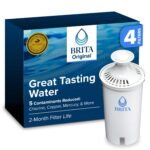
If you’ve got a Brita pitcher or dispenser, the Brita Elite replacement filter is the upgrade you probably didn’t know you needed. It traps more contaminants than the standard filter—things like lead, mercury, and even some microplastics—without making you wait longer for a full pitcher. It’s a simple swap, and for most households, it’s the best bang for your buck in the pitcher-filter world.
What problem does it solve? Tap water that tastes fine but could be cleaner. Some people want the reassurance of a filter that cuts out heavy metals and doesn’t slow down. This one delivers that, and it fits Brita pitchers and dispensers that use the standard-sized filter slot. But it’s not for every situation—if you rent and have municipal water that’s already decent, you might not notice a massive difference.
Key Features
Filtration power – Reduces lead, mercury, cadmium, and microplastics that standard Brita filters let through. That’s a real step up if your water comes from older pipes.
Lifespan – Lasts up to 120 gallons, which is about 40% longer than the standard filter. For a two-person household, that’s roughly four months before you need to swap.
Flow rate – You’ll get a full pitcher in about the same time as the regular filter, maybe a few seconds slower. No annoying trickle while you’re waiting for a glass.
Compatibility – Fits most Brita pitchers and dispensers that accept the standard round filter (the one with the pull-tab on top). Check your model, but the list is long: Grand, UltraMax, Stream, and more.
BPA-free materials – The filter housing and the media inside are free from BPA. No extra chemicals leaching in.
Certification – Certified by NSF International for reducing 80+ contaminants. You can look up the specific standards if you’re the type who reads fine print.
Fit for You
You live in an area with old plumbing and want to cut down on lead and copper without installing an under-sink system.
You refill a water bottle every morning and want the taste to be crisp, not “tap with a hint of bleach.”
You have kids who drink a lot of water and you’d rather not worry about microplastics from the mains.
You already own a Brita pitcher and are tired of replacing the standard filter every two months.
You fill a dispenser for the office fridge and need a filter that lasts through a busy work week without losing flow.
You’re trying to reduce single-use plastic bottles and want a filter that actually handles the stuff you’re trying to avoid.
Uses
Pouring yourself a glass of water after the Brita Elite has been sitting in the fridge—you’ll notice it tastes cleaner than tap, with none of that metallic aftertaste. Good for filling a kettle for tea, where off-flavors become obvious.
Filling a large dispenser for a party? The 120-gallon lifespan means you won’t be swapping it mid-event. Just remember to prime it with two full pitchers before you use it—everyone forgets that step once.
If you’re using it for ice cubes, the difference is subtle but real. Ice made from filtered water doesn’t cloud up as fast from mineral deposits, and your iced coffee won’t have a chlorine whiff.
Experience
Setting it up is straightforward: soak it in cold water for 15 minutes, rinse, then drop it into the filter slot. The first two pitchers go down the drain to flush the loose carbon dust. That dust is normal—expect a few black specks on the first run. Some people get annoyed by that, but it’s normal for any carbon block filter.
Everyday use: you fill the reservoir, it drips through, and the pitcher fills. The sound is a gentle glub-glub, nothing loud. One small annoyance: the filter can wobble slightly in some older pitchers if the gasket isn’t pushed all the way down. Press firmly and it’s fine.
Cleaning the pitcher itself stays the same—hand wash with mild soap. The filter doesn’t need maintenance; just change it every 120 gallons or when the water starts tasting slightly less crisp. Some people use a sticker to track the date, but the filter also has a little indicator wheel on top that you can set to the month. It’s not electronic, just a plastic dial that’s easy to forget about. Set it when you install or you’ll never remember.
Storage: the two-pack comes in a box that’s bigger than you expect. If you have cabinet space under the sink, fine. Otherwise, store one in the fridge to keep it fresh until needed.
Pros and Cons
Pros
Reduces more contaminants than standard – Lead, mercury, and microplastics are the big ones. If your water report shows any of these, this filter is a solid answer.
Longer lifespan – 120 gallons vs. 80 for the standard. That’s about one less replacement per year, and less plastic waste.
Easy to install – No tools, no plumber. Soak, rinse, drop in. Even a first-timer can do it in under five minutes.
Good flow rate – Doesn’t slow down noticeably as it ages, unlike some competitor models that choke up after a month.
Works with many Brita models – You don’t have to buy a new pitcher; just swap the filter.
Cons
Costs more per filter – Two-pack at about $30, while a standard two-pack is around $17. Over a year, the Elite costs roughly $10 more. Worth it if you need the extra filtration, but not if you don’t.
Not compatible with all Brita models – The older “pitcher-style” filters (the ones that look like a hockey puck with a top tab) won’t fit some slim or bottle-shaped pitchers. Double-check your model number.
Requires a good seal – If you don’t push it all the way in, water can leak around the top. That’s a user error thing, but worth knowing.
Doesn’t remove all contaminants – No pitcher filter removes dissolved minerals, fluoride, or bacteria. If you need that, you’re looking at a reverse osmosis system.
Advantages
Brita Elite vs PUR filter – The Elite catches more total contaminants than PUR’s basic filter, including lead and microplastics that PUR misses at the same price point. PUR’s premium filter does similar work but costs a few dollars more per filter.
Lifespan edge – 120 gallons beats many generic replacement filters that claim 100 gallons but slow down sooner. The Elite keeps a steady drip through most of its life.
No need to change your pitcher – You keep using the plastic you already have. That’s one less trip to the store and less trash.
Who Should Buy
Buy it if – You drink a lot of tap water, you have old pipes, you want to cut microplastics, and you already own a compatible Brita pitcher. It’s a direct upgrade that costs little over the long run.
Skip it if – Your tap water is already good (you get it from a modern municipal supply or a known well) and you’re mainly filtering for taste. The standard Brita filter is cheaper and does fine for chlorine and sediment.
Also skip if – You’re on a tight budget and don’t care about heavy metals. The standard filter saves you about $13 per year.
Consider an alternative if – You need fluoride removal or a very high flow rate for a big family. In that case, look at an under-sink carbon filter or a countertop model with a larger capacity.
FAQ
Is the Brita Elite replacement filter worth it?
If your main concern is filtering out lead, mercury, and microplastics from tap water, then yes—it does a noticeably better job than the standard Brita filter for only a few extra dollars per filter.
How long does the Brita Elite filter last?
It lasts up to 120 gallons, which is about four months for a two-person household. The actual lifespan depends on how much water you use; some people get five months if they’re conservative with pitcher fills.
Is the Brita Elite filter safe for drinking water?
Yes, it’s made from BPA-free materials and is certified to NSF standards for reducing 80+ contaminants, including lead and microplastics. It won’t introduce anything harmful.
Does the Brita Elite filter remove fluoride?
No, it does not remove fluoride. Pitcher filters generally don’t; you’d need a reverse osmosis system or a specialized fluoridation filter for that.
Is the Brita Elite replacement filter compatible with my pitcher?
It fits most Brita pitchers and dispensers that use the standard round filter (the kind with a pull tab on top). Models like the Grand, UltraMax, and Stream work. Older “Slim” pitchers may not, so check the model number.
How often should I change the Brita Elite filter?
Every 120 gallons, or roughly every four months. You can track it with the built-in plastic dial on the filter top—set it to the month you installed it, then swap when that month rolls back around.
Final Verdict
For anyone who already owns a Brita pitcher and wants to reduce heavy metals and microplastics from their tap water, the Brita Elite replacement filter is a smart, straightforward choice. It costs a little more than the standard version, but the extra filtration and longer lifespan make that trade-off easy to stomach. Just remember to check compatibility with your pitcher model before buying, and you’ll be set for months of better-tasting water.
Brita Elite replacement filter vs the Competition in 2026
If you’re shopping for a pitcher filter that actually reduces the stuff you care about—lead, copper, mercury, and a few PFAS—the Brita Elite is the default pick for people who aren’t ready to spend $50 every two months on cartridges. But it’s not the only game in town. PUR and ZeroWater have strong followings, and Soma offers that bamboo-clad design. Which one you buy depends on whether you want a filter that lasts, one that strips everything out, or one that looks good on a counter you rarely wipe down. Here’s how they stack up—and where the Brita Elite sits in the 2026 filter landscape.
Product
Price Range
Key Strength
Key Weakness
Best For
Brita Elite Replacement Filter
$$ (about $15 per filter in 2-packs)
Long 120‑gallon lifespan, certified reduction of lead, copper, mercury, and some PFAS
Slower flow than standard Brita filters; not designed for ZeroWater-level total solids removal
People who want decent contaminant reduction with the longest time between swaps
PUR Classic Filter (Pitcher)
$$ (approx $8–$12 per filter)
FDA certification for lead and mercury; widely available at grocery stores
Shorter 40‑gallon lifespan; plasticky taste if you don’t flush it properly
Budget‑minded buyers who don’t mind changing filters every month
ZeroWater 10‑Cup Pitcher Filter
$$ – $$$ ($12–$18 per filter)
Removes essentially all dissolved solids (TDS meter included); catches lead, chromium, and asbestos
Short lifespan (20–30 gallons on average tap); filters can get expensive fast
Anyone with hard water or taste/odor issues who wants near-distilled water
Soma Pitcher Filter
$$ – $$$ ($10–$14 per filter)
Sleek design (glass pitcher, bamboo handle); reduces chlorine, some heavy metals
Only 40‑gallon lifespan; fewer certifications than Brita Elite; replacement filters are harder to find
People who want a pretty pitcher and are okay with basic filtration
Brita Elite replacement filter vs PUR Classic
The PUR Classic gets you lead and mercury reduction for a lower up‑front price, but the big difference is lifespan. A Brita Elite lasts 120 gallons—three times longer than a PUR Classic’s 40 gallons. That means you’ll swap a Brita Elite roughly once every six months (on a typical household), while you’re buying a new PUR filter every two months. Over a year, the Brita Elite ends up cheaper per gallon. The catch: flow rate. The Brita Elite is slower. If you’re impatient and fill a 10‑cup pitcher daily, the PUR Classic will drip almost as fast as its standard counterpart. Also, the Brita Elite handles mercury, copper, and cadmium more thoroughly per their NSF certifications. For someone who drinks a lot of water and doesn’t want to think about filter changes, the Brita Elite replacement filter vs PUR Classic is no contest—Brita wins on convenience and cost‑per‑gallon.
Brita Elite vs ZeroWater
ZeroWater goes after everything—dissolved solids, lead, chromium, asbestos, and that weird metallic taste from old pipes. It’s the “I want my water to read zero on a TDS meter” choice. But there’s a real trade‑off. The ZeroWater filter lasts maybe 20–30 gallons, depending on your starting water. That’s one‑sixth the life of a Brita Elite. If you have moderately hard water, you’ll be replacing the cartridge every three to four weeks. The cost adds up fast—think $60–$100 a year for filters alone. The Brita Elite replacement filter, in contrast, costs about $30 for a two‑pack that covers an entire year. So the question is: do you need near‑distilled purity, or is the Elite’s lead‑copper‑mercury reduction enough? For 90% of households, the Brita Elite is more than sufficient and far cheaper. Only reach for ZeroWater if your tap has consistently high TDS or you’re paranoid about trace contaminants.
Brita Elite vs Soma
Soma makes a pretty pitcher—glass with a bamboo top, and the filter is designed to look minimal. It reduces chlorine, some lead, and zinc, but it stops short of the broader contaminant list the Brita Elite tackles. The Soma filter also only lasts 40 gallons, same as PUR, and the replacement cartridges aren’t stocked at every Target. Performance‑wise, the Brita Elite is the more serious water filter. The Soma is the one you pick when kitchen aesthetics matter more than lifespan or certification breadth. If you’re someone who leaves the pitcher on the counter and wants it to look like a nice carafe, Soma delivers. But if you’re reading a Brita Elite filter review because you actually care about best water filter for pitcher performance per dollar, skip the bamboo and grab the Elite.
So: is Brita Elite filter worth it? Yes, if you want the longest‑lasting filter in the mainstream pitcher world, decent certification on heavy metals and some PFAS, and a per‑gallon cost that leaves PUR and ZeroWater in the dust. It’s the smart middle‑ground. The Brita Elite replacement filter compatibility note: it only fits Brita Elite–rated pitchers and the new 10‑cup Elite dispenser; check your pitcher lid before buying. If you have hard water and zero trust in your tap, get ZeroWater and budget for frequent swaps. If you just want “good enough” for less cash, the PUR Classic will do. But if you’re after a Brita Elite pitcher filter review that ends with “buy this one”, here it is: for most people in 2026, it’s the best water filter for a pitcher, as long as you can live with a slightly slower pour.
Ready to decide on the Brita Elite replacement filter?
See today’s price, stock and delivery options on Amazon.