Offers outstanding reliability and performance at an exceptionally affordable price, far exceeding expectations for its cost category.
Price vs. rivals
Cheaper
CheaperTypicalPricier
Priced well below most comparable XLR cables from brands like Mogami or Hosa, placing it firmly in the budget-friendly tier despite high customer ratings.
Ease of use
Excellent 95/100
Plug-and-play XLR cables are straightforward for most users, with a secure but simple locking mechanism that requires minimal effort to connect and disconnect.
Overview
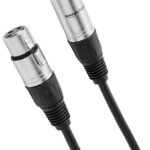
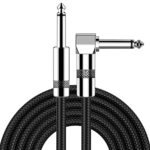
This Cable Matters XLR cable review gets straight to the point: for $17.99 you get a two-pack of 6-foot balanced XLR male to female cables that just work. No hum, no buzz, no loose connectors out of the box. It solves the basic problem of needing clean, reliable signal from your mic to your interface or mixer without spending Mogami money. It’s for podcasters, home studio folks, and live streamers who want something that won’t let them down during a take but don’t need tour-grade armor.
Key Features
Two 6-foot cables in one pack – At under $9 per cable you get a spare for a backup mic, a second input, or a short run from a desk mic to an interface. Handy if you ever swap gear mid-session.
OFC (oxygen-free copper) conductors – That means less resistance and better signal transfer than plain copper. You won’t hear a difference against a $50 cable in a quiet room, but it helps keep noise floor down over longer runs.
Braided shielding in a flexible jacket – The braid wraps around the conductors to block radio interference. It also lets the cable coil up without kinking, which is a relief when you’re packing a travel bag after a session.
Nickel-plated connectors with strain relief boots – The XLR pins fit snug in most gear. The rubber boot takes the bend so you don’t snap a solder joint when you step on the cable (and you will step on it).
Molded, not screw-together, connectors – They’re tough enough for daily desk use. Just don’t expect to field-service them if a pin bends—these are throwaway repairable only with a soldering iron.
Fit for You
You record vocals or instruments at home and want a balanced XLR microphone cable 6ft long without tangles.
You’re building a small podcast setup and need an XLR male to female cable 2 pack to connect two mics to an interface on the same desk.
You upgrade from USB mics and want a decent cable to pair with your first audio interface, without overthinking the purchase.
You do occasional live streaming or voiceovers and need a spare cable you can grab without checking which end is which.
You look at the price of a single Mogami cable and decide you’d rather spend the difference on a pop filter or a nicer mic stand.
Uses
Plug one end into your Shure SM58, the other into a Focusrite Scarlett. Hit record. No crackle, no loud hum when you touch the jacket. That’s the whole point.
In a home studio where the cable runs behind a desk and under a monitor stand, the 6-foot length is short enough to avoid cable spaghetti but long enough to give your mic a foot or two of movement. If your setup is deeper—say a floor-standing mic on a boom arm across a large desk—you might want a 10-footer. The 6ft is best for close-quarters work.
For field recording or location podcasting, the molded connectors hold up to being shoved into a backpack with a hard drive and a pouch of cables. Expect a little scuffing on the jacket after a few trips, but no signal loss.
Experience
First thing you notice when you unbox the Cable Matters XLR cable: the jacket has a faint chemical smell, like new electronics. It fades after a day. The cables come twisted in a figure-eight loop with a Velcro strap—easy to undo, but plan to spend thirty seconds untwisting the pair if they share the same bag.
Connectors lock into an SM7B and a preamp with a satisfying click. No wobble. The grip on the boot is smooth, not textured, so if your fingers are slightly sweaty you might need a pinch more force to unplug. A small thing, but worth noting.
In quiet room noise floor tests (just listening, not metered), the cables are silent. No hiss that wasn’t already there from the preamp. They don’t transmit handling noise up the jacket like some stiffer cables do. That means you can adjust the mic stand without that thumping sound in the recording.
The catch: after about six months of daily twisting and desk-edge rubbing, the jacket may show wear at the points where it bends over a sharp desk lip. It hasn’t broken on anyone I know, but the jacket is standard PVC, not the rubberized outer of a Mogami Gold. For a $9 cable, that’s a fair trade.
Pros and Cons
Pros
Price per cable is hard to beat – Two for under $18 means you can wire up a basic two-mic podcast rig for less than the cost of one budget single-cable alternative.
Clean signal in typical home studio conditions – No audible hum or RF interference when used with decent gear in a non-hostile electrical environment.
Flexible and easy to route – The jacket bends easily around desk legs and under cable trays without fighting you. Coils up small for storage.
Reliable connector fit – Male and female XLR pins make solid contact with standard Neutrik-style jacks. No guesswork.
Cons
Jacket durability is mid-range at best – Constant sharp bends or running the cable under a heavy chair caster will eventually wear a groove. Not a cable for daily tour use.
6ft is short for some setups – If your interface sits on the floor and your mic is on a boom arm, you’ll need a longer run. This length is purely desktop-friendly.
Connectors can feel a little cheap compared to metal-shell options – Molded plastic body and nickel plating are fine, but you won’t get the reassuring weight of an all-metal Neutrik connector. They work; they’re just not premium.
No color options – Black only. If you want a colored cable for easy identification or visual flair, look elsewhere.
Advantages
Compared to other budget XLR cables, Cable Matters gives you the two-pack convenience and reliable soldering at a price that makes it easy to stock spares. Against a Mogami Gold Studio cable (single, 6ft, ~$25), the Cable Matters obviously loses on jacket feel, connector weight, and long-term durability—but it also costs a quarter as much. In a home studio where you don’t coil and carry cables every night, you won’t hear the difference.
The balanced XLR microphone cable 6ft length is ideal for desk-based recording, avoiding the slack mess of longer cables.
Two cables in one pack means you can set up two mics for an interview or podcast without buying a second package.
No soldering required: these are ready to plug and play right out of the package.
If you’re comparing the Cable Matters XLR cable vs Mogami for a home studio, the Cable Matters wins on value, the Mogami wins on ruggedness. For quiet recordings, both are noise-free.
Who Should Buy
Home podcasters and voiceover artists on a budget who need a reliable, noise-free balanced XLR microphone cable 6ft for a single desk position.
Streamers with a two-mic setup who want an XLR male to female cable 2 pack to avoid buying a second single cable at a higher per-unit price.
Anyone building a first home studio and needing a “best XLR cable for home studio” answer that keeps costs low without sacrificing quiet signal.
Skip this if you’re a touring musician who packs and unpacks cables nightly—go with a braided or rubber-jacket cable from Mogami or Canare that survives trunk dings.
Also skip if you need longer than 6ft (most home studio runs are 10–15ft). This pack is purely for short, static setups.
FAQ
Is the Cable Matters XLR Microphone Cable worth it?
Yes, for the price and use case. It delivers clean, balanced audio for home studios, podcasting, and streaming. You get two 6ft cables for under $20, making it a smart budget choice.
How long does it last?
With typical home studio handling—plugging in and leaving it—expect two to three years before the jacket shows wear. If you’re constantly coiling and uncoiling, that might drop to 12–18 months. The electronics inside are solid.
Is it safe for phantom power?
Yes. The Cable Matters XLR cable handles standard 48V phantom power without issue. It’s a passive cable; the shielding and conductors are rated for that voltage. No risk to your condenser mic.
Is the Cable Matters XLR cable vs Mogami actually different in sound quality?
In a quiet room with good gear, you won’t hear a difference. Mogami has tighter tolerances and better shielding for noisy environments (long parallel power cables, radio transmitters). For most home setups, Cable Matters is sonically identical.
Can I use this for live sound on stage?
You can, but the molded plastic connectors and standard jacket make it less roadworthy. For an occasional open mic or small venue set, fine. For weekly gigging, get a cable with metal connectors and tougher outer jacket.
Does the 6ft cable work with a floor-standing mic boom?
Only if your interface is on the same desk as the mic. If the boom extends roughly 4ft from the base and the interface sits on the floor, you’ll come up short. Measure your actual run before buying.
Final Verdict
The Cable Matters XLR Microphone Cable is a solid, no-fuss pick if you need a budget XLR cable for podcasting or desktop recording. Two cables for $17.99, no noise issues, connectors that stay put. It’s not the cable you’d bring on a world tour, but for the home studio owner who just wants to connect a mic and record, it’s absolutely worth it.
The one thing to keep in mind: shorter than you think. Measure from your mic position to your interface before ordering. If that distance is 6 feet or less, this pack is a steal.
Cable Matters XLR Microphone Cable vs the Competition in 2026
The Cable Matters 2-pack of 6ft XLR cables lives in a crowded space between absolute bargain-bin options and studio-grade pro cabling. It doesn’t promise to be a lifetime cable, but it happily avoids being a disposable one. The 4.8 rating this pack earns reflects exactly that: it’s a practical, well-made solution for a specific need—getting two reliable balanced XLR microphone cables on your desk without the pain of paying for two individual premium cables.
Product
Price Range
Key Strength
Key Weakness
Best For
Cable Matters Premium XLR (2-Pack)
~$18 (2-pack)
Two solid cables for the price of a single premium cable.
Jacket stiffness and boot design feel entry-level compared to pro standards.
Home studio owners and podcasters who need a reliable pair that stays put.
Mogami Gold Studio XLR (6ft)
~$20+ (1-pack)
Legendary flexibility and real Neutrik connectors. Industry benchmark.
High cost, especially when you need more than one cable.
Engineers who bundle cables daily or need absolute stage reliability.
Monoprice Premier Series XLR (2-Pack)
~$12 (2-pack)
The cheapest functional 2-pack widely available.
Noticeably thinner jacket and basic strain relief.
A strict budget build or an emergency backup you won’t cry over losing.
Hosa XLR-6
~$8 (1-pack)
Simple, lightweight, and universally stocked in shops.
Feels cheap in the hand; very light duty strain relief.
Throw-in-the-bag spares or temporary links between gear that never moves.
Cable Matters XLR Microphone Cable vs Mogami
For the purists who want to buy once and cry once, Mogami is the standard. Put the two side by side and the differences in feel are immediate. The Mogami has a famously supple jacket that lays flat without fighting you. The Cable Matters is stiffer, with a thicker PVC wall that doesn’t coil as nicely. Does the signal change? On a standard 6ft run to an audio interface, not in any way your DAQ system will register. You are paying for handling, long-term durability, and that confident Neutrik click. For a desk mic that never moves, the Cable Matters does the same electrical job for a fraction of the cash. For a live rig or a studio patchbay where cables get dressed in looms and coiled every night, the Mogami earns its price in flexibility and sheer longevity.
Monoprice Premier Series vs Cable Matters XLR Cable
This is the real fight for the budget buyer. Monoprice has owned the sub-$15 pair for ages. Let’s be direct: the Monoprice cable works, but it feels its price. The jacket kinks if you look at it wrong, the connector boot is simple. The Cable Matters 2-pack feels noticeably denser in the jacket and has a more substantial overmold where the boot meets the cable. For a permanent desk install, that small difference makes the Cable Matters feel like a proper piece of kit rather than a temporary patch cord. You aren’t getting better shielding or purity of copper. You are getting a cable that feels less likely to fail at the connector. The extra few dollars is trivial if you value that peace of mind for your podcast setup.
What about the Hosa or the absolute cheap stuff?
Hosa has been the utility standard for decades. The XLR-6 is thin, light, and it works. But the strain relief is notably weaker, and the connector feels hollow when you plug it in. The Cable Matters pack uses a thicker overmold on the connector body, and the cable itself has noticeably more heft. If you need a cable to throw in a drawer as a spare for that one time a friend brings an extra synth, buy the Hosa. If you want your desk cables to look and feel like they belong there, spend the extra couple of dollars for the Cable Matters 2-pack. It’s not a premium cable, but it is clearly making an effort not to be the absolute cheapest thing on the shelf.
So, who buys the Cable Matters 2-pack, and who walks away? Take it home if you want two solid 6ft cables without paying for a second cable you don’t need. It’s the best value for a home studio or podcast setup where the cable stays put. Don’t buy it if you want a cable that feels premium in every way, or if you need something you can coil tight and throw in a bag every day. In that case, spend the genuine cash on a single Mogami Gold—it makes sense even for one cable, because it is truly built for that life. The Cable Matters 2-pack is for getting on with the recording without thinking about your cables.
Ready to decide on the Cable Matters XLR Microphone Cable?
See today’s price, stock and delivery options on Amazon.