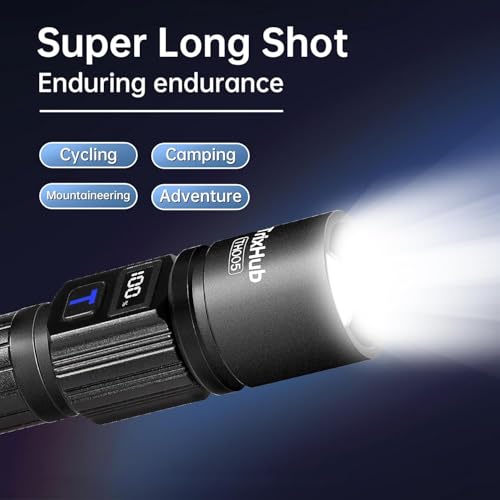
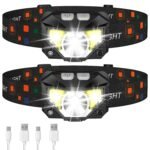
Two-pack rechargeable flashlights at this price point offer exceptional value for budget-conscious buyers seeking high brightness.
Price vs. rivals
Cheaper
CheaperTypicalPricier
This 2-pack is priced well below most comparable rechargeable flashlight sets, making it a budget-friendly option without sacrificing key features like high lumens.
Ease of use
Excellent 90/100
The flashlight is very easy to use with a simple button operation and rechargeable convenience, though initial charging may require a short setup.
Overview
The TrixHub rechargeable flashlight 2 pack lands at a price that makes you do a double-take—under $16 for two lights that claim to be super bright. It’s a straightforward solution for people who keep losing flashlights, need spares for the car, or want something cheap enough to stash everywhere without wincing. This isn’t a boutique camping light; it’s a practical, no-drama tool for everyday darkness.
What problem does it solve? The one where you’re fumbling for your phone’s flashlight in a power outage, the one where you drop a screw behind the sofa at midnight, or the one where you realize you only have one working light and three family members who also need it. If that sounds like your life, this pack is aimed squarely at you.
Key Features
Two lights for the price of one – You get a pair, which means one goes in the kitchen drawer and one in the glovebox, or you hand one to the kid without worrying they’ll break a $50 light.
USB-C rechargeable – No scrambling for obscure batteries. You plug it into the same cable you use for your phone, laptop, or tablet. The charging port is under a rubber flap; keep it dry.
High-lumen LED – The “super bright” claim holds up for its class. On the highest mode, you’ll light up a backyard or a dark trail well enough to see where you’re stepping. It’s not a thrower that’ll reach a mile, but for a pocket-sized light it’s impressive.
Multiple brightness modes – High, medium, low, and a strobe. The strobe is useful for an emergency signal or for annoying your cat—your choice. Cycle through with a single button.
Built-in battery with indicator – A small LED shows red when charging and green when full. It’s a simple cue, but it beats guessing.
Compact and lightweight – Each one fits in a jacket pocket or a small pouch. The aluminum body feels sturdy enough for daily drops, though it’s not military-grade.
Fit for You
You keep a flashlight in the car for checking the engine or changing a tire at night.
You go camping a couple times a year and want a backup that won’t hurt if it gets wet or lost.
You’re a renter or homeowner who deals with the occasional breaker-tripping darkness.
You have kids who “borrow” your good flashlight and never return it.
You need a light for walks after dark in a suburban neighborhood where streetlights are sparse.
Uses
The most obvious place is the power outage. When the grid hiccups, you grab one from the drawer, press the button, and you’ve got enough light to find candles, read a book, or navigate the hallway without stubbing a toe. The low mode lasts long enough to get through an evening.
For camping, it’s a solid second-tier light. You wouldn’t want it as your only source on a week-long backcountry trip—battery life won’t stretch that far on high—but for setting up a tent at dusk, cooking after dark, or walking to the bathroom, it’s perfectly fine. The strobe can double as a beacon if you get separated.
Around the house, it’s the thing you grab when the cat knocks something under the fridge, when you need to see into a dark closet, or when you’re looking for a lost earring on the bedroom floor. That’s where the two-pack shines: one stays by the back door, the other in the utility drawer.
Experience
Living with these lights is mostly unremarkable, which is a compliment. The button on top is big enough to find by touch, though it’s a bit stiff at first. You click once for high, again for medium, again for low, and a fourth time for strobe. The order makes sense—bright first, then dimmer. No long-press nonsense.
Charging is painless. The USB-C port sits under a rubber cover that you pry open with a fingernail. That cover is the weakest link: it feels like it’ll tear after a few dozen openings if you’re not careful. Owners tend to mention that after a few months it can get loose. The battery indicator is a tiny LED near the button—it glows red while charging, green when done. No app, no Bluetooth, no fuss.
On high mode, the flashlight gets warm after about ten minutes. Not hot, but noticeably warm. That’s normal for a light this size trying to push high lumens. The beam is a clean white with a slight hotspot and decent spill—fine for close-to-medium work. It won’t throw far enough to light up a field, but for a 15-foot path it’s plenty.
Storage is easy. They’re small enough to fit in a backpack side pocket or a glovebox without taking over the whole compartment. The black finish scratches quickly if you toss them loose with keys, but that’s cosmetic. The clip on the side works for attaching to a belt or a backpack strap, though it’s a little tight—you’ll wrestle it onto thicker fabric.
Pros and Cons
Pros
Price per light is ridiculous – About $8 each. You’d pay more for a decent single disposable-battery light.
USB-C charging is future-proof – No micro-USB frustration. One cable rules them all.
Bright enough for most real-world tasks – It’s not a searchlight, but it’ll light up a room or a trail well.
Two-pack means less “where’s the flashlight?” hunting – You always have a spare within reach.
Simple interface – One button, four modes. No manual needed.
Cons
Rubber charging port cover feels flimsy – It works fine at first, but expect it to lose its seal or tear after heavy use. A magnetic charging port would have been nicer at this price point, but that’s not common in this tier.
Battery life on high is short – Expect maybe 2–3 hours on the brightest setting. Medium and low are much longer, but if you habitually run it on high, you’ll be charging often.
No water resistance rating stated – It can handle a light drizzle if you keep the port cover closed, but don’t submerge it or leave it in a downpour.
The clip is stiff and doesn’t hold strongly – It works on a thin belt or backpack webbing, but thicker edges will pop it off.
Button can be hard to press with gloves – The rubber cover over the switch requires a firm push; winter gloves won’t do you any favors.
Advantages
Versus Anker’s rechargeable flashlight – Anker makes solid lights, but they typically sell singles at a higher price. The TrixHub 2 pack gives you two lights for less than one Anker. You lose some build quality and maybe a few lumens, but for the price difference it’s a fair trade.
Better than buying disposable-battery lights – Over time, recharging saves money and battery waste. The built-in battery means you never need to remember which size battery goes where.
Great for gifting or sharing – Hand one to a friend during a camping trip and don’t worry about getting it back.
Who Should Buy
Buy it if you want an affordable, rechargeable light for around-the-house emergencies, car storage, or casual camping. The two-pack makes it a no-brainer for households that always seem to misplace one.
Skip it if you need a dedicated work light for daily heavy use, if you require a high IP waterproof rating, or if you’re a flashlight enthusiast who wants precise beam patterns and long runtimes on max brightness. In that case, look at something like a Fenix or a Streamlight—expect to spend $40–$100 per light.
Also skip it if you only need one light; you might find a better single unit for the same $16. But the value of the two-pack is hard to beat.
FAQ
Is the TrixHub rechargeable flashlight worth it?
Yes, for the money. You get two functional, rechargeable lights with USB-C charging and enough brightness for most everyday needs. The build is decent for the price, though the rubber charging port cover is the weak spot.
How long does the battery last on a full charge?
On the highest mode, expect around 2–3 hours. On medium you’ll get 5–6 hours, and on low you can push 10–12 hours. The actual time depends on the battery’s age and temperature, but those are typical figures for lights in this class.
Is it waterproof or water-resistant?
The product doesn’t carry an official IP rating. The rubber flap over the charging port offers some splash resistance, but treat it as rain-resistant at best. Don’t drop it in a puddle or leave it out in a storm.
Can you use it while it’s charging?
Yes, you can. The flashlight stays on when plugged in, which is handy if you need steady light during a long power outage and want to save battery. Just keep the cable out of the way.
How does the TrixHub compare to an Anker rechargeable flashlight?
TrixHub vs Anker rechargeable flashlight — Anker lights tend to have better waterproofing, a more durable switch, and a smoother beam. But the TrixHub 2 pack costs about half as much per light. If you’re on a budget or need multiple lights, go TrixHub. If you want one bombproof light, consider Anker.
Is this the brightest high lumens rechargeable flashlight for under $20?
Not the absolute brightest—some single lights at this price claim 1500+ lumens. The TrixHub is “super bright” for its size but likely around 800–1000 lumens. For most people that’s plenty; you don’t need a blinding beam for walking the dog or finding a dropped screw.
Final Verdict
The TrixHub rechargeable flashlight 2 pack delivers exactly what it promises: two handy, fairly bright lights that recharge via USB-C, at a price that makes you forgive the minor flaws. The rubber charging port cover is the thing that’ll likely bug you first, but at $16 for the pair, you’re not paying for premium seals. You’re paying for a practical solution to the “where’s the flashlight?” problem.
If you need a set for the car, the house, and the camping bag, grab this pack. Just keep an eye on that little rubber flap—and maybe buy a spare set next time they’re on sale, because at this price you can afford to.
TrixHub Rechargeable Flashlight vs the Competition in 2026
At $15.95 for a two-pack, the TrixHub rechargeable flashlight lands squarely in the “why not buy two” territory. It’s a budget-friendly option that doesn’t feel cheap in the hand, but it’s up against some real heavy hitters. Anker, Olight, and ThruNite all have rechargeable lights that cost more but promise more—more lumens, better build, longer runtime. So who actually wins your money? Depends on what you’re lighting up and how often you drop things in the dark.
Product
Price Range
Key Strength
Key Weakness
Best For
TrixHub Rechargeable Flashlight (2 Pack)
~$16
Two lights for the price of one, simple USB-C charging
Not the brightest, plastic body feels slightly hollow
Zoomable beam, IPX5 water resistance, known reliability
Single light only, older micro-USB charging
Home use, car emergencies, folks who want a zoom feature
Olight Baton 3
~$60–$70
Incredibly compact, 1200 lumens, magnetic charging base
Costs four times the TrixHub pair, proprietary charger
EDC carry, pocketable daily use, premium feel enthusiasts
ThruNite TC15
~$40–$45
2300 lumens peak, USB-C, long runtime on medium
Single light, larger head can bulge in a pocket
Outdoor adventurers, night hikes, max brightness without breaking the bank
TrixHub rechargeable flashlight vs Anker Bolder LC90
You’ve probably seen the Anker Bolder LC90 in every “best budget flashlight” list since 2019. It’s a solid performer, with a zoomable head that goes from flood to tight spotlight, and it’s IPX5 rated so a rainstorm won’t kill it. But here’s the catch: it charges via micro-USB and costs about the same as the TrixHub two-pack for one light. If you need two flashlights—one for the kitchen drawer and one for the tent—the TrixHub wins on value alone. The Anker does feel sturdier, with a thicker rubber grip and a metal bezel, while the TrixHub’s plastic body flexes a bit if you squeeze. In a TrixHub rechargeable flashlight vs Anker rechargeable flashlight face-off, the deciding factor is whether you’d rather have one tougher light or two decent lights. For camping with a family, two wins.
TrixHub vs Olight Baton 3: budget pragmatism vs premium pocket candy
The Olight Baton 3 is tiny—shorter than a lipstick—and it pumps out 1200 lumens for a few seconds. That’s almost double the TrixHub’s peak output, and it runs on a proprietary magnetic charger that clicks on satisfyingly. But the Baton 3 costs more than four times the price of the TrixHub pair. For EDC, where you want a light that disappears in a jeans pocket, the Olight is worth every penny. The TrixHub, however, is chunky and lives in a bag or drawer, not a pocket. If you routinely use a flashlight daily, the Olight is the better long-term buy. If your flashlight duty is “once a month when the power goes out,” the best rechargeable flashlight for camping at this price point is the TrixHub 2-pack simply because you can leave one in the car without worrying about losing it.
TrixHub rechargeable flashlight vs ThruNite TC15: brightness vs backups
The ThruNite TC15 is a legit beast: 2300 lumens on turbo, a smooth beam that lights up a whole field, and USB-C charging that the TrixHub also has. The TC15’s battery life on medium (around 300 lumens) is something like 30 hours, whereas the TrixHub’s single light lasts about 4–5 hours on high before dimming. That’s a huge difference. But again—single light vs two lights. The TrixHub flashlight 2 pack features are simple: you get two identical lights, each with a side switch, a lanyard, and a USB-C port hidden under a rubber flap. The ThruNite’s build is better—anodized aluminum, tougher lens—and it’s the brightest high lumens rechargeable flashlight you can get under $50. If you’re night hiking or need to signal across a canyon, the TC15 is the obvious pick. If you’re fixing a sink under the house while your kid is searching for a lost ball in the yard, having two lights that each do the job adequately is the smarter setup.
So who should actually buy the TrixHub rechargeable flashlight? Anyone on a tight budget who needs two lights—for the garage, the glovebox, the camping gear bag. It’s a practical grab-and-go pair that charges with the same cable as your phone. Who should skip it? Anyone who needs a single extremely bright, rugged, or pocket-friendly light. In that case, the ThruNite TC15 gives you more punch per dollar for outdoor use, and the Olight Baton 3 is the best sub-compact EDC you can buy. The TrixHub flashlight 2 pack isn’t trying to be the best at anything except being enough for two people at once, and at sixteen bucks, that’s a pretty good party trick. Is the TrixHub flashlight worth it? If “worth it” means “I get two working flashlights for under $20,” then yes.
Ready to decide on the TrixHub rechargeable flashlight?
See today’s price, stock and delivery options on Amazon.