Offers dependable everyday performance at a fraction of the cost of premium brands, making it an outstanding value for bulk household use.
Price vs. rivals
Cheaper
CheaperTypicalPricier
Priced well below major brand equivalents like Duracell or Energizer, reflecting Amazon Basics' typical value positioning as a budget-friendly alternative with reliable performance.
Ease of use
Excellent 95/100
Batteries are extremely easy to use—simply insert them into compatible devices, and the high rating and long shelf life ensure reliable performance without hassle.
Overview
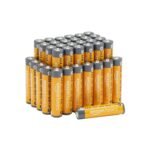
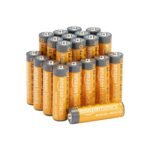
These are alkaline AA batteries from Amazon’s own brand. You get forty-eight of them in a single box, each rated for 1.5 volts and a claimed 10-year shelf life. The pitch is simple: a reliable, everyday battery at a price that undercuts most name brands. If you’ve got a drawer full of remotes, clocks, toys, and wireless mice, this pack solves the “why is everything dead at once” problem without making you wince at the checkout.
They’re not fancy. No lithium chemistry, no rechargeable circuitry, no ultra-high-drain wizardry. What they are is a straightforward, high-volume alkaline battery built for the stuff that drains slowly or sits for months. That makes them a natural fit for households that want to stock up and forget about batteries for a year or two. The real question is whether using Amazon Basics means giving up performance. Spoiler: mostly not, but there are trade-offs.
Key Features
48-pack format – You get enough to cover every device in the house, plus spares for the junk drawer. At roughly $0.32 each, it’s cheaper than buying four-packs of big brands.
10-year shelf life – The batteries come with a stamped date and claim to hold charge for a decade. You can stash them in a closet and forget them until you need replacements for a clock or smoke detector.
No-leakage construction – Amazon Basics uses a double-seal design that’s supposed to keep the alkaline goo inside. Owner reports suggest it works well, though no battery is fully leak-proof if left dead in a device for years.
1.5-volt alkaline chemistry – Standard voltage for the category, so they work in everything that accepts AA. No compatibility worries, unlike some rechargeable cells that run at 1.2 volts.
Blister-free packaging (mostly) – The box opens with a tear strip, and the batteries are inside a plastic tray. You won’t need scissors or a knife to free them, which is a small but real win.
Fit for You
You change the batteries in your TV remote three times a year and want to stop paying $8 for a four-pack at the grocery store.
You have a stack of children’s toys that chew through power on weekends, and you’d rather buy in bulk than hunt for a single AA at 9 p.m.
You finally replaced the battery in your smoke detector and realized it’s been beeping for six months because you kept putting it off.
You keep a stash of emergency supplies in a go-bag or a camping bin, and you want batteries that will still work when you need them five years from now.
You’re the person who buys the giant pack of paper towels at Costco and feels smug about it every time you reach for one.
Uses
Pop a pair into your wireless mouse and you’ll get several months of daily clicks before the cursor starts stuttering. The same goes for the TV remote, the thermostat, and that kitchen scale you only use when baking. For low-drain devices like wall clocks or digital thermometers, expect a year or more.
They’re also a solid choice for smoke detectors. The 10-year shelf life means you can buy a pack now and swap batteries every six months without worrying about the spares going flat. Smoke detectors are a low, steady drain, and alkaline cells handle that well. Just don’t rely on them for gadgets that demand high current in short bursts—things like motorized toys or high-powered flashlights will drain these faster than a lithium or a high-end alkaline like Duracell Optimum.
One more use case that isn’t obvious: gift wrapping. Hand someone a couple of batteries taped to a card? Nobody’s ever mad about it.
Experience
Living with these batteries is about as eventful as you’d expect—you put them in, they work for months, and you eventually replace them. The box is easy to open, which matters more than you think when your last remote just died mid-scroll. Each battery has a clear “use by” date stamped on the side, and the positive terminal has a little ring that makes it easier to see polarity in dim light.
The negligible downside: the batteries are a smidge lighter than premium brands, which can throw off the balance in some toys or game controllers. Also, the plastic tray inside the box holds the cells in tight rows, but once you pull one out, the others rattle around a bit. Not a real problem—just a mild packaging complaint.
You might notice that after about a year in a device, the voltage drops faster than a Duracell would. For remote controls that’s fine; the device just stops working and you swap. For something like a digital camera that needs full voltage for the flash, you’ll see the difference. That’s not a flaw—it’s the chemistry trade-off for a lower price. Most of the time, you won’t care.
Pros and Cons
Pros
Price per battery – At roughly $0.32 each, it’s one of the cheapest ways to stock up on standard AAs. You save maybe 50% compared to Energizer Max.
10-year shelf life – Real utility if you buy in bulk and use them slowly. Store them in a cool, dry place and they’ll be ready when you need them.
Low leakage risk – Amazon uses a double-seal design that owners generally trust. Leaks happen, but far less often than with cheap generic batteries.
Consistent performance for low-drain devices – For clocks, remotes, smoke detectors, and other light loads, they’re indistinguishable from name-brand alkaline cells.
Cons
Not ideal for high-drain gadgets – If you run a motorized toy, a powerful LED flashlight, or a portable speaker daily, these will die faster than premium alkaline or lithium cells. You’ll swap batteries more often.
No rechargeable option – This is a one-and-done pack. If you have devices that go through batteries weekly, rechargeable NiMH AAs will be cheaper over time and reduce waste.
Lightweight feel – Some people interpret the lighter weight as cheap construction. It’s not; it just means less internal paste, which correlates to slightly lower total energy for very high-drain devices.
Bulk packaging means you have to store 48 cells – They come in one big box. If you only need six batteries, you’ve committed to a two-year supply. That’s only a con if you lose track of where you put them.
Advantages
Price beats nearly everything – Compare this to a 48-pack of Energizer Max, which runs about $24. You save a third of the cost for performance that’s identical in 80% of real-world uses.
Amazon Basics vs Energizer batteries – In a direct shootout for low-drain devices, you’d be hard-pressed to tell the difference. Energizer holds an edge in very high-drain gadgets (think digital cameras, handheld video games). But for the stuff in your kitchen junk drawer, the Amazon Basics are just as reliable.
Bulk AA batteries for household devices – This is exactly the right product if you want a single purchase to cover every clock, remote, thermometer, and wireless keyboard in the house. One box, done for a year or two.
Amazon Basics battery leakage test – You can find plenty of owner photos online showing that even after years of storage, these batteries don’t leak inside the device. The double-seal design matters more than the brand on the wrapper.
Who Should Buy
Buy them if you’re tired of paying store prices for individual packs and you want a one-stop solution for all your low-drain devices. Also buy if you like the peace of mind of a 10-year shelf life for emergency kits or smoke detectors.
Skip them if you run high-drain electronics daily – get lithium AAs (e.g., Energizer Ultimate Lithium) or invest in a set of rechargeable NiMH cells and a charger. Also pass if you only need six batteries and don’t have the drawer space for a 48-pack.
Skip them if you’re environmentally conscious enough to prefer rechargeables; these alkaline cells go in the trash after one use, whereas NiMH can be reused hundreds of times.
FAQ
Is the Amazon Basics AA Batteries worth it?
Yes, for routine household devices. The price is low, the shelf life is long, and the leakage protection is good enough for most people. If you own a lot of things that take AAs, this pack will save you money and trips to the store.
How long does it last in a device?
It depends on the device. In a wall clock or remote control, expect 12–18 months of normal use. In a wireless mouse about 3–6 months. In a toy that runs a motor, maybe a few weeks. The batteries are designed for low to moderate drain, so high-drain devices will drain them quickly.
Is it safe for smoke detectors?
Yes. Smoke detectors draw very little power, and the 10-year shelf life means your spares won’t go bad between changes. Alkaline batteries are the standard recommendation for most smoke alarms. Replace them twice a year to stay safe.
What about Amazon Basics vs Energizer batteries for high-drain stuff?
Energizer Max (and especially Energizer Ultimate Lithium) delivers more usable power in high-drain devices like digital cameras, gaming controllers, and portable speakers. For those uses, the extra cost is worth it. For everything else, Amazon Basics matches them for less money.
Do these batteries leak?
No battery is leak-proof forever, but Amazon Basics uses a double-seal design that does a better job than generic no-name brands. Owner feedback is positive; you’ll see fewer reports of leaking compared to the cheapest store-brand alkalines. Just don’t leave dead batteries in a device for years.
Are these the best AA batteries for smoke detectors?
They’re a strong candidate. For smoke detectors, you want a battery that you can buy in bulk, store for years, and trust not to leak. The Amazon Basics 48-pack delivers on all three. Any quality alkaline works fine, but the low per-unit cost makes this a smart choice for a whole house of detectors.
Final Verdict
The Amazon Basics AA 48-pack is a no-surprises purchase. It gives you reliable power for the devices that eat batteries slowly, at a price that makes buying in bulk feel smart rather than wasteful. You won’t get the top-tier stamina of premium lithium cells, but you also won’t pay for it. For the vast majority of household uses—clocks, remotes, toys, smoke detectors—these are the right call.
The one thing to keep in mind is the trade-off: they’re not built for high-drain gear, and they’re disposable. If your life revolves around flashlights and game controllers, look elsewhere. But if you just want to fix the “remote died again” problem for a year or two? Grab this box and forget batteries exist until next Christmas.
Amazon Basics AA Batteries vs the Competition in 2026
The sheer volume of praise for the Amazon Basics 48-pack ($15.29, 4.7 stars) makes it an easy recommendation on paper. It undercuts the big names while throwing out bold claims: 10-year shelf life, long-lasting, no leakage. But in a category where a leaked battery can ruin a $50 device, getting the best pick means looking past the price tag. Here is how it holds up against the real heavyweights and the value alternatives.
Product
Price Range
Key Strength
Key Weakness
Best For
Amazon Basics 48-Pack
$15.29 (~$0.32/unit)
Terrific per-battery cost, 10yr shelf life
Short track record on leakage
General household bulk buyer
Duracell Coppertop 40-Pack
~$20 – $25 (~$0.50+/unit)
Decades of proven leak protection
Significantly higher per-battery cost
Critical devices (smoke alarms)
Energizer Ultimate Lithium 20-Pack
~$15 – $20 (~$0.75-$1.00/unit)
Extreme temp performance, 20yr shelf
Very expensive per battery, not rechargeable
Emergency kits, high-drain gear
Kirkland Signature 48-Pack
~$16 – $18 (~$0.33/unit)
Very low cost for quantity
Inconsistent leakage reputation, membership fee
Low-risk devices for Costco members
Amazon Basics AA Batteries vs Duracell Coppertop
This is where the math meets the anxiety. The Amazon Basics pack works out to roughly $0.32 per battery. A 40-pack of Duracell Coppertops will run you closer to $0.50 or more per cell. That gap adds up when you are filling a whole house. But the Duracell buys a proven record. People trust the Coppertop in their smoke alarms because it has decades of not leaking behind it. If the Amazon Basics battery is going into a kids toy that gets swapped weekly, the risk is trivial. If it is sitting in a weather sensor for three years, the Duracell premium starts to look like cheap insurance against a corroded battery terminal.
Amazon Basics AA Batteries vs Kirkland Signature
You might be reading this comparing two store brands. The Kirkland batteries from Costco and the Amazon Basics sit in the same brutal price bracket. The difference shows up in the reviews. Costco’s battery quality has been all over the map over the last decade. The Amazon Basics pack, based on 4.7 stars across thousands of buyers, seems to have locked in a consistent manufacturing spec from the start. If you already have a Costco card, the Kirkland batteries are fine for TV remotes and bathroom scales where a leak just means a quick cleanup. If you don’t have a membership, the math falls apart completely — you can buy three 48-packs of the Basics for the price of the annual Costco fee.
Best AA Batteries for Smoke Detectors and High-Stakes Gear
All of these alkalines have a blind spot. They hate the cold, and they fade under a heavy constant draw. This is where the Energizer Ultimate Lithium comes in. It costs roughly $0.80 to $1.00 per battery, which feels painful next to the $0.32 Amazon Basics. But it lasts significantly longer in a high-drain device, keeps a steady voltage in freezing weather, and packs a 20-year shelf life. For an emergency radio, a GPS tracker, or a smoke detector in a vacation cabin, the Lithium cell is the genuinely superior product, and the price is a secondary concern.
For the general household battery drawer — the remote controls, the wireless mice, the kids toys that eat cells for lunch — the Amazon Basics AA 48-pack is the obvious pick. The price is unbeatable for the quantity, and the 10-year shelf life lets you stock up without worry. Pick the Duracell Coppertops if that battery drawer sits next to the smoke alarm installation, and you want the total peace of mind of a brand that has never let you down. Pick the Energizer Ultimate Lithium if you are packing an emergency kit or powering a device you rely on in bad conditions.
Ready to decide on the Amazon Basics AA Batteries?
See today’s price, stock and delivery options on Amazon.