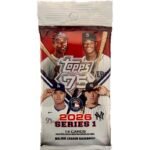
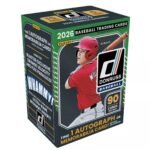
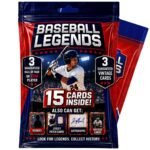
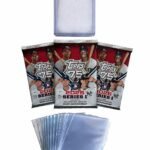
If you’re looking for a Topps Allen Ginter box review before you spend $32.49, here’s the answer: yes, it’s worth it, but only if you want the quirky side of baseball cards, not a guaranteed hit. You get the A&G experience, with its minis, oddball subjects, and vintage tobacco-card charm, for a lot less than a hobby box.
Offers a fun, quirky card-collecting experience at an accessible price point with solid product quality.
Price vs. rivals
Cheaper
CheaperTypicalPricier
Priced modestly below typical retail for similar Allen & Ginter blasters, placing it near the lower end of comparable value boxes.
Ease of use
Excellent 85/100
A sealed box is straightforward to open and enjoy, with no complex setup required for an average person.
Overview: Topps Allen Ginter Box Review in One Minute
Allen & Ginter is the Topps set that asks what baseball cards would look like with a Victorian soul. The 2025 edition keeps the formula: a large base set of current players, then it happily veers into historical figures, animals, and the occasional oddity. The Value Box is the budget entry point, factory sealed and priced for a casual buy.
The problem it solves is real. Most baseball card products are all baseball, all the time. A&G is one of the rare boxes that makes opening packs feel like browsing a cabinet of curiosities. It’s really for two kinds of people: set builders who want the base run without paying hobby-box prices, and fans who just want a fun rip with a real chance of something weird.
Key Features That Matter
The things that matter in a Topps Allen Ginter box review aren’t what you’d expect from a standard card product. Here’s what earns the money.
Factory sealed packaging: You know the packs haven’t been searched or handled. That peace of mind matters when you’re buying from an online marketplace.
Mini cards as the signature: A&G’s smaller-size cards are the reason many collectors buy this set. Different backs give you something to chase beyond the base cards.
Offbeat subject matter: One pack can give you a star pitcher; the next can give you a rare moth or a 19th-century explorer. The mix is the whole point.
Deep base checklist: The set runs a few hundred cards, enough to make a full build feel like a project without being impossible.
The oversized box card tradition: Box loaders have been part of Allen & Ginter for years, and the Value Box continues it.
Matte card stock: A&G cards have a flat, sturdy feel that doesn’t show fingerprints the way glossy flagship cards do. They photograph well and hold up in a binder.
Fit for You: When This Box Makes Sense
This box fits you if:
You’re a set builder who wants the cheapest route to the A&G base checklist.
You like pulling cards that aren’t baseball players, and you’re tired of opening the same prospect parallels all year.
You collect minis and want a box that feeds that habit without a hobby-box investment.
You’re buying for a kid who just got into cards and will be thrilled by the oddball subjects alone.
You want a self-contained Friday-night rip that doesn’t blow the budget.
You keep a desk or coffee table where one strange card can live and start conversations.
Uses: Where It Earns Its Keep
The most honest use for a box like this is a solo rip on a slow evening. You put on a ballgame, crack packs, and sort base cards into stacks. The time moves nicely.
The Topps Allen & Ginter 2025 value box also works as a two-person activity. The oddball checklist gives you something to talk about, and trading doubles back and forth beats two people staring at their phones.
It’s a solid pick for a gift, too. A factory sealed box reads as a proper present rather than a last-minute thought, and the price keeps it an easy yes.
Experience: What Opening It Is Actually Like
Breaking the seal is simple enough. No tape fights, no crushed corners, everything inside as advertised. No setup, no cleanup, no batteries. You tear the seal, open packs, and the only mess is a stack of base cards you’ll sort twice.
This is the part of a Topps Allen Ginter box review where the quirks show up. The minis are the first surprise. They’re smaller than normal cards, which is charming until you realize they don’t fit a standard nine-pocket page. You’ll want mini-sized pages or sleeves, and that’s an extra purchase most people don’t see coming.
The oversized box card is the loudest moment. It doesn’t fit a binder. It’s a shelf card. It tends to be the thing you actually display.
Owner chatter tends to mention duplicate base cards. Collation across retail boxes isn’t kind, so a second box means doubles. There are also short prints in the base checklist, which is where set builders start to feel the pain.
The other honest note: you probably won’t pull an autograph or relic at this price. Those cards exist in the product, but the odds are much longer in the value format. Treat any hit as a bonus.
Pros and Cons
Pros
Fun per dollar: The oddball checklist makes every pack feel like a tiny museum visit. That’s a good entertainment ratio for $32.49.
Set builder value: Base cards come cheap, and a few boxes plus some singles can knock out the checklist.
Mini chase: The different mini backs give you a second game beyond the base set, and it’s a fun one.
Display quality: The matte stock and vintage frame look good in a binder or on a shelf.
Factory sealed: Buying online feels safer when the shrink wrap is intact and the box is still sealed by Topps.
Cons
Hit odds are long: At $32.49, you’re buying the base experience, not a realistic shot at a big card. That’s the trade-off.
Minis need separate supplies: Standard pages and sleeves don’t fit them, so add that cost to your total.
Duplicates pile up: A second box brings doubles, and short prints make full completion harder than the checklist suggests.
Not built for ROI: This box is unlikely to return its price in resale value. It’s a product to open, not an investment.
Advantages: Topps Allen & Ginter vs Topps Series 1
Topps Allen & Ginter vs Topps Series 1 comes down to personality. Series 1 is the dependable flagship: current players, clean design, and the base set everyone knows. A&G is the weird cousin. It keeps the baseball but adds history, nature, and nonsense.
For a Topps Allen Ginter box review, the comparison that actually matters is against other A&G formats. A hobby box costs two or three times the value box’s price. What you give up in hits, you get back in entry price, and the base set stays just as buildable as the one in the hobby box.
There’s also the quieter comparison against buying singles. Singles guarantee you get exactly the cards you want. A box is the opposite bet, but it’s selling the small thrill of discovery that singles can’t replicate.
Who Should Buy the 2025 Value Box
If you’re weighing the best Allen & Ginter box for set builders, the Value Box deserves a serious look. It’s the cheapest way to get the base cards and minis without touching hobby pricing.
Buy it if:
You’re building the 2025 A&G base set and want a low-cost starting point.
You collect minis and want a box that feeds the habit.
You’re new to Allen & Ginter and curious what the product actually is.
Skip it if:
You need guaranteed hits to enjoy a box. Hobby boxes are the better call.
You only collect flagship Topps and want cards that track Series 1 values.
You’re chasing one player’s most valuable cards. A&G is a niche design, and flagship or Chrome serves that goal better.
FAQ: Topps Allen Ginter Box Review Quick Answers
Is Topps Allen & Ginter worth it?
Yes, for its purpose. If you want a fun, unusual baseball card rip without paying hobby prices, the Value Box delivers. If you want valuable hits or flagship-style cards, spend elsewhere. The value is in the experience, not the resale.
What are typical Allen & Ginter box contents?
Base cards, mini cards, a shot at inserts, and an oversized box card. Hits like autographs and relics are possible but rare in the value format. Hobby boxes carry better odds and more inserts, which is why they cost more.
Is the Topps Allen & Ginter 2025 value box different from a hobby box?
Yes. The hobby box costs two to three times as much and comes with better odds for autographs, relics, and short-printed minis. The Value Box trades those odds for a much lower entry price, which makes it a better starter or set-build option.
Can you pull autographs or relic cards in a Value Box?
Yes, but don’t expect one. The autograph and relic checklist includes the value format, but the odds are long, and most boxes won’t contain either. Hobby boxes are where hits actually happen, so treat any pull here as a bonus.
Is the Value Box a good buy for set builders?
Yes. It gives you base cards and minis at the lowest entry price in the A&G lineup, and the base set is sized so a few boxes plus some singles can finish it. The short prints will test you, though.
Final Verdict
Any Topps Allen Ginter box review that lands on a 4-star average has to mention the same caveats: hit odds are long, minis need special pages, and dupes accumulate. None of that stops this from being a good time.
Buy it if you collect for the joy of discovery. Keep one thing in mind: treat hits as a bonus, not an expectation, and the 2025 Value Box will give you a few genuinely weird cards you’ll be glad to own.
Topps Allen & Ginter Value Box vs the Competition in 2026
If you’re shopping for a baseball card box that doesn’t empty your wallet, the 2025 Topps Allen & Ginter Value Box sits in an odd, useful spot. It’s a retail-only box at $32.49, and it gives you a taste of Allen & Ginter’s mix of baseball players, historical figures, animals, and outright oddities. The Allen & Ginter box contents are the brand’s usual draw: no guaranteed hits, but a bunch of minis and inserts you won’t find in a normal flagship product. That’s not for everyone. But this Topps Allen Ginter box review is about who should buy it and who should move on.
Product
Price Range
Key Strength
Key Weakness
Best For
Topps Allen & Ginter Value Box
Budget, around $32
Minis, strange subjects, and fun inserts
No guaranteed autograph or relic
Collectors who want a cheap, quirky rip
Topps Series 1 Hobby Jumbo
Premium, well over $100
Guaranteed hit, flagship rookies, lots of parallels
Expensive and conventional
Rookie chasers and flagship investors
Topps Heritage Hobby Box
Mid, around $100
Vintage design and one guaranteed hit per box
Short prints make set building a grind
Nostalgic collectors who don’t mind SPs
Bowman Chrome Blaster
Budget, under $40
Prospect autographs are possible, shiny chrome
Most blasters come up empty
Prospectors who like lottery tickets
Topps Big League Blaster
Budget, under $25
Cheap and easy to rip with kids
Card stock feels thin, low long-term value
New fans and casual family breaks
Topps Allen & Ginter Value Box vs Topps Series 1 Hobby Jumbo
This is a clash of priorities rather than price. A Series 1 Hobby Jumbo costs more than twice as much and gives you a guaranteed hit, a massive base set, and the season’s flagship rookies. The Value Box gives you something else: subjects you won’t find in Series 1, plus minis and insert cards that lean into the silly side of the hobby. Topps Allen & Ginter vs Topps Series 1 comes down to whether you want standard-looking star cards or a card of a famous scientist holding a snake. Both are fun. Only one is a standard baseball card.
Topps Allen & Ginter Value Box vs Topps Heritage Hobby Box
Heritage is the other retro-styled box, and it’s the closer competition. A 2025 Heritage Hobby Box costs roughly three times as much as the Value Box and still gives you a lot of short prints to chase. That’s great if you love the 1976 design and like sifting through variations. It’s less great when your one guaranteed hit is a relic from a backup catcher. The best Allen & Ginter box for set builders is still a Hobby Box, because it packs in way more base cards. But on a budget, the Value Box is a better entry point than a Heritage box: less money, less SP frustration, and the content is more varied.
Topps Allen & Ginter Value Box vs Bowman Chrome Blaster
Bowman Chrome is a different animal. A blaster costs about the same, but it’s almost entirely about prospects and shiny cards. You might pull a future star, or you might pull a guy who plays six games in AAA. The ceiling is higher and the floor is lower. Allen & Ginter doesn’t have that prospect lottery. Instead, it offers a more reliable kind of joy: a pile of minis, historical figures, and oddball inserts that have a steady collector base. So is Topps Allen & Ginter worth it over a Bowman blaster? If you’re chasing a rookie autograph, no. If you want a fun, low-stakes rip, yes.
The Topps Allen & Ginter 2025 value box is the right pick if you want a cheap, weird, and satisfying box without expecting a big hit. It’s also one of the best cheap baseball card boxes of 2026 for people who collect outside the normal rookie chase. If you’d rather have a guaranteed autograph or relic, the better alternative is a Topps Series 1 Hobby Jumbo or a Heritage Hobby Box, depending on how much you want to spend. If you’re purely prospecting, jump to Bowman Chrome. For everyone else, the Value Box earns its 4.0 stars and your $32.49.
Ready to decide on the Topps Allen & Ginter Value Box?
See today’s price, stock and delivery options on Amazon.