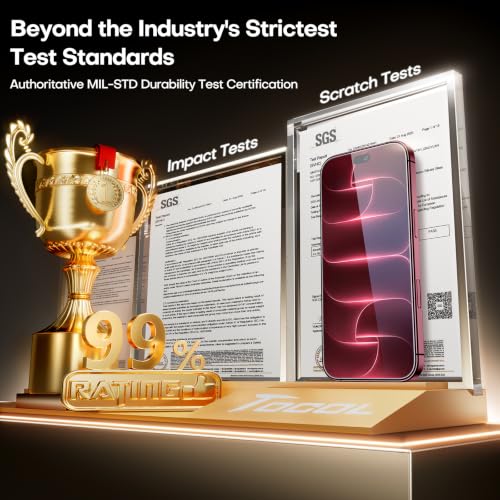
Offers reliable protection and good user feedback at an accessible price point.
Price vs. rivals
Cheaper
CheaperTypicalPricier
Priced well below most comparable accessories, reflecting a budget-friendly option without premium features.
Ease of use
Excellent 85/100
The easy installation design and high user rating indicate that most people can apply it without professional help.
Overview
This TOCOL screen protector review answers one question straight away: is it worth buying for your new iPhone 18 Pro Max? At $8.99 for two pieces with a working alignment frame, yes. You get solid drop and scratch protection at a price that makes the usual big-name glass look like a rip-off, as long as you know where the trade-offs are.
It solves the basic problem of keeping a $1,200 screen safe from grit, keys, and the occasional face-down landing on pavement. It’s for someone who wants reliable protection without paying Belkin or Spigen money, and who doesn’t mind replacing the protector every few months to keep it feeling fresh.
Key Features
9H Hardness Tempered Glass: This handles the usual pocket litter—keys, coins, a loose screw—without picking up visible micro-scratches. It’s hard enough to absorb a sharp impact and crack instead of your actual screen.
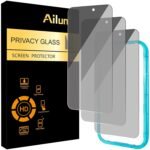
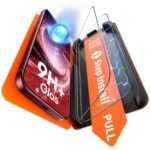
Easy Installation Alignment Frame: You snap your phone into the plastic tray, drop the glass in, and press. It centers the protector perfectly every time. No bubbles unless you lift it mid-stick, and even then you can fix it with the included dust removal sticker.
Oleophobic Coating: Out of the box, it repels fingerprints and greasy smudges well. A wipe on your sleeve clears it right up. The coating does fade after a couple of months, but that’s normal at this price point.
Case-Friendly Edge Profile: The glass sits just inside the lip of most cases. You avoid the problem of the protector peeling up at the corners because the case pushes against it. It’s a small detail that saves you from replacing protectors early.
Precise Cutouts: The speaker slit and front camera hole line up exactly where they should. You won’t get muffled audio or a foggy selfie because the glass shifted during installation.
Fit for You
You’ve never installed a screen protector without trapping a microscopic piece of dust right in the center.
You hand your phone to a toddler who thinks “gentle” is a suggestion, not a rule.
You work outdoors or in a shop where fine dust and grit land on everything.
You replace your screen protector a few times a year anyway and don’t want to feel guilty about throwing away a cheap one.
You use a case but still want the satisfaction of knowing the glass itself is protected from scuffs.
Uses
Gaming sessions on the iPhone 18 Pro Max get long and sweaty. The oleophobic coating keeps your thumbs gliding smoothly across the surface, and the glass doesn’t get tacky when the phone warms up. For anyone wondering about the best screen protector for iPhone 18 Pro Max gaming without spending thirty bucks, this one holds up well for normal play. It won’t stop a heavy slam, but it handles frantic swiping without issues.
Dropping the phone is never fun, but when it happens, the glass spiderwebs instead of your screen. You peel off the damaged protector, wipe the phone clean, and grab the second one from the box. The process takes five minutes and your actual screen stays flawless.
Daily pocket carry with keys and loose change is the main event for any screen protector. The 9H hardness shrugs off metal edges and gritty dust that would otherwise leave permanent marks on bare glass. You’ll see some faint scuffs on the protector over time, but that’s exactly what it’s there for.
Experience
Setting this thing up is the most pleasant part of owning it. You clean the screen with the wet wipe, dry it with the cloth, and use the dust sticker to pick up any remaining specks. Then you place the phone in the plastic alignment tray, peel the backing off the glass, and lower it using the frame. The glass sticks from the center outward, pushing air to the edges. You’ll still manage to trap a dust speck if you rush the cleaning, but the frame makes it easy to lift one corner with the included pick and grab it with the sticker.
Once it’s on, you barely notice it. The glass feels smooth, almost identical to the phone’s original surface. The fingerprint resistance works well for the first few weeks. Around month two, you’ll start wiping the screen more often to clear smudges. That’s the coating wearing down, which is the main trade-off for the low price.
Cleaning is simple. A microfiber cloth and a little water or lens cleaner. The edges can collect a thin line of pocket lint over time if you don’t use a case that wraps around the front. It’s not a major issue, but it’s something you’ll notice if you look closely. The glass itself stays clear and doesn’t yellow or haze up.
Pros
Two protectors for less than nine bucks. You get a spare, which means the first mistake isn’t costly.
Alignment frame is genuinely useful. It centers the glass perfectly without guesswork or bubbles.
Good scratch resistance. Keys, coins, and grit don’t leave permanent marks.
Smooth feel out of the box. Your finger glides like it would on bare glass.
Precise cutouts. The speaker and camera holes line up correctly.
Cons
Oleophobic coating fades after a few months. Expect it to get smudgier faster than a premium protector from Spigen or Belkin.
Edges can chip on a hard, angled drop. Tempered glass is strongest in the center and weakest at the thin edges.
Not fully edge-to-edge. It leaves a tiny gap for case compatibility, so a sliver of screen is exposed if you drop it on a sharp rock.
Dust collects at the edges over time. A case with a raised front edge helps, but bare users will see lint build up.
You get what you pay for on the coating. It’s good for the price, but it doesn’t match the longevity of more expensive options.
Advantages
The biggest advantage is the price. A TOCOL vs Spigen screen protector comparison comes down to this: Spigen’s coating lasts longer and the install kit feels more solid, but TOCOL gives you two protectors for half the price of one Spigen. If you’re okay replacing it twice a year, you save real money.
Value per protector: You get two for less than ten bucks. Most competitors charge that much for one.
Easy installation: The plastic alignment frame is simple and works reliably, unlike flimsy hinge stickers that can shift.
Low replacement cost: When the oleophobic coating wears out, swapping it doesn’t hurt your wallet.
Who Should Buy
Buy it if you want reliable scratch and drop protection without paying premium prices.
Buy it if you’re comfortable installing a protector yourself and appreciate a good alignment tool.
Buy it if you don’t mind swapping the protector every few months to keep the smooth feel.
Skip it if you need the oleophobic coating to last a full year. A higher-priced option will hold up longer.
Skip it if you want a perfect, dust-free install without doing it yourself. Pay a shop to handle it.
FAQ
Is the TOCOL 18 Pro Max screen protector worth it?
Yes, for the price of a fast-food meal you get two protectors and a reliable alignment frame. It offers strong scratch and drop protection, though the oleophobic coating fades faster than premium brands.
How long does a TOCOL screen protector last?
The glass can last indefinitely if you don’t drop the phone. The oleophobic coating starts losing smudge resistance after roughly two to three months of regular use, which is typical for protectors in this price range.
TOCOL vs Spigen screen protector: which is better?
Spigen has a more durable oleophobic coating and a slightly nicer installation kit. TOCOL offers better value with two protectors at a lower price. If you don’t mind replacing it more often, TOCOL is the smarter buy.
Is it the best screen protector for iPhone 18 Pro Max gaming?
It works well for gaming because the glass is smooth and doesn’t catch your thumbs. The 9H hardness resists scratches from intense swiping. For most players, it’s a solid choice without overspending on a premium brand.
Is the TOCOL screen protector easy to install?
Yes, the plastic alignment tray holds your phone securely and guides the glass into perfect position. You still need to clean the screen thoroughly to avoid dust bubbles, but the frame eliminates the guesswork.
Does it work with a phone case?
Yes, the glass is designed to sit just inside the lip of most cases. This prevents the protector from peeling up at the corners, which is a common issue with full-edge coverage protectors.
Final Verdict
The TOCOL screen protector does exactly what a screen protector should do: it keeps your phone’s screen safe from scratches and drops without making you feel bad when you have to replace it. The alignment frame makes installation easy, and the price makes it disposable. You get two protectors for less than ten bucks, and both work well out of the box.
Buy it if you want solid, no-fuss protection and you’re okay swapping it out every few months. Skip it if you need a single protector that lasts a full year without losing its smooth feel. For the cost, this TOCOL screen protector review gives it a clear recommendation for anyone who values practical protection over brand name.
TOCOL 18 Pro Max Screen Protector vs the Competition in 2026
The TOCOL 18 Pro Max screen protector sits firmly in the budget-friendly corner of the market, but it’s not priced like a disposable throwaway. At $8.99, it undercuts most big-name rivals by a solid margin, yet it comes with an installation frame that actually works. That combination has made it a popular pick for people who don’t want to gamble $40 on a piece of glass they might crack in week one. It’s the sensible middle child between “cheap no-name” and “premium brand tax.”
Product
Price Range
Key Strength
Key Weakness
Best For
TOCOL 18 Pro Max Screen Protector
Budget ($8.99)
Easy installation frame, solid oleophobic coating
Edges are slightly less durable than premium rivals
First-time installers, value seekers, everyday users
Good clarity, comes in 3-pack for same price as one
Installation frame less forgiving than TOCOL’s
Households with multiple devices, frequent replacements
TOCOL 18 Pro Max screen protector vs Spigen GlasTR EZ Fit
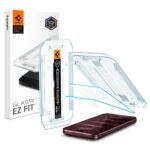
Spigen’s GlasTR EZ Fit is the closest direct competitor, and the comparison comes down to what you value more: the installation experience or the edge seal. The TOCOL 18 Pro Max screen protector vs Spigen GlasTR EZ Fit debate usually starts with the tray. TOCOL’s frame clicks onto the phone with a satisfying snap, and the glass drops in perfectly centered every time. Spigen’s is similar, but the tray feels slightly more rigid — like it was milled rather than molded. The real difference shows up in the corners. Spigen’s glass wraps a touch tighter around the curve of the display, which means less dust creeping in over time. But you’ll pay roughly three times more for that extra grip. If you’re careful with your phone and replace protectors when they scratch, not when they shatter, the TOCOL is the smarter spend. If you keep a phone for two years and hate seeing a dirty line along the edge, Spigen justifies its price.
TOCOL vs Belkin UltraGlass 2: the durability question
Belkin’s UltraGlass 2 is the one you buy when you’ve already shattered two screens in a year and your insurance deductible stings more than the glass itself. It uses a different ion-exchange process that makes the glass physically tougher — you can feel it when you tap. The TOCOL screen protector durability is fine for normal life; keys in a pocket, a drop from waist height onto concrete, all handled without drama. But drop it face-first onto a sharp rock or a parking lot curb, and the TOCOL will crack where Belkin might survive. That said, Belkin runs $40-$50 for a single piece. TOCOL sells in a 3-pack for less than $9, so even if you break two, you’re still ahead financially. The trade-off is honest: Belkin for protection, TOCOL for economics. If you’re the type who uses a case with a raised lip and doesn’t juggle phones, don’t pay the premium.
Best screen protector for iPhone 18 Pro Max gaming — a sidebar
If you’re looking for the best screen protector for iPhone 18 Pro Max gaming, the TOCOL has one quiet advantage: the oleophobic coating. It’s genuinely good, and it stays slick for months. While the ESR competitor in the same price range starts showing fingerprint smudges after about six weeks, the TOCOL holds up noticeably longer. That matters when you’re grinding through a session and the screen keeps picking up thumbprint grease that obscures the action. The TOCOL screen protector features list doesn’t scream “gaming” — no matte finish, no anti-glare layer — but the glass itself has enough smoothness that swipes feel responsive, and the edge-to-edge cut doesn’t interfere with the phone’s gesture bar. For dedicated gamers who need a protector that won’t turn into a smudge magnet mid-match, the TOCOL is the dark horse pick at this price. The Belkin might survive a harder impact, but it won’t feel this clean under your thumbs for this long.
Who should actually buy the TOCOL
Choose the TOCOL 18 Pro Max screen protector if you’re buying for yourself, possibly buying two, and you want to stop worrying about the install process. The frame makes alignment foolproof, the price means a broken one isn’t a tragedy, and the coating holds up well for a budget option. It’s also the right call if you’ve never applied a protector successfully before — the TOCOL screen protector easy installation design genuinely removes the skill requirement. But if you’re the person who keeps a phone for three years, drops it constantly, or obsesses over the cosmetic edge where glass meets bezel, skip it and grab the Spigen GlasTR EZ Fit instead. The Belkin UltraGlass 2 is only worth the money if your screen has already paid the price once — otherwise, $8.99 buys you the same clean surface, and a spare, for a fraction of the cost.
Ready to decide on the TOCOL 18 Pro Max screen protector?
See today’s price, stock and delivery options on Amazon.