Spigen combines strong brand trust and high user satisfaction with a price that sits comfortably in the middle of the screen protector market.
Price vs. rivals
Pricier
CheaperTypicalPricier
Priced moderately above the typical market range for a branded screen protector, reflecting its strong reputation and high rating without being a premium outlier.
Ease of use
Excellent 90/100
Spigen screen protectors are generally easy to install with included alignment tools, though careful placement is needed to avoid bubbles.
Overview
If you’re staring down a $1,200 phone and wondering whether a $20 piece of glass is worth it, the short answer is yes if you pick the right one. This Spigen screen protector review cuts through the noise: it’s a tempered glass sheet made for the iPhone 18 Pro Max, 17 Pro Max, and 16 Pro Max. The problem it solves is obvious—scratches from pocket change, tiny chips from a drop, and that sick feeling when you see a hairline crack. It’s for anyone who wants solid protection without paying Zagg prices or dealing with a bubbly install.
Spigen has been making phone cases and screen protectors for years, so they know the fit. This isn’t a generic “one size fits most” sticker—it’s cut precisely for the curved edges and camera notch of the latest Pro Max models. Owners tend to mention that the alignment tool (included) makes first-time positioning easy, which matters more than you’d think. The glass itself is 9H hardness—industry code for “hard enough to fend off keys and coins”—and the oleophobic coating keeps fingerprints from becoming a permanent art project.
Key Features
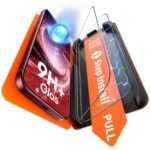
9H tempered glass hardness – That rating means it’s harder than typical plastic protectors and shrugs off the scratch test from a coin or a stray grain of sand. You’ll still want a case, because glass can shatter on a direct corner impact, but it buys you a lot of peace of mind for daily pocket life.
Oleophobic coating – The coating repels oil from your fingers, so smudges wipe off more cleanly. After a month, it’s still slicker than a bare screen, though you’ll notice it fading slightly after heavy texting sessions—nothing a microfiber cloth can’t handle.
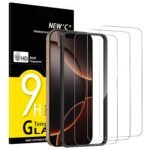
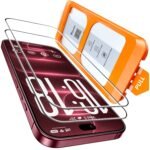
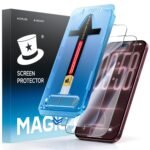
Alignment frame tool – A plastic tray that clips over your phone and guides the protector into perfect position. If you’ve ever tried to eyeball a protector and ended up with a corner hanging off, you’ll appreciate how well this solves that anxiety. It takes maybe 90 seconds.
Edge-to-edge coverage (with slight clearance) – It covers nearly the whole display, leaving just a hair of room around the edges to avoid lifting when you put a case on. Most bumper cases fit fine, but super-thick ones might push the edges. Check your case’s lip height.
UV-free, auto-adhesion layer – No need for a UV lamp or liquid glue. You peel the back, align it, and let it drop. The adhesive bonds evenly without bubbles if you follow the instructions—one slow, steady press from the center outward.
Anti-shatter film on the glass side – If the protector does crack, the glass stays attached to a thin PET backing. That means no tiny shards flying off or scratching your fingers. It also makes removal less stressful because the whole thing peels off in one piece.
Fit for You
You drop your phone onto concrete at least once every six months, and the last time the screen replacement cost more than the protector.
You carry your phone in the same pocket as your keys or a coin, and you’re tired of micro-scratches that show up under direct sunlight.
You’ve tried a cheap $5 protector from a gas station and it lifted within a week, leaving a dust line along the edge.
You use a thick case (like a rugged armor or a MagSafe wallet) and you need a protector that doesn’t get pushed off when you slide the phone into your pocket.
You want something you can trust to install yourself without a trip to the phone repair shop, because you watched a YouTube video and now you’re confident.
You’re buying this protector for an iPhone 17 Pro Max or an iPhone 18 Pro Max and you want a proven fit from a brand that actually owns tooling for those models, not a “universal” cutout.
Uses
Picture this: you’re pulling your phone out of your jeans pocket after a coffee run, and you feel that telltale scrape of a key against the screen. With a bare screen, that leaves a faint mark that catches the light until you sell the phone. With this Spigen tempered glass screen protector, you hear a dull click and the glass stays clear. You’ll check it later and see a hairline scratch on the protector instead of on the display.
Another real moment: you’re at a picnic, balance your phone on a towel, and someone knocks it off the table onto pea gravel. The protector bears the brunt—maybe a tiny chip at the edge from a sharp rock. You replace the protector for $20 instead of paying $379 for a screen repair from Apple. That math adds up fast if you’re clumsy like me.
Then there’s the daily grind: you’re texting with greasy fingers after eating a burger, and the smudges build up. The oleophobic coating makes them easier to wipe off with your shirt or a napkin, though you’ll still want a proper cleaning cloth once in a while. It’s not magic, but it reduces that “eww, greasy” feeling.
Experience
Installation is the part that usually ruins a screen protector experience. Spigen includes an alignment frame—a plastic tray that snaps onto the phone body, with cutouts for the screen. You clean the screen with the included wet and dry wipes, then peel the protector, drop it into the frame, and press from the center. Bubbles? A few small ones sometimes, but they usually push out to the edge if you press firmly with the included squeegee card. The whole process takes about two minutes, which is faster than any other tempered glass I’ve seen at this price point.
Once it’s on, the glass feels almost identical to the phone’s original screen. The touch sensitivity is fine—no ghost taps or missed swipes. Face ID works because the protector covers the entire front, including the notch, with a precise cutout for the sensor array. Some people report a slight rainbow effect under direct sunlight if the protector isn’t perfectly clean, but that’s rare and disappears after a wipe.
The real annoyance? Dust and dirt can get stuck under the edges if you let it sit too long before pressing down. Also, the glass picks up scratches faster than you might expect on the coating itself—not deep ones, but fine hairlines that show under a desk lamp. That’s normal for any tempered glass protector; the coating is soft to keep the glass flexible. You’re trading a replaceable layer for a pristine phone screen.
Cleaning is simple: a microfiber cloth and a tiny spray of water or lens cleaner. Avoid alcohol wipes every day because they can wear down the oleophobic layer faster. After about three months, you might notice the coating feels less slippery—that’s the usual lifespan before you’ll want to replace it. At $20, swapping it out every three to four months feels reasonable, especially compared to the $40+ options.
Pros and Cons
Pros
Excellent value at $20 – For a trusted brand with precise cutouts and an easy alignment tool, you’d normally pay $30–40 from the big names. Spigen delivers the same core protection for half the price.
Included alignment frame is dead-simple – Even if you’re the sort of person who peels off an orange in a single spiral, you’ll appreciate how little margin of error this leaves. First-timers get a perfect install almost every time.
Solid scratch resistance for daily life – Keys, coins, sand, and even a butter knife (don’t ask) won’t leave permanent marks. The 9H rating holds up well; you’ll need a steel pick to actually scratch it through.
Clear and oleophobic – The screen stays bright and sharp. The coating fights fingerprints well for the first month, then declines gracefully. You can buy a two-pack from Spigen if you want to swap after the coating fades.
Compatible with most cases – The edges are slightly smaller than the display so that a case lip won’t push it up. Spigen’s own cases (like the Tough Armor or Liquid Air) pair perfectly, but third-party bumper cases also work unless they have super aggressive lips.
Cons
Not shatterproof, just scratch-resistant – If you drop your phone face-down onto a sharp rock, the protector can crack. That’s true of all tempered glass; a flexible film would resist shattering better but scratch easier. Know that this is a trade-off for hardness.
Oleophobic coating wears off after a few months – After about 90 days of regular use, smudges start to stick more. You can apply a liquid oleophobic coating refill, but by that point it’s easier to just install the second protector if you bought a two-pack.
Alignment frame only works if you use it immediately – The frame has to snap onto a clean, dry phone. If you accidentally get dust on the adhesive before aligning, you might have to peel it and try again with a new protector because re-sticking doesn’t work well.
Cutout for the notch is fine, but some complain about a slight gap – A few users mention that the top edge of the protector sits a tiny bit lower than the glass, leaving a thin strip of unprotected screen above the notch. It doesn’t affect functionality, but it’s a small aesthetic annoyance if you look closely.
Not the most edge-friendly for curved screens – The iPhone 18 Pro Max has slightly 2.5D rounded edges, and this protector covers most of the flat area but stops before the curve. That’s normal for a flat glass protector, but if you absolutely need edge-to-edge curved coverage, you’d need a TPU film or a liquid adhesive glass (like Whitestone Dome), which costs more and is harder to install.
Advantages
Spigen vs Zagg screen protector – Zagg’s Glass Elite costs around $40–50 and includes a lifetime warranty (you pay shipping). Spigen is half the price and the warranty is only for defects, not accidents. So if you break a protector every month, Zagg’s replacement policy might win. But if you want a solid, no-hassle protector that you can replace twice for what Zagg charges once, Spigen is the better call—especially for the same level of scratch resistance and clarity.
Better fit than generic brands – A $9 no-name protector from Amazon often has off-center cutouts or slightly thinner glass. Spigen’s tooling is made for each specific iPhone model, so the camera cutout and speaker mesh are precisely aligned.
Easy install without a UV lamp – Unlike some “privacy” or “anti-glare” glass that requires LOCA glue and curing, Spigen’s straightforward adhesion works out of the box. No mess, no waiting, no chance of glue seeping into buttons.
You get a two-pack option – For a few dollars more (check the listing), Spigen sells a two-pack for around $24. If you’re clumsy or just want a backup, that’s a great deal—most competitors sell singles for that price.
Who Should Buy
Buy it if you want a balanced protector for daily use and don’t mind swapping every few months – It’s perfect for anyone who hates scratches but doesn’t need military-grade shatter resistance. Ideal for commuters, students, or anyone who keeps their phone in a pocket with random objects.
Skip it if you drop your phone onto hard floors multiple times a week – In that case, you might want a tougher, more expensive option like a liquid-adhesive glass (Whitestone Dome) or a flexible TPU film that doesn’t crack. Even the best tempered glass can shatter on a bad angle.
Skip it if you insist on a lifetime warranty – Spigen’s warranty covers manufacturing defects only. For breakage protection, you’d need a paid plan like Zagg’s. If you break a protector every month, the $20 Spigen starts to add up.
Perfect for iPhone 16 Pro Max, 17 Pro Max, and 18 Pro Max owners – The fit is specifically designed for these models, so older iPhones (like 15 Pro Max) have slightly different dimensions. Check the listing for your exact model.
FAQ
Is Spigen screen protector worth it?
Yes, for most people. You get a precisely cut, 9H tempered glass protector with an easy alignment frame for $20. It matches the clarity and scratch resistance of more expensive brands like Zagg, but without the lifetime warranty. If you’re okay replacing it every three to four months (common for any glass protector), it’s a good deal.
How long does the Spigen screen protector last?
Expect the scratch resistance to hold up fine for the life of the protector (months to a year if you don’t break it). The oleophobic coating starts to lose its smudge resistance after about three months. The glass itself can last until you crack it—often a drop or a strong impact. People usually replace it once they see a scratch or chip.
Is the Spigen screen protector safe for Face ID and the camera?
Yes. The protector has a precise cutout for the notch that leaves the Face ID sensors and front camera uncovered. No interference, no fogging. The camera lens on the back isn’t covered (it’s a separate piece), but the front camera works fine through the clear glass above the notch.
Does the Spigen screen protector work with a case?
Mostly. It’s designed to be case-friendly, with a slight gap around the edges. It fits well with Spigen’s own cases and most thin to medium bumper cases. Very thick, “tough” cases with deep lips might lift the protector at the corners. If you’re unsure, check the product Q&A or reviews for case compatibility.
How do you install the Spigen screen protector?
Clean the screen with the included wet and dry wipes. Remove dust with the sticker. Snap the alignment frame onto your phone. Peel the protector, align it with the frame, and drop it. Press from the center outward. Use the squeegee card to push out any bubbles. Takes about 2 minutes.
Is Spigen screen protector scratch resistant?
Yes, it’s rated 9H on the pencil hardness scale, meaning it will resist scratches from materials like keys, coins, and even sand (silicon dioxide is harder, but everyday items are softer). It won’t stop a diamond or a carbide tool, but for daily pocket life it’s very effective. The coating is scratch-resistant, not scratch-proof.
Final Verdict
If you’re on the fence about spending twenty bucks on a bit of glass, consider this: a single screen repair for an iPhone 18 Pro Max runs more than $350. This protector won’t stop a brutal drop, but it will fend off the scratches and tiny chips that make you cringe. The installation is the easiest I’ve seen for this category, the clarity is great, and the price is fair. Spigen is a reliable name—they’ve been doing this for over a decade—so you’re not gambling on some random brand.
One thing to keep in mind: the coating will wear down, and you’ll eventually want to replace it. But at $20, you can swap it out a couple of times and still come out ahead of the competition. If you value a clean screen without paying a premium for a warranty you might never use, this is a solid choice.
Spigen Screen Protector vs the Competition in 2026
Spigen has been cranking out tempered glass for years, and their latest offering for the iPhone Pro Max lineup sits right in the middle of a very crowded market. You’re paying about $20, which isn’t cheap, but it’s not premium either. The real question is whether that sweet spot means you’re getting a protector that actually stays on, stays clear, and doesn’t force you to re-learn screen installation at 11pm. Let’s stack it against the usual suspects.
Product
Price Range
Key StrengthKey WeaknessBest For
Spigen Screen Protector
Mid (~$20)
Great touch sensitivity and easy install (alignment tray included)
Scratches show sooner than premium options
Someone who wants solid protection without fuss or a second mortgage
Zagg Glass Elite
Premium ($40–$50)
Lifetime warranty and very high hardness rating
Installation is a pain and it can chip at the edges
The “set it and forget it” crowd who wants a warranty backup
Belkin UltraGlass 2
Premium ($45–$60)
Ceramic-infused glass that resists drops better than most
Thicker than average, which can mess with some cases
People who drop their phone face-down on pavement regularly
Whitestone Dome Glass
Premium ($40–$50)
UV glue fills every gap and prevents edge lift completely
Messy install, permanent glue residue if you mess it up
Anyone with a curved display or an obsession with zero bubbles
ESR Tempered Glass (3+3 Pack)
Budget ($10–$15 for 3)
Good value – you get spares, and the coverage is generous
Prone to scratches and oleophobic coating wears off fast
Someone who replaces protectors every few months anyway
Spigen vs Zagg Screen Protector – The Warranty Gamble
Zagg’s main pitch is that lifetime warranty. You break it, you pay shipping, they send a new one. Sounds great until you realize that the Glass Elite itself costs twice as much upfront and that warranty process means filling out forms, waiting, and hoping your phone doesn’t get scratched in the meantime. Spigen’s $20 option doesn’t come with a safety net, but the glass is thin enough that touch responce stays snappy and the alignment tray makes installation boringly simple. If you’re the person who drops their phone onto a gym weight once a month, Zagg might pay off. If you pay attention to where your phone lands, Spigen will save you cash and frustration.
Spigen vs Whitestone Dome – Adhesive That Won’t Betray You
Whitestone Dome uses a UV-cured liquid glue that flows into every microscopic gap. The result: zero edge lift, zero bubbles, and a bond that feels like the protector is painted on. But you have to watch a 10-minute video, carefully align a plastic jig, apply glue, drop the glass, cure with a UV lamp, and pray you didn’t trap a hair. Mess it up and you’ve got sticky goo on your phone that’s nearly impossible to remove. Spigen’s standard silicone adhesive won’t win any awards for tenacity – if you use a thick case, the edges can eventually lift – but you can install it in less than a minute and re-apply if you botch it. If you’re the patient type with a steady hand, Whitestone is superior. For everyone else on a Tuesday night, Spigen wins.
Spigen vs Belkin UltraGlass 2 – Thickness and Drop Protection
Belkin’s UltraGlass 2 is chemically strengthened with aluminum silicate (the same stuff used in gorilla glass). It’s noticeably thicker – about 0.4mm versus Spigen’s 0.25mm – and that extra bulk does absorb more impact. But it also pushes your screen slightly higher, which can cause air pockets or edge interference with many cases, especially slim ones like Apple’s silicone or those from Casetify. Spigen’s thinner glass sits lower, so case compatibility is rarely an issue. The trade-off is that Spigen’s glass is more likely to crack under a severe drop. If you’ve got a bulky Otterbox and you worry more about concrete than fingerprints, Belkin is your guy. If you switch cases every season and want a protector that just works, stick with Spigen.
So who should pick the Spigen Screen Protector? You. If you want a reliable, easy-to-install tempered glass that doesn’t demand a teaching degree, and you’re fine replacing it once a year rather than sending in warranty claims. The Spigen is the sensible choice for the vast majority of iPhone Pro Max users. But if you absolutely cannot tolerate edge lift and you have the patience of a saint, spend the extra $20 on Whitestone Dome. Or if you want the peace of mind of a lifetime guarantee, Zagg’s Glass Elite is the better safety net – just be ready for a fussier install and a higher upfront cost.
Ready to decide on the Spigen Screen Protector?
See today’s price, stock and delivery options on Amazon.