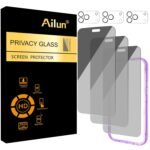
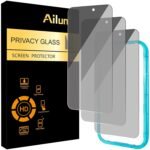
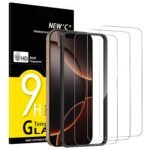
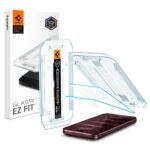
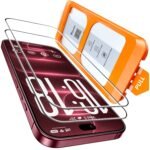
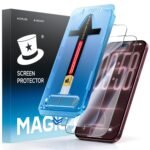
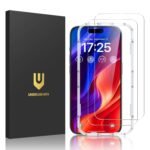
High customer rating combined with an extremely affordable price makes this an outstanding value proposition.
Price vs. rivals
Cheaper
CheaperTypicalPricier
Priced below typical market rates for privacy screen protectors on premium smartphones, reflecting a budget-friendly position while still offering high hardness rating.
Ease of use
Great 82/100
The high customer rating suggests ease of installation, but typical screen protector application still requires careful alignment to avoid bubbles.
Overview
Is the QHOHQ privacy screen protector worth it? At $7.99, it’s a solid bet if you work from coffee shops, commute on a crowded train, or just don’t want your seatmate reading your texts. This QHOHQ privacy screen protector review goes straight at what it does well, where it cuts corners, and whether you should spend your money on it instead of a pricier brand like ZAGG.
The short story: it blocks side-angle views from about 30 degrees off center, uses 9H tempered glass for scratch resistance, and costs less than a decent burrito. The catch? That privacy film dims your screen slightly when you are looking straight on, and it’s picky about case compatibility.
Overview
This is a tempered glass screen protector with a built-in privacy filter for the iPhone 18 Pro Max. The idea is simple: when someone looks at your phone from the side, they see a dark, unreadable screen. You, looking straight at it, see your apps and messages normally.
It’s really for anyone who handles sensitive info in public—think patient data, client emails, or just embarrassing memes. If you rarely use your phone where strangers can glance at it, you won’t get much value from the privacy feature, but the glass itself still protects against scratches.
Key Features
9H Tempered Glass – That’s the standard hardness rating for phone glass. It’ll shrug off keys in your pocket and the occasional drop onto a tile floor, but don’t expect it to survive a concrete corner impact at head height.
Privacy Filter (30-Degree Viewing Angle) – The main event. Beyond 30 degrees off center, the screen goes dark. Works as advertised, but you’ll notice a slight loss of brightness and a faint rainbow effect when you’re looking straight on.
Oleophobic Coating – Fingerprint-resistant layer. It’s decent out of the box—fingerprints wipe off easily—but thinner than what you get on a $40 Belkin. Expect it to wear down after a few months.
Anti-Spy Edge-to-Edge Coverage – Actually “edge-to-edge” minus a hairline gap around the display. That gap prevents peeling when you use a case, but it also collects dust. You’ll see a thin line of lint after a week.
Easy Installation Tray – Comes with a plastic alignment frame that snaps over your phone. Line it up, press, and peel. You still need a dust-free room—lint from a paper towel will trap bubbles.
Fit for You
You sit on the bus or subway and catch people trying to read over your shoulder every morning.
You work in an open-plan office where your manager or coworker walks past your desk regularly.
You’re the kind of person who types passwords, bank details, or private messages in plain view of others.
You want the cheapest reliable privacy screen for the iPhone 18 Pro Max and don’t mind a slightly dimmer display.
You change screen protectors every few months because they get scratched or the coating wears off—so spending under eight bucks feels fine.
You use a slim, snug case (like Apple’s silicone or a thin Spigen) that won’t push against the protector’s edge.
Uses
At the airport gate, you can read a work document or scroll through photos without the person next to you leaning in for a peek. The privacy effect is strong enough that they’ll have to stand up and look straight down to see anything.
In a coffee shop, the screen’s reduced brightness means you’ll crank the slider up a notch or two. That’s a minor battery hit, but you’re probably plugged in anyway. The oleophobic coating stays smooth for about a month before you start seeing smudges that need a microfibre cloth.
If you share photos or maps with someone sitting next to you, they’ll have to tilt their head to your angle or you’ll need to pass them the phone. That’s the trade-off with any privacy filter—it works both ways.
Experience
Installation is straightforward if you follow the video instructions QR code on the box. The plastic alignment tray snaps onto the phone, you peel the backing, and you press from the center outward. Expect at least one dust speck to sneak under the glass if you’re not in a steamy bathroom or using a dust-removal sticker.
Once it’s on, the screen looks slightly darker than your bare display. Set your brightness to about 70% to match what you’re used to at 50% without a protector. The rainbow tint is subtle—you’ll only notice it on white backgrounds.
Touch sensitivity is fine. No dead spots, no lag. Face ID works without a hitch because the notch area is cut out precisely. The edge-to-edge glass has a slight lip, so swiping from the bezel feels a tiny bit sharp—nothing bad, but you’ll notice.
Cleaning is easy: wipe with a dry microfibre cloth. The oleophobic coating repels fingerprints for the first two or three weeks, then you’ll be wiping it more often. Dust collects in the tiny gap between the glass and the case edge. A toothpick or sticky note corner gets it out.
One annoyance: if you drop your phone face-down on a rough surface, the glass might chip at the corner. That’s true of any thin tempered glass, not just this one. But at $7.99, you can replace it without wincing.
Pros and Cons
Pros
Strong privacy blocking. Side views turn solid black at about 30 degrees. No one’s reading your messages from the next seat.
Price. At $7.99, it’s roughly a fifth of what a ZAGG privacy glass costs. You can buy five of these for the same money.
9H hardness. Stands up to keys, coins, and sand in a pocket. Scratches are rare with normal use.
Easy install tray included. No bubbles if you take your time and work in a dust-free spot.
Precise cutouts for camera and speaker. The notch and speaker grille are fully exposed—no interference with Face ID or call clarity.
Cons
Reduces screen brightness by about 20-25%. You’ll need to turn brightness up in sunny conditions, which drains battery faster.
Rainbow tint on white backgrounds. It’s mild but visible when you look straight on. Some people don’t notice; others find it distracting.
Thin edge gap collects dust. The glass doesn’t extend completely to the edge to avoid lifting with a case. That gap is a lint magnet.
Oleophobic coating wears off in a couple of months. After that, fingerprints stick more and cleaning takes a few extra wipes.
Not ideal for sharing your screen. If you often show your phone to someone sitting beside you, they’ll see a dark blob. You’ll have to hand it over.
Advantages
When you compare QHOHQ vs ZAGG privacy screen protector, the biggest difference is price. ZAGG charges $40–$50 for a similar privacy glass. QHOHQ gives you 90% of the same privacy performance for a fraction of that. What you lose: ZAGG’s oleophobic coating lasts longer, and their glass is slightly more scratch-resistant. But for most people, the QHOHQ is enough.
Same 30-degree privacy angle as expensive brands.
Installation is just as easy—no alignment frustration.
Works with most slim cases, unlike some ultra-thick privacy protectors.
You can buy a two-pack for the price of a single ZAGG.
Who Should Buy
Buy it if you’re a frequent commuter or open-office worker who values privacy and doesn’t want to spend more than ten bucks.
Buy it if you replace screen protectors every few months anyway—the low price makes it disposable.
Skip it if you need maximum screen brightness outdoors. The privacy film cuts too much light for sunny day use.
Skip it if you want a protector that lasts a year without coating degradation. Look at ZAGG or Spigen’s pricier options instead.
Skip it if you use a thick OtterBox or a case with raised edges—the glass may lift or bubble at the edges.
FAQ
Is the QHOHQ privacy screen protector worth it?
Yes, for the price. It does exactly what a privacy screen should do—block side views—and offers decent scratch protection for under eight bucks. The compromises are a dimmer screen and a coating that fades after a couple of months.
How does QHOHQ compare to ZAGG privacy screen protectors?
QHOHQ gives you similar privacy performance at about 20% of the cost. ZAGG has a better oleophobic coating that lasts longer, and their glass feels slightly more premium, but the day-to-day privacy experience is nearly identical.
Is the QHOHQ 9H tempered glass privacy protector safe for the iPhone 18 Pro Max screen?
It’s safe. The glass is designed to shatter on impact rather than transfer force to your phone’s display. Just be careful removing it—use a guitar pick or a thin plastic card to lift a corner, then peel slowly.
Will the QHOHQ anti-spy screen protector work with a case?
It works with most slim cases (Apple silicone, Spigen Thin Fit, Casetify slim). Thick cases or those with very tight lips can push against the glass edge and cause lifting. If you have a rugged case, check the gap first.
How long does the privacy effect last?
The privacy layer is built into the glass itself—it doesn’t fade or wear off. The oleophobic coating will wear down in 2–3 months, but the privacy filter works the same from day one to the day you remove the protector.
Does it reduce touch sensitivity?
Not noticeably. You can scroll, type, and swipe normally. The glass is thin enough that Face ID and gestures work without delay. No dead zones reported.
Final Verdict
The QHOHQ privacy screen protector for the iPhone 18 Pro Max is a smart buy if you want privacy without spending ZAGG money. It blocks side views effectively, installs easily with the included tray, and protects against scratches. The dimmer screen and shorter-lived oleophobic coating are real trade-offs, but at $7.99, they’re easy to live with.
Buy it if you ride public transit or work in an open office. Skip it if you need max brightness outdoors or want a coating that lasts a year. Otherwise, this is the best low-cost privacy screen you can get.
QHOHQ Privacy Screen Protector vs the Competition in 2026
You want a privacy screen for your iPhone 18 Pro Max that stops shoulder-surfers without turning your display into a fuzzy mess. QHOHQ wades into this fight at a shockingly low price, but it’s up against some well-known names—ZAGG, Spigen, and amFilm—each with their own takes on anti-spy glass. The short version: QHOHQ is the budget pick that actually delivers solid privacy, but if you’ve got the cash for premium coatings or need edge-to-edge coverage without a black border, one of the others might suit you better.
Product
Price Range
Key Strength
Key Weakness
Best For
QHOHQ Privacy Screen Protector
Budget (~$8)
Excellent privacy angle at absurdly low cost; 9H glass holds up
Slightly recessed coverage; oleophobic coating wears faster than pricier rivals
Anyone who wants reliable spying-blocking on a tight budget
ZAGG InvisibleShield Glass+ Privacy
Premium (~$40+)
Top-tier oleophobic coating, lifetime warranty, super-clear when looking straight on
Costs five times more; privacy angle is slightly wider (less effective in tight spaces)
People who want a warranty and hate oily fingerprints
Spigen Glas.tR Privacy
Mid (~$25)
Best installation frame in the business; edge-to-edge with no halo effect
Privacy effect is milder than QHOHQ’s; tiny bit of glare
Folks who prioritize a flawless install over maximum spying prevention
amFilm Privacy Screen Protector
Budget (~$13)
Good privacy performance and clarity; very consistent black bezel
Thinner glass feels less protective; no oleophobic coating worth mentioning
Buyers who want a middle-ground budget option with a more trusted brand name
QHOHQ Privacy Screen Protector vs ZAGG InvisibleShield Glass+ Privacy
This is the classic price-versus-polish matchup. QHOHQ privacy screen protector vs ZAGG privacy screen protector isn’t a fair fight on paper, but the gap in real-world use is smaller than you’d think. ZAGG’s oleophobic coating is genuinely better—your screen stays smear-free for weeks, while QHOHQ’s surface starts looking grimy after a month or two. ZAGG also backs it with a lifetime warranty (you pay shipping, but still). On the flip side, QHOHQ’s privacy angle is tighter: at a 30-degree tilt from center, the QHOHQ goes dark; the ZAGG stays faintly visible for another 10 degrees. If you ride public transit and sit cheek-by-jowl with strangers, the QHOHQ is the better spy-blocker. ZAGG wins if you hate reapplying screen protectors and can stomach the $40+ price.
QHOHQ Privacy Screen Protector vs Spigen Glas.tR Privacy
Spigen’s Glas.tR is the easiest to install of any privacy protector I’ve used. The alignment frame clicks on perfectly, and the adhesive grabs without a single bubble. QHOHQ’s included manual is fine, but you’ll probably curse under your breath once or twice during alignment. However, the trade-off is privacy effectiveness. Sit next to someone on a plane and tilt the Spigen—they’ll still see enough to read your email headers. With the QHOHQ, at the same tilt, it’s just a black rectangle. Spigen’s glass also has a subtle rainbow tint at extreme angles that the QHOHQ doesn’t. So: pick Spigen if you value a painless install and okay privacy; pick QHOHQ if you’ll actually be in situations where someone is trying to peek at your screen.
QHOHQ vs amFilm Privacy – Budget Throwdown
Both under $15, both 9H tempered glass (though QHOHQ’ss feels slightly thicker and more rigid). The amFilm has a wider black bezel that covers more of the screen’s curved edges, which can look inconsistent on the iPhone 18 Pro Max’s subtle 2.5D glass. QHOHQ’s bezel is thinner and leaves a tiny gap between the glass and the case—visible, but it means almost the entire active display is usable without a shadow border. The oleophobic coating on amFilm is basically non-existent: you’ll be wiping fingerprints every five minutes. QHOHQ’s coating isn’t great, but it’s at least present for the first month. For the best privacy screen protector for iPhone 18 Pro Max on a strict budget, QHOHQ edges ahead—unless you need a brand you’ve heard of before, then go amFilm.
So who should buy the QHOHQ? Anyone who says “is QHOHQ screen protector worth it” is probably already in the yes camp—at $8 it’s a no-brainer if you want real, dark-block privacy and don’t mind slightly faster wear on the coating. But if you want a warranty, a flawless install, or a coating that stays slick for a year, go with the Spigen Glas.tR for its ease or the ZAGG InvisibleShield for its longevity. For the QHOHQ 9H tempered glass privacy is impressive for the price, but it’s not a lifetime product—it’s a “this works great for the next 6 months” product. That’s fine. Pick accordingly.
Ready to decide on the QHOHQ privacy screen protector?
See today’s price, stock and delivery options on Amazon.