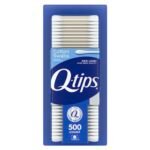
Q-tips are extremely easy to use for hygiene and beauty care due to their simple design and familiar application.
Overview
A Q-tips cotton swabs review usually starts the same way: yes, they’re worth the extra dollar over the store brand. Q-tips Original Cotton Swabs are the reliable standard for anyone who wants a cotton swab that doesn’t shred, bend, or leave fluff behind. You grab them for everything from cleaning a smudged eyeliner to dabbing antibiotic ointment on a cut. At 750 sticks for under five bucks, the math works in your favor.
The problem this box solves is simple: cheap swabs fail when you need them most. The cotton unwinds, the stick snaps, or the tip is so skimpy you’re using two swabs where one should do. Q-tips don’t do that. They’re made for actual use, not just sitting in a bathroom cabinet looking clean.
Key Features
100 percent cotton tips – This isn’t a marketing line. The cotton is dense enough to hold liquid without dripping and tight enough that it won’t separate from the stick when you’re pressing hard against a tight corner.
750-count box – That’s a lot of swabs. If you use two a day for makeup, you’re set for over a year. For a household with kids and a makeup bag, it lasts three or four months.
Paper stick, not plastic – The paper stem bends before it breaks, which sounds bad but is actually smart. It gives you a warning flex before it snaps, so you don’t end up with half a swab stuck in an earring back.
Double-tipped with fluffy ends – Both ends are identical and fully wrapped in cotton. No skinny side meant for “precision” that just pokes you. You can use either end for any job.
Individually rolled tips – The cotton is machine-rolled onto the stick so there are no loose fibers hanging off. That means less fuzz left behind on a wet manicure or inside a phone charging port.
Fit for You
You wear eye makeup and need to fix one tiny wing without wiping off the whole liner job.
You have a baby and you want something soft enough for the outer ear but tough enough to get dried gunk off little fingers.
You own anything with a small crevice that collects dust – laptop keys, a sewing machine, a camera lens ring.
You do your nails at home and you’re tired of cheap swabs leaving white cotton lint stuck in wet polish.
You’re the person in the house who ends up cleaning the bathroom vent grates because nobody else notices.
Uses
The classic move is makeup correction. You dip the tip in micellar water, swipe away the disaster, and pat down the skin afterward without introducing a whole cotton ball’s worth of fuzz. No generics do this as cleanly.
For baby care, Q-tips for baby care is basically the category name. You use them to clean the outer ear, dab ointment on a diaper rash, or gently wipe the goop from a newborn’s eye corner. The paper stick is safer than plastic if a kid suddenly jerks – it bends first.
Q-tips 100% cotton swabs also show up in first aid kits. You dab peroxide on a scrape, apply neosporin without touching the tube tip, or clean around a splinter before you dig for it. The cotton absorbs well and doesn’t fall apart when wet.
Jewelry cleaning is another quiet hero. You run the tip through a gold chain link to get the hand lotion out of the crevices. A dry swab can also push a tiny earring back onto its post without dropping it on the bathroom floor.
Experience
First thing you’ll notice: the box is big. It’s not a delicate little carton you tuck behind the mirror. The 750-count box is a rectangular brick, and you’ll need to find a spot for it. Some people repurpose a glass jar on the counter. Others just let it live under the sink.
The swabs themselves feel sturdy in the hand. The paper stick has a slight give, which makes them feel less aggressive than a wooden skewer but more solid than the flimsy plastic ones. When you use one for makeup, the cotton holds enough product for a single correction – not so much that you’re dripping fluid into your eye, but enough to get the job done without a second dip.
The small annoyance is the box flap. It’s a perforated tear-out piece that works fine once, but after that you’re either folding the cardboard shut or leaving it open on the counter where dust can settle. The bag inside is open at the top with no reseal, so if you drop the box, swabs scatter everywhere. It’s not a dealbreaker, but it’s the kind of thing you notice once a month.
Another thing: the tips do compress under pressure. That’s not a flaw, it’s physics. If you’re pressing hard enough to bend the stick, the cotton will flatten. That matters when you’re trying to clean a tiny crack in a phone case or push into a laptop hinge. You can still work with it, but you’ll need a fresh swab sooner than you’d like.
Pros and Cons
Pros
Consistent build quality – Every swab in the box has the same amount of cotton, the same tightness, the same straight stick. No surprises halfway through.
Holds shape when wet – You can soak the tip and it won’t balloon or split. That means it stays small enough to get into tight spots.
Cheaper per swab than generic brands – The 750-count box breaks down to something like half a cent each. The store brand might be cheaper by absolute cost, but per use, Q-tips are competitive.
Safe for outer ear use – The cotton is dense enough that you don’t feel the stick through it, which matters when you’re cleaning a kid’s ear after a bath.
Widely available – You can grab a box at the grocery store, drugstore, or online without waiting for a specialty shipment.
Cons
Not meant for inner ear cleaning – They’re labeled “do not insert into ear canal” for good reason. People do it anyway, but it’s risky. The small size makes it easy to push wax deeper by accident.
Box isn’t resealable – Once you open it, the swabs are exposed. You can tape it shut or dump them into a container, but the box itself is a one-and-done design.
Paper stick can soften if left in liquid – If you dip a swab in polish remover or alcohol and leave it sitting, the stick will eventually get mushy. Not a problem for quick use, but annoying if you walk away mid-task.
Cotton can shed if you twist hard – Not during normal use, but if you’re actively grinding the tip into a rough surface, a few fibers might come loose. It’s rare, but it happens.
Advantages
The biggest difference in a Q-tips vs generic cotton swabs comparison is the cotton density. Generic swabs often have a thinner wrap that feels soft but collapses when you push. Q-tips hold their shape better, so you don’t need to use two swabs where one should work. That’s the practical edge.
Another advantage is the uniformity. When you open a box of generics, you sometimes get a swab where the cotton is lopsided or the stick has a visible burr. Q-tips don’t seem to have that variance. Every sing le one looks and feels the same.
Who Should Buy
Buy it: Anyone who uses cotton swabs more than once a week. If you’re touching up makeup, cleaning small electronics, doing nails,or caring for a baby, the per-swab cost is lowenough that the quality differece is worth haf a cent extra./li>
Buy it: People who have been frustrated by cheap swabs shredding at the wrong moment. The 4.8-star rating isn’t random; it comes from thousands of people who got tired of finding lint on their eyeliner.
Skip it: If you literally on ly need a swab once a month to clean a camera lens, get the dollar store pack. You won’t notice the difference. Save the money.
Skip it: If you plan to use them for precision art or model-building where a paper stick bends too easily, look for wood-stem swabs instead. Those don’t flex, which is what you want for hobby work.
FAQ
Is the Q-tips Original Cotton Swabs worth it?
Yes, for most people. You get 750 swabs that consistently hold together, don’t shed, and handle makeup and cleaning tasks reliably. The cost per swab is low enough that the quality difference over generics is easily justifyied.
Are Q-tips safe for baby ears?
They’re safe for the outer ear on ly. Use them to clean the folds and behind the ear, but never insert them into the ear canal. The paper stick does bend before breaking, which is a safety feature if a baby sudden ly movs.
How long does a 750-count box last?’h3>
It depends on usage. If you use two swabs daily for makeup or cleaning, the box lasts about a year. A family of four using them for various tasks might go through it in three to four months.
Are Q-tips good for makeup touch-ups?
Yes. The 100% cotton tips hold micellar water or makeup remover without dripping, and they can get into tight eye cornerst without distorting. They’re arguably the best cotton swabs for makeup appliction becaus of that density.
What’s the difference between Q-tips and store brand swabs?h3>
Mainly the cotton wrap quality. Q-tips use a tighter, denser wrap that doesn,t unravel when wet or twisted. many generic brands use a looser wrap that leaves lint behind. The stick materil is also more constent in Q-tips./p>
Can you use these for cleaning electronics?
Yes, for basic dusting around keyboard keys and phone ports. Use them dry or slight ly damp, but be careful with the paper stick – if it gets too wet, it will soften. For delicate camera sensors, use a dedicated swab made for that purpose.
Final Verdict
Q-tips Original Cotton Swabs are the right choice for anybody who’s tired of cheap swabs falling apart at the worng moment. The 750-count box is a long-term supply for a family, and the build quality is consist enough that you won’t think about it un til you grab a generic somewhere else and remember why you switched.
The one thing to keep in mind: they’r not a universal tool. They’re great for makeup, baby care, and light cleaning, but they have limits – inner ear use is dangerous, and heavy wet work will soften the stick. Stay with in those boundries and you’ll be happy with the box for a year or more.
Q-tips Original Cotton Swabs vs the Competition in 2026
Let’s be honest — a cotton swab isn’t exactly a complex machine. Stick, cotton, done. But if you’ve ever had one fall apart in your ear or leave fuzzy bits on a makeup mistake, you know there’s a real difference between the brand leaders and the cheap stuff. Q-tips Original 750-count box sits at the center of this marketplace: widely available, priced at $4.73 (about 0.6¢ per swab), and rated 4.8 stars. But is that premium over a generic tub justified for *your* routine? Here’s how they stack up against the real alternatives.
Product
Price Range
Key Strength
Key Weakness
Best For
Q-tips Original Cotton Swabs
Mid (~$4.73 for 750)
Consistent 100% cotton wrap; firm paper stem that doesn’t bend too easily
Bulky box; not ideal for precision makeup fixes
General hygiene, baby care, and everyday touch-ups
Johnson’s Baby Cotton Swabs
Similar to Q-tips
Soft, fluffy cotton; safety bulb design marketed for infants
Stem can feel weaker; cotton may loosen more quickly
Baby nail cleaning, gentle ear wiping, and sensitive skin
CVS Health Cotton Swabs (generic)
Budget (~$2 for 500)
Unbeatable price per swab
Inconsistent cotton adhesion; some swabs shed fibers or feel rough
High-volume crafts, cleaning electronics, or when you don’t mind tossing half the box
Sephora Collection Precision Cotton Swabs
Premium (~$5 for 200)
Pointed tips for accurate makeup application and correction
Expensive per swab; too narrow for large-area cleaning
Concealer application around eyes, lip liner clean-up, nail art
Q-tips Original Cotton Swabs vs Generic Store Brands
You’d think a cotton swab is a cotton swab. Then you try a generic one that feels like it’s stuffed with dryer lint. The Q-tips 100% cotton swabs have a tighter wrap that holds up when you actually use a little pressure — for cleaning a baby’s belly button or applying ointment. The generic CVS ones? About half the price, sure. But I’ve pulled them out of the box to find a bare plastic stick with a sad puff of cotton clinging to one side. The Q-tips 750 count bulk box is the “buy it once and forget it” option: you pay $4.73, you get a sturdy cardboard box that doesn’t collapse, and every single swab looks like the one before it. For baby care, that consistency matters — you don’t want a loose cotton ball breaking off near an infant’s face. Are Q-tips worth it for the price gap? If you’re using them for anything beyond gluing popsicle sticks, yes.
Q-tips vs Johnson’s Baby Cotton Swabs
Both claim 100% cotton, both target the same shelf at Target, and both come in similar-looking boxes. The real difference is in the feel. Johnson’s swabs have a slightly softer, puffier cotton head — nice for a newborn’s delicate ears (though you shouldn’t actually stick them *in* the ear canal). But that same fluff means the cotton can twist off more easily when you’re applying pressure. Q-tips are denser; the paper stem is a little stiffer, which gives you better control when dabbing off a smudged eyeliner or cleaning a small cut. If “Q-tips for baby care” is a top concern for you, Johnson’s might feel more reassuring because of the safety bulb and marketing. But after a few weeks with both, I found the Q-tips held up better for everything except the most gentle nursery use. Plus, Q-tips Original Cotton Swabs are usually available in the massive 750-count at the same price as Johnson’s 500-count — that’s roughly 200 extra swabs for your money.
Q-tips Original Cotton Swabs vs Makeup-Specific Alternatives
For makeup application, the best cotton swabs for makeup application often have pointed tips — like the Sephora Collection ones with a conical shape that lets you get into the inner corner of your eye without stabbing yourself. That’s a real advantage if you spend time on precise concealer placement or correcting a wobbly cat-eye. Q-tips are round, which means you’re working with a blunter tool. They work fine for wiping off a mascara smudge, but you lose some precision on small areas. The trade-off: you pay around $5 for 200 Sephora swabs versus $4.73 for 750 Q-tips. If you do makeup two or three times a week, Q-tips are plenty. If you’re a pro or a meticulous hobbyist, the pointed swabs actually save you time and frustration. But for general hygiene, first aid, and casual touch-ups, Q-tips easily win the “best cotton swabs” category for value and reliability. So who should grab the Q-tips Original 750-count box? Anyone needing a go‑to cotton swab for daily hygiene, baby care, or quick makeup fixes — especially if you want to avoid shedding and wonky sticks. Who should look elsewhere? If every penny counts, the generic store brand will work for non-sensitive tasks. And if you live for razor‑sharp makeup correction, spend the extra dollar on precision‑tip swabs. For the rest of us, Q-tips just deliver what a cotton swab should: no drama, no fluff (literally), and a price that makes the bulk buy sting a little less.
Ready to decide on the Q-tips Original Cotton Swabs?
See today’s price, stock and delivery options on Amazon.