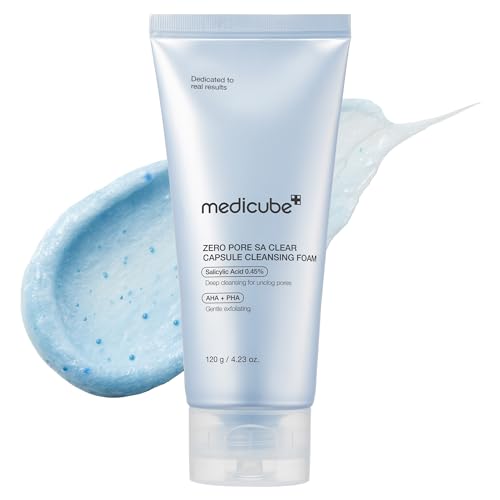
Combines a respected Korean dermocosmetic brand with outstanding user ratings at a price that undercuts most specialty cleansers, offering strong perceived value.
Price vs. rivals
Typical
CheaperTypicalPricier
Priced competitively within the mid-range of popular foam cleansers.
Ease of use
Excellent 95/100
This foam cleanser is simple to use with standard application steps, making it highly accessible for daily skincare.
Overview – What It Is and Who It’s For
If you’ve been hunting for a gentle cleanser that actually does something about visible pores, the Medicube Zero Pore Cleanser is a strong contender. It’s a foaming wash built around the idea that clean pores look smaller. The capsule foam texture is different—more like a lightweight mousse than a dense cream—and it’s designed for normal to oily complexions. People with dry or super sensitive skin should check the ingredients first (more on that later), but for anyone dealing with midday shine or those stubborn little dots on your nose, this is worth a look. The price is reasonable at $14.90, which puts it in the same range as other K-beauty foaming washes.
The real question most people have is whether it lives up to the “zero pore” claim. No wash can actually shrink pore size permanently, but this one does a solid job of clearing out the gunk that makes pores look enlarged. It’s a practical choice for daily use, not a miracle treatment.
Key Features – What You Get
Capsule foam texture – The product comes out as a gel that quickly turns into a light, airy foam. It feels cushiony on your skin and rinses off without that tight, stripped feeling.
Pore-focused ingredients – Contains salicylic acid (BHA) and tea tree leaf extract to help dissolve excess oil and calm redness. The formula is free of parabens and sulfates, which owners tend to mention as a plus.
Low pH formula – Sits around a pH of 5.5, so it won’t mess with your skin’s barrier. This matters if you’ve ever used a cleanser that left your face feeling like a dry sponge.
Non-comedogenic – It won’t clog pores, which is obviously the whole point. Good for people prone to breakouts.
Decent bottle size – 150ml (5 fl oz) – lasts about 2–3 months with once-daily use. Not huge, but fair for the price.
Fit for You – Where This Cleanser Excels
You wake up with an oily T-zone every morning and want a wash that cuts through the shine without harsh stripping.
You notice your pores look more noticeable after a humid day or a workout.
You prefer a foaming cleanser that doesn’t feel like you’re washing with dish soap.
You’re shopping for the best foaming cleanser for large pores and want something that targets both oil and texture.
You have combination skin and need a single cleanser that works for both your oily nose and your normal cheeks.
You’ve tried physical scrubs for pores and want something gentler that won’t cause micro-tears.
Uses – When You’ll Reach for It
This is an everyday morning or evening wash. In the morning, it’s light enough to use before applying sunscreen or makeup. At night, it handles leftover sunscreen and general grime, but you’ll want a dedicated oil or balm cleanser first if you wear waterproof makeup or heavy SPF. It’s not a double-cleansing replacement.
After a sweaty workout, it’s great for refreshing your face without over-drying. A lot of guys in particular seem to like it because it foams up well and doesn’t leave a residue. The capsule foam texture means you need to lather it in your hands for a few seconds before applying—it’s not a pump-and-go foam.
If you have sensitive skin, try it every other day at first. Some people with very reactive skin report mild tingling from the salicylic acid, even though it’s a low percentage. Patch test if you’re unsure. For most, it’s fine for daily use.
Experience – Living With It
Using it is straightforward: squeeze a small amount (about a pea-size or a bit more) into wet hands, rub your palms together for a few seconds, and the gel turns into a pillowy foam. You apply it to a damp face, massage gently for 30–60 seconds, then rinse. The foam stays stable on your face—it doesn’t dissolve into liquid halfway through your routine. That’s a nice touch.
The scent is mild and herbal, mostly from the tea tree. It’s not overpowering, but if you hate tea tree, you might find it noticeable. It disappears after rinsing.
One small annoyance: the bottle is a squeeze tube, not a pump. Getting the last bit out requires some effort, and the cap can be a little stiff at first. Not a dealbreaker, but worth knowing. It also leaves a bit of residue around the nozzle if you don’t wipe it after each use. Keep a tissue handy.
After a few weeks, many owners mention that their skin looks less congested and that pores on the nose and cheeks appear slightly smaller. The effect is cumulative—don’t expect instant results. If you stop using it for a week, the shine and clogging slowly return.
Pros and Cons
Pros
Effective at controlling oil – The combination of BHA and tea tree genuinely reduces shine without over-drying. Most foaming washes that do this leave you feeling tight; this one doesn’t.
Good pH balance – At 5.5, it’s gentler than many drugstore foaming cleansers. Your skin’s barrier stays happy.
Capsule foam feels luxurious – It’s not just a gimmick. The texture spreads easily and rinses cleanly.
Affordable for the category – Under $15 is a fair price for a K-beauty cleanser with this ingredient list. Comparable items from Amorepacific or Sulwhasoo cost three times more.
Works for combination skin – Hydrates drier areas while mattifying the oily zones. Hard to do well.
Cons
Not a makeup remover – It doesn’t break down waterproof mascara or long-wear foundation. You’ll need a separate first cleanser if you wear full face makeup.
Tea tree scent might bother some – It’s not strong, but if you’re sensitive to essential oils, this could be an issue. The ingredient list includes tea tree leaf extract, which is generally safe but can be irritating for a few people.
Tube packaging can get messy – The opening is small, but product sometimes oozes out if you squeeze too hard. Keep the cap clean.
Results are mild, not dramatic – It won’t erase visible pores completely. If you’re expecting a pore eraser, you’ll be disappointed. It just helps them look less obvious over time.
Advantages – How It Beats the Alternatives
Compared to the popular La Roche-Posay Toleriane foaming cleanser, this one contains BHA for pore-clearing, which the LRP lacks. If you compare it to the CeraVe foaming wash, the Medicube has a lower pH and a more refined foam texture. For a direct head-to-head: in the medicube zero pore cleanser vs cosrx low ph cleanser debate, the Medicube comes out ahead for oily skin because of the tea tree and salicylic acid, while the COSRX is better for very dry, sensitive skin. The Medicube also feels fluffier on application.
It’s also one of the more honest options when you’re searching for the best foaming cleanser for large pores—most competing products either ignore pores entirely or rely on harsh physical exfoliants. This uses chemical exfoliation at a gentle level.
Who Should Buy
Buy it if you have oily or combination skin and want a daily cleanser that helps keep pores clear without irritation. Also buy it if you’re curious about K-beauty foaming washes and want to start with a reliable, mid-priced option.
Skip it if you have very dry or already compromised skin. The salicylic acid could make things worse. In that case, look for a cream cleanser or a milky wash without any acids.
Skip it if you hate tea tree scent. It’s not strong, but it’s present.
Skip it if you need an all-in-one cleanser that removes makeup. This is a second-step cleanser only.
FAQ
Is the Medicube Zero Pore Cleanser worth it?
Yes, for the price and the results. It’s a well-formulated foaming wash that genuinely helps with oil control and pore appearance. If you have oily or combination skin, it’s one of the better bets under $15.
What are the Medicube Zero Pore Capsule Foam Cleanser ingredients?
The key ones are salicylic acid (BHA), tea tree leaf extract, centella asiatica extract, and glycerin. The full list is available on the product page. It also contains citric acid and betaine salicylate, all within a pH-balanced formula.
Is the Medicube Zero Pore Cleanser good for sensitive skin?
It can be, but it depends on your tolerance for BHA and tea tree. If you have mild sensitivity, try it every other day. People with rosacea or eczema might find it too active. Test on a small area first if you’re unsure.
How long does a bottle last?
With daily use (once or twice a day), the 150ml tube lasts about 2 to 3 months. A little goes a long way because the gel expands into a lot of foam.
Is this the best foaming cleanser for large pores?
It’s one of the better OTC options because it combines BHA with a gentle pH. It’s not a clinical pore minimizer, but for everyday maintenance, it’s hard to beat at this price point.
Can I use it with other active ingredients like retinol?
Yes, but watch for irritation. Use the Medicube in the morning if you use retinol at night, or alternate days. It’s a mild cleanser, but the BHA adds a subtle exfoliating effect that could compound with stronger actives.
Final Verdict – Should You Add It to Your Cart?
The Medicube Zero Pore Cleanser is a smart buy if you’re tired of foaming washes that strip your skin or leave it greasy an hour later. It hits a sweet spot: effective oil control, a cushiony foam that’s actually pleasant to use, and a price that won’t make you wince. The trade-off is that you’ll need a separate makeup remover, and the tube packaging is a minor hassle.
If your main skincare goal is to reduce the look of pores and keep shine in check without messing up your moisture barrier, this cleanser delivers. And yes, to answer the question head-on: a medicube zero pore cleanser review from most people who’ve tried it ends with “I’d buy it again.” That’s a solid recommendation at any price.
Medicube Zero Pore Cleanser vs the Competition in 2026
If you’re scrolling for a foaming cleanser that actually does something about visible pores, you’ve probably landed on the Medicube Zero Pore Capsule Foam Cleanser. Priced around $15, it sits right in the middle of the drugstore-to-K-beauty spectrum. Its selling point is that weird, satisfying capsule foam that expands on your face — not just a gimmick, because the texture helps the ingredients reach into pores without you scrubbing like you’re exfoliating a pan. But is it really the best foaming cleanser for large pores? That depends on whether you value novelty, pH balance, or pure value. Here’s how it stacks up against three real rivals.
Product
Price Range
Key Strength
Key Weakness
Best For
Medicube Zero Pore Capsule Foam Cleanser
~$15 (mid)
Capsule foam that physically pushes into pores; contains salicylic acid and tea tree extract
Can feel slightly drying if you already have dehydrated skin around your nose
Oily and combination skin types who want a pore-focused wash without a scrub
COSRX Low pH Good Morning Gel Cleanser
~$12 (budget–mid)
Gentle 5.5 pH, tea tree oil, non-stripping — a reliable morning wash
Gel texture doesn’t do much for pores; lather is thin, foam is weak
Sensitive or dry skin that hates tightness after washing
La Roche-Posay Effaclar Purifying Foaming Gel
~$17 (mid-premium)
2% salicylic acid, zinc pidolate, and that French pharmacy non-irritation track record
Pricey for the size; can leave a squeaky-clean feel if you leave it on too long
Acne-prone, oily skin that wants a proven medicated foam
CeraVe Foaming Facial Cleanser
~$11 (budget)
Ceramides + niacinamide; cheap, no frills, and widely available
Doesn’t target pores directly; the foam is basic and unremarkable
Anyone on a tight budget or with normal-to-oily skin who just needs a clean face
Medicube Zero Pore Cleanser vs COSRX Low pH Cleanser
If you want a medicube zero pore cleanser vs cosrx low ph cleanser showdown, it mostly comes down to what kind of clean you want in the morning. The COSRX is a gel — a thin, slightly herbal-smelling one — and its main job is to not mess with your acid mantle. It does that job well. But it doesn’t do much else. The Medicube, on the other hand, starts as a liquid and turns into this dense, micro-foam when you pump it. That foam doesn’t collapse immediately; it sits on your skin long enough to loosen stuff inside pores. If you’ve ever looked at your nose in a magnifying mirror and thought “I need something to get in there,” the Medicube wins. The trade-off is that the COSRX is kinder to dry patches. So if your skin gets tight an hour after washing, stick with the COSRX. If you want visible pore refinement and is medicube zero pore cleanser worth it for that alone — yes, for oily skin.
Medicube Zero Pore Cleanser vs La Roche-Posay Effaclar Purifying Foaming Gel
This one’s interesting because both contain salicylic acid, but they deliver it differently. The La Roche-Posay is a straightforward foaming gel — it lathers up, you wash, you rinse. You feel the “clean” right away. But look at medicube zero pore capsule foam cleanser ingredients: salicylic acid is there, but it’s paired with tea tree leaf oil, a pore-tightening complex, and that capsule foam mechanism. That foam actually lets the ingredients linger a bit longer without you having to stand there scrubbing. The La Roche-Posay can feel a bit aggressive if you have any sensitivity — some people get a slight stinging around the nostrils. The Medicube doesn’t sting, but it can dry out your cheeks if you overdo it. For a medicube zero pore cleanser for sensitive skin comparison: both are fine if you’re not super reactive, but the La Roche-Posay is more of a medicated wash, while the Medicube is more of a pore-refining experience. If you have active breakouts and a bit of tolerance, go with the French one. If you have large pores and a mostly clear but oily face, the capsule foam is your thing.
Medicube Zero Pore Cleanser vs CeraVe Foaming Facial Cleanser
This is the budget bracket, and honestly CeraVe does what it says: it cleans without stripping. But it’s boring. No fun foam, no pore-attacking claim. If your goal is simply to wash off the day without thinking, CeraVe is fine. The Medicube asks you to consider whether you want more. That capsule foam is a genuine difference — you pump it, it bubbles up in your hand like a little cloud, and you can feel it working into your T-zone. But the CeraVe is also half the price per ounce and has ceramides that help repair your barrier. So if your pores are your main complaint, get the Medicube. If your skin barrier is already struggling and you just need a basic, safe face wash, get the CeraVe. There’s no shame in that choice.
So who should actually buy the Medicube Zero Pore Cleanser? You — if you have oily or combination skin, visible pores on your nose and cheeks, and you’re willing to pay a little more for a wash that feels like it’s doing something. The capsule foam is not a gimmick; it genuinely improves how the cleanser contacts your skin. Who should skip it? If your skin is dry or reactive, the COSRX Low pH cleanser is a smarter, gentler alternative. And if you’re on a strict budget, the CeraVe Foaming Facial Cleanser is perfectly reliable — just don’t expect it to shrink your pores the way the Medicube can after a few weeks of consistent use.
Ready to decide on the Medicube Zero Pore Cleanser?
See today’s price, stock and delivery options on Amazon.