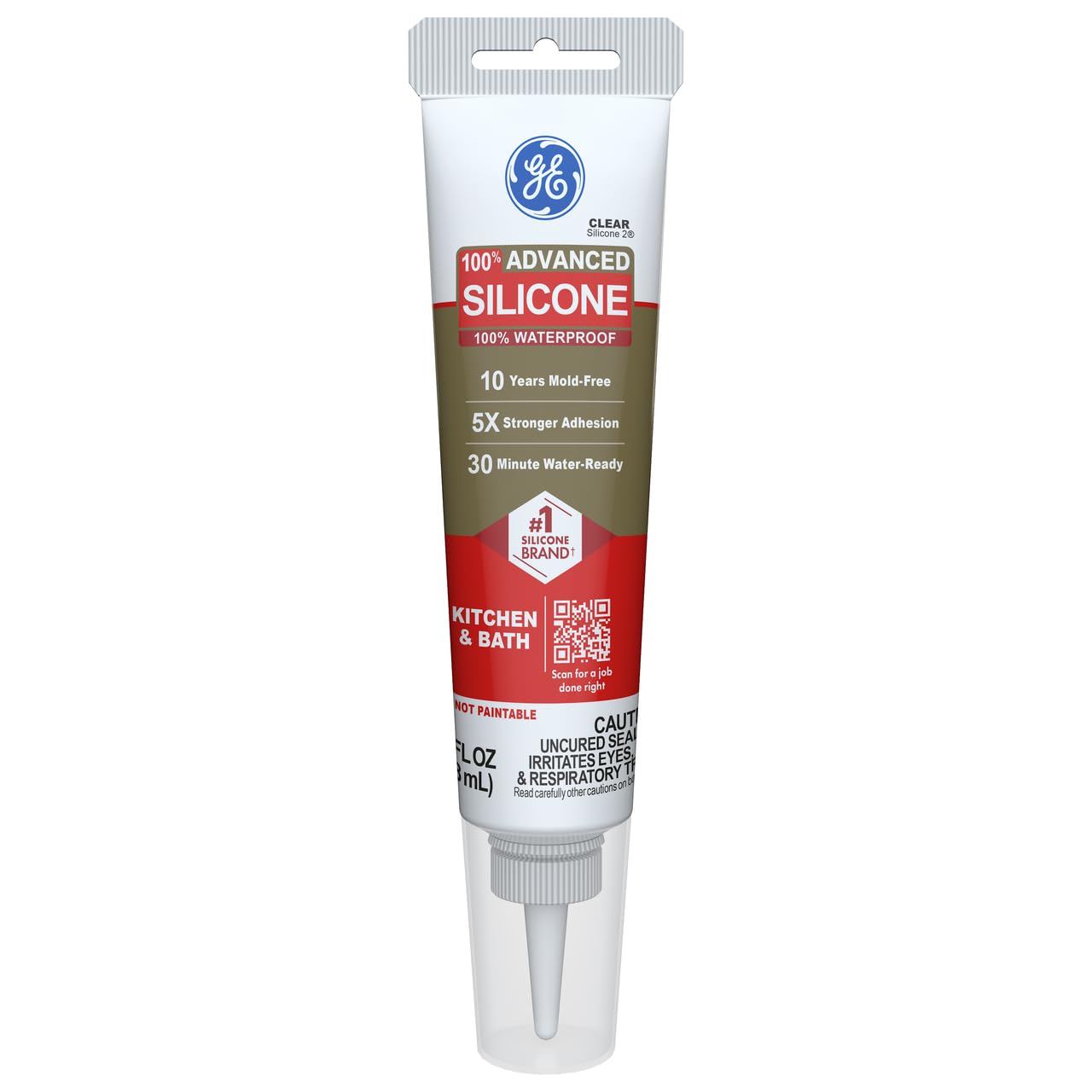
This GE silicone caulk review gets straight to the point: yes, the GE Advanced Silicone Caulk is worth buying if you need a waterproof sealant that actually stays put in wet areas. It’s not the cheapest tube on the shelf, but you’re paying for adhesion that won’t let go and a finish that won’t shrink or crack.
Despite a higher unit price, the exceptional adhesion and durability justify a top-tier value perception among demanding users.
Price vs. rivals
Pricier
CheaperTypicalPricier
Priced above typical small-tube silicone caulks due to brand reputation and specialty features like 5X stronger adhesion.
Ease of use
Great 78/100
Easy to use with a standard caulking gun, but getting a smooth, even bead may require some practice for beginners.
Overview: A Straightforward GE Silicone Caulk Review
This is a 100% silicone sealant, not a latex or hybrid blend. That distinction matters because pure silicone handles moisture better and stays flexible longer than cheaper alternatives. It’s designed for kitchens and bathrooms, but you’ll find it useful anywhere you need a waterproof seal that doesn’t crack over time.
The problem it solves is simple: water gets behind loose seals and causes mold, rot, and damage. GE Advanced Silicone Caulk sticks hard to tile, glass, porcelain, fiberglass, and most plastics, and it stays stuck. It’s for anyone redoing a shower, sealing a sink, or fixing a drafty window. It’s not for painting over—silicone doesn’t take paint well—so keep that in mind.
Key Features in This GE Silicone Caulk Review
100% Waterproof Silicone: Once cured, this sealant forms a solid water barrier. You can use it in a shower floor or around a kitchen sink without worrying about moisture seeping through.
5X Stronger Adhesion: GE claims stronger adhesion compared to standard silicone caulks. In practice, that means it grabs onto smooth surfaces like tile and glass without peeling away after a few months.
Shrink & Crack Proof: The formula doesn’t pull back as it cures. You get the bead you applied, not a thinner, sunken line that needs a second pass.
Mold & Mildew Resistant: It’s treated to resist fungus growth in damp areas. Not a permanent solution—nothing is—but it holds up longer than untreated caulk in a steamy bathroom.
UV Resistant: Won’t yellow or degrade in direct sunlight. Handy for outdoor applications like sealing around a window frame or a garden spigot.
Flexible Seal: It moves with the joint. When your house settles or tiles expand from heat, the caulk stretches instead of snapping.
Fit for You: When This Caulk Makes Sense
You’re resealing a shower that leaks water onto the bathroom floor every time someone showers.
You just installed a new kitchen sink and need a bead of clear caulk that won’t draw attention to itself.
You’ve tried cheap caulk twice in the past year and it keeps peeling off your fiberglass tub surround.
You need to seal around a window frame where rain blows in and you want something that won’t crack in the sun.
You’re finishing a basement bathroom and want a sealant you can trust behind the tile backsplash.
You own a rental property and want to fix a bathroom seal once without coming back to redo it in six months.
Uses: Where This Silicone Caulk Earns Its Keep
Around a bathtub is the obvious one. You run a bead along the seam between the tub and the tile, smooth it with a wet finger or a tool, and let it cure overnight. The next day, you can fill the tub without watching water drip behind the wall.
In the kitchen, run a bead along the back edge of the counter where it meets the backsplash. That’s a spot where crumbs and water collect, and a reliable waterproof silicone sealant for kitchen use prevents staining and swelling of the counter material.
People also use it around toilet bases, on the seam where the sink meets the vanity, and along window frames. Outdoors, it works on gutters and downspouts where you need a flexible seal that stays put.
For anyone searching for the best silicone caulk for bathroom projects, this is the one to try. It’s particularly good on shower doors—the track where water pools and drains. That joint gets constant moisture and needs a sealant that won’t soften or grow mold quickly.
Experience: Living with GE Advanced Silicone Caulk
Cutting the tip is the first thing you’ll do. The nozzle is standard, so you snip at a 45-degree angle and screw on the cap. The tube fits a standard caulk gun, nothing special needed.
Squeezing is where you notice the difference. This silicone is thick—stiffer than latex or hybrid sealants. You’ll need a firm, steady pull on the trigger. If you’re used to easy-flow caulk, this feels denser. That thickness translates into better staying power once it’s in place.
Tooling the bead takes some attention. A wet finger works, but a smoothing tool gives you a cleaner line. The silicone is sticky, so have a damp rag handy for wiping excess. If you get it on your hands, soap and water won’t cut it—use a dry cloth and then wash. Or just wear gloves.
The smell is typical silicone—a mild vinegar odor during cure. It’s not overwhelming, but don’t seal yourself in a tiny windowless bathroom while applying it. Open a window or run the fan for a few hours.
Cure time is where patience matters. The caulk skins over in about an hour, but full cure takes 24 hours. Water exposure should wait at least that long. If you try to use the shower sooner, you risk washing out the uncured sealant. Plan your project for a day when the bathroom can stay dry.
Cleaning up the tube tip after use is worth doing. The silicone hardens in the nozzle, and if you leave it, the next use requires digging out cured rubber. Stick a screw or nail in the tip between uses, or just cut a fresh tip next time.
One annoyance owners tend to mention: the tube can keep dripping after you release the trigger. Have a rag under the nozzle when you set it down. Minor, but worth knowing.
Pros and Cons of GE Advanced Silicone Caulk
Pros
Stays flexible without cracking: The silicone formula moves with the joint and won’t split when things shift.
Bonds to tricky surfaces: Tile, glass, porcelain, fiberglass, most plastics—it grabs on and stays.
Clear finish is truly transparent: Once smooth, it disappears against most surfaces. No cloudy or yellow haze after cure.
Mold resistance lasts: Treated to fight fungus longer than standard caulk. You’ll still need to clean it, but it won’t turn black as fast.
Cons
Thick and stiff to apply: The dense formula takes more effort to squeeze out compared to latex or hybrid caulks. A cheap caulk gun might struggle.
Not paintable: Pure silicone rejects paint. If you want a colored finish, choose a paintable caulk or buy colored silicone.
Difficult to remove after cure: Once it’s set, removing it requires cutting and scraping. Mistakes are not easy to undo.
Price per tube is higher: At around $8 per tube, it costs more than basic acrylic caulk. For small jobs, the difference is negligible, but for big projects, it adds up.
Advantages: GE Silicone Caulk vs DAP and Others
If you’re weighing GE silicone caulk vs DAP, here’s the honest difference. GE Advanced tends to be thicker and stickier right out of the tube. That makes it harder to apply but gives better initial grab on vertical surfaces—it won’t sag down the wall before it cures.
Where GE wins is adhesion on non-porous surfaces like glazed tile and glass. DAP’s standard silicone works fine, but GE’s formula is designed specifically for those smooth, slick surfaces where other caulks peel.
Both brands offer mold resistance. GE’s version holds up well in continuous humidity. The GE clear silicone caulk dries to a cleaner, more invisible finish than some DAP clear formulas, which can look slightly milky on white tile.
The catch with GE is application effort. You trade ease of use for long-term holding power.
Feature
GE Advanced Silicone
DAP Silicone Max
Adhesion strength
Higher on smooth surfaces
Good on most surfaces
Application ease
Stiffer, more effort
Slightly softer
Cure time
24 hours
24 hours
Mold resistance
Yes
Yes
Paintable
No
No
Price (per tube)
Around $8
Around $7
Who Should Buy GE Advanced Silicone Caulk
Buy it if you’re sealing a shower, bathtub, or sink and want a seal that lasts years without peeling.
Buy it if you need a clear caulk that actually disappears against white tile or glass.
Buy it if you’ve tried cheaper caulk twice and it failed both times.
Skip it if you need to paint over the caulk—get a paintable latex or hybrid instead.
Skip it if you’re on a tight budget and sealing a low-moisture area where basic acrylic will work fine.
Skip it if you have weak hands or a cheap caulk gun—the stiff squeeze will frustrate you.
FAQ: Common Questions About This Silicone Caulk
Is the GE Advanced Silicone Caulk worth it?
Yes, if you need a waterproof seal that holds up in wet areas. It costs more than basic caulk, but the adhesion and flexibility mean you won’t be redoing the job next year. For showers and sinks, it’s a smart buy.
How long does GE silicone caulk last?
In normal bathroom or kitchen use, expect 3 to 5 years before the seal begins to show wear. Direct sunlight or constant chemical exposure can shorten that. Regular cleaning extends its life.
Is GE Advanced Silicone Caulk safe for drinking water?
No, this is not certified for drinking water contact. Use it on sinks and fixtures where water runs over the cured seal, but don’t use it inside pipes or on surfaces that hold drinking water.
Does GE clear silicone caulk dry completely transparent?
It dries to a clear, nearly invisible finish on most surfaces. On very dark or uneven backgrounds, you might see a faint haze, but on white tile or glass, it disappears. Smooth application helps.
Can you use GE silicone caulk on shower tiles?
Yes, that’s one of its primary uses. It bonds well to ceramic, porcelain, and glass tile. Make sure the surface is clean and dry before applying, and let it cure for 24 hours before exposing it to water.
Is GE silicone caulk paintable?
No, pure silicone does not accept paint. If you need a colored finish, choose a paintable latex or hybrid caulk, or buy GE silicone in a color that matches your surfaces.
Final Verdict: The GE Silicone Caulk Review Bottom Line
This is the caulk you reach for when you want to seal a wet area and forget about it. It applies thicker than you might like, and the 24-hour cure time requires planning, but the result is a flexible, waterproof seal that stays put.
If you’re sealing a shower, tub, or kitchen sink and you want a clear finish that lasts, this GE silicone caulk review says go for it. Just don’t expect to paint over it, and give it the full day to cure before you test it with water. For the price of one service call from a plumber, you can seal three bathrooms and have a tube left over.
GE Advanced Silicone Caulk vs the Competition in 2026
GE Advanced Silicone Caulk sits in a sweet spot—more expensive than basic hardware-store tubes, but still under ten dollars, with a 4.6-star rating that actually feels earned once you use it. It’s a 100% waterproof silicone sealant built for wet zones, sold as “5X stronger adhesion” and shrink-proof. Compared to the usual suspects on the shelf, it’s less of a general-purpose caulk and more of a specialist for places where water sits. That makes it a top contender if you’re looking for the best silicone caulk for bathroom use, but not necessarily the right pick for every tube-and-gun job around the house.
Heavy-duty sealing outdoors or in high-humidity zones
GE Advanced Silicone Caulk vs DAP Dynaflex 230
This is the most common question, and it comes down to one thing: paint. DAP Dynaflex 230 is a latex-silicone blend that you can paint over an hour after application. Slap it on a baseboard or window trim and it vanishes under latex paint. GE Advanced Silicone Caulk is pure silicone—waterproof as a wetsuit, but nothing sticks to it once it cures. If you’re sealing a shower pan or a kitchen backsplash against standing water, GE wins. If you’re caulking a door frame, Dynaflex 230 is cheaper, easier to clean up with soap and water, and you won’t be cursing at the tube an hour in. The GE silicone caulk review crowd usually gets this right: use silicone where water pools, use Dynaflex where you paint.
GE Advanced Silicone Caulk vs Loctite Polyseamseal
Loctite Polyseamseal goes on clearer than GE’s clear formula—almost invisible on glass shower doors. That matters if you’re the type of person who notices a milky haze around your tile. But here’s the catch: Loctite’s initial grab is weaker. On a vertical surface like a wall-to-tub joint, GE Advanced Silicone Caulk holds its shape better right out of the gun. You don’t get that slow sag that forces you to keep tooling and re-tooling. For a fast DIY bathroom reno where you want to lay a bead and walk away, GE is the better choice. For a transparent seal on a glass enclosure where appearance is everything, Loctite gives you a cleaner look—if you have the patience for it.
GE Advanced Silicone Caulk vs Gorilla Silicone Sealant
Gorilla’s silicone sealant costs roughly two to three dollars more per tube and gives you a bigger volume, which makes sense if you’re sealing a whole basement window well or a roof seam. Its bond is aggressive—it grabs onto wet wood and damp tile with a grip that feels like it’s part of the substrate. But it takes longer to skin over, and if you’re not careful with your tooling, you end up with a mess that’s tough to clean. GE Advanced Silicone Caulk cures faster and is easier to smooth into a neat bead. For a small bathroom or kitchen job—the kind where you buy one tube and have a little left over—GE is more practical. For a larger project where you’d go through three tubes in an afternoon, Gorilla’s bigger tube and lower per-ounce value might suit you better, even if application is less forgiving.
Who should buy GE Advanced Silicone Caulk
If you’re sealing a sink rim, a tub edge, a shower corner, or any joint that gets sprayed or soaked daily, GE Advanced Silicone Caulk is the right call. It bonds hard to porcelain, tile, glass, and metal, it doesn’t shrink into a crusty gap six months later, and it’s genuinely waterproof—not just water-resistant. The tube is small, so if you’re caulking your entire house (doors, baseboards, crown molding), pick up DAP Dynaflex 230 for those dry areas and save the GE tube for the wet spots. But for bathroom and kitchen work where failure means mold or water damage, it’s hard to beat this one at this price. That’s the short version of any honest GE silicone caulk review: it does one thing extremely well, and you shouldn’t ask it to do anything else.
Ready to decide on the GE Advanced Silicone Caulk?
See today’s price, stock and delivery options on Amazon.