A trusted brand with a high rating delivers dependable performance and durability at a fair everyday price, making it a strong value choice for general-purpose use.
Price vs. rivals
Cheaper
CheaperTypicalPricier
At $3.59, this Duck Tape single roll is priced below the typical mid-range for branded duct tape, offering good value relative to similar products.
Ease of use
Excellent 95/100
Duct tape is extremely intuitive to use for most people, as tearing, cutting, and applying it requires minimal effort or prior experience.
Overview
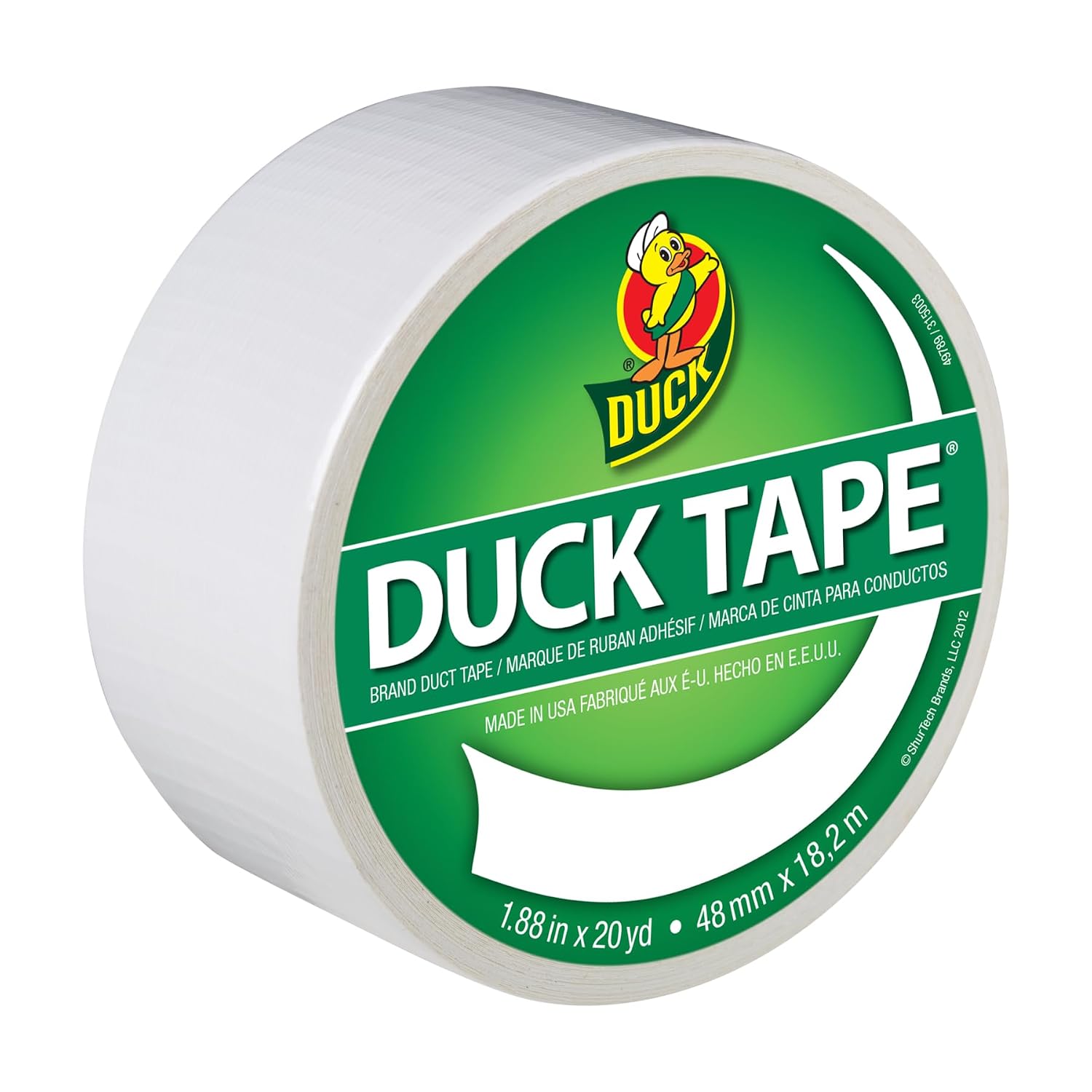
If you’ve ever grabbed a roll of generic duct tape to find it peeling off a cardboard box after an hour, you know the frustration. Duck Tape’s white duct tape is the brand’s answer to that problem—a reliable, everyday tape that sticks hard and stays put. It’s not the strongest tape you can buy, but for most household jobs it’s more than enough. This roll is 1.88 inches wide and 20 yards long, which is the typical size for sealing boxes, quick repairs, and craft projects. The catch? It’s a solid performer, not a miracle worker. You’re getting a clean, bright white tape that does its job without fuss, and at about $3.59, it’s priced like a no-brainer.
Is Duck Tape worth it? That’s the question most people have before they toss one in their cart. The short answer is yes—for general use around the house, especially if you need a white tape that doesn’t look industrial. It sticks well to cardboard, plastic, and metal, and it tears by hand without making you wrestle the roll. But it has limits. It’s not waterproof in the way marine tape is, and it won’t hold up long outdoors in direct sun. Know what you’re buying: a solid all-rounder, not a heavy-duty specialist.
Overview – What It Is and Who It’s For
Duck Tape’s white duct tape is exactly what the label says: a standard cloth-backed, polyethylene-coated tape with a rubber-based adhesive. It’s made in the USA, and the brand has been around long enough that most people recognize the duck logo. This particular roll is the “Color Duct Tape” line, meaning the adhesive is white too (some colored tapes have clear adhesive, which can look messy). If you need to seal boxes for moving, patch a torn tent, or wrap a cable bundle out of sight, this tape works.
Who’s it really for? Anyone who wants a dependable white tape that doesn’t cost a fortune. Artists and crafters often reach for it because white takes paint or markers well. Parents like it for labeling bins or taping down loose cords. It’s also a favorite for temporary repairs—say, a cracked vacuum hose or a split in a vinyl chair. It’s not for roofing, extreme cold, or anything that’ll sit in a puddle for a month. Keep expectations realistic, and you’ll be happy.
Key Features
Size and length – 1.88 inches wide by 20 yards long. That’s enough tape to seal about 30–40 medium boxes or handle a couple of small repairs. The width is standard, so it fits most dispensers and hand-tearing is easy.
White cloth backing – The fabric weave gives it strength to resist tearing under tension, and the white color blends with painted walls, paper, and light-colored surfaces. It’s not bright white like printer paper, but it’s close enough for most uses.
Rubber-based adhesive – Sticks aggressively to cardboard, plastic, vinyl, metal, and painted wood. It forms a bond quickly, so you don’t need to press hard. Downside: it’s not repositionable; once it touches, it’s on.
Hand-tearable – You can rip it across the width with your fingers cleanly. No scissors needed for most jobs. Some folks find it tears a little raggedly if you go slow, but a quick snap gives a straight edge.
Indoor durability – Holds for months indoors on clean surfaces. On boxes stored in a dry closet, owners report it staying stuck for over a year. Outdoors, expect a few weeks before UV and moisture weaken the adhesive.
Fit for You
You’re packing up your apartment for a move and you want tape that won’t pop open a box at the bottom.
You’re teaching a kid to make duct tape wallets or book covers, and you want a color that acts like a blank canvas.
You need to temporarily patch a hole in a window screen or a garden hose without the repair screaming “I used duct tape.”
You label storage bins with a Sharpie on white tape so the writing is easy to read from a distance.
You’re bundling extension cords or wrapping handle grips on a tool—something that needs a decent hold but isn’t structural.
Uses – Where It Earns Its Keep
Sealing boxes is the classic use, and Duck Tape does it well. Lay a strip across the center seam, then one along each edge, and your box is ready for a trip across town or into storage. The white color is handy if you’re writing addresses or “fragile” notes directly on the tape—the marker won’t bleed like it sometimes does on brown tape.
Another common scene: a ripped vinyl chair armrest. Cut a piece of Duck Tape a couple inches longer than the tear, round the corners with scissors (so the edges don’t curl), and press it down. It’ll hold for months of daily sitting, and the white matches pale furniture surprisingly well. Just don’t expect it to survive a spilled drink without the edges lifting—wipe spills quickly.
Crafters love it because it takes paint. Acrylics, spray paint, even markers stick nicely to the cloth surface. If you’re making a white tape rose or a decorative edge on a picture frame, this tape behaves. It cuts with scissors without fraying too much, and you can layer it without the adhesive bleeding through.
Experience – Living with Duck Tape White
Right out of the package, the roll feels solid. The tape has a satisfying weight in your hand, and the cardboard core doesn’t collapse when you squeeze. Unrolling it gives a steady tug—no jerky resistance that makes you fight it. Tearing is where you’ll notice a quirk: if you pull gently and try to rip, you’ll get a zigzag edge. The trick is a quick, sharp snap. Once you learn that, it’s pop and done.
Sticking it to a box is almost too easy. You press down once, and it’s bonded. That’s great for speed, less great if you misalign. You can lift a corner carefully within the first few seconds, but after ten seconds you’re peeling off paper fiber. Owners tend to mention that the adhesive leaves a slight residue on smooth surfaces like plastic bins after a few weeks—nothing that won’t scrub off with a bit of oil, but worth knowing.
The white color is an advantage in low-light spots like closets or basements—you can see the tape edge easily when you’re pulling it off the roll. On the flip side, if your hands are greasy (say, from working on a bike), the tape picks up fingerprints that don’t wipe off. And the roll can be a little loud when you set it down on a hard table—the cardboard core clatters. Minor stuff, but real.
Storage is simple: keep it in a cool, dry place. A hot car in summer will soften the adhesive and make the roll sticky when you try to unroll it. A cold garage won’t hurt it, but tearing gets a bit harder below freezing. If you’re using it outside in winter, warm the roll in your pocket for a minute first.
Pros and Cons
Pros
Sticks hard and stays stuck – Once you press it down, it’s not moving. Great for boxes and repairs where you want a single application.
White color blends well – On white walls, paper, or light fabrics, it disappears visually. Handy for quick fixes you don’t want to notice.
Good value at $3.59 – That’s about 18 cents per yard. You get a lot of tape for the price, especially compared to specialty tapes.
Hand-tearable with a snap – No scissors required for most tears. Saves time when you’re in a rhythm packing boxes.
Accepts paint and markers – Crafters can personalize it easily, which is a nice bonus over brown or gray tapes.
Cons
Not waterproof for outdoor use – Rain or direct sun will degrade the adhesive in weeks. Don’t plan on sealing a leaky gutter with it.
Adhesive leaves residue on smooth surfaces – If you stick it to plastic, glass, or finished metal, expect a cleanup job later. Not ideal for rental property touch-ups.
Tears unevenly if you pull slow – You need a fast snap for a clean edge. That takes a moment to learn and can waste tape if you mess up.
Bright white is a little shiny – The cloth backing has a slight gloss. On matte painted walls, it can stand out more than you’d like. Flat white paint might be a better match for invisible repairs.
Advantages – Duck Tape vs Gorilla Tape and Others
The main competitor people ask about is Gorilla Tape. Gorilla Tape is thicker, has a stronger adhesive, and is tougher to tear by hand. It also costs about twice as much and leaves a nastier residue. If you’re sealing heavy boxes for shipping or patching a metal vent, Gorilla wins. But for everyday tasks—crafts, labeling, light repairs—the Duck Tape is easier to work with and more than strong enough. The white color is a clear advantage for craft and aesthetic jobs; Gorilla Tape’s black or clear options don’t blend the same way.
Against generic store brands, Duck Tape holds its own. The adhesive consistency is better (less likely to go gummy in heat), and the cloth backing doesn’t separate from the poly coating as easily. For the tiny price difference, it’s worth sticking with the brand name. On the other hand, if you need real strength, you’ll be better off with a dedicated product like strapping tape for boxes or gaffer tape for stage use. Duck Tape sits in the middle: capable but not extreme.
Who Should Buy
Buy it if – You want a reliable white duct tape for indoor projects, moving, or crafts. The price is low, the performance is predictable, and the brand is easy to find.
Buy it if – You’re a crafter who needs a white base that takes paint. For the cost of a coffee, you get enough tape for several small projects.
Skip it if – You need a tape that survives outdoors or in wet conditions for months. Look at a waterproof repair tape or butyl tape instead.
Skip it if – You’re sealing heavy pallets for freight shipping. The adhesive is strong, but the tape itself can shear under extreme load. Use a filament-reinforced tape for that.
FAQ
Is the Duck Tape White Duct Tape worth it?
Yes, for most indoor uses it’s a solid buy. At about $3.59 for a 20-yard roll, you get dependable adhesion and a clean white finish that’s hard to beat at the price.
How long does it last on a cardboard box?
Indoors in a dry space, expect the bond to last over a year. The tape won’t dry out or peel off on its own as long as the box surface is clean and dust-free.
Is it safe for painted walls?
It sticks aggressively, so pulling it off can lift paint, especially on older or satin finishes. Test a small corner first. For temporary wall mounting, use painter’s tape instead.
Can I write on it with a marker?
Yes. Sharpie and other permanent markers dry quickly and stay legible. Ballpoint pens don’t write well on the cloth texture; stick to markers.
Does it work in cold temperatures?
It still sticks below freezing, but the adhesive gets stiffer and tearing requires more force. For outdoor winter use, warm the roll indoors before applying.
Is Duck Tape the same as duct tape?
It’s a specific brand of duct tape. All Duck Tape is duct tape, but not all duct tape is Duck Tape. In terms of performance, it’s a reliable mid-range option—better than cheap dollar-store tape but not as heavy-duty as Gorilla Tape.
Final Verdict
If you need a white duct tape for indoor tasks, packing, or crafts, this roll is a clear choice. It sticks hard, tears easily once you get the snap right, and the white color is genuinely useful for labeling and blending. You don’t need to spend more for stronger tape unless you’re tackling outdoor repairs or heavy shipping. For the price of a fancy sandwich, you can tape up twenty boxes and still have half a roll left. That’s a pretty good deal.
The one thing to keep in mind: it’s not waterproof or UV-resistant. Use it indoors or for short-term outdoor fixes, and it’ll serve you well. Duck Tape’s white duct tape is worth buying for its intended job—and it never pretends to be something it’s not. That honesty, rare in tape, is why people keep coming back.
Duck Tape White Duct Tape vs the Competition in 2026
You’re staring at a shelf of white duct tape, and honestly, they all look identical. But they’re not. The Duck Tape Brand Color Duct Tape sits in a weird middle ground—it’s not the cheapest, not the toughest, and not the most specialized. It’s the one you grab when you want a tape that behaves, looks clean, and doesn’t cost a fortune. Here’s how it stacks up against the real rivals you’re actually considering.
Product
Price Range
Key Strength
Key Weakness
Best For
Duck Tape White Duct Tape (1.88″ x 20 yds)
Mid (around $3.59)
Smooth finish, easy hand-tear, decent adhesion
Not the strongest bond for outdoor use
Crafts, indoor sealing, labeling
Gorilla Tape (White, 1.88″ x 30 yds)
Premium (slightly higher)
Aggressive adhesive, ultra-thick backing
Stiff, hard to tear by hand, leaves heavy residue
Heavy-duty repairs, outdoor, rough surfaces
3M Scotch Tough Duct Tape (White)
Mid
Smooth application, consistent thickness, good UV resistance
Weaker stick on cold or gritty surfaces
General household sealing and patching
T-Rex Tape (White, 1.88″ x 35 yds)
Premium (higher)
Serrated edge cut, waterproof backing
Serrated cuts can snag, overkill for light tasks
Extreme sealing, automotive, outdoor gear
Duck Tape White Duct Tape vs Gorilla Tape: The Adhesive Showdown
This is the big one. Gorilla Tape has a thicker backing and a sticky layer that is essentially an octopus in glue form—it grabs onto cinder block, wood grain, and even poorly cleaned plastic. It’s wildly strong. But you pay for that in flexibility. Gorilla Tape is stiff, it doesn’t conform to curves well, and tearing it with your fingers is a forearm workout. The Duck Tape roll is more forgiving; you can rip it straight down with a quick tug, and it wraps around a pipe or a picture frame corner without puckering. If you are sealing a heavy cardboard box for shipping, Gorilla is better. If you are taping down a loose cable or hanging a lightweight plastic sign on a smooth wall, the Duck Tape White Duct Tape is actually the smarter pick because it won’t leave a sticky nightmare behind when you pull it off.
Duck Tape White Duct Tape vs 3M Scotch Tough Duct Tape
These two are closer than any other pairing here. Both shred cleanly by hand, both have a pretty matte finish, and both cost about the same. The difference comes down to the cloth backing. The 3M variant is slightly thinner and more flexible, which makes it brilliant for wrapping around odd shapes like a bicycle handlebar or a garden hose. However, it shows its weakness on sharp corners—the backing wears through faster. Duck Tape’s version is a touch denser, so it handles scuffs against rough edges better. For straight-line sealing on boxes and envelopes, you won’t notice a difference. For projects that involve wrapping or bending, the Duck Tape White Duct Tape has a subtle edge in durability. Also—and this is a small thing—the Duck Tape roll has a clean, uniform white surface that takes a marker well, which matters if you are labeling bins.
Duck Tape White Duct Tape vs T-Rex Tape: The Overkill Option
T-Rex is the truck tire of duct tapes. It has a serrated edge on the roll so you can bite into it, and it is insanely waterproof. It’s genuinely impressive for sealing a cracked gutter or patching a tarp. But for buying a single roll of white tape for general household use, it’s overkill. The serrated cut means every strip you tear has a jagged edge, which looks messy on crafts. It’s also noticeably more expensive per roll. When you’re comparing the best white duct tape for crafts or for simple box sealing, T-Rex’s features don’t help you—they actually hurt the aesthetic. The Duck Tape product is the best white duct tape for crafts because it gives you a clean edge every time without fighting the roll.
The Verdict: Is Duck Tape Worth It?
Is Duck Tape worth it? For $3.59, yes—if you’re honest about what you need. Choose the Duck Tape White Duct Tape when your day involves craft projects, closing lightweight shipping cartons in the office, or general indoor fixes where you value a neat appearance and easy handling over brute force. It’s a mid-tier product with mid-tier adhesion, and that is completely fine for most people. But if your work is outdoors, involves freezing temperatures, or requires a bond that survives rough handling, you’ll be happier with the extra grip of Gorilla Tape. That one costs a bit more, but it won’t let you down when the stakes are higher than a paper cut.
Ready to decide on the Duck Tape White Duct Tape?
See today’s price, stock and delivery options on Amazon.