This roll offers a decent mix of collectible wheat pennies with an Indian Head cent bonus, providing fair value for its price point without being a steal or overpriced.
Price vs. rivals
Pricier
CheaperTypicalPricier
Priced above typical mid-range for similar wheat penny rolls of this era and condition, but still within a plausible retail bracket where premium presentation or the included Indian Head cent may justify a higher asking.
Ease of use
Excellent 92/100
The roll is straightforward to open and inspect, requiring only basic handling to view the coins, making it very easy for an average person to use.
Overview of the US Mint Wheat Penny Roll
This US Mint wheat penny roll review covers a $20 shotgun roll that contains 50 Lincoln wheat cents from 1909 through 1958, plus a bonus Indian Head cent on the end. The seller grades them Good or Better, which means you won’t get slick, unreadable coins, but you also won’t get uncirculated gems. It’s a product designed for someone who wants a cheap, tactile introduction to old pennies without hunting through bank rolls themselves. The catch is the randomness: you know the date range, but you don’t know which specific years or mint marks are inside.
Key Features
50 wheat cents plus an Indian Head cent — That’s 51 old coins for $20. The Indian Head cent on the end is a nice bonus; it gives you a pre-1909 coin you wouldn’t get in a standard wheat roll.
1909–1958 date range — This covers almost the entire Lincoln wheat cent series, including the earlier, harder-to-find dates. You won’t get a 1909-S VDB, but you could get a teens or early-’20s coin.
Shotgun roll format — A paper wrapper that you tear open. No plastic tube, no display box. It’s the same kind of roll a bank would hand you, which keeps the price low and the experience old-school.
Good or Better grading — The seller sorts out culls and unreadable dates. “Good” means the date and main design details are clear but the coin is worn. “Better” could mean Fine or Very Fine condition in spots.
Random dates and mint marks — Part of the appeal is the surprise. You might get a string of common 1940s cents and then hit a 1917. It’s a lottery with low stakes.
No duplicates in the Indian Head bonus — The end coin is different from the wheat cents, so you automatically get two different series in one roll.
Fit for You
You want a tangible, low-cost way to start a coin collection without reading a grading guide first.
You need a last-minute gift for someone who likes history, old things, or Americana and you don’t want to spend more than $25.
You’re a teacher or parent looking for a hands-on activity to show kids what pocket change looked like before 1959.
You already collect modern coins and want a cheap, low-pressure way to dip into the vintage side without committing to a key date.
You’re filling a folder or album and need a batch of common-date wheat cents to plug holes without cherry-picking each one.
You enjoy the ritual of opening a roll, sorting the coins by decade, and looking up each date — the process matters more than the payout.
Uses
Imagine a Sunday afternoon with nothing pressing. You tear the paper wrapper, spread 50 pennies across a table, and start stacking them by decade. 1940s, 1950s, a couple of 1930s, maybe a 1920 if you’re lucky. That’s the main use case: fifteen minutes of quiet sorting with a magnifier in hand.
It also works as a conversation piece at a desk or on a shelf. A friend sees the roll, asks about it, and suddenly you’re explaining what “wheat” means and why the Indian Head cent has a different look. The roll is compact enough to toss in a drawer or gift bag without a box.
For someone who does craft projects, these coins can end up in resin coasters, shadow boxes, or jewelry. A roll of 50 gives you enough material to experiment without ruining a valuable coin. Just know that altering the coins destroys their collector value. If that matters to you, keep them in the roll.
Experience with the US Mint Wheat Penny Roll
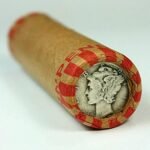
The roll arrives in a standard bubble mailer. The paper wrapper is plain white with the date range and condition printed on it. You tear the end open and slide the stack out. Coins are stacked face-up and face-down, mixed, just like a bank roll. The Indian Head cent sits on one end, visible before you open it.
Right away you’ll notice the color range. Some coins are warm brown, some are nearly black with old patina, a few might show a faint orange peel texture from the copper. The condition varies coin to coin. Most are Good to Fine: flat spots on Lincoln’s hair and the wheat ears, but the date and lettering are clear. You won’t need to guess what year it is on any of them.
The Indian Head cent is the wildcard. It could be a common 1880s or 1890s date in Fine condition, or it could be a smoother, more worn example. The seller doesn’t specify the exact grade for the bonus coin, so expect it to be consistent with the wheat cents in wear.
Sorting through 50 coins takes about ten minutes. You’ll probably find a few duplicate dates, especially from the 1940s and 1950s. If you’re lucky, you’ll pull a 1910s or 1920s coin that gives you a real sense of age. The minor annoyance is the copper dust and residue that comes off worn coins onto your fingers. Wash your hands after handling them, or wear cotton gloves if you care about toning.
Storage is simple: a 2×2 cardboard flip, a coin folder, or a plastic tube. The roll itself is single-use paper, so once you tear it, it’s gone. If you want to keep the coins together, you’ll need your own container. That’s not a big deal, but worth knowing.
Pros and Cons
Pros
Price per coin — Roughly 39 cents per coin. That’s a fraction of what you’d pay for individually sold common-date wheat cents in similar condition.
Bonus Indian Head cent — Adds a second series without extra cost. A single Indian Head cent in Good condition often sells for $2–$4 on its own.
Condition consistency — No culls, no holed coins, no dateless slicks. The “Good or Better” grading is honest for this price range.
Gift-ready format — The roll looks like an old bank roll, which has a nostalgic appeal. You don’t need wrapping paper; just a ribbon.
Low risk — You’re not gambling on a single expensive coin. The worst case is you get 50 common dates worth about what you paid.
Cons
No rare dates guaranteed — You probably won’t find a 1909-S, 1914-D, or 1931-S. The seller naturally pulls key dates and sells them separately. This is a common-date mix.
Duplicate-heavy decades — Expect multiple 1940s and 1950s cents. If you already own a full set, half the roll will be redundant.
Indian Head cent condition is unknown — You might get a beautiful Fine example or a smooth, low-Good one. The bonus is a gamble within the overall product.
Paper wrapper is single-use — Once you open it, you need your own storage. Not a deal-breaker, but a minor hassle if you wanted a reusable tube.
Premium over face value — The face value of the coins is 50 cents. You’re paying a 40x markup for the vintage content and the sorting convenience. That’s normal for collector rolls, but know what you’re paying for.
Advantages
In the wheat penny roll vs indian head cent roll comparison, this one gives you two series for the price of one. A straight wheat-only roll at the same price point would give you 50 coins, but you’d miss the pre-1909 variety. The Indian Head cent is a distinct design that adds historical depth without costing extra.
It also beats buying the same coins individually on eBay or at a coin shop. Hand-picking 50 wheat cents in Good or Better condition from a dealer’s bargain bin would run you $0.50 to $1.00 each plus shipping. This roll bundles them at roughly half that cost per coin. You lose the ability to pick specific dates, but you gain a lower average cost and the surprise element.
For a wheat penny roll bulk buy, this is a sensible entry point. Buying multiple rolls increases your odds of hitting a wider date spread, and the per-roll price stays the same. Some collectors buy three or four at once and combine the coins into a single set, then resell the extras.
Who Should Buy
New collectors on a budget — You’ll get a solid mix of old copper without spending more than $20. This is the best wheat penny roll for coin collection if you’re just starting out and want to learn the series.
Parents or grandparents buying for kids — The roll format feels like opening a present, and the coins are tough enough to handle. A 10-year-old can sort them without causing damage.
Folder fillers — If your Lincoln cent album is missing common dates from the 1910s through the 1950s, this roll will fill several holes at once.
Gift givers who want something unusual — A roll of old pennies is more memorable than a gift card, and the price is low enough that you can buy two and keep one for yourself.
Skip this if you’re a date-specific collector — If you need a specific mint mark or a high-grade example, buy the exact coin from a dealer instead. A random roll won’t deliver a targeted want.
Also skip if you dislike duplicates — If the idea of getting three 1944-D cents and two 1951-S cents bothers you, this roll will frustrate you. Hand-picked sets are a better fit.
FAQ
Is the Wheat Penny Roll worth it?
Yes, if you want a cheap, fun way to get 50 old Lincoln cents and a bonus Indian Head cent in one shot. The $20 price is about half of what you’d pay for the same coins individually. Just don’t expect key dates or uncirculated condition.
What dates will I get in a 1909-1958 wheat penny roll?
You’ll get a random mix from the full 1909–1958 range, but the distribution is weighted toward common dates. Expect a majority from the 1940s and 1950s, with a few from the 1930s and possibly a teens or 1920s coin if you’re lucky.
Does the Indian Head cent count toward the 50 coins?
No, the Indian Head cent is a bonus coin on the end of the roll. You get 50 wheat cents plus the Indian Head, so 51 coins total. The roll is labeled as 50+1, so you’re not losing a wheat cent to the bonus.
What does Good or Better condition look like?
A Good coin has a clear date and readable lettering, but the details on Lincoln’s hair and the wheat stalks are worn smooth in spots. Better means Fine or higher: sharper detail, less wear, maybe some original luster remaining.
Can I return the roll if I don’t like the dates?
Amazon’s return policy applies, but most sellers of random-date coin rolls explicitly state no returns based on the specific coins inside. The product is sold as a random assortment, so you’re buying the experience, not a guaranteed set.
How does this compare to buying a wheat penny roll bulk buy from a bank?
Bank rolls cost face value (50 cents) but you get modern coins or a mix of modern and old. Finding wheat cents in bank rolls requires luck and volume. This roll guarantees all wheat cents plus a bonus Indian Head, saving you the search time.
Final Verdict on the US Mint Wheat Penny Roll
This US Mint wheat penny roll review boils down to a simple recommendation: buy it if you want a cheap, entertaining taste of coin collecting. The $20 price is fair for 51 old coins in readable condition, and the Indian Head cent bonus makes it a better deal than a plain wheat roll. It’s not for collectors who need specific dates or high grades. But for a gift, a classroom, or a quiet evening sorting copper, it delivers exactly what it promises. Just be ready for duplicates and a bit of copper dust on your fingers.
Most wheat penny rolls in this price range (roughly $15 to $25) fall into one of two camps: the reliable-but-boring source of filler coins, or the sketchy grab bag where you’re lucky to find a readable date. The 1909-1958 US Mint Wheat Penny Shot Gun Roll tries something different. It sticks a single Indian Head cent on one end as a hook, fills the rest with wheat cents graded Good or Better, and asks $19.99. If you’re reading this US Mint wheat penny roll review, you already know the basic pitch. The real question is whether it beats the alternatives that have been selling these rolls for decades.
Product
Price Range
Key Strength
Key Weakness
Best For
US Mint Wheat Penny Roll
~$20
Indian Head cent bonus, mixed dates from 1909-1958
Beginners wanting consistent quality without hassle
Whitman Wheat Cent Roll
$12-$18
Uniform Good condition, trusted brand name
Dull date selection, mostly 1940s-1950s common cents
Budget-minded collectors filling album holes
H.E. Harris Wheat Penny Roll
$10-$15
Lowest price entry point, easy to find
Spotty grading, more culls and damaged coins
Kids or first-time buyers testing the waters
Wheat Penny Roll vs Littleton Coin Company Wheat Penny Roll
Littleton is the safe bet. Their wheat penny rolls come with a grading guarantee (G-VG), a return policy that actually works, and a reputation that makes them the default choice for people who just want a roll of old pennies without drama. The trade-off: you pay for that safety. A Littleton roll typically runs $22 to $28, and you won’t find an Indian Head cent staring at you from the end of the tube. What you get is predictable: decent readable dates, minimal holes or damage, and the quiet satisfaction of knowing you didn’t get ripped off.
The US Mint roll, by contrast, is a gamble with a reward. The Indian Head cent at the end is the obvious draw, but the rest of the roll is more of a mixed bag. Some dates are sharp and clearly graded Good or Better. Others are closer to Fair, with worn rims and faint details. You’re paying about $20 for the chance to find a 1909 or a 1914-D among the common 1940s cents, a chance that’s real but not guaranteed. This roll is a wheat penny roll vs indian head cent roll hybrid in a single tube, since you get one Indian Head plus 49 wheat cents. If you’re the kind of collector who enjoys the hunt more than the certainty, this roll delivers. If a single worn coin would bug you, stick with Littleton.
Wheat Penny Roll vs the Budget Alternatives (Whitman and H.E. Harris)
Whitman’s wheat cent roll is the sensible choice. At $12 to $18, it’s cheaper than the US Mint roll, and the condition is consistent, Good across the board, almost boringly so. But consistency has a cost: the dates skew heavily toward the 1940s and 1950s. You’re unlikely to find anything earlier than 1934, and the Indian Head cent? Not happening. It’s a roll for filling holes in a Whitman album, not for the thrill of discovery. For anyone asking whether a wheat penny roll is worth it as a gift or a teaching tool, the Whitman gets the job done without the upcharge.
H.E. Harris goes even cheaper, with rolls priced around $10 to $15, and you feel the difference immediately. The coins are more worn, more likely to have issues like dents or green spots, and the grading is optimistic at best. It’s fine for a kid who wants to sort through “old pennies” on a rainy afternoon, but disappointing if you’re hoping for a decent 1909-1958 wheat penny roll value in terms of collectible condition. If you want a wheat penny roll bulk buy for a classroom or youth group, H.E. Harris makes sense. For personal collecting, the quality drop is hard to stomach.
The US Mint roll splits the difference. It’s not as cheap as H.E. Harris, but the condition is generally better, and you get that Indian Head cent as a bonus. Versus Whitman, it’s more expensive but more interesting. The old penny roll grading guide on this one runs Good to Very Good, but expect some that barely hit Good, especially toward the middle of the roll. Whether that trade-off works for you depends on whether you value surprise over predictability.
Pick the US Mint Wheat Penny Roll if you want a roll that feels like a real coin hunt, with a guaranteed Indian Head cent at the end and the possibility of finding something earlier or scarcer in the middle. It’s the best wheat penny roll for coin collection enthusiasts who already have the common dates and want a bit of a lottery with their copper. Skip it and go with Littleton if you’re buying for a young collector who needs a reliable starter set, or if graded condition matters more to you than the thrill of the unknown. And if your budget is tight, grab the H.E. Harris roll, just don’t expect any surprises beyond the occasional readable date.
Ready to decide on the Wheat Penny Roll?
See today’s price, stock and delivery options on Amazon.