Excellent battery life and essential features at a low price, but the required separate Sync Module slightly diminishes out-of-box value.
Price vs. rivals
Cheaper
CheaperTypicalPricier
Priced well below many comparable wireless security cameras, offering strong value for budget-conscious buyers.
Ease of use
Great 80/100
The wireless design and long battery life make it convenient, but the need for a separate Sync Module adds a minor setup step for average users.
Overview
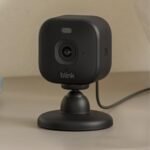
This is a wireless security camera that runs on two AA lithium batteries and claims a two-year battery life. It’s made by Amazon’s Blink brand, sits completely outside (weatherproof, not just “weather resistant”), and sends motion alerts straight to your phone. No wiring, no subscription required for basics like live view and alerts, though you do get more with a plan.
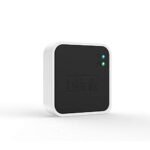
The catch that catches most people off guard: the Blink Outdoor 4 sync module required note on the box is real. The camera won’t work without one. It’s a small white box that plugs into your router via ethernet. If you’re buying this as a first Blink camera, expect to buy a starter kit or pick up a sync module separately. That $69.99 price tag doesn’t include it.
Key Features
Two-year battery life – On paper, this is the headline, and it holds up decently in real use if you don’t have motion triggers going off constantly. Real-world tends to land closer to 18 months with typical activity, but that’s still excellent for a wireless camera with long battery life.
1080p HD with night vision – The footage is sharp enough to read a license plate at 15 feet in good light. Infrared night vision is grayscale but clear, with a surprisingly even beam that doesn’t leave dark corners.
Two-way talk – The Blink Outdoor 4 two-way talk works through the Blink app. Audio is clear on your end, but the person outside hears a slightly tinny version of your voice. Fine for telling a delivery driver where to leave a package. Less fine for a heart-to-heart with grandma.
Motion detection with adjustable zones – You draw boxes in the app to tell the camera where to look. It’s basic but effective. You can also set the sensitivity, which helps cut down on false alarms from trees or passing cars.
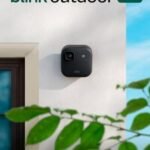
Weatherproof build – IP65 rating means rain, snow, and sun won’t bother it. The housing feels sturdy enough that you won’t worry about it after a storm.
Free cloud storage for motion clips – Blink gives you free storage for up to 60 minutes of motion-triggered clips. Once you hit the cap, the oldest clips get replaced. A subscription gets you longer storage and person detection, but you can absolutely use this camera without paying a dime.
Fit for You
You want a camera you can mount on a fence post or a tree trunk anywhere in your yard without running extension cords.
You’re a renter who can’t drill holes for wired cameras or doesn’t want to deal with patching them later.
You need something that keeps working after the power goes out, as long as the Wi-Fi stays up (batteries handle that).
You’ve tried cheap no-name cameras from random brands and got tired of apps that crash or stop getting updates after six months.
You’re already in the Amazon ecosystem and want a camera that shows up on your Echo Show or Fire TV without a hassle.
You don’t want a monthly subscription just to see who’s at the door.
Uses
Stick one above your front door so you can see who rang the bell while you’re at work. The motion detection catches people approaching, not just when they’re already right there. You’ll get a push notification, pull up the live feed, and decide if you need to shout through the two-way talk.
Mount one overlooking a side gate or a backyard shed if you store bikes or tools out there. The wide field of view (143 degrees diagonal) covers a decent stretch without making you buy two cameras for one small yard.
Point one at a driveway if you want to know when the kids get home from school or when a delivery truck shows up. The free cloud storage keeps a rolling log of clips you can scroll through later, so you don’t have to watch live all day.
Experience
Setup is straightforward if you’ve ever paired a smart home gadget. You screw the camera onto its magnetic mount (included), install the two AA lithium batteries, and open the Blink app. The app walks you through syncing to the module, naming the camera, and adjusting motion zones. It took about 15 minutes for the first camera, less for each additional one.
The app itself is clean but a little slow. Tapping “Live View” takes a couple of seconds to connect, which is normal for battery-powered cameras (they sleep to save power). You won’t get the instant-on you’d see from a wired Ring or wired Arlo. That trade-off is the reason you get that two-year battery life in the first place.
Motion alerts arrive on your phone within a few seconds. Not instant, but fast enough that someone can’t linger and leave before you see them. The IR night vision kicks in automatically when it gets dark, and the image is usable up to about 30 feet. Past that, figures get fuzzy enough that you won’t identify a face, but you’ll see movement.
The magnetic mount is a nice touch. You can pivot the camera to adjust the angle without loosening screws. Downside: the magnet isn’t strong enough that you’d want to mount it upside down without the included bracket. It’ll hold, but a strong bump might knock it loose.
One annoyance: the sync module needs to be plugged into your router via ethernet. If your router is in a closet or a basement, the module needs to be there too. The module then talks to the cameras over your Wi-Fi, so the cameras don’t need to be near the router themselves. That works fine, but it means you’re tethered to your router’s location for the module.
Battery life in practice depends on how busy your camera’s view is. A camera overlooking a quiet backyard with a motion zone set to ignore the street might last the full two years. A camera at a busy front door with frequent walkers, dogs, and cars? Expect more like 12 to 15 months. The app shows approximate battery level per camera, so you’ll get a warning well before it dies.
Audio from the two-way talk works well enough but has a slight delay. The person outside hears you about half a second after you speak, which can feel awkward. For quick messages like “Leave it by the door,” it’s fine. For a longer conversation, you’ll both do that “you go first” dance.
One more small thing: the camera has a built-in LED that blinks blue when it detects motion. You can turn that off in the settings if you want it to be more discreet. By default it’s on, which might tip off someone paying attention.
Pros and Cons
Pros
Real two-year battery potential in low-traffic spots – That puts it ahead of most competitors in the best outdoor security camera for battery life conversation.
No monthly fee for basic use – Free cloud storage for motion clips and unlimited live viewing. That saves you $3–$10 a month compared to many alternatives.
Weatherproof and easy to mount – You can put it almost anywhere outdoors without worrying about the elements or running power.
Works with Alexa and Echo devices – Say “Alexa, show me the front door” and it appears on your Echo Show. No extra hub or skill setup needed.
Decent video quality for the price – 1080p is what you’d expect at this price, but the color accuracy and low-light performance are a notch above the very cheapest cameras.
Cons
Sync module required, not included here – If you’re buying this as an add-on camera and you already own a module, fine. If this is your first Blink camera, you’re spending extra money you might not have expected.
No person detection without a subscription – The free tier only detects motion in general. You’ll get alerts for swaying tree branches and passing cars unless you fine-tune your motion zones very carefully.
Noticeable delay on live view and two-way talk – Not a dealbreaker, but if you’re used to wired cameras that respond instantly, you’ll feel the difference.
Ethernet dependency for the sync module – The module can’t use Wi-Fi. If your router is in a bad spot for running a cable, you’ll need to get creative or buy a longer ethernet cable.
Magnetic mount could be stronger – It’s convenient, but you wouldn’t want to rely on it in a high-wind area without the safety screw.
Advantages
The Blink Outdoor 4 vs Ring comparison usually comes down to two things: battery life and subscription. Ring’s battery cameras last 6–12 months on a charge, and you really want a subscription for person detection and video storage. The Blink Outdoor 4 goes double the battery life and works without a subscription at all. That’s a straightforward win if you don’t want to pay monthly.
Against the Arlo Essential Wireless, the Blink holds a price advantage. The Arlo costs more upfront and also pushes a subscription for cloud storage. Blink’s free tier is more generous for the budget-conscious buyer.
If you already own an Echo Show or a Fire TV, the Blink camera integrates without extra apps or voice command training. That ecosystem convenience is something standalone camera brands can’t match.
Who Should Buy
Buy this if you want a no-nonsense outdoor camera that runs on batteries for a year or more, you’re okay with a slight delay on live view, and you don’t want another monthly subscription.
Buy this if you’re adding to an existing Blink system. The cameras are cheaper than the starter kits, and you already have the sync module.
Skip this if you need instant live view and no delay on two-way talk. A wired camera like the Ring Wired or a Reolink POE model will serve you better.
Skip this if you want continuous recording. The Blink Outdoor 4 only records on motion events. There’s no 24/7 option, even with a subscription.
Skip this if you don’t have a spare ethernet port near your router. The sync module requirement is a hard constraint, not a suggestion.
FAQ
Is the Blink Outdoor 4 worth it?
For $69.99 plus the cost of a sync module if you don’t already have one, it’s a solid buy if you value battery life and no subscription. You get good 1080p video, weatherproof build, and free cloud storage for motion clips. The trade-off is a slight delay on live view and no person detection without paying.
How long does the Blink Outdoor 4 battery last?
Blink claims up to two years with the included AA lithium batteries. In typical real-world use with moderate motion triggers, owners tend to report 12 to 18 months. Busy locations with frequent triggers will drain it faster. The app shows approximate battery level for each camera.
Does the Blink Outdoor 4 require a subscription?
No. You get free cloud storage for motion-triggered video clips (up to 60 minutes total) and unlimited live view. A subscription adds person detection, longer clip storage, and a few other extras, but the camera works fine without paying anything monthly.
Does the Blink Outdoor 4 work with Ring or other smart home systems?
It works with Alexa and Echo devices natively. For Google Assistant and Apple HomeKit, you’ll need to use a third-party workaround. There’s no direct integration with Ring, since Ring is a separate Amazon subsidiary with its own ecosystem.
Is the Blink Outdoor 4 safe for outdoor use in rain and snow?
Yes. It carries an IP65 rating, which means it’s dust-tight and protected against low-pressure water jets from any direction. Rain, snow, and direct sunlight won’t harm it. Operating temperature range is -4°F to 113°F, so severe cold or heat can be an issue in extreme climates.
Do I need the sync module for the Blink Outdoor 4?
Yes, the Blink Outdoor 4 sync module required step is not optional. The camera connects to the sync module via Wi-Fi, and the module connects to your router via ethernet. If you’re buying this as a standalone camera without a module, you’ll need to purchase one separately or buy a starter kit that includes it.
Final Verdict
The Blink Outdoor 4 does exactly what it promises: deliver long battery life, clear video, and reliable motion alerts without a subscription. It’s not the fastest camera you can buy, and the sync module requirement is an extra hurdle if you’re starting from scratch. But for the price, and especially if you’re already in the Blink or Alexa world, it’s a smart choice that won’t nag you for monthly payments or battery swaps every few months.
One thing to keep in mind: budget for the sync module if you don’t have one. Once that’s sorted, you’ll have a dependable outdoor camera that keeps an eye on things for years with almost zero maintenance.
The Blink Outdoor 4 sits right in the middle of the wireless security camera market — not the cheapest, not the most feature-packed, but it nails the one thing most people actually care about: not changing batteries. At around $70 (plus you’ll need the Sync Module, which is another $30 or so if you don’t already have one), it’s a decent deal for a camera that promises two years of juice. But how does it stack up against the usual suspects from Ring, Arlo, Wyze, and Eufy? Here’s the straight talk on where the Blink wins, loses, and why you might pick something else.
Product
Price Range
Key Strength
Key Weakness
Best For
Blink Outdoor 4
~$70 (plus ~$30 for Sync Module)
Two-year battery life, compact size
Requires separate Sync Module, no continuous recording
Anyone who hates climbing a ladder to swap batteries
Ring Stick Up Cam Battery
~$100
Great Alexa integration, Ring ecosystem
Short battery life (3–6 months), subscription needed for recording
Households already deep in the Ring / Amazon world
Arlo Essential Spotlight Cam
~$130
Sharp 1080p with color night vision, integrated spotlight
Battery lasts 3–6 months, more expensive
People who want clear night footage and can afford premium pricing
Wyze Cam Outdoor v2
~$50
Very low price, basic two-way talk
Build feels cheap, less reliable motion detection
Filling a gap on a tight budget
EufyCam 2C
~$150 for a two-cam kit
No monthly fees, local storage via HomeBase
Higher upfront cost, larger cameras
People who refuse subscription services
Blink Outdoor 4 vs Ring Stick Up Cam: The Battery vs Ecosystem Trade-off
Ring’s Stick Up Cam is the obvious competitor because it’s also wireless, battery-powered, and lives in the same Amazon family. But the battery difference is stark. You’ll swap Ring’s batteries every few months — more often if you live on a busy street. Blink’s claim of two years is real in low-traffic settings, and even in busy spots you’re looking at at least a year. That’s a big win. But Ring gives you something Blink doesn’t: a proper ecosystem. If you already have a Ring doorbell, the Stick Up Cam integrates into the same app, same alerts, same chime. Blink’s app is fine, but it’s separate from Ring’s. Also, Ring’s motion zones are more granular — you can draw custom shapes instead of just picking a general area. So if you’re fine changing batteries twice a year, and you love the Ring universe, get the Stick Up Cam. If you’d rather not think about power for two years, the Blink Outdoor 4 is the smarter choice.
Blink Outdoor 4 vs Arlo Essential Spotlight: When You Want Better Video
Arlo charges more, and you can see where that money goes. The Essential Spotlight has a built-in light that actually illuminates the area in color at night, and the 1080p sensor handles low light better than Blink’s 1080p sensor. Blink’s night vision is okay — it’s grayscale and a bit soft — but Arlo’s is sharper and more usable if you need to identify a face or a license plate. But you pay for that clarity with battery life. Arlo’s battery lasts maybe six months if you’re careful; turn on the spotlight frequently and you’re down to three. The Blink will outlast it by a mile. Also, Arlo’s subscription is pricier if you want cloud recording beyond motion clips. Blink’s subscription (Blink Subscription Plan) is cheaper and optional if you use local storage via the Sync Module. So here’s the deal: if video quality is your top priority, and you don’t mind recharging twice a year, go Arlo. If you just want something that works, sees enough, and never asks for a new battery, Blink wins.
Blink Outdoor 4 vs Wyze Cam Outdoor v2: The Budget Showdown
Wyze cameras are famously cheap, and the Outdoor v2 at around $50 is tempting. But cheap comes with compromises. The Wyze’s construction is plasticky and the mount feels flimsy — I’ve had one fall off after a windy night. The motion detection is also hit-or-miss; sometimes it catches a leaf and misses a person. Blink’s motion detection is more consistent, and the camera body feels sturdier despite being tiny. Two-way talk on the Wyze is usable but has a noticeable delay; Blink’s two-way talk is snappy enough for telling a delivery driver where to leave a package. The real kicker is battery life: Wyze quotes 6 months, but real-world use with frequent recording gets you closer to 3–4 months. Blink’s two-year claim leaves it in the dust. So if you’re on an absolute shoestring budget, the Wyze works in a pinch. But if you can stretch to the Blink Outdoor 4, you’ll have a more reliable camera that you’ll barely think about.
So who should pick the Blink Outdoor 4? Anyone who values set-it-and-forget-it battery life above all else. It’s ideal for spots where changing a battery is a hassle — think high-up eaves, remote sheds, or rental properties where you don’t want to visit every quarter. But if you need superior night vision, a rich smart-home ecosystem, or you want to skip monthly fees entirely, look at the Arlo Essential, the Ring Stick Up Cam, or the EufyCam 2C respectively. The Blink is a great middle-ground camera, but it’s not the best at everything — just the best at not needing you.
Ready to decide on the Blink Outdoor 4?
See today’s price, stock and delivery options on Amazon.