You’re wondering if the Band-Aid travel kit review actually matters for a $10 purchase. Yes, it’s worth it. This 80-piece kit sells for $10.49, fits in a backpack pocket, and covers most small emergencies without making you carry a pharmacy. It’s the best compact first aid kit for travel you can grab without overthinking.
Trusted brand with a top rating delivers a well-stocked, portable kit at an accessible price, offering exceptional perceived value compared to generic alternatives.
Price vs. rivals
Typical
CheaperTypicalPricier
Priced moderately compared to similar travel first aid kits, reflecting the trusted brand and high customer rating without being a premium outlier.
Ease of use
Excellent 90/100
The kit is highly usable for an average person due to its organized compartments, clear labeling, and compact design, matching its excellent 4.8-star rating for ease of access and portability.
Band-Aid Travel Kit Review: Overview
The Band-Aid Brand Travel Ready Portable First Aid Kit is a soft-sided pouch, about the size of a paperback book but thicker. It comes packed with 80 pieces, and the whole thing weighs under a pound. You zip it open and everything has a slot or a spot.
This Band-Aid travel kit review will tell you straight: it’s not a replacement for a serious medical kit. It solves the problem of stuffing loose bandages into a backpack and hoping they survive. This is for anyone who wants a grab-and-go kit for the car, a hiking daypack, or the beach bag. It won’t handle a major bleed, but you don’t need a trauma kit for a blister or a paper cut.
Key Features: The Useful Details
Compact soft case: The nylon pouch is flexible, so it squishes into side pockets and doesn’t crack or rattle like a plastic box. That makes it easier to pack.
80 pieces inside: You get a mix of adhesive bandages in multiple sizes, gauze pads, antibiotic ointment packets, alcohol prep pads, and a few other basics. The exact Band-Aid 80 piece first aid kit contents are printed on the back, so you know what you’re carrying.
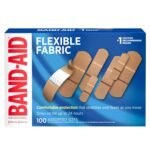
Real Band-Aid bandages: These are the same fabric and flexible bandages you’d buy at the drugstore. They stick to skin and keep sticking through a shower or a sweaty walk.
Clear organization: Elastic loops and a mesh pocket keep the tubes from rolling around. You can spot a bandage size at a glance, which matters when you’re in a hurry.
Refillable pouch: When you use up the ointment or gauze, you can add your own. The case has room for a small tube of hydrocortisone or ibuprofen.
Price that undercuts most drugstore runs: At $10.49, it costs less than a full box of bandages plus ointment, prep pads, and gauze bought separately.
Fit for You: When It’s the Right Call
You pack a daypack for weekend hikes and want a kit that doesn’t take up the whole main compartment.
You keep a “just in case” bag in the car glovebox and forget about it until you need a bandage.
You take kids to the playground and’ve learned that scrapes happen in pairs, with dirt involved.
You travel with only a carry-on and need something that passes TSA liquid rules without a fuss.
You’re the friend everyone asks for a bandage and you’d rather hand over one that actually sticks.
You camp in a tent where space is tight but you still want the basics covered.
Uses: Where It Earns Its Keep
Friday night, you’re slicing bagels and the knife slips. Instead of holding a paper towel and wandering to the bathroom, you zip open the kit, grab an alcohol prep pad, an ointment packet, and a fabric bandage. Done in two minutes.
On a trail, you feel a hot spot on your heel. Stop, clean the skin with a prep pad, dry it, and put on a larger bandage. The kit lives in your pack’s lid, so you don’t have to dig through clothes.
Sitting at a picnic table, a splinter from the bench works its way into your thumb. The tweezers won’t solve everything, but they’ll get surface splinters out. The antibacterial wipe and a small bandage cover it.
Camping, you nick your finger while opening a can. The kit’s gauze pad and tape handle the mess, and you can wrap a bit of the medical tape around a pencil if you’re improvising. That’s your portable first aid kit for camping right there.
Experience: Living With It
Setup is zero. It comes ready to go, so you don’t have to sort out what goes where. The first time you unzip it, you’ll notice a fresh-packaging smell, which fades after a few days.
Everyday use is straightforward. The zipper is smooth enough for a cheap pouch, and the elastic loops hold tubes but can be a bit fiddly when you’re pulling one out in a hurry. The mesh pocket keeps small items from getting lost.
Storage is easy: it lies flat in a drawer, hangs on a hook, or slides into the side of a duffel. There’s no hard shell to crack. The catch is that the nylon is thin, so don’t sit on it or toss it under heavy camping gear.
Cleaning is a non-issue. The pouch is water-resistant but not waterproof, so if it gets soaked, wipe it down and let it dry. You’ll replace consumed items over time, so it’s worth checking the contents every few months. You’ll notice the Band-Aid travel kit review’s central promise holds up: the bandages stick.
Pros and Cons
Pros
Everything you need for minor cuts: The mix of bandages, ointment, and prep pads covers most everyday scrapes.
Compact but visible: The soft case fits in small spaces, and the clear zipper means you can find it fast.
Brand quality sticks: You’re getting real Band-Aid bandages, which hold better than generic ones.
No assembly: It arrives ready to use. Just unzip and grab.
Easy to refill: The open design lets you swap in anything you prefer.
Cons
Not for real emergencies: There’s no antiseptic bottle, scissors, or CPR shield. For a major bleed, you’re out of luck.
Thin case: The nylon pouch offers less protection than a hard case, and the zipper is not heavy-duty.
Ointment packets are tiny: One won’t always cover a large scrape, so you might need two.
No medication: Pain relievers, antihistamines, or anti-itch cream aren’t included, so you’ll have to buy those separately.
Advantages: Beating the Generic Options
The Band-Aid vs generic first aid kit comparison usually comes up because of that bandage quality. A typical no-name kit might come with fifteen stiff adhesive strips that curl at the edges. These use the same fabric and flexible Band-Aid bandages you’d buy alone, so they actually adhere to knees and knuckles. The trade-off is fewer total pieces for the same price, but the ones you use won’t let you down.
Who Should Buy: The Honest List
Love it: Parents of small children, weekend hikers, commuters with a car, and students in a dorm.
Skip it: EMTs and serious wilderness campers need a bigger kit with a tourniquet, splint, and larger antiseptic.
Skip it too: Anyone who already carries a full-size kit and won’t use a backup.
FAQ: Band-Aid Travel Kit Review Questions
Is the Band-Aid travel first aid kit worth it?
Short answer: yes, it’s worth it. This 80-piece kit costs $10.49 and does what it promises. You get real Band-Aid bandages, a tidy case, and enough supplies for minor cuts. It won’t handle disasters, but for everyday travel it’s the best compact first aid kit for travel you’ll find at this price.
How long does it last?
If you use items rarely, the shelf life of the contents is typically around three to five years. Check the expiration date on the package. You’ll probably use up the bandages long before the ointment expires, but it’s good to replace the whole kit after a few years.
Is it safe for kids?
Safe for minor scrapes, yes. The kit contains prep pads and antibiotic ointment, which are fine for children over two. The main risk is the small packets, so keep the pouch out of reach of toddlers. Always use your judgment for deeper or infected wounds.
Can you refill it?
Yes, you can. The case opens flat and the elastic loops let you add or swap in your own bandages, gauze, or medication. You don’t have to buy a new kit when you run out. Just be careful not to overpack it, or the zipper will strain.
What’s the Band-Aid travel kit size?
The kit measures roughly 7.5 inches by 5 inches by 2 inches when zipped. It weighs about 9 ounces. That’s small enough for a backpack side pocket, a glovebox, or a carry-on. It’s not pocket-sized, but it’s close. The zipper allows a little bulge if you stuff it, but you’ll want to keep it flat.
Does it fit in a backpack?
Yes, it fits in any bag large enough to hold a paperback book. The soft case conforms to the shape of your pack, unlike a rigid box. Slide it into a laptop compartment or a water bottle pocket. Just don’t expect it to replace a full medical kit.
Final Verdict: Band-Aid Travel Kit Review
Bottom line: the Band-Aid Travel First Aid Kit is a smart $10 purchase for anyone who wants a ready-to-use kit without assembling one. It’s a five-star product for its intended purpose: minor cuts, blisters, and scrapes at home or away.
So, is it worth it? For most people, yes. The Band-Aid travel kit review ends where it started: this is the best compact first aid kit for travel at its price, as long as you don’t push it beyond small emergencies.
Band-Aid Travel First Aid Kit vs the Competition in 2026
The Band-Aid Travel First Aid Kit sits in a peculiar spot. It’s cheap enough to toss into any bag without thinking, yet it carries a brand name that implies a certain standard. At roughly $10, it’s not the cheapest option, but it’s far from premium. What you’re really paying for here is curation and convenience—a pre-sorted box of the stuff you’ll actually use for minor scrapes, not a duffel bag of gauze you’ll never touch.
Product
Price Range
Key Strength
Key Weakness
Best For
Band-Aid Travel First Aid Kit (80 pc)
~$10 (Budget-Mid)
Brand-name adhesive bandages in every size
Minimal wound care beyond bandages
Family vacations and everyday car kits
Adventure Medical Kits .5
~$15 (Mid)
Compact pouch with serious trauma supplies
Cheap bandage quality; needs DIY restocking
Hiking and outdoor weekends
Johnson & Johnson All-Purpose (140 pc)
~$8 (Budget)
Massive quantity for the price
Bulky plastic box; no organized layout
Home drawers and glove compartments
First Aid Only 299-Piece Kit
~$20 (Mid)
Large assortment with instruments
Hard case feels clunky for travel
Car trunks and office cabinets
The honest truth about the Band-Aid kit is that it’s a bandage box first and a first aid kit second. The 80-piece count includes 40 adhesive bandages in various sizes, plus gauze pads, tape, and antibiotic ointment. You get the essentials for a skinned knee, a blistered heel, or a paper cut. But if you’re picturing a trauma kit for a backcountry fall, this isn’t it.
Band-Aid Travel First Aid Kit vs Adventure Medical Kits .5
The Adventure Medical Kits .5 is the outdoor enthusiast’s alternative to the Band-Aid Travel First Aid Kit. Both fit in a daypack, but they’re built for different realities. The AMK .5 comes in a soft, waterproof-ish pouch with a better selection of tape and a Moleskin blister kit—something Band-Aid doesn’t include. It’s the better pick for camping or long trail days where blisters are a genuine threat. However, the AMK .5 trades down on the most visible item: its bandages are generic. They stick okay, but they lack the reliable adhesive that Band-Aid is known for. For a comparison of pure bandaging, Band-Aid wins handily. The AMK wins on versatility and prep for real-world outdoor mishaps. If your travel involves actual dirt, a trailhead, or a campfire, grab the AMK. If you’re heading to a hotel, a theme park, or grandma’s house, the Band-Aid kit is more than enough.
Band-Aid Travel First Aid Kit vs Johnson & Johnson All-Purpose Kit
Johnson & Johnson’s All-Purpose kit is the budget alternative that throws 140 pieces into a clamshell case for about $8. On a per-piece basis, it’s a better deal. But the J&J kit suffers from a fatal flaw for travel: it’s a loose bin. Items shift and scatter the moment you open it, and there’s no compartmentalization. You’ll dig through a tangled pile of gauze to find the one bandage you need. The Band-Aid kit, by contrast, uses a folding vinyl case with elastic loops and a zippered mesh pouch. That organization matters when you’re fumbling in a dim hotel room at 2 a.m. for an antiseptic wipe. The J&J box is better left on a shelf at home, where its bulk doesn’t annoy you. For travel, the Band-Aid’s compact, orderly layout justifies the two-dollar premium. For a desk drawer, save the money and buy the J&J.
The Camping Angle and the Size Question
A portable first aid kit for camping seems like the Band-Aid’s natural territory, but the 80-piece set has a glaring omission: no cold pack and no tweezers. A splinter or a bee sting will require improvisation. You can work around it—a credit card edge for splinters, a cold bottle for stings—but the First Aid Only 299-Piece kit includes those tools. That kit’s hard case is a nuisance to stuff into a duffel, though. The Band-Aid kit’s flat 8.5 x 6.5 x 2-inch profile slides into a backpack side pocket, unlike the bulky plastic of the alternatives. For weight-conscious travelers, the Band-Aid’s compact size is its quiet advantage. So who should pick the Band-Aid Travel First Aid Kit? You should, if your trips are urban, car-based, or family-oriented. It covers 95 percent of travel scrapes with brand-name bandages that actually stay on. It’s the best compact first aid kit for travel if you value quick access over extreme versatility. But if you’re sleeping in a tent or hiking serious trails, the Adventure Medical Kits .5 is the smarter buy—even with its weaker bandages—because it prepares you for what the outdoors actually throws at you. For a fixed home base, the Johnson & Johnson All-Purpose kit offers more for less money. The Band-Aid kit wins on the road; just don’t expect it to save a life that isn’t in immediate, minor peril.
Ready to decide on the Band-Aid Travel First Aid Kit?
See today’s price, stock and delivery options on Amazon.