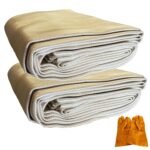
This Fire Blanket 1500F review cuts straight to the point: if you cook with oil or want a non-expiring safety tool, this $93 blanket is a smart buy for the kitchen. The high heat rating and CE certification back up the price, but it has quirks you need to know before clicking “add to cart”.
Combines high-temperature resistance and CE certification to offer professional-grade safety for discerning users.
Price vs. rivals
Pricier
CheaperTypicalPricier
This fire blanket is priced higher than most comparable alternatives, likely due to its higher temperature rating and CE certification, placing it in the premium range.
Ease of use
Excellent 95/100
A fire blanket is simple to use—just pull it from its packaging and place it over a small fire, requiring no special skills or setup.
Overview
It is exactly what the name says: a fiberglass blanket rated to handle flames up to 1500F, stored in a wall-mountable box. You pull the two tabs, the blanket unfolds, and you drop it over a pan fire or wrap it around a person. No aiming, no squeezing, no annual inspection.
This is for someone who wants a fire tool that cannot clog, leak, or lose pressure over a decade in a cabinet. The CE certified fire blanket designation means it meets European safety standards for material and size. A good choice if you rent, if you have kids who might grab a heavy extinguisher, or if you are plain tired of checking pressure gauges.
Key Features
Rated for 1500F (815C) continuous heat – This is the headline number. Most cheap kitchen blankets top out around 1000F. You get a real margin if a grease fire flares high.
CE certified – Third-party testing on flammability, tear strength, and dimensions. Not every blanket on Amazon carries this, and the difference shows in how the fabric feels.
40×40 inch coverage – Big enough to cover a standard stovetop burner and the pan. Small enough to store in a cabinet door without rethinking your layout.
Two hanging grommets and a velcro-sealed pouch – The box has metal grommets so you can screw it to a wall or cabinet interior. The velcro is strong enough that a bump won’t open it, but not so strong you fight to get the blanket out.
Fiberglass fabric with no chemical coatings – Works by smothering oxygen. No powder to inhale, no chemical residue to clean up after. You just let it cool and toss it.
Fit for You
You deep-fry anything more adventurous than frozen fries at least once a month.
You live in an apartment where a sprinkler system is either missing or unreliable.
You have a gas stove and a habit of walking away from a simmering pot.
You want a backup safety tool for the kitchen that your teenager could use without reading instructions.
You keep an electric skillet or a countertop deep fryer and the nearest sink is across the room.
You have an elderly relative who cannot lift a 10-pound extinguisher or pull a pin easily.
Uses
A grease fire in a skillet. This is the obvious one. You slide the blanket out, let it unfurl over the flames, and turn off the burner. No mess, no foam, no ruined stovetop.
A toaster oven or microwave fire. If flames are contained inside the appliance, you can drape the blanket over the top and front to cut off oxygen while the fire starves. Works better than trying to open the door and aim a extinguisher into a small space.
Someone’s clothing catches fire. The emergency fire blanket 1500F is large enough to wrap around a person from shoulder to mid-thigh. You wrap, drop them to the floor, and smother the flames. A grim scenario, but the blanket does not stick to burned skin like synthetic fabrics.
A grill flare-up on a balcony. If your gas grill sends a grease column up, you can lay the blanket across the grates. It handles the heat long enough for the flames to die, and you avoid spraying extinguisher powder all over your patio furniture.
Car engine fire. You pop the hood, stand back, and toss the blanket over the engine bay. It will smother a small electrical or fuel fire if you catch it early. Keep it in the trunk if you drive an older car.
Experience
You open the box and find the blanket folded inside a velcro-sealed pouch. The pouch itself is stored in a sleeve with two grommets. You screw the sleeve to the wall next to your stove, about shoulder height. Takes five minutes with a drill and two screws.
The fiberglass fabric is stiff when new, as you would expect. It does not drape like a cotton blanket. When you pull it out, it unfolds with a bit of resistance. You need to practice the motion once or twice so you don’t fumble during a real fire. The pull tabs are wide and clearly marked, so you grab them without looking.
Storage is simple. The sleeve is slim enough to fit between a spice rack and a cookbook stand. The velcro holds the pouch securely, but over time, the fibers on the hook side can pick up lint. Expect to clean the velcro strips with a toothpick every few months. Small annoyance, but worth knowing.
Cleaning after use? You do not clean it. Once a blanket smothers a fire, you dispose of it. Fiberglass can shed tiny particles, so wear gloves and a dust mask when you handle the used blanket, double-bag it, and throw it in the trash. That is the reality of this material.
One thing owners tend to mention: the blanket is heavier than it looks. 40×40 inches of dense fiberglass weighs close to three pounds. That is fine for a stovetop, but if you plan to wrap it around a person, you want to practice the unfolding motion so the weight doesn’t throw you off.
Pros and Cons
Pros
1500F rating gives you confidence – Most kitchen fires peak below 1000F, but the extra margin means you can use it on a grill or a car fire without the fabric degrading mid-use.
CE certification is a real differentiator – Cheaper blankets often skip independent testing. This one documents its size, heat resistance, and tear strength, which matters when your safety is on the line.
No expiration date or maintenance – You install it once and forget it. Unlike a fire extinguisher, you do not check a gauge, shake it, or replace it every 5 years.
Leaves no residue – After you smother a pan fire, the blanket comes off and the pan wipes clean. No chemical powder to scrub out of the burner grates.
Easy for anyone to use – Pull the tabs, drop the blanket, turn off the heat. No pin to pull, no aim, no squeeze. A child or an older adult can do it.
Cons
Single-use item at $93 – You use it once and you have to buy a new one. That is a bitter pill if you only ever need it for a small pan fire that a lid could have extinguished.
Fiberglass itch is real – If you handle the blanket without gloves, tiny glass fibers will irritate your skin. Keep a pair of heavy-duty gloves stored next to the blanket.
Not effective on vertical surfaces or electrical fires – The blanket must sit flat on the fire. If flames are running up a wall or inside an open electrical panel, you need a different tool.
Bulky for a kitchen drawer – The sleeve is about 10x10x2 inches. It fits on a wall or inside a cabinet door, but if you wanted to tuck it into a junk drawer, you will be disappointed.
You cannot test it – You never know if your blanket is good until you actually need it. With an extinguisher, you can feel the pressure. With a blanket, you trust the certification and hope.
Advantages
The obvious comparison is the fire blanket vs fire extinguisher debate. An extinguisher is reusable if you refill it, but it requires annual inspections, can leak pressure, and leaves a corrosive powder mess. The blanket is simpler, cheaper over a decade if you never use it, and does not require strength or coordination.
Compared to other fire blankets at a lower price point, the CE certification and the 1500F rating set this one apart. Many sub-$50 blankets advertise 1000F, but the fabric is thinner and the stitching pulls apart under repeated folding. This one feels denser, and the reinforced edges mean you can grab it firmly without tearing it.
For a home kitchen fire blanket, the size is a practical sweet spot. A 40×40 inch blanket covers most burner-to-sink distances. Smaller blankets (around 28×28) will not cover a large skillet, and larger ones are harder to store in a tight kitchen.
Who Should Buy
Anyone who cooks with oil at least once a week and does not own a fire extinguisher.
Renters who cannot mount a fire extinguisher on a wall or drill into a tile backsplash.
People with limited hand strength or arthritis who struggle with the pin and lever on a standard extinguisher.
Homeowners who want a second safety tool in addition to an extinguisher, not a replacement for one.
Skip this if you already have a working class K extinguisher next to the stove and you use it. You do not need both.
Skip this if you want a single tool that works for electrical panel fires or fires that spread up a wall. Buy a multipurpose extinguisher instead.
FAQ
Is the 1500F Fire Blanket worth it?
Yes, if you want a no-maintenance, no-mess safety tool for the kitchen that anyone in the house can use without training. The price is higher than basic blankets, but the CE certification and the higher heat rating justify the cost for most people.
How long does a fire blanket last?
Indefinitely, as long as the packaging stays sealed and the blanket is not damaged. There is no chemical to expire and no pressure to lose. Check the pouch every couple of years for rips or insect damage, especially if you store it in a humid cabinet.
Is it safe for kitchen grease fires?
Yes, and that is its main use. A grease fire cannot burn without oxygen, and the fiberglass blanket cuts the air supply completely. Do not use water or flour on a grease fire. This blanket is the correct tool for that situation.
Can you reuse a fire blanket after putting out a fire?
No. Once the blanket absorbs heat and fiberglass fibers may have degraded, you must replace it. The packaging is designed for a single pull, and the velcro pouch will not reseal properly after use anyway.
Does a fire blanket expire?
No, not in the traditional sense. CE certified fire blanket standards test for long-term stability, and there is no printed expiration date. Store it away from direct sunlight, heat sources, and moisture, and it should last for many years.
How does the 1500F Fire Blanket compare to a fire extinguisher?
The fire blanket vs fire extinguisher choice depends on the fire type. The blanket is better for pan fires and clothing fires because it smothers without spreading grease or powder. An extinguisher covers a wider range of fires, including electrical, but it leaves a mess and requires annual maintenance.
Final Verdict
The Fire Blanket 1500F review ends where it started: if you need a simple, reliable, no-expiration fire safety tool for the kitchen, this is a solid pick. The CE certification, the generous coverage area, and the real 1500F rating give you a better product than most of what sits on the same shelf at a lower price.
The catch is the $93 price tag and the single-use nature. You buy it, hang it, hope you never use it, and if you do, you buy another. It works. Buy one if you cook with oil or live with someone who might panic during a fire. Skip it if you already have a working extinguisher and a lid near every pan.
The 1500F Fire Blanket sits at the top of the price stack for home kitchen fire blankets. At $92.95 it costs two to three times what a basic store-bought blanket does. You’re paying for a CE certification that most rivals skip, a verified 1500°F temperature rating, and a generous size that actually covers a stovetop burner and then some. The question is whether you need that pedigree or a $25 alternative will do the job just as well on a grease fire.
Product
Price Range
Key Strength
Key Weakness
Best For
1500F Fire Blanket
Premium ($90+)
CE certified, rated to 1500°F, large 1.8m x 1.2m size
Expensive; overkill for small kitchens that might never have a fire
Serious home cooks, rental landlords, commercial kitchens looking for certified safety
First Alert FBM-1
Budget ($20–$30)
Widely available, decent 1.2m x 1.8m coverage, name you trust
No CE certification, temperature rating often unspecified (~1000°F), plastic packaging can be slow to open
Budget-conscious households that want a fire blanket as a backup just in case
Kidde KFBF-01
Budget ($20–$30)
Compact storage, easy wall-mount, same basic fiberglass material
Smaller than it looks (1.0m x 1.2m), no certification, thin fabric can tear if you yank it
Small apartments or RVs where space is tight and you don’t mind a smaller blanket
Prepared Hero Emergency Fire Blanket
Mid-range ($30–$50)
Good value, claims 1500°F rating, quick-release Velcro pouch
No CE mark – you’re trusting the brand’s word, pouch can fall off wall mount
People who want a mid-price option with a modern look and decent specs for kitchen use
1500F Fire Blanket vs First Alert FBM-1
First Alert is the default fire blanket you grab at the hardware store. It’s fine. You pull it out of its plastic bag and lay it over a pan fire. But the bag seal is a pain – you have to rip open a perforated edge that sometimes tears the blanket itself. The 1500F comes in a plastic case with a quick-release hook and a red pull tab that doesn’t fight you. More important: the First Alert doesn’t carry a CE certification. That matters if you’re renting out a property or running a commercial kitchen where insurance or codes require tested equipment. The 1500F also feels denser; the fiberglass weave is tighter, so you get less smoke leaking through when you drape it over a burning pot. For a home kitchen that sees daily frying and the occasional flare-up, the extra $60 buys you confidence the cheaper blanket doesn’t offer.
1500F Fire Blanket vs Prepared Hero
Prepared Hero is the trendy one – you’ve seen it on Instagram with the sleek black pouch and the “1500°F” claim right on the label. And to be fair, it’s a solid blanket for $35. The Velcro pouch is easy to mount and the release is faster than First Alert’s bag. But here’s the thing: Prepared Hero has no third-party certification. Their 1500°F rating might be real, or it might be self-reported from their factory in China. The 1500F Fire Blanket has the CE mark from a notified body, which means someone actually tested it in a lab. Also, Prepared Hero’s blanket is slightly smaller (1.2m x 1.2m in some versions) – fine for a stovetop burner, but if you’re trying to smother a turkey fryer or a larger grease fire, the 1500F gives you that extra six inches on each side. So the trade-off is certification and coverage versus price. If you’re a renter who might move next year, Prepared Hero is a smart buy. If you own your place and you want the best fire blanket for kitchen that you can hang and forget, the 1500F earns its cost.
1500F Fire Blanket vs Kidde KFBF-01
Kidde is famous for fire extinguishers, and their blanket is exactly what you’d expect: functional, boring, and a little flimsy. The KFBF-01 measures 1.0m by 1.2m – noticeably smaller than the 1500F’s 1.2m by 1.8m. That matters because a common grease fire in a frying pan can send flames licking up the sides, and a too-small blanket might leave the edges exposed. The Kidde also uses a thinner fiberglass; it’s easy to fold but you can see light through it if you hold it up. That’s not a problem for a small fire, but it means less heat reflection if the fire is serious. And again: no CE mark. For a home kitchen fire blanket, the Kidde works as a last resort, but you’re better off spending the extra $65 on the 1500F if you have the budget – or dropping down to the Prepared Hero if you don’t. If you need a fire blanket that you can rely on without second-guessing the certificate or the material, the 1500F Fire Blanket is the right choice. It’s the one you hang on the wall near the stove and forget about, knowing it’s been tested by people who do this for a living. For a casual home cook who just wants a cheap safety net that sits behind the pantry door, the First Alert FBM-1 will cover the basics without breaking the bank. And if you’re in the middle – want something better than a basic blanket but don’t want to spend ninety bucks – the Prepared Hero gives you good performance and a modern look at half the price, just without the paperwork.
Ready to decide on the 1500F Fire Blanket?
See today’s price, stock and delivery options on Amazon.