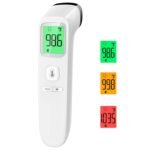
The Kinsa Smart Thermometer offers a strong balance of accuracy, smart connectivity, and FDA clearance at a reasonable price, providing excellent value for families seeking reliable fever tracking.
Price vs. rivals
Cheaper
CheaperTypicalPricier
Priced below many comparable smart thermometers, reflecting a budget-friendly position relative to popular alternatives with similar features.
Ease of use
Excellent 85/100
The thermometer is straightforward to use with clear instructions and fast results, though proper positioning for different measurement methods may require a brief learning curve.
Overview
This Kinsa Smart Thermometer review covers exactly what you need to decide: a fast, FDA-cleared digital thermometer that syncs with an app to track fevers over time. It solves the problem of remembering temperatures when you call the doctor at 2 AM. Really, it’s for anyone who manages a household where fevers happen, especially parents of young kids and caregivers for older adults.
The thermometer itself is a standard flexible-tip digital stick you use orally, under the arm, or rectally. What sets it apart is the app that logs every reading and shows you a fever timeline. No guessing whether the fever went up or down since last night. The price sits around $18.94, which is fair for what you get.
Key Features
Fast 10-second reading – You get a temperature on the display in about ten seconds. With a sick kid squirming on your lap, every second matters. The beep is clear but not jarring.
Color-coded fever guidance – The display glows green for normal, yellow for elevated, and red for high fever. No squinting at tiny numbers while half asleep. It tells you what you need to know at a glance.
App syncs via Bluetooth – Readings transfer automatically to the free app on your phone. The app records the time, temp, any symptoms you note, and builds a history you can show a doctor or share with a partner.
Flexible tip for comfort – The tip bends slightly, which makes it more comfortable for kids and adults. That matters a lot for rectal temps on infants, where a rigid thermometer is genuinely unpleasant.
Memory recall on the device – Even without the app, the thermometer shows the last reading when you turn it on. Useful if your phone battery died or you just want a quick look.
Standard CR2032 battery – It uses a common coin-cell battery that lasts about a year with regular use. You replace it yourself in seconds. No charging cables to lose.
Fit for You
You have a toddler who treats thermometers like an enemy and you need the reading done in under fifteen seconds.
You manage a household where strep throat or the flu tends to hit multiple people, one after another, and you need to track who had what temp when.
You want to text a temperature to a doctor’s office or a family member without fumbling with a photo of the screen.
You prefer a simple stick thermometer over ear or forehead models, which can be finicky about positioning and age limitations.
You like having data on your phone without manual logging, especially if you’re sleep-deprived and can’t trust your memory.
You’re a caregiver for an older relative who struggles with memory, and you want a clear record for their doctor visits.
Uses
Picture this: your three-year-old wakes up at 1 AM, flushed and crying. You grab the Kinsa, slide it under their armpit, and within ten seconds it beeps. The display glows yellow. You tap your phone on the nightstand, the app opens, and the reading is already there with a timestamp. You add “woke crying, warm to touch” as a note. In the morning, the pediatrician asks when the fever started and how it’s trending. You hand them your phone.
For a baby, you’ll use it rectally for the most accurate reading the FDA clearance supports. The flexible tip makes it less awful than older stiff thermometers. Clean it with alcohol before and after, obviously.
Adults use it orally, under the tongue toward the back. If you’ve just had coffee or ice water, wait five minutes. The app reminds you of that, which sounds obvious but you’d be surprised how often people forget.
Experience
Setup takes maybe three minutes. Pull the plastic tab from the battery compartment, download the app, pair via Bluetooth. The app walks you through creating profiles for each family member. You can have a few people on one phone, which is handy if you track temps for kids plus yourself.
Taking a reading is dead simple: press the power button, wait for the “ready” indicator, place the tip, wait for the beep. The beep itself is a short, single tone. Not loud enough to wake a sleeping baby in the same room, but you’ll hear it if you’re paying attention.
Cleaning is straightforward. The tip is waterproof, so you can wipe it with an alcohol pad or soapy water. The body is not waterproof, so don’t dunk the whole thing. That’s standard for this category.
The catch is Bluetooth range. The thermometer needs to be within about ten feet of your phone to sync automatically. If you take a temp in the kid’s room and leave your phone in the kitchen, the reading stays on the device until you’re close enough. It’s not a big hassle, but worth knowing.
One small annoyance: the app pushes notifications for every logged reading, even if it’s completely normal. You can turn those off in settings. Also, the flex tip, while comfortable, feels a bit less sturdy than a rigid plastic thermometer. Don’t let a teething toddler chew on it.
Pros and Cons
Pros
Real fever history on your phone – This is the main reason to buy it. The app builds a graph you can show a doctor. You stop relying on memory.
Fast and accurate – Owners consistently report readings close to hospital-grade thermometers. Ten seconds is genuinely quick for a stick thermometer.
Simple for anyone to use – The color display and one-button operation mean even a sleep-deprived parent or a teenager can get it right.
Affordable price – Under $20 puts it in the same range as basic digital thermometers, but you get the app integration on top.
Works for all ages – From newborns to grandparents, with the right placement. You don’t need separate thermometers for different family members.
Cons
App notifications can be annoying – It pings you for every reading, even normal ones. Adjustable in settings, but it’s not great out of the box.
Bluetooth range is limited – You need your phone within about ten feet for auto-sync. Not a dealbreaker, but something to plan around.
Flexible tip feels less durable – It’s comfortable, but some people worry about breaking it. Treat it carefully and it’ll be fine.
Battery is a coin cell – CR2032 is common, but you might not have one on hand when it dies. Keep a spare in the drawer.
No forehead or ear option – If you absolutely hate under-tongue or underarm temps, this isn’t for you. Stick thermometers are the most accurate, but they are also the most invasive.
Advantages
The Kinsa Smart Thermometer beats a basic digital thermometer in one clear way: the app. A $6 drugstore model gives you the same temperature reading, but you’re writing it on a sticky note or trying to remember it for the doctor. The app does that remembering for you.
Compared to a Braun thermometer, like their ear models, the Kinsa is cheaper and works for every age without buying different tips or worrying about ear wax interference. Braun ear thermometers are faster – about one second – and don’t need contact with mucous membranes. But they cost more, require precise positioning in the ear canal, and aren’t recommended for newborns under three months. The Kinsa works for babies from day one with rectal placement.
For parents looking for the best thermometer for kids, the Kinsa app really helps. You can track multiple children separately, set fever alerts, and see trends. That’s rare at this price point.
Who Should Buy
Busy parents with two or more kids who get sick in waves. The app tracking alone saves sanity.
Caregivers for elderly relatives who need to monitor fever patterns and report to doctors.
Tech-comfortable households that already use smart home gadgets and appreciate data on their phone.
People who want accurate, old-school thermometer reliability without the hassle of manual logging.
Skip it if: you hate using apps for simple devices, you want a completely no- fuss button thermometer, or you prefer a forehead scanner for speed. In that case, get a basic digital or a Braun ear model.
FAQ
Is the Kinsa Smart Thermometer worth it?
Yes, if you value tracking fever history over a few days. For a single reading, a cheaper thermometer works fine. For $18.94, the app adds real value when you’re reporting to a doctor or managing multiple sick family members.
How accurate is the Kinsa Smart Thermometer?
It’s FDA-cleared and owners typically report readings within 0.2°F of clinical thermometers. For home use, that’s more than enough to tell you whether a fever is rising or falling.
Can you use it for a baby’s rectal temperature?
Yes, it’s designed for oral, armpit, and rectal use. The flexible tip makes it more comfortable for infants. Clean it thoroughly before and after with rubbing alcohol or soap and water.
Does it need Wi-Fi or a subscription?
No Wi-Fi needed. It uses Bluetooth to connect to your phone within about ten feet. The app is free and has no ads or subscriptions. You can use the thermometer without the app at all if you prefer.
How long does the battery last?
A single CR2032 coin cell lasts about a year with regular use. The app warns you when it’s getting low. You replace it yourself in about thirty seconds.
Is the Kinsa app data private?
Kinsa states they follow HIPAA guidelines for data privacy. Your temperature history is stored on the app and can be deleted. They don’t sell your data. Like any connected device, it’s worth reading their privacy policy if you’re concerned.
Final Verdict
The Kinsa Smart Thermometer is a genuinely useful upgrade over a basic digital thermometer, mainly because the app turns scattered readings into a real fever history. For under $20, it’s an easy recommendation for parents, caregivers, or anyone who deals with fevers more than once a year.
The one thing to keep in mind: it requires your phone nearby to log automatically. If that’s fine with you, this is an accurate, fast thermometer that earns its place in the medicine cabinet. Is Kinsa thermometer worth it? For most people, absolutely yes.
Kinsa Smart Thermometer vs the Competition in 2026
The Kinsa Smart Thermometer sits in a strange middle ground. It’s not the cheapest option on the shelf, nor the most expensive. What it does is trade a little bit of raw speed for a connected experience that actually works—if you care about tracking fevers over time rather than just grabbing a number and moving on. Its real rivals are the Braun ThermoScan 7 (the premium ear thermometer everyone’s heard of), the iProven DMT-489 (the no-fuss budget pick that just works), and the Vicks SpeedRead V985 (the speed demon for impatient parents). Below is how they stack up.
Product
Price Range
Key Strength
Key Weakness
Best For
Kinsa Smart Thermometer
Around $18
App tracks temperature history, sends reminders, lets you share data with caregiver or school
Requires phone nearby; reading takes 8 seconds, not instant
Parents who manage recurring fevers and want a log without paper notes
Braun ThermoScan 7
Roughly $50–$60
Ear thermometer with age-adjusted guidance; very consistent readings
Bulky, pricey, and you have to buy disposable lens covers
Those who prefer ear readings and won’t mind the ongoing consumable cost
iProven DMT-489
Under $15
Simple two-button operation, takes temperature in 1–2 seconds, includes a flexible tip
No app, no memory beyond last reading, backlight is dim
Anyone who just wants an accurate fast thermometer at the lowest price
No connectivity, feels plasticky, accuracy drifts slightly if you rush
Parents who need a quick check and don’t care about tracking history
Kinsa Smart Thermometer vs Braun ThermoScan 7
The Braun ThermoScan 7 is the established heavy hitter of ear thermometers—solid, fast, and backed by decades of clinical use in paediatrics. Its age-adjusted guidance (it tells you if your toddler’s temp is “normal” vs “high” based on their age) is a nice touch. But it costs three times the Kinsa, and those disposable lens covers add up. If you have two kids with overlapping fevers, swapping the cap between them gets annoying fast. The Kinsa app thermometer review you’ll read again and again mentions one thing: the colour-coded fever readings sync to your phone, so you can see a 24-hour trend without digging for a notebook. Braun gives you a single number; Kinsa gives you context. If you need a thermometer for occasional use and you already hate keeping a log, the Braun is fine. If you’re managing sick days across a whole season, the Kinsa pulls ahead.
Kinsa Smart Thermometer vs iProven DMT-489
The iProven DMT-489 is the quiet winner of the “digital thermometer for baby” category among parents who don’t want another screen in their life. It’s cheap, it reads in about two seconds, and the flexible tip doesn’t jab a squirming infant. Its downside: no app, no memory of fever duration, no way to email a chart to your partner or the school nurse. The is Kinsa thermometer worth it question really comes down to whether you need that log. If you’re a parent who wakes up at 3 a.m., takes the temperature, and just wants to know if it’s safe to go back to sleep, the iProven does the job for less money and no phone fiddling. But if you’ve ever stood in a doctor’s office fumbling for “was it 101.2 on Tuesday morning or was that Wednesday?”, you’ll be happier with the Kinsa—the app tracks timestamps automatically.
Kinsa Smart Thermometer vs Vicks SpeedRead V985
Vicks claims the SpeedRead V985 gives you a temperature in one second. It does—if you place it correctly under the tongue and hold it steady. Miss the placement by a millimetre and you’ll see a wildly different number, because the probe is sensitive to air gaps. The Kinsa takes about 8 seconds, but its longer window means you get a more stable reading across a wider “acceptable” positioning area. In the accurate fast thermometer debate, Vicks wins on speed and loses on forgiveness. Also, the Vicks has no app, no memory, and no way to export data. For a best thermometer for kids situation where you might be taking temperatures three times a day for a week, the Kinsa’s graph of rising and falling fevers is genuinely useful—it shows you the pattern without having to reconstruct it from memory. The Vicks is better as a “check once and done” tool for adults who just want to rule out a fever and move on.
Kinsa Smart Thermometer vs the Competition: Who Wins?
Choose the Kinsa Smart Thermometer if you’re the kind of parent who sends fever charts to the school, shares temperature trends with a partner, or just likes knowing the number from yesterday without digging through messy text messages. It’s also the smart pick if you’re doing multiple readings day after day—the app’s fever alerts and timestamping save real mental energy. Skip it if you can’t stand pulling out your phone for a quick temp check, or if you only take temps a few times a year. In that case, grab the iProven DMT-489: cheaper, faster, no pairing needed. And if ear thermometers are your thing and you don’t mind paying for lens covers, the Braun ThermoScan 7 is still the most reliable ear probe you can buy.
Ready to decide on the Kinsa Smart Thermometer?
See today’s price, stock and delivery options on Amazon.