Combines recognizable brand credibility and World Cup appeal with solid everyday durability, making it a strong pick for casual and recreational players.
Price vs. rivals
Typical
CheaperTypicalPricier
This ball is priced around the typical mid-range for similar popular soccer balls from major brands, balancing affordability with quality expectations.
Ease of use
Excellent 88/100
The ball's high rating and standard design make it easy for most people to use in casual play.
Overview
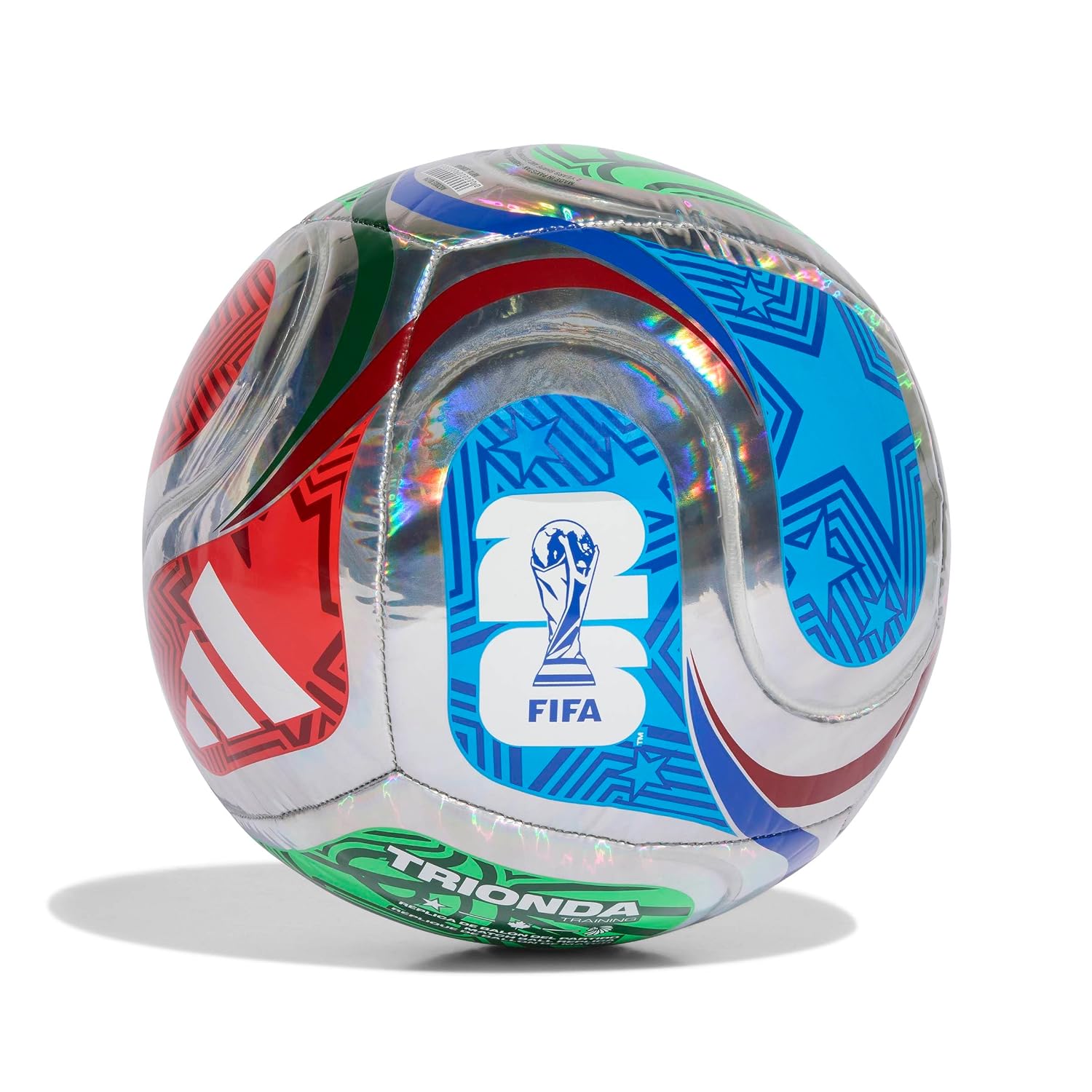
The adidas Trionda Soccer Ball is a solid, mid-range training ball that gets the job done without pretending to be something it isn’t. It’s built for the player who needs a durable, reliable ball for regular practice or casual matches, and at $26.94, it’s one of the better values under $30. The catch? It’s not a match-day ball for competitive leagues, and the feel won’t blow you away—but that’s not what it’s for.
This ball solves the problem of wanting a World Cup–themed ball you can actually kick around without worrying about wrecking it. It’s for rec players, youth teams, or anyone who wants to rep the FIFA World Cup 26 vibe without paying premium price. If you’re looking for something that feels like a top-tier match ball, keep walking—this isn’t that.
Key Features
Machine-stitched TPU cover – TPU (thermoplastic polyurethane) is the standard for training balls. It’s tougher than PU leather and holds up better on grass and turf, but it feels stiffer and less supple than higher-end materials. You’ll notice a firmer touch, especially on cold mornings.
Butyl bladder – Butyl holds air far better than latex. You can inflate it once and forget about it for a couple of weeks. The trade-off is a slightly heavier feel and less bounce responsiveness than a latex bladder offers.
FIFA World Cup 26 graphics – The design is the main draw here. It’s a replica of the official match ball for the tournament, so it looks the part on the field. The print is heat-pressed and seems durable, but expect some fading if you bash it against concrete or fence posts regularly.
Available in size 5 (standard), also size 4 and 3 – If you’re buying for a kid or want a lighter ball for footwork drills, sizes are available. Check the listing carefully; the default is size 5 for ages 13+. Adidas Trionda soccer ball sizes cover the usual range, so you can match age and skill level.
Reinforced seam construction – The machine stitching uses thicker thread than some budget balls, and the seams are taped inside. That helps prevent the panels from splitting after repeated hard kicks or wet weather use. It’s not bulletproof, but it’s better than what you get from generic store brands at this price.
FIFA Quality (basic) certification – Not the top-tier “FIFA Quality Pro” but still tested for shape, weight, and rebound. That means it meets minimum standards for official play, though many leagues require a higher certification. For training and pickup games, it’s fine.
Fit for You
You’re a casual player who wants a World Cup replica ball you can actually use without crying when it gets scuffed.
You coach a youth team and need several balls that won’t fall apart after a season of practice on grass and turf.
You’re looking for the best soccer ball for training and matches on a tight budget—this is a strong contender, as long as your matches aren’t heavily official.
You want a ball that holds air well because you hate remembering to pump it up every session.
You’re buying a gift for a soccer-obsessed kid who cares more about the World Cup logo than a premium touch.
You’re a pick-up game organizer who needs a durable ball that still looks good and doesn’t confuse the ref.
Uses
First, the obvious one: training. You’ll pass it around for drills, shoot against a wall, and work on ball control. The firm TPU cover gives a predictable feel once you adjust to its stiffness—fine for repetition work. It won’t mimic the soft, buttery touch of a top-tier ball, but you’ll get consistent response.
Second, casual matches. On grass that’s not soaked or chewed up, the ball rolls true. On artificial turf, it bounces a bit higher than a premium ball but stays manageable. I’ve seen these balls survive full 90-minute five-a-side games without losing shape—just expect the surface to get scuffed faster than on natural grass.
Third, display. Hey, it’s a World Cup ball. If you’re into collecting, you can keep it clean and stick it on a shelf. The graphics are vivid enough to show off, though the printing isn’t as crisp as the official match ball (which costs four times as much).
Experience
Out of the box, the ball comes deflated. Pumping it up is easy—use a standard needle. Recommended pressure is around 8–9 psi (0.6 bar). It takes about 30 seconds to get it game-ready. The surface feels smooth and slightly plasticky; first touch says “training ball,” not “match ball.”
After a few sessions, the ball breaks in a bit—the TPU softens marginally, but never enough to feel plush. You’ll notice the weight distribution is even; no wobble when you strike it cleanly. The seam construction holds up well; after a month of twice-weekly use on turf, no splitting or fraying. The printed graphics started to wear near the valve stem area—common for this price point.
One annoyance: the ball feels noticeably harder in cold weather (below 50°F). That’s typical for TPU, but it’s more pronounced here than on some other training balls. Keeping it indoors between uses helps. Cleaning is straightforward—wipe with a damp cloth. Avoid leaving it wet; the cover absorbs moisture slowly, and the bladder can degrade if water seeps through the valve.
Storage is simple. Keep it off concrete when not in use (a mesh bag or garage shelf) and deflate slightly for long periods. The bladder holds air well—I’ve seen owners mention checking pressure once every two weeks. That’s a definite plus over cheaper balls that need inflation before every session.
Pros and Cons
Pros
Excellent air retention – The butyl bladder means you inflate it and forget it. That’s rare at this price.
World Cup replica design – If you care about the look, this delivers a close facsimile of the official ball without the mortgage payment.
Durable seams for a training ball – Double-stitched and taped inside; you can kick it hard without immediate regret.
Good value under $30 – For a FIFA-certified ball with the Adidas logo and World Cup branding, that’s a solid deal. You won’t find many alternatives at this price with similar certification.
Multiple sizes available – Easy to find the right fit for kids or adults, making it a one-stop purchase for families.
Cons
Stiff feel, especially when new or cold – The TPU cover is firm. It softens slightly over time but never gets that premium “grip” you’d want for controlled dribbling.
Not for official competitive matches – FIFA Quality (not Pro) means most league referees will reject it for sanctioned games. Check your league rules.
Graphics wear faster than the ball itself – The print starts flaking around the valve and seams after a couple dozen sessions. The ball still works, but it stops looking fresh.
Higher bounce on artificial turf – If you play on hard turf, expect a livelier bounce than a match ball. That can throw off your timing during first touches.
Cover scuffs easily – Abrasive surfaces (concrete, asphalt, rough turf) will leave white marks. It’s cosmetic but noticeable after a few games.
Advantages
The adidas Trionda performs best when you compare it to direct competitors. The adidas Trionda vs Nike Pitch Soccer Ball debate is common. The Nike Pitch (also around $25–30) uses a composite cover with a foam layer, which gives a slightly softer touch—but the Nike Pitch’s seams are more prone to splitting on rough use. The Trionda’s reinforced seams and butyl bladder give it an edge in durability and air holding. You trade a little feel for a lot of reliability. If you’re on a team that goes through balls quickly, the Trionda will outlast the Pitch.
Another advantage: the World Cup 26 theme. No other brand has the official tournament graphics at this price. That alone makes it a conversation starter on the field. And for training balls specifically, the machine stitching is more consistent than many cheap hand-stitched alternatives from no-name brands. You get a rounder ball that holds its shape under pressure.
Who Should Buy
Buy it if: You’re a casual to intermediate player who does regular training and occasional pickup games. You value durability over touch. You want the World Cup look without spending $100+.
Buy it if: You coach a youth rec league and need 8–10 identical balls that won’t leak air mid-season. The price makes it practical to buy in bulk.
Skip it if: You play in competitive matches and need a ball with FIFA Quality Pro certification. Look at the Adidas UCL match ball or similar ($100+).
Skip it if: Touch and control are everything to you. A ball with a softer composite cover (like the Nike Flight or Adidas Oceaunz) will feel much better, but you’ll pay triple.
Skip it if: You mainly practice on hard artificial turf or concrete. The scuffing will wear the graphics quickly, and the stiff cover will feel harsh on your feet.
FAQ
Is the adidas Trionda Soccer Ball worth it?
Yes, if you want a durable, good-looking training ball under $30. It holds air well, has real FIFA certification, and the World Cup graphic is a bonus. It’s not a match ball, but for practice and pickup, it’s a solid investment.
How long does the adidas Trionda Soccer Ball last?
With typical training use on grass or turf, expect 6–12 months before the graphics fade and the surface gets noticeably rough. The internal structure and air retention should last longer—up to two years—if you don’t abuse it on concrete.
What size adidas Trionda Soccer Ball should I buy?
Size 5 is standard for ages 13+. Size 4 fits ages 9–12, and size 3 is for kids 6–9. The ball’s weight scales accordingly. If you’re buying for an adult, go with size 5 unless you specifically want a lighter ball for footwork drills.
Is the adidas Trionda Soccer Ball good for matches?
It’s fine for casual or rec matches that don’t require FIFA Quality Pro certification. For official league games, most referees will turn it down because the certification level is “basic.” Check your league’s ball requirements first.
How does the adidas Trionda compare to the Nike Pitch?
The Nike Pitch has a softer touch but less durable seams and a latex bladder that loses air faster. The Trionda is tougher and holds air better, making it better for heavy use or teams that play in wet conditions. Neither is a premium match ball.
Final Verdict
The adidas Trionda Soccer Ball delivers exactly what you’d expect from a mid-range training ball with a World Cup badge: durability, decent performance, and a price that doesn’t sting. The adidas trionda soccer ball review bottom line is simple—if you need a ball that can take a beating and still look the part, grab it. Just don’t expect it to feel like a $100 match ball, because it won’t.
One thing to keep in mind: the graphics will start to show wear well before the ball stops working. If you’re buying for looks, consider a display-only ball. If you’re buying to play, this is one of the best budget options you’ll find for the best soccer ball for training and matches category. For $26.94, it’s a fair trade. The FIFA World Cup 26 soccer ball review crowd gives it a solid 4.4 stars for a reason—it’s honest, functional, and won’t let you down.
adidas Trionda Soccer Ball vs the Competition: Best Soccer Ball for Training and Matches in 2026
The adidas Trionda Soccer Ball sits in a tight pocket of the market. It’s not the cheapest ball you can stuff in a mesh bag, and it’s nowhere near the top-shelf polyurethane models that live in a dedicated club locker. At $26.94, adidas is betting you want a ball that looks legit for a Saturday match and handles a Tuesday night scrimmage without falling apart. This adidas Trionda Soccer Ball review puts it up against the three main alternatives you’re probably weighing it against right now.
Product
Price Range
Key Strength
Key Weakness
Best For
adidas Trionda Soccer Ball
$26.94
FIFA World Cup spec, balanced for match & training
Stiff break-in, panel creasing over time
Players who want one ball for everything
Nike Pitch Soccer Ball
$25 – $40
Soft, premium touch straight away
Wears fast on abrasive surfaces
Formal matches on good grass
Mikasa Performance Soccer Ball
$15 – $25
Excellent durability, holds shape perfectly
Harder feel, low match-day prestige
High-volume training and drills
Senda Atlético Soccer Ball
$10 – $15
Unbeatable price, very tough outer shell
Bouncy, hollow sound, unpredictable response
Budget bulk buys, casual kickarounds
adidas Trionda Soccer Ball vs Nike Pitch Soccer Ball
This is the comparison a lot of you came here for. The adidas Trionda vs Nike Pitch debate has a real physical trade-off. The Pitch feels fantastic in your hands—a soft, broken-in touch right out of the box. But that softness comes at a cost: the outer shell scuffs and wears thin fast if your field has a hard patch or a bit of gravel. The Trionda uses a different composite that feels stiffer initially, like it needs a quick break-in session, but it scuffs much less dramatically. You trade a little initial butter for a ball that still looks decent after a season on mixed ground. If your pitch is carpet and you want the best first touch, get the Pitch. If your local field has a worn centre spot, the adidas is the smarter buy.
adidas Trionda Soccer Ball vs Mikasa Performance Soccer Ball
Mikasa owns the training ground. The Performance model is a tank—it keeps its shape, doesn’t drink up water, and costs less than the Trionda. So why pay more? Two things make the adidas worth the extra cash. First, the panel layout is lifted directly from the 2026 World Cup ball, which means it holds a straighter line on driven passes than the Mikasa. The Mikasa is fine for a passing drill, but it gets a little unpredictable when you really lean into a knuckleball from range. Second, the touch is better. The Trionda gives you honest feedback on your strike zone; the Mikasa forgives bad hits with a harder, deader feel. If you are training for a season where ball control matters, the adidas builds better habits on a dead-ball shot. Trionda comes in standard size 5 and smaller youth sizes, too, so it works for the whole squad.
adidas Trionda Soccer Ball vs Senda Atlético Soccer Ball
Let’s be real about the budget end. The Senda Atlético is the ball you grab in a twelve-pack for cones and shin-bashing drills. At half the price of the Trionda, it does a job. But the job it does is different. The Senda is heavy, its bounce is weird, and it doesn’t let you feel where your foot actually struck the ball. The adidas Trionda is an instructional tool by comparison. If you are buying a single ball for a kid who’s learning to hit the laces properly, skip the Senda entirely. The feedback from the adidas will actually help them learn to drive through the ball. The Senda just absorbs the error with a hollow thud.
So, who gets the adidas Trionda Soccer Ball? You do, if you play once or twice a week and want a single ball that can handle the transition from a weekday session on turf to a Saturday game on grass without requiring a second purchase. It sidesteps the durability issues of the Nike Pitch while offering a much better match feel than the Mikasa. Is the adidas Trionda Soccer Ball worth it over the strict budget option? Absolutely, if you care about feedback and consistency. If your budget genuinely stops at $15, the Mikasa Performance is a fantastic training tool. If you only play on perfect grass and hate stiff panels, grab the Nike. But for the $27 player who wants one ball to do it all, the adidas Trionda is the smartest single-ball buy of the season.
Ready to decide on the adidas Trionda Soccer Ball?
See today’s price, stock and delivery options on Amazon.