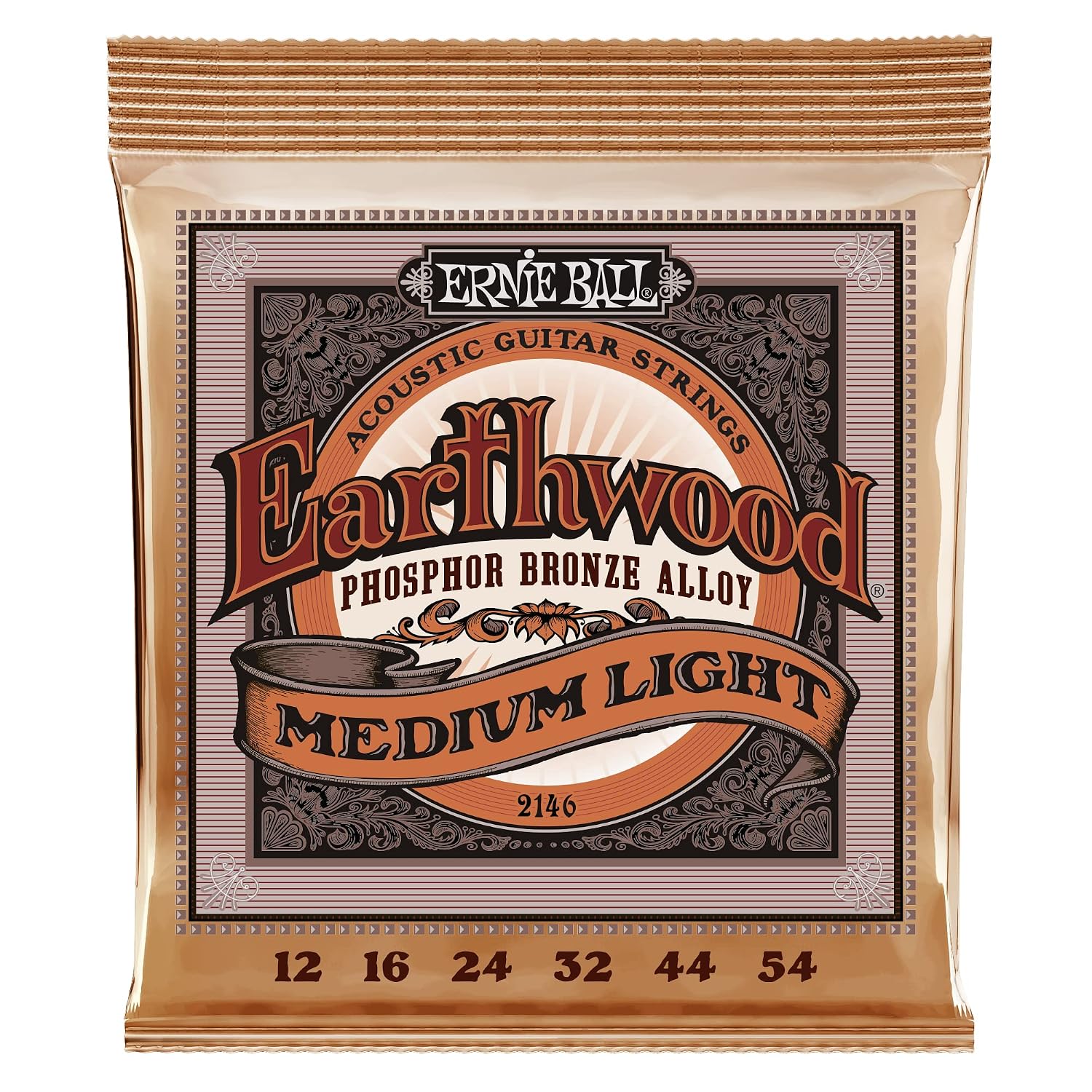
If you’re looking for an Ernie Ball Earthwood strings review that cuts through the marketing, here’s the short version: at $7.99 a set, these are an easy yes for most acoustic players. They deliver a warm, balanced tone that punches well above their price, even if they won’t dethrone your favorite premium set.
Excellent customer satisfaction and trusted brand at an accessible price point.
Price vs. rivals
Cheaper
CheaperTypicalPricier
These strings are priced notably below many comparable phosphor bronze acoustic sets from premium brands, which often retail higher for similar gauge options. The cost is closer to budget-friendly entry-level alternatives, making them a value-oriented choice.
Ease of use
Excellent 90/100
These strings are straightforward to install and tune, with a comfortable feel and reliable performance, making them highly accessible for most acoustic guitar players.
Overview: Ernie Ball Earthwood Strings Review
The Ernie Ball Earthwood Medium Light set is the brand’s answer to the old complaint that budget acoustic strings sound thin and metallic. They’re phosphor bronze, the alloy most players associate with a rounder, warmer voice than the brighter 80/20 bronze you find on cheaper sets. At 12-54, they sit in a comfortable middle: enough tension to drive a dreadnought, not so much that barre chords become a workout.
For an Ernie Ball Earthwood 12-54 gauge review, the Medium Light set is the one to watch. It’s the balance point in the lineup, and the version most players land on for a first set. This is really for anyone who wants a dependable string under ten bucks without overthinking the choice. You put them on, they sound good, they stay in tune, and you get back to playing.
Key Features
A quick look at what you’re actually paying for:
Phosphor bronze wrap wire — The alloy is what gives these strings their warm character. Standard 80/20 bronze can sound brash on budget guitars; phosphor bronze rounds off the harsh edge.
Medium light 12-54 gauge — A middle-ground tension. You get enough steel for full volume when you dig in, but barre chords won’t punish your hand the way a 13-56 set will.
Round-wound construction — The traditional acoustic design. It gives you a rich, textured tone at the cost of some finger squeak when you slide. That’s the trade-off you accept with this style.
Corrosion-resistant foil packaging — Each set ships in a sealed foil pouch. If you buy a few packs ahead, they stay fresh in a drawer or gig bag for months.
Consistent ball ends and wound strings — The build quality is dependable. You won’t find a dead string or a winding that unravels, which isn’t always true at this price point.
Fit for You
This set makes sense in a handful of situations.
You play a mahogany-topped dreadnought and want warmth without turning the low end to mud.
You’re learning to restring and a $7.99 set makes accidental breakage a small problem.
You gig or practice heavily and change strings monthly; the low price keeps that habit painless.
Your guitar has a laminate top that turns 80/20 bronze harsh; phosphor bronze smooths the edge.
You want the feel and fullness of medium strings without the finger fatigue of true 13s.
Uses
Strumming campfire songs with a capo on the fifth fret. The 12-54 gauge keeps the treble from going thin when you capo up, which is a common complaint on lighter strings. You get a full, round chord no matter where you clamp.
Flatpicking fiddle tunes on a warm-sounding guitar. The phosphor bronze wire gives each note enough separation that single-note runs stay distinct, without making the guitar sound metallic.
Recording at home with a single mic. Players tend to mention that these strings sit well in a mix because their warmth avoids the icy overtones that bright strings can produce. If you’re fighting a loud band, you might want more cut, but for solo or duo work they’re a safe bet.
Keeping a spare guitar by the couch for late-night practice. They don’t need humidity hand-holding, they tune up fast, and if one breaks you’re out less than $8 for the whole set.
Experience
Restringing is standard for any acoustic — ball ends, bridge pins, no special tricks. You’ll want to pull some slack through the tuner posts and stretch each string after installing. Do it right and they settle into tune within a day. Do it lazily and you’ll be fine-tuning for two sessions.
Fresh out of the pouch, they sound a touch bright for the first hour or two. That fades quickly, and by the next day the warm character people talk about is there. The tone holds up well for a few weeks of regular playing, as long as you wipe the strings down after sweaty practice. Skip the wipe-down and the glow dies faster.
Finger squeak is the main thing that catches people off guard. Round-wound phosphor bronze slides noisily between chords, especially with a condenser mic in the room. On a cheap guitar or through a practice amp it’s barely noticeable. In a quiet apartment, you’ll hear it every time you shift positions. No Ernie Ball Earthwood strings review would be complete without that warning.
The other small annoyance: the wound G string can feel a bit stiff under fingertips used to lighter sets. It’s standard for the gauge, but players coming from extra-lights will feel the difference in bends. It’s not a dealbreaker, just something your fingers get used to.
Ernie Ball Earthwood Strings Review: Pros and Cons
Pros
Warm, balanced tone — The phosphor bronze wrap rounds off the metallic harshness that plagues cheap acoustic strings.
Low price — At $7.99, they cost about half of a premium set and sound close for most ears.
Dependable build — Consistent ball ends and clean windings mean no duds in the pack.
Versatile gauge — 12-54 works for fingerpicking, flatpicking, and campfire strumming alike.
Good shelf life — The sealed packaging lets you stock up without the strings oxidizing.
Cons
Finger squeak — Shifting positions makes noise. In a recording, you’ll hear it; with a band, you won’t.
Not bright — On a dark-sounding guitar they can sound muffled. A brighter 80/20 set is the better match there.
Dull faster if neglected — No coated layer means the tone fades quicker than premium alternatives. Wipe them down or accept the loss.
Medium tension isn’t beginner-soft — Coming from 11s, you’ll feel the extra resistance in barre chords.
Advantages
Ernie Ball Earthwood vs Martin acoustic strings is a matchup that comes up a lot, and the short version is simple. Earthwoods are warmer, cheaper, and tone up quickly. Martin’s treated strings cost more and hold their brightness longer, but they also take a few days to reach their best sound.
In any phosphor bronze acoustic strings tone comparison, the Earthwoods land on the warm side of the spectrum. That makes them a better pick for guitars that already sound bright or a touch cheap. Put them on a dark-sounding guitar, and you might find them a little too mellow.
Who Should Buy
You’ll love these if you want warm tone without spending premium money.
You’ll love these if your guitar leans bright and needs taming.
You’ll love these if you change strings often and want spares on hand.
You should skip them if you hate finger squeak; look for coated strings like Elixir instead.
You should skip them if your guitar already sounds dark; look for 80/20 bronze for more sparkle.
FAQ
Is Ernie Ball Earthwood worth it?
For most acoustic players, yes, especially if you value tone per dollar. At $7.99, they deliver a warm, balanced sound that competes with sets costing twice as much, and the main trade-offs are finger squeak and shorter durability than coated strings.
How long does the Ernie Ball Earthwood strings last?
With regular play and a wipe-down after each session, expect two to four weeks of good tone. Beyond that, the brightness fades gradually. If you play heavily and sweat a lot, don’t be surprised if they sound tired by week three.
What gauge is Ernie Ball Earthwood Medium Light?
The Medium Light set is 12-54, with a wound G string. It’s a middle-ground tension that suits most players. Fingerpickers may prefer the lighter 11-52 set, and heavy strummers may want the 13-56, but 12-54 is the safest place to start.
How do Ernie Ball Earthwood strings compare to Martin acoustic strings?
The short answer is that Earthwoods are warmer and cheaper, while Martin’s treated strings last longer and hold their brightness better over time. If you change strings every few weeks, Earthwoods make more sense; if you want maximum life, Martin is worth the extra cost.
Are Ernie Ball Earthwood strings good for beginners?
Yes, the 12-54 gauge is comfortable enough for new players, and at $7.99 a set, mistakes during restringing are cheap to fix. The only caveat is medium tension; absolute beginners might prefer an extra-light set to ease finger strain on first chords.
Do Ernie Ball Earthwood strings sound bright or warm?
They’re on the warm side, which is the signature of phosphor bronze. The tone is round and mellow, not sparkly, so they play well with mahogany-topped guitars. On a bright guitar, they sound balanced and rich. On a dark guitar, they can sound a bit dull.
Final Verdict: Ernie Ball Earthwood Strings Review
If someone asked where to start with the best acoustic guitar strings for warm tone on a budget, this Ernie Ball Earthwood strings review would point them straight here. The Medium Light set earns its keep: it sounds good on day one, plays nicely on most guitars, and lets you change strings often without flinching at the cost. The 4.7-star average on Amazon is a fair reflection of that.
The one thing to keep in mind is that they’re not coated. They won’t last as long as premium treated strings, and they’ll squeak. But at $7.99 a set, you can keep a spare pack in your gig bag and still spend less than one premium set. That’s a deal worth taking.
Ernie Ball Earthwood Strings Review: vs the 2026 Competition
This Ernie Ball Earthwood strings review covers the Medium Light 12-54 phosphor bronze set, which runs $7.99 and carries a 4.7-star average. It sits in the budget bracket, and it doesn’t try to sound like anything fancier than it is. The Ernie Ball Earthwood strings alternatives below cover four different voices: D’Addario, Martin, Elixir, and John Pearse.
Product
Price Range
Key Strength
Key Weakness
Best For
Ernie Ball Earthwood Medium Light Phosphor Bronze 12-54
$7.99
Warm, round tone that settles in quickly
Uncoated, so it fades faster than coated sets
Players who want a cheap, musical set without overthinking it
D’Addario EJ16 Phosphor Bronze Light
About $8-10
Consistent brightness and clear highs
Fresh strings can sound metallic
All-purpose playing where you want a familiar, reliable voice
Martin Authentic Acoustic Phosphor Bronze Light
About $12-15
Smooth, woody midrange with less zing
Costs nearly twice as much
Players who want a premium uncoated tone
Elixir Nanoweb Phosphor Bronze Light
About $15-18
Coating protects against sweat and grime
Coating feels slick and slightly dulls highs
Gigging players who want long life and don’t mind the premium
John Pearse Phosphor Bronze Light
About $10-12
Deep bass and a broken-in feel early
Harder to find and less consistent in stock
Fingerstyle and flatpicking players who favor warmth
Ernie Ball Earthwood strings vs D’Addario EJ16
If you’re making a phosphor bronze acoustic strings tone comparison, this is the most useful matchup. The EJ16 is the default string on countless new acoustics, and it has a clear, slightly metallic shimmer right out of the pack. The Earthwood is softer on top and fuller in the low end. You lose a little sparkle, but you gain a warmth that makes chord changes feel less brittle. D’Addarios tend to hold their brightness longer. The Ernie Balls sound better to me in the first couple of weeks, then fade a bit faster. If you’re after the best acoustic guitar strings for warm tone in this price range, the Earthwoods win the first half of that string’s life.
Ernie Ball Earthwood strings vs Martin acoustic strings
Ernie Ball Earthwood vs Martin acoustic strings comes down to how much depth you want in the midrange. Martin Authentic Acoustic Phosphor Bronze strings have a woody complexity that makes a cheap guitar sound older, almost like it’s been played for years. The Earthwoods are simpler. They’re warm, but they don’t have that same dimension in the middle. For a proper Ernie Ball Earthwood 12-54 gauge review, I’d call the Martin the upgrade and the Earthwood the smart compromise. Most listeners won’t hear a huge difference in a mix. On a solo fingerpicked piece, the Martin’s extra depth is obvious. If you want that depth and can spare a few dollars, get the Martins. If you’d rather spend the difference on a capo or a pack of picks, the Earthwoods are close enough.
Ernie Ball Earthwood strings vs Elixir Nanoweb
Here is where the price gap gets real. Elixir Nanowebs cost almost twice as much, but they last two or three times longer for many players. If you gig regularly or sweat through the G string on the third song, that coating is worth every cent. The downside is a slick feel and a less open tone. Is Ernie Ball Earthwood worth it? Yes, if you change strings often and want an uncoated set with a natural voice. John Pearse Phosphor Bronze is another uncoated alternative with a deeper bass, but it’s harder to find in local shops. The Earthwoods are easier to buy, just as warm, and more predictable. Pick the Elixirs only when string changing feels like a chore you’d rather avoid.
If your definition of the best acoustic guitar strings for warm tone in 2026 is something that won’t fight your playing style and doesn’t cost a fortune, choose the Ernie Ball Earthwoods. They’re not the last word in longevity or complexity, but they do what a good phosphor bronze set should do: sound musical right away, at a price that makes experimentation easy. The player who should skip them is the one who hates changing strings. For that person, the Elixir Nanoweb is the better buy, even at double the price. If you want a brighter, longer-lasting uncoated option, D’Addario EJ16 is the safe call. The Earthwoods just happen to be the warmest of the cheap bunch.
Ready to decide on the Ernie Ball Earthwood strings?
See today’s price, stock and delivery options on Amazon.