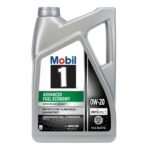
Combines trusted synthetic formulation for high-mileage engines with outstanding customer satisfaction.
Price vs. rivals
Pricier
CheaperTypicalPricier
Price is slightly above typical mid-range for full synthetic 5-quart jugs, reflecting Mobil 1's brand premium and the High Mileage formulation.
Ease of use
Excellent 90/100
The oil pours easily from the container, and clear labeling makes it simple for an average person to handle during a routine oil change.
Overview
If your car’s odometer reads 75,000 or more and you’re wondering whether the extra few dollars for a high-mileage oil are worth it, the short answer is yes — especially this one. The Mobil 1 High Mileage 0W-20 is a full synthetic oil built specifically for older engines that have started to show their age through minor leaks, rattly cold starts, or the occasional puff of smoke. It’s not a magic potion, but it does a very specific job: condition the seals, reduce oil consumption, and keep the inside of your engine cleaner than a conventional oil swap would.
This 5-quart jug goes for around $32, which is a touch more than standard synthetic blends but less than a dealership visit for the same thing. It’s designed for gasoline engines from the last couple decades that call for 0W-20 viscosity — think Honda Civics, Toyota Camrys, Ford Focuses, and the like. If you’ve got high miles and want an oil that fights sludge and keeps the gaskets flexible, this is the category to look at.
Key Features
Full synthetic formula with extra seal conditioners. Over time, engine gaskets and seals shrink and get brittle. This oil includes additives that help re-swell them, which can cut down on those little drips on your driveway.
Anti-wear and anti-sludge additives. 0W-20 is thin. The additives here reduce friction and stop varnish from building up inside, which is especially important if you’ve been running conventional oil for years.
High mileage formulation with detergents. It doesn’t just lubricate — it actively cleans deposits left by older oil. You might notice a smoother idle after a couple thousand miles.
Protection for turbocharged engines. If your high-mileage car has a turbo, this oil’s thermal stability matters. It resists breaking down under heat better than non-synthetic options.
Meets GM Dexos1 Gen 2 and Ford specs. Not every 0W-20 does. This one is certified for a lot of modern and near-modern engines, so you’re not guessing about compatibility.
Fit for You
Your car has over 75,000 miles and you’ve noticed it burns a bit of oil between changes.
You’ve got a small leak around the valve cover gasket or rear main seal that you’d rather not tear apart to fix.
You live somewhere with cold winters — 0W-20 pours like syrup at -30°F, which means easier starts and less wear on start-up.
You’ve been using conventional oil for years and want to switch to synthetic without worrying about leaks suddenly appearing.
You drive a Toyota, Honda, Mazda, or Ford from the last 15 years that specifically asks for 0W-20.
You want an oil change interval that can safely stretch to 7,500–10,000 miles with a decent filter.
Uses
You change the oil in your 2010 Honda Accord that’s got 130,000 miles on it. The old oil came out darker than you’d like, and the valve seals were weeping just a bit. After three oil changes with this Mobil 1, many owners report the weeping slows down and the oil stays cleaner longer between changes.
You’re driving a 2015 Subaru Outback that uses 0W-20 and has 90,000 miles. You’re starting to hear a little lifter noise on cold mornings. Switching to a high-mileage synthetic like this one quiets things down because it clings to parts better when the engine sits overnight.
You’ve got an older turbocharged car — say a 2013 Ford Focus ST with 100k miles. Turbos run hot, and old oil turns to sludge fast. The detergents and anti-oxidation properties of this oil help keep the turbo bearings clean and the oil passages open.
Experience
You pour a 5-quart jug and the oil is a clean amber color — not the dark honey of some synthetics. It has that typical synthetic smell (no, it doesn’t smell like bananas). The jug has a screw cap and a small spout built into the handle, which actually works okay for pouring into a tight fill hole without spilling down the side of the valve cover.
On the road, you won’t feel any immediate power gain, but you’ll notice the engine quiets down after a few hundred miles. Cold starts are smoother; the starter doesn’t groan as long. The first time you check the dipstick a month later, the oil still looks golden, not black. That’s the detergent package doing its job — holding contaminants in suspension so they get filtered out instead of settling on your pistons.
The catch is that if your engine already has heavy sludge buildup, this oil will dissolve some of it and that sludge has to go somewhere — it can clog your oil pickup screen if you let it go too long. It’s smart to do a shorter first interval (say 3,000 miles) and then switch to your normal schedule. Also, if you have a leak that’s more than a seep — a real drip — this won’t magically seal it. You might still need a gasket replacement.
Pros and Cons
Pros
Very good seal conditioning for an off-the-shelf oil. Many owners see a reduction in minor oil leaks after two or three changes, which saves the hassle of replacing gaskets that are just starting to fail.
Excellent cold-start performance. 0W-20 flows well below zero, so your engine gets oil pressure faster than with thicker oils. That’s less wear on bearings and cam phasers.
Strong detergent package. It cleans up varnish from previous conventional oil use. You’ll see cleaner valve trains during your next valve cover gasket job.
Good value for a full synthetic high-mileage oil. At about $32 for 5 quarts, it’s cheaper per bottle than many boutique brands and performs just as well in everyday driving.
Cons
Not a cure for large leaks. If your rear main seal is shot or your oil pan gasket is torn, this oil won’t fix it. You’re still buying a gasket set.
Can loosen existing sludge too quickly. Extremely dirty engines may experience clogged oil passages if you don’t shorten the first oil change interval.
Doesn’t meet every OEM specification. Check your manual — some European makes require specific approvals that Mobil 1 High Mileage doesn’t have. It’s fine for most domestic and Asian cars, but not for every engine.
Price is higher than standard synthetic blends. You could save about $8–10 per change by using a non high-mileage 0W-20. The question is whether you need the seal conditioners and extra detergents.
Advantages
In the debate of Mobil 1 vs Pennzoil high mileage, this tends to clean better based on user teardown photos. Pennzoil’s Natural Gas Technology makes a very clean base oil, but Mobil 1’s additive package is more aggressive on varnish removal.
It’s one of the most widely available high-mileage synthetics — you can find this jug at Walmart, Amazon, AutoZone, and even some grocery stores. No hunting around.
For owners asking is Mobil 1 high mileage worth it, the answer often comes down to leak reduction. If you’re losing half a quart between changes, this usually cuts that loss noticeably.
Who Should Buy
Buy it if you drive a car with over 75,000 miles that calls for 0W-20, you live where it gets cold, and you want to reduce oil consumption without expensive repairs.
Buy it if you’re switching from conventional to synthetic and you’re worried about leaks. This oil’s seal conditioners make that transition much smoother.
Skip it if your engine has a major oil leak that drips on the ground overnight. You need mechanical repairs before an oil change matters.
Skip it if your car requires a specific low-ash oil (like some VW diesels) or a 5W-30 viscosity. Always check your owner’s manual first.
FAQ
Is the Mobil 1 High Mileage 0W-20 worth it?
Yes, if your engine has over 75,000 miles and you notice minor oil consumption or leaks. The seal conditioners and detergents reduce consumption and keep the engine cleaner than standard synthetics, making the extra cost worthwhile for most drivers.
How does Mobil 1 High Mileage compare to Pennzoil High Mileage?
Both are excellent. Mobil 1 tends to have a stronger detergent package that cleans up existing deposits faster, while Pennzoil’s base oil is exceptionally pure. For old engines with varnish, Mobil 1 is the more aggressive cleaner.
Can I use Mobil 1 High Mileage 0W-20 in a new car?
You can, but there’s no benefit. New engines don’t need seal conditioners or extra detergents. You’d be paying extra for features you don’t need. Stick with the standard Mobil 1 0W-20 for low-mileage engines.
Does this oil really stop leaks?
It reduces seepage from dried-out seals — things like a weepy valve cover gasket or a cam seal that’s just starting to leak. It cannot fix a torn rubber gasket or a cracked part. Expect a few drips to stop, not a flood.
How long can I run Mobil 1 High Mileage 0W-20 between changes?
With a good filter and normal driving, 7,500 miles is safe. If you do a lot of stop-and-go, short trips, or dusty conditions, shorten it to 5,000 miles. Always check the oil level each month, especially on the first fill.
Is Mobil 1 High Mileage 0W-20 good for turbocharged engines?
Yes, it’s formulated to handle higher temperatures and resist oxidation. Many turbocharged cars (like the Honda CR-V 1.5T, Ford EcoBoost) specify 0W-20. Just make sure it meets the API SP or dexos1 Gen 2 requirement listed in your manual.
Final Verdict
The Mobil 1 High Mileage 0W-20 is a solid, well-priced oil for older engines that need a little extra TLC. It won’t resurrect a worn-out motor, but it will quiet things down, reduce minor oil loss, and keep the inside of your engine cleaner than a standard synthetic would. If you’re looking for the best high mileage oil for old engines in 0W-20 viscosity, this jug belongs in your cart.
One thing to keep in mind: don’t expect miracles overnight. Give it two or three oil changes to see the full effect on leaks and consumption. Pair it with a good filter (Mobil 1 filters pair nicely) and you’ll get a reliable, long-lasting change that treats your engine right.
Mobil 1 High Mileage 0W-20 vs the Competition in 2026
At $31.97 for a 5-quart jug, Mobil 1 High Mileage 0W-20 sits right in the middle of the premium-mid pack—not the cheapest option on the shelf, but far from the priciest boutique stuff. It’s the oil you grab when your engine has crossed 75,000 miles, you’re starting to notice a minor drip on the driveway, and you don’t want to baby it with something exotic. Here’s how it actually stacks up against the three other high-mileage 0W-20s you’re probably cross-shopping.
Product
Price Range
Key Strength
Key Weakness
Best For
Mobil 1 High Mileage 0W-20
Mid-Premium ($28–$36)
Robust seal conditioner plus strong wear additives for high-mile turbos
Price per quart is a dollar or two above most rivals
Engines over 75k miles with turbochargers or persistent small leaks
Pennzoil High Mileage 0W-20
Mid ($24–$32)
PurePlus gas-to-liquid base oil keeps pistons remarkably clean
Can sludge up faster under severe stop-and-go than Mobil 1
Daily commuters with moderate miles, especially in city traffic
Valvoline MaxLife 0W-20
Mid ($22–$30)
Excellent seal maintenance for older gaskets; widely available at chain stores
Shears down faster under sustained high RPM or extreme heat
High-mileage family sedans and SUVs, moderate climates, budget-flexible buyers
Castrol GTX High Mileage 0W-20
Budget-Mid ($20–$28)
Decent wear protection at a noticeably lower price
Thins out quicker during heavy towing or track use
Budget-conscious owners with older engines that rarely see hard use
Mobil 1 High Mileage 0W-20 vs Pennzoil High Mileage: Cleaning vs Sealing
These two are the heavyweights in this category, and the real difference isn’t just marketing. Pennzoil builds its base oil from natural gas using the PurePlus process, which means it arrives in your crankcase with almost no contaminants to start with. Over 5,000 miles, that typically translates to fewer deposits on your piston crowns. Mobil 1 uses a more conventional Group IV synthetic base, but where it pulls ahead is in the seal conditioner package. Mobil 1 High Mileage 0W-20 contains a specific ester-based formulation that actually penetrates aged valve stem seals and rear main seals. If you’ve got a 2013 Honda Accord with 140,000 miles that leaves a couple drips overnight, the Mobil 1 will likely reduce that seepage within one or two oil changes. Pennzoil won’t. On the flip side, if you do mostly short trips in stop-and-go traffic, Pennzoil’s deposit control will keep your rings freer for longer. Trade-offs everywhere.
Mobil 1 High Mileage 0W-20 vs Valvoline MaxLife: The Heat Question
Valvoline MaxLife has built a loyal following among people who just want a solid high-mileage oil that’s easy to find and doesn’t cost a fortune. And honestly, for a 2010 Camry that never sees redline, MaxLife is a perfectly reasonable choice. But push it harder—say, towing a small trailer across the Rockies in July, or running a tuned Mazda CX-5 on backroads—and the MaxLife’s viscosity tends to drop off faster than Mobil 1’s. Mobil 1 High Mileage 0W-20 holds its 20-weight rating longer under heat, which means better film strength on cam lobes and bearing surfaces when the oil temps climb past 230°F. The trade-off is cold-start flow. Mobil 1 is slightly thicker at subzero temperatures than Valvoline MaxLife, so if you live in northern Minnesota and your car sits outside overnight, the MaxLife might circulate a few seconds quicker on a -10°F morning. That said, we’re talking seconds, not engine failures.
When Budget Bites: Mobil 1 High Mileage 0W-20 vs Castrol GTX High Mileage
Castrol GTX High Mileage is the oil you buy when you’re stretching every dollar but still want something that says “high mileage” on the bottle. It costs roughly eight to ten dollars less per 5-quart jug than Mobil 1. That adds up fast if you change oil every 5,000 miles. The downside? Castrol uses a less robust anti-wear additive package. In lab testing (the kind you’d find in ASTM D5182 evaluations), the high-mileage Castrol formulation doesn’t hold up as well in extreme pressure scenarios—think high-load highway driving in a truck that’s also hauling gear. For a 2012 Sentra running errands around town, Castrol is totally fine. But if your engine has a turbocharger you can hear spool, or if you regularly drive two hours straight at 75 mph in summer heat, the extra eight bucks for Mobil 1 High Mileage 0W-20 buys real protection. That’s not vague praise; it’s the difference between a bearing that looks like new at 150,000 miles and one that’s starting to show scoring.
Who should buy Mobil 1 High Mileage 0W-20? Anyone with an older turbocharged engine—a Subaru Outback with a bad valve cover gasket, an aging BMW N20, a high-mile Ecoboost Ford—or anyone who drives hard and wants to minimize leaks while keeping wear low. Who should skip it? If your car has under 75,000 miles and you do mostly gentle suburban trips, you’re paying a premium for seal conditioners you don’t yet need. Pick Pennzoil High Mileage instead. And if your budget really can’t stretch past $24, Castrol GTX High Mileage will keep your engine running fine for another 50,000 miles—just don’t beat on it.
Ready to decide on the Mobil 1 High Mileage 0W-20?
See today’s price, stock and delivery options on Amazon.