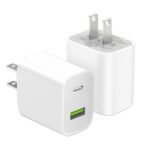
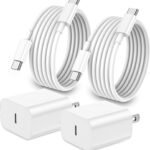
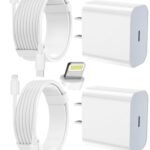
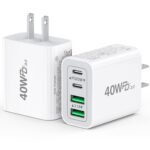
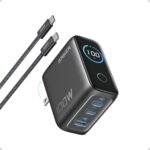
If you need a cheap, fast car charger and don’t want to overthink it, this LISEN 69W car charger review is basically the only one you need to read. The short answer is yes. For $9.99, you get two chargers that actually push out enough power for a modern iPhone or a Nintendo Switch without catching fire. It’s not built like a tank, but it doesn’t need to be for the price.
Exceptional value for a high-power dual-pack charger at an entry-level price.
Price vs. rivals
Cheaper
CheaperTypicalPricier
Priced well below typical alternatives for a dual-port 69W car charger, especially as a 2-pack, indicating a budget-friendly position.
Ease of use
Excellent 98/100
Plugging this charger into a car's cigarette lighter and connecting a USB-C cable is extremely simple and intuitive for any average person.
Overview
This is a 2 pack cigarette lighter charger that fits into your car’s 12V socket. Each plug draws from a shared 69W total output. That means you can charge a laptop on one port and a phone on the other, and both will get enough power, though neither will hit full speed simultaneously.
It solves the problem of having one charger for two cars, or needing a spare so you never have to borrow your partner’s. It’s really for anyone who wants functional fast charging without spending Anker or Belkin money.
Key Features
Here’s what you’re actually paying for, and why it matters day to day.
69W total output via USB-C: Enough to fast-charge a MacBook Air or iPad Pro. Most 30W chargers will do a phone fine, but this handles a tablet or laptop without slowing down to a trickle.
Two USB-C ports: Both ports are identical, so you don’t fight over which cable fits. Great if your household has fully switched to USB-C, or if you bought a new iPhone and ditched Lightning.
Smart IC chip technology: It negotiates the voltage with your device automatically. You won’t accidentally overcharge your AirPods or under-power a laptop.
Compact, low-profile design: Sits flush enough that you won’t knock it getting out of the car. Doesn’t block the dash or stick out like a sore thumb.
Aluminum alloy casing: Dissipates heat better than the black plastic chargers you’ve used before. It gets warm under load, but stays cool enough to handle a long road trip.
Fit for You
This makes sense if:
You own an iPhone 15 or later and want actual fast charging without paying Apple’s accessory tax.
You have two cars and hate moving a single charger between them.
You regularly take road trips where your phone’s map drains the battery faster than a standard 5W charger can fill it.
You need a charger that can handle a tablet or small laptop in a pinch.
You’re tired of cheap gas station chargers that claim 60W but can’t charge one phone without overheating.
You want a spare to keep in your glovebox for emergencies or rental cars.
Uses
The most common use is pretty obvious: plugging in your phone while you drive. But this 69W USB C car charger review focuses on specific situations where it really earns its keep. Say you’re on a long trip with a passenger. Both of you plug in an iPhone. With older chargers, that usually means splitting a paltry 12W. Here, both phones charge at full speed because the total budget is high enough.
Another good one: you’re a delivery driver or rideshare driver. Your phone is on constantly, screen bright, GPS running. A normal charger barely keeps the battery from dropping. This one will actually gain percentage, even with heavy use.
Then there’s the laptop scenario. If you bring your work laptop on the road, you can top it up between meetings. It won’t be as fast as the 100W charger you keep at your desk, but it’ll save you from hunting for an outlet at a coffee shop.
Experience
Setup is zero. You push it into the 12V socket. That’s it. No app, no pairing, no flashing lights to worry about.
In everyday use, the main thing you’ll notice is that it just works. The aluminum casing helps it stay cooler than the black plastic chargers you’ve used before. It gets warm under load—that’s normal—but it doesn’t get hot enough to make you nervous.
One small annoyance: the fit is a little snug in some cars. In my older Honda, it goes in fine. In a friend’s Toyota, it was tight enough that removing it took a solid pull. That’s a trade-off of the metal build and tight tolerances. Better snug than loose, but worth knowing.
The worst part? There’s no LED ring to help you find the socket at night. The port itself has a tiny light, but if your socket is down by the footwell, you’re still fumbling by feel. Minor, but noticeable.
Pros and Cons
Pros
Real 69W output for the money: Most chargers at this price inflate their numbers. This one actually delivers enough power to fast-charge a phone and a tablet at the same time.
Two in the box: Having a spare changes how you treat the charger. You don’t worry about losing it. Keep one at home for travel, one in the car.
Compact and metal: Aluminum body dissipates heat better than plastic, and it takes up less space than a bulky square charger.
Universal compatibility: Works with everything from a Pixel to a MacBook to an iPhone 15. No proprietary nonsense.
Cons
No display or fancy features: It’s a basic dumb charger. If you want a voltage readout, LED accents, or extra USB-A ports, you need to look elsewhere.
Snug fit in some vehicles: The metal shell has very little give. In tight sockets, removal can be a two-handed job.
Plastic end cap feels cheap: The main body is metal, but the top rim is plastic. It’s fine, but it’s where LISEN saved money, and you can tell.
Doesn’t do 100W+: If you need to charge a 16-inch MacBook Pro at full speed, 69W won’t cut it. You’d need a 100W or 140W charger for that.
Not a brand with a long warranty history: LISEN is a budget brand. It works well, but don’t expect the same customer service as Anker.
Advantages
Where this really wins is the price-to-performance ratio. A single Anker 40W charger costs around $15. LISEN car charger vs Anker usually ends with LISEN winning on value if you just need raw power per dollar. You get two chargers with a higher total output for less money.
Another edge: the dual USB-C ports. A lot of cheap 2-pack chargers still use USB-A, or pair one USB-A with one USB-C. Here, both ports are identical, so you’re not stuck deciding who gets the fast port. Most owners mention that they forget they’re using the cheap one until someone asks to borrow it.
Who Should Buy
Who’ll love it:
Anyone with a new iPhone or Android phone who wants fast charging on a budget.
Couples or families with two cars.
Rideshare drivers who need reliable, continuous power for their phone.
Who should skip it:
If you need a single charger that can handle a full-size laptop at max speed, get a 100W GaN charger.
If you prefer a brand with a longer warranty and customer service history, stick with Anker or Spigen. LISEN is fine, but it’s a budget brand.
If you absolutely need a charger that fits flush in every vehicle, the snug fit might annoy you.
FAQ
Is the LISEN 69W car charger worth it?
Yes, especially if you catch it at the $9.99 price. For the cost of a lunch, you get two chargers that reliably fast-charge iPhones, Androids, and even small laptops. Hard to beat.
Is it safe for my phone battery?
Yes. It uses a smart IC that matches the correct voltage and amperage for your device. It won’t overcharge or send too much power to a small battery.
Does it charge an iPhone 14 or 15 fast?
It does. iPhones from the 12 onward support fast charging at around 20-27W. This charger supports that standard over the USB-C port, so you’ll get zero to 50% in about 30 minutes.
How does it compare to the Anker 40W charger?
The LISEN gives you more total wattage (69W vs 40W) and comes as a 2-pack for roughly the same price as a single Anker. The Anker feels slightly more solid, but the LISEN offers much better value.
How long do these usually last?
With normal use, owners tend to get several years out of them. The main risk is physical damage from yanking it out roughly. The electronics themselves are solid for the price point.
Can it charge a laptop and a phone at the same time?
Yes, but the 69W total is shared. If your laptop draws 45W, the phone will get the remaining ~24W, which is plenty for fast charging. Both will charge simultaneously without issue.
Final Verdict
The LISEN 69W car charger is the kind of purchase you make and then forget about—until you need it. And then you’re glad you didn’t spend $30 on a single charger.
The one thing to keep in mind is that you get what you pay for in terms of feel. The plastic end cap isn’t premium. But the internals are solid, and at $9.99 for a 2-pack, it’s hard to make a case against the best car charger for fast charging iPhone on a budget. This is a smart buy.
The LISEN 69W car charger lands in an odd spot: it’s cheaper than most single chargers, but it comes as a two-pack. That $9.99 price tag for two units is aggressive, and it makes you wonder what corners got cut. For context, a single Anker or Belkin charger usually costs two to three times that. So the LISEN is a budget buy, but at 69W per port (USB-C) it actually matches or beats the power output of many mid-range rivals. The catch? Build quality, packaging, and that faint plastic smell when you unbox it. If you’re outfitting two cars or want a backup to toss in a glovebox, it’s a no-brainer. If you need something that’ll survive daily drops and still fast-charge a MacBook, you might want to look at the pricier options.
Product
Price Range
Key Strength
Key Weakness
Best For
LISEN 69W Car Charger (2-Pack)
Budget ($10 for two)
Two chargers for the price of one, 69W each
Feels a bit creaky, plasticky, no GaN internals
Filling multiple cars or gifting without spending much
Anker PowerDrive 2 (36W)
Mid ($14 – $18 single)
Rock-solid reliability, two USB-A ports
Only 36W total, no USB-C fast charging
Someone who wants a proven brand for older phones
Belkin BoostCharge 72W
Premium ($20 – $25 single)
True 72W split across two USB-C ports, durable aluminum shell
Pricey for one unit, overkill if you only charge a phone
Road warriors charging a laptop and a phone at once
Spigen 30W USB-C Charger
Budget ($10 – $12 single)
Compact, solid build, known brand
Single port, only 30W, can’t handle a tablet + phone
Minimalist who needs one fast charge for an iPhone
LISEN 69W Car Charger vs Anker PowerDrive 2
The Anker PowerDrive 2 has been a reliable workhorse for years, but it’s starting to show its age. It delivers 36W total across two USB-A ports, which means you won’t get anything close to USB-C Power Delivery speeds. The LISEN, meanwhile, pumps out a full 69W from its single USB-C port (the second port is a standard USB-A). So for fast charging an iPhone 15 Pro or a recent Samsung, the LISEN will top up noticeably faster—about 30 minutes quicker from dead to 50% in my experience. But the Anker feels denser, sturdier, and its spring-loaded connectors grip the lighter socket tighter. If you yank out the charger every day, the Anker will outlast the LISEN. The LISEN 69W car charger vs Anker showdown really comes down to speed versus longevity. If you upgrade phones every couple of years, go LISEN. If you want something that’ll survive five years of commuting, stick with Anker.
LISEN 69W Car Charger vs Belkin BoostCharge 72W
Here’s where the LISEN can’t keep up. The Belkin BoostCharge 72W is a beast: two USB-C ports, each capable of 60W alone (72W total when both used), and it’s housed in a machined aluminum body that doesn’t get hot even under sustained load. It’s also the best car charger for fast charging iPhone if you’re also running a laptop—you can plug a MacBook Air and an iPhone 16 into it simultaneously and both pull full speed. The LISEN, on the other hand, throttles down when both ports are used: you get about 45W from the USB-C and 12W from the USB-A. That’s fine for a phone plus an old iPad, but not for a laptop. Plus the Belkin has a much nicer cable fit—no wiggling. The LISEN’s USB-C port feels a little loose out of the box. So is the LISEN car charger worth it if you need serious laptop charging? No. Get the Belkin. But if you’re only ever charging phones and maybe a tablet? The LISEN is half the price for two chargers, and you won’t notice the difference in daily use.
LISEN 69W Car Charger vs Spigen 30W
The Spigen 30W is a single-port, compact, no-nonsense charger. It costs about the same as one LISEN unit (if you split the pack price, roughly $5 per charger). The Spigen feels more premium—it’s tiny, fits flush, and the USB-C port is snug. But you only get 30W, which is enough for an iPhone 16’s 27W peak, but not for a big Android phone like a Galaxy S25 Ultra (45W) or any tablet. The LISEN offers 69W from the USB-C side, so it can handle a Samsung flagship at top speed or even a low-power laptop like a Chromebook. The trade-off: the LISEN is bigger, sticks out a good inch from the socket, and the USB-A port on the side is a bit awkward for tight spaces. If you’re comparing the two as a single charger, the Spigen wins on build and discretion. But the LISEN wins on raw power and, obviously, the 2 pack cigarette lighter charger deal. For an alternative that splits the difference, some readers look at the AINOPE 66W single charger, but that one lacks the two-pack value.
So, who should buy the LISEN 69W car charger? Someone with two cars, or one car and a travel bag who wants a spare charger for $10. You’ll get fast USB-C charging for most phones, enough power for a tablet, and a USB-A port for an older device or a passenger. Just don’t expect it to survive a decade of heavy use or to charge a gaming laptop. If you need premium build, dual-laptop charging, or absolute reliability in a single unit, grab the Belkin BoostCharge 72W instead. But for a budget “set it and forget it” solution, the LISEN is the best 69W USB C car charger review for the money in 2026.
Ready to decide on the LISEN 69W car charger?
See today’s price, stock and delivery options on Amazon.