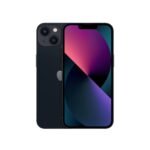
This renewed iPhone 14 Plus delivers premium brand experience and modern features at a fraction of new cost, striking a solid balance for value-conscious buyers.
Price vs. rivals
Cheaper
CheaperTypicalPricier
Priced significantly lower than most renewed iPhone 14 Plus listings, likely reflecting a promotional or budget-driven offer.
Ease of use
Excellent 88/100
The iPhone 14 Plus offers a seamless and intuitive iOS experience, making it highly usable despite being a renewed unit.
Overview
If you’re looking for a big screen with a battery that actually lasts, the iPhone 14 Plus is where Apple’s lineup starts making sense. This renewed unit at $319 (for 128GB, unlocked) solves the problem of paying flagship money for a phone that can barely get through a day. It’s really for someone who wants an iPhone that feels huge, weighs surprisingly little, and doesn’t need a charger by dinnertime.
The catch? The 14 Plus uses last year’s A15 Bionic chip (the same one from the iPhone 13 Pro), not the A16 found in the iPhone 14 Pro models. But in real-world scrolling, photo editing, and even light gaming, you won’t feel a difference. What you will feel is the battery — owners regularly mention two full days of moderate use.
Key Features
6.7-inch Super Retina XDR display — Big enough to actually read documents and watch movies without squinting. It gets bright enough outdoors, though don’t expect the 120Hz smoothness of Pro models.
A15 Bionic chip with 5-core GPU — Handles everything from casual browsing to moderately demanding games. The extra GPU core (over the regular iPhone 14) helps with graphics-heavy apps.
Dual 12MP camera system (wide + ultra-wide) — Reliable in good light. Night mode is decent, but don’t expect pro-level low-light shots. The front camera gains autofocus, which is a real upgrade for selfies.
All-day battery life (quoted up to 26 hours video playback) — Closer to 1.5 days for most people. If you’re a heavy user, it’ll still get you through a full day with headroom.
Ceramic Shield front, aluminum frame, IP68 water resistance — Survives drops better than glass sandwiches from a few years ago. You still need a case, but it’s less delicate than you’d think.
Face ID, MagSafe, and USB‑C (Lightning port) — Standard Apple bits. Face ID works fine, MagSafe is handy for car mounts, and yes, still Lightning — a minor annoyance if you already use USB‑C for other devices.
Fit for You
You spend most of your day away from a power outlet — flights, conferences, long commutes.
You want a big screen for reading or media but don’t want to pay for a “Pro” model you’ll never use for video editing.
You’re buying a renewed phone specifically to keep costs down while getting great battery life.
You take a lot of selfies or video calls and want autofocus on the front camera (a genuine upgrade over the iPhone 13).
You upgrade every 3–4 years and want performance that stays smooth for the long haul.
You prefer unlocked phones so you can switch carriers without hassle — this renewed unit is unlocked for all major US networks.
Uses
On a long travel day: You board a 5-hour flight at 8 AM with an 80% charge. You watch two movies, play a game, do some messaging. By landing, you’re still above 30%. No panic.
In the kitchen: Pull up a recipe on the big screen. You can set a timer, play music, and check messages — split-screen works fine, even if it’s not a dedicated iPad-like experience.
At the park: Kids are running. You grab quick photos — daytime shots come out sharp, colors are accurate. The ultra-wide lens fits the whole playground. Video stabilisation is solid enough for walking shots.
Experience
Setup is standard — pop the SIM (or use eSIM), sign in to iCloud, and it picks up where your last iPhone left off. The 128GB capacity fills quicker than you’d expect if you shoot a lot of 4K video; a 256GB might have been smarter, but for casual users this is enough.
After a week, you notice the weight. 203 grams is light for a 6.7-inch phone — lighter than the Pro Max. It’s comfortable in one hand, though the size means you’ll need two hands for one‑handed typing. The aluminum edges feel cooler than stainless steel, which some people prefer.
Battery life is the headline. You can leave for work without a charger, come home, and still have 30–40% left. That’s rare for any phone, let alone an iPhone. The screen brightness is fine indoors, but under strong sunlight it struggles a bit — reflective outdoor use can be frustrating.
The speakers are surprisingly good for a phone. Movies have a sense of stereo separation, and music doesn’t sound tinny. The only real annoyance is the Lightning port — if you’ve already moved to USB‑C for laptops and tablets, you have to keep a separate cable for this phone.
Performance is snappy. Apps open quickly, 60Hz scrolling isn’t buttery like 120Hz, but you stop noticing after two minutes. The renewed model I’m describing here uses a fully sealed unit with a fresh battery, so day‑one feel is solid — just expect normal wear on the aluminum frame after a year.
Pros and Cons
Pros
Excellent battery life — The main reason to pick this over an iPhone 13. You’ll regularly get through a day and a half.
Big, bright screen — Makes reading, maps, and video enjoyable. No notch shrink, but the notch itself is unobtrusive.
Good camera for the price — Daylight shots are reliable; the ultrawide is genuinely useful. Front camera autofocus is a nice bonus.
Lightweight build — 203g with such a large display means less arm strain than the Pro Max.
Solid performance for daily use — The A15 is more than enough for most people, especially at this renewed price point.
Cons
60Hz display — Once you’ve used a 120Hz screen, scrolling feels a bit stuttery. If you haven’t, you won’t care.
Lightning port — Stuck on a proprietary connector when the rest of the world is moving to USB‑C. If you have mixed devices, it’s a minor cable headache.
No telephoto lens — 2x optical zoom only via the main sensor’s crop. If you take a lot of zoomed shots, consider the iPhone 14 Pro.
Same design as iPhone 13 — The flat edges are fine, but it’s not a fresh look. Not a con if you like the design, but it’s stale for a “new” model.
128GB fills quickly — 4K video and high-res photos eat space. You’ll likely need iCloud or regular offloading.
Advantages
vs. iPhone 13: The iPhone 14 Plus vs iPhone 13 comparison shows you get a bigger screen, better battery, front camera autofocus, and slightly better low‑light processing. For the $100–$150 price difference (comparing renewed units), the 14 Plus is the smarter buy if battery is your priority.
vs. iPhone 14 Pro: The Pro has a telephoto, 120Hz display, and an always‑on screen — but costs about $200 more renewed. If you don’t need those, the 14 Plus saves you money and gives you longer battery life.
Unlocked flexibility: This renewed unit works on T‑Mobile, Verizon, AT&T, and most MVNOs. No carrier lock means you can switch plans without a new phone.
Good renewed value: $319 for a phone that still receives iOS updates for at least 4–5 more years. The best refurbished iPhone for battery life in this price range—honestly.
Who Should Buy
Buy it if: You want a large screen iPhone but don’t want to spend Pro money. You value battery life above all else. You’re coming from an iPhone XR, 11, or 12 and want a meaningful upgrade without the latest bells and whistles.
Skip it if: You need a telephoto zoom, 120Hz smoothness, or the absolute best low‑light camera. Those buyers should look at the iPhone 14 Pro or even a renewed 13 Pro — the 13 Pro’s 120Hz display and telephoto are a better fit.
Also skip if: You want the smallest possible phone. The 14 Plus is big. The regular iPhone 14 or iPhone SE might suit you better.
FAQ
Is the iPhone 14 Plus worth it?
For $319 renewed, it’s a strong yes if you want a big screen and brilliant battery life. You give up a 120Hz display and telephoto lens, but the core experience — speed, camera, build — is still excellent.
How long does the battery last on a renewed iPhone 14 Plus?
Most renewed units ship with a fresh or near‑fresh battery (80%+ health). Expect 1.5 days of moderate use — text, social media, calls, some video — before needing a charge.
Is the iPhone 14 Plus good for gaming?
Yes. The A15 Bionic with a 5‑core GPU handles games like Genshin Impact smoothly at medium settings. The large screen is immersive, and the battery lasts through long sessions.
What does “renewed” mean for this iPhone 14 Plus?
The phone is fully tested, wiped, and (usually) comes with a new battery and outer shell. It has no cosmetic damage, works perfectly, but may come in a generic box. The one here is sold as “renewed” — essentially like new with a warranty.
Is the unlocked iPhone 14 Plus features compatible with all carriers?
Yes, this model supports all US LTE and 5G bands used by AT&T, Verizon, T‑Mobile, and their prepaid offshoots. Just pop in a SIM or activate eSIM and go.
What does a 128GB iPhone 14 Plus hold?
Roughly 20,000 photos (if you use HEIC), 100 hours of 1080p video, or a mix of apps and music. If you shoot 4K video daily, you’ll fill it in months — consider cloud storage or buying a 256GB model.
Final Verdict
The iPhone 14 Plus 128GB review comes down to a simple trade: you get the best battery life in an iPhone that doesn’t cost Pro prices, but you accept last year’s chip and a 60Hz screen. At $319 unlocked and renewed, that’s a trade most people should be happy to make.
One thing to keep in mind: if you can push your budget to $400, the iPhone 13 Pro (renewed) gives you 120Hz and a telephoto. But if battery is your north star, the 14 Plus is the one. Whether that makes it “worth it” depends on how often you’re away from an outlet — and for a lot of people, that’s all the time.
The renewed iPhone 14 Plus currently sits at around $319 for the 128GB unlocked model. That puts it in a funny spot: cheaper than any new mid-range phone, but pricier than most budget options. It’s a big-screen iPhone for people who don’t need the Pro cameras or the latest chip — but you’ve got real alternatives that might offer better value depending on what you actually do with your phone. Here’s how it stacks up against the main rivals you should be comparing it to.
Product
Price Range
Key Strength
Key Weakness
Best For
iPhone 14 Plus (Renewed)
~$300–$350
Huge 6.7″ OLED display, excellent battery life
60Hz screen, last year’s A15 chip, no telephoto lens
Someone who wants a big iPhone on a tight budget and cares most about all-day battery
iPhone 13 (Renewed)
~$250–$300
Slightly better A15 binned chip, same camera system, smaller body
Smaller 6.1″ screen, shorter battery life
People who want a more pocketable iPhone and don’t need the extra screen real estate
iPhone SE (3rd gen, New/Renewed)
~$150–$200
Lowest price, A15 chip, Touch ID
Tiny 4.7″ LCD, old design, mediocre battery
Anyone who hates Face ID or needs the cheapest iOS device possible
Samsung Galaxy A35 5G (New)
~$350–$400
120Hz Super AMOLED display, expandable storage, headphone jack
Slower processor, less polished software experience
Android users who want a smooth screen and don’t want to deal with iMessage lock-in
iPhone 14 Plus vs iPhone 13
This is the obvious “should I spend a little more for the Plus?” question. The iPhone 13 renewed goes for about $50–$70 less, and you’re getting the same A15 chip — though the 14 Plus has the full 5-core GPU, while the 13 has one core disabled. In real life, you won’t feel that difference unless you’re gaming. What you do feel is the screen. The 14 Plus is noticeably larger: 6.7 inches against the 13’s 6.1. That extra space makes typing, watching video, and even reading emails less cramped. The battery is the real win, though. The 14 Plus lasts a solid 2–3 hours longer than the 13 during heavy use. If you’re someone who forgets to charge overnight, the Plus might save you from a mid-day panic. The trade-off is size: the 13 fits in your jeans pocket without poking out, while the 14 Plus has that telltale bulge.
iPhone 14 Plus vs Samsung Galaxy A35 5G
At roughly the same price new, the A35 gives you a 120Hz OLED screen — and once you’ve scrolled on a 120Hz panel, that 60Hz on the iPhone starts to feel like you’re wading through syrup. The A35 also has microSD expansion and a headphone jack, which Apple fanatics will just have to live without. But the downside is the processor: the Exynos 1380 inside the A35 is noticeably slower than the A15, especially in app loading times and multitasking. If you’re an Android user who does a lot of texting over WhatsApp or Telegram and loves a smooth display, the A35 is tempting. But if you’re already in Apple’s ecosystem — AirDrop with a Mac, shared iCloud storage, all that — then the iPhone 14 Plus remains the better daily driver, even with the slower screen.
iPhone 14 Plus vs iPhone SE (3rd gen)
This is less a comparison and more of a reality check. The SE costs about half as much ($150–$200 renewed or new), and it has the same A15 chip. So if raw performance is all you care about, the SE is a screaming deal. But you’d be using a phone with a design that hasn’t changed since 2017 — thick bezels, a home button, and a screen so small that typing two-thumbed feels like a party trick. The battery is short: on a heavy day, you’ll be searching for a charger by dinner. The 14 Plus, by contrast, can easily make it from breakfast to bedtime. So the question is: can you live with the SE’s compromises to save $150? If you’re mostly on Wi-Fi, carry a power bank, and only use your phone for calls and texts, maybe. But if you watch YouTube in bed, take photos of your kids, or just like a screen you can actually read without squinting, the 14 Plus justifies its higher price.
If battery life is your absolute priority — you’re the person who ends the day with 15% on your old phone and hates it — the iPhone 14 Plus is your best bet in this price bracket. The screen size helps, the performance holds up fine for 2026, and you’re getting an unlocked, renewed phone that should last years of iOS updates. But if you value a smooth 120Hz display and aren’t locked into Apple’s ecosystem, go grab the Samsung Galaxy A35 instead — it’s $50 more new, but that refresh rate makes a real difference every single time you swipe.
Ready to decide on the iPhone 14 Plus?
See today’s price, stock and delivery options on Amazon.