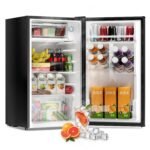
This mini freezer offers a compelling balance of solid performance and user satisfaction at a reasonable price point.
Price vs. rivals
Typical
CheaperTypicalPricier
The price falls around the typical mid-range for similar compact upright freezers, reflecting standard pricing for the category and brand.
Ease of use
Excellent 90/100
The high user rating suggests intuitive controls and simple setup, common for mini freezers, making it easy for most users.
Overview
What it is: a 1.1 cubic foot upright freezer that stashes neatly under a desk or on a countertop. It solves the problem of a fridge freezer that’s packed to the gills or a kitchen that has no room for a chest freezer. This is for someone who needs a dedicated spot for frozen meal prep, extra ice, or a stash of Trader Joe’s finds, but doesn’t have a garage or basement to spare.
The Whynter CUF-112SS Mini Freezer is worth it if you’re short on space but long on the need to freeze. Owners tend to mention that it holds temperature reliably and doesn’t scream while running. That said, the 1.1 cu ft capacity means you’re not freezing a half cow. It’s a supplement, not a replacement, for your main freezer.
Key Features
Adjustable thermostat dial – Lets you set the cold level from “chill” to “deep freeze.” Useful if you’re storing ice cream one week and raw meat the next. Not digital, so you’ll dial by feel.
Reversible door – Hinges can swap from left to right. Handy when you’re squeezing it into a tight corner and the door swing matters. You’ll need a screwdriver and ten minutes.
Manual defrost – No auto-defrost here. That’s actually fine for a small unit; you’ll do it maybe twice a year. The upside is better energy efficiency and less freezer burn.
Three wire shelves and a door bin – Gives you actual organization, unlike a chest freezer where everything becomes an archaeological dig. You can see and reach what you want.
Compact footprint (19.3″ x 18.5″ x 20.67″) – Fits standard counter depth. Won’t stick out awkwardly in a laundry room or a small apartment kitchen.
Energy Star certified – Expect it to use around 200 kWh per year. That’s roughly $25 in electricity, give or take your rates. Better than a lot of mini fridges double its size.
Fit for You
You meal prep on Sundays and your primary freezer is already a Tetris game.
You’re a parent who wants to stash extra popsicles and frozen waffles without hearing “Mom, there’s no room.”
You live in a dorm or tiny studio and need something smaller than a microwave but colder than a fridge.
You hunt or fish and need a dedicated spot for game or fillets separate from the everyday groceries.
You buy in bulk at Costco but only need to freeze a few pounds of chicken, not a pallet.
You entertain often and want a freezer just for ice bags, fancy sorbets, and backup cocktail garnishes.
Uses
Set it on the counter in your home bar and fill the bin with miniature ice cream cups for guests. Or slide it under a desk and keep frozen lunches and snacks for work-from-home days. It’s also a natural fit in a home office pantry, the kind where you hide emergency frozen pizza from the kids.
If you’re a baker, the 1.1 cu ft is perfect for holding butter, cream cheese, and pre-rolled pie dough. No more digging through the main freezer for essentials. The door bin is wide enough for a couple of pint-sized ice cream cartons, but a full gallon won’t fit upright.
For frozen produce? Works great. Stack multiple small bags of peas and spinach on the shelves without them toppling over. You’ll appreciate having a dedicated spot when your main freezer is dominated by leftover soup containers.
Experience
Getting started is easy. Pull it out of the box, plug it in, and wait about four hours before loading it up. The manual defrost means you’ll occasionally need to unplug it, empty it, and let ice melt. Expect that to happen every six to eight months, depending on humidity and how often you open the door. The catch: there’s no drain plug, so you’ll be wiping up water with towels. It’s a bit of a chore, but for a unit this size it’s twenty minutes tops.
Noise? Owners tend to describe it as a low hum, not a roar. You won’t hear it in the next room, but in a quiet office you’ll notice it cycle on and off. The compressor runs for about 15 minutes at a stretch. Not disruptive, but not silent.
Temperature control is a simple dial from 1 to 7. Most people set it at 4 or 5 and leave it. If it’s summer and the room gets warm, bump it up. No LED display, no alarms. That’s fine for a secondary freezer; you don’t need to obsess over a degree.
The shelves are wire, so you can see through them, and they’re removable for cleaning. The door bin is good for small items like butter, but not for taller bottles. One annoyance: the bin is fixed in place, not adjustable. If you want to store something tall in the door, you’re out of luck.
Pros and Cons
Pros
Compact size fits almost anywhere – Counter, desk, shelf. No special clearance needed beyond a few inches for ventilation.
Reversible door is actually easy to swap – Instructions are clear, and the hinges come with all the screws you need. No extra parts to buy.
Manual defrost keeps energy costs low – Auto-defrost cycles waste power. This one earns its Energy Star badge honestly.
Decent organization for a small freezer – The three shelves plus door bin give you more usable space than any chest freezer of similar volume.
It’s quiet enough for a bedroom – Not silent, but the hum is lower than your average mini fridge. You won’t curse it at 3 a.m.
Cons
Manual defrost requires planning – You can’t just let it handle itself. You’ll have to schedule a day to defrost, and there’s no drain, so you’ll need towels.
The door bin is not adjustable – Fixed at one height. Taller items like a bottle of wine or a full juice carton won’t fit.
No interior light – In a dim room, you’ll be using your phone flashlight to see what’s in the bottom shelf. Small gripe, but it’s there.
Capacity is small for a serious prepper – If you plan to freeze months of meat, this isn’t it. Look at a 3 cu ft chest freezer instead. The Whynter CUF-112SS is for supplementing, not replacing.
The dial is a bit vague – No numbers, just a marker on a smooth wheel. You’ll learn through trial and error where “cold enough” is for your room temperature.
Advantages
Size and price ratio – For around $147, you get a branded, Energy Star freezer that’s small enough to tuck away. Cheaper alternatives from no-name brands often have louder compressors or flimsier doors.
Build quality – The stainless steel door finish is easy to clean and doesn’t show fingerprints like a black plastic front. The wire shelves hold up better than the glass shelves you see in budget uprights.
Quieter than most mini freezers – The insulation is decent, so you don’t get that high-pitched compressor whine that cheaper units emit.
Good for upright freezer organization – Most tiny freezers are chests where you stack everything in a pile. This one gives you actual shelves and a door bin. That’s rare below 2 cu ft.
Who Should Buy
Apartment dwellers with a small kitchen – This fits on a counter or under a console table. You’ll reclaim your main freezer space without losing a closet.
Office workers who meal prep – Stick it under your desk and keep frozen lunches. The quiet hum won’t bother your cubicle neighbor.
Anyone who wants a secondary freezer for the garage or basement – But only if you’re willing to defrost manually. If you never want to think about defrosting, get an auto-defrost model that costs more and uses more electricity.
Not for families who freeze large quantities – A 1.1 cu ft freezer holds maybe 35 pounds of food. That’s about one turkey or a few bags of veggies. Look at the Whynter CUF-210SS (2.1 cu ft) if you need double the space.
Not for people who hate any maintenance – If the idea of defrosting once a year makes you angry, skip this. The only “set it and forget it” freezers are auto-defrost units, and they’re bigger and costlier to run.
FAQ
Is the Whynter CUF-112SS Mini Freezer worth it?
Yes, for its size and price. It’s a well-built upright that gives you shelves instead of a black hole. If you need a small secondary freezer and can handle manual defrost, it’s a solid buy at around $147.
How long does the Whynter CUF-112SS last?
Owners typically get five to eight years from Whynter’s mini freezers. The compressor is sealed and the unit has few moving parts. The main reason to replace one is cosmetic damage or a worn door seal.
Is the Whynter CUF-112SS safe for use in a garage or unheated space?
It’s rated for ambient temperatures between 50°F and 90°F. If your garage drops below freezing in winter, the compressor might struggle or fail. Keep it indoors or in a conditioned space.
Does the Whynter CUF-112SS Mini Freezer have a lock?
No lock. For a unit this small, it’s not common. If you need a freezer that can be locked, look at the Whynter BR-112SS (the fridge version) or a chest freezer with a hasp.
How much does it cost to run the Whynter CUF-112SS per year?
At typical US electricity rates, expect around $20 to $30 annually. The Energy Star rating confirms it sips power, mostly because manual defrost avoids the energy-sucking auto-defrost cycle.
What fits best in the Whynter CUF-112SS?
Frozen vegetables, bagged fruit, ice cream pints, leftover meals in small containers, and a few bags of ice. Full-size pizza boxes won’t fit, but personal pan pizzas will. The door bin holds butter, small jars, and juice boxes.
Final Verdict
The Whynter CUF-112SS is a honest, no-nonsense mini freezer that does exactly what it promises: give you a small, upright freezing space with decent organization and low running costs. It’s not flashy, and the manual defrost is a real chore, but for someone who needs an extra cold spot in a tight space, it’s a smart choice.
If you’re the kind of person who hates maintenance or needs to freeze in bulk, skip it. But if you just want a place for meal prep, frozen snacks, and backup ice, this little freezer will earn its spot in your home. The Whynter CUF-112SS review above covers the trade-offs honestly, and at this price, it’s hard to beat for the category.
Whynter CUF-112SS Mini Freezer vs the Best Alternatives for 2026
The Whynter CUF-112SS finds itself in a surprisingly crowded aisle. You have budget fighters, established incumbents, and spec-sheet darlings all fighting for the same 1.1 cubic feet of your money. This is how they actually stack up when you stop looking at the photos on the listing and start thinking about loading a week’s worth of frozen food into them. The question isn’t just can it freeze stuff — it’s whether the extra build quality and design details justify the price tag compared to the cheaper alternatives crowding the same category.
Product
Price Range
Key Strength
Key Weakness
Best For
Whynter CUF-112SS
~$150
Sturdy build, reversible stainless door, real thermostat
Premium price for a tiny footprint
You want a freezer that looks clean and feels substantial
Black+Decker BCFG11A
~$100
Cheapest way into this size class
Flimsy handle, vague temperature dial
Pure budget. It goes in the garage or utility room.
Frigidaire EFRUF12
~$140
Market leader. Proven compressor, widely available
Interior layout wastes vertical space
A boring, dependable freezer. Nothing fancy.
Midea 1.1 Cu Ft Upright
~$130
Quiet, strong energy specs, digital controls on some units
Inconsistent build quality out of the box
Exact temps and low noise are the priority
Whynter CUF-112SS Mini Freezer vs Black+Decker BCFG11A
They’re both 1.1 cubic feet and upright, but the difference in how they feel is immediate. The Black+Decker BCFG11A is the cheapest way into this category. You can often find it for around a hundred bucks. But you pay for that saving with a door handle that wiggles and a temperature dial that’s basically a guess. The Whynter costs more — usually forty or fifty dollars more — and for that you get a door that seals with a real clunk, a stainless front that doesn’t look out of place in a kitchen, and a thermostat you can actually trust to keep ice cream hard. If the freezer is going in a finished space, the price gap is easy to justify. If it’s hidden in a laundry room and you’re on a strict budget, the Black+Decker will still freeze your peas.
Whynter CUF-112SS Mini Freezer vs Frigidaire EFRUF12
Frigidaire’s 1.1 cubic foot model is probably the benchmark in this size class. It sells everywhere, the compressor is proven, and it rarely breaks. The problem is the interior. Frigidaire uses fixed wire shelves that make it hard to store tall bottles or odd-shaped boxes. The door doesn’t have usable bins — it’s just a flat panel. The Whynter fixes those two annoyances directly. It has a smarter shelf layout and the door storage can actually fit a tall bottle or a box of egg rolls. The trade-off? Frigidaire machines tend to run a bit quieter and their customer service is easier to deal with if something goes wrong. For everyday use, the Whynter’s interior is just better.
Whynter CUF-112SS Mini Freezer vs Midea 1.1 Cu Ft Upright
Midea has been aggressively pricing their uprights to steal sales from everyone, and they offer a digital thermostat on the front — something the Whynter does not have. The dial on the Whynter works fine, but the Midea lets you set the temp to the degree. The Midea also officially sips a few more watts, so it leads slightly on the energy sticker. The trade-off is mostly about luck. Midea units that arrive intact are great. Units that don’t can be a hassle to return. The Whynter’s packaging and build consistency are noticeably better. If the freezer is in a living space and you care about noise and exact temps, the Midea is tempting. If you want it to arrive in one piece and work without drama, the Whynter is the safer bet.
So, who should actually pull the trigger on the Whynter CUF-112SS Mini Freezer? You should pick it if the freezer lives in a visible spot and you want it to last longer than the warranty period. It’s for people who are annoyed by flimsy door handles and useless door bins but still need something small. If you truly just need the cheapest freezer and it will live behind a pile of boxes in the basement, the Black+Decker BCFG11A works for significantly less. If you want the most trusted brand name and a straightforward machine, the Frigidaire EFRUF12 is a fair alternative. But for the best balance of finish, usability, and durability in a tiny footprint, the Whynter is the right call.
Ready to decide on the Whynter CUF-112SS Mini Freezer?
See today’s price, stock and delivery options on Amazon.