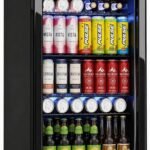
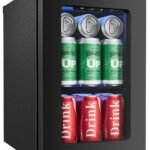
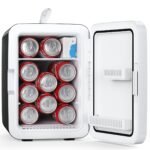
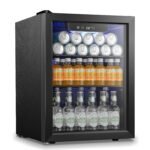
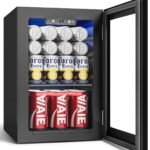
This Midea mini fridge review starts with the honest answer you actually want: yes, it’s worth picking up if you need a small, glass-fronted cooler for keeping drinks handy without sacrificing a ton of space. It’s a compact compressor model with a clear door, which puts it ahead of cheap thermoelectric coolers for real cooling power.
An outstandingly affordable compressor beverage cooler that doesn't skimp on performance, making it a top choice for budget-minded shoppers.
Price vs. rivals
Typical
CheaperTypicalPricier
Priced near the average for comparable beverage coolers, indicating a typical mid-range position.
Ease of use
Excellent 88/100
The mini fridge is straightforward to use with simple temperature control and a clear glass door for easy viewing.
Overview of the Midea Mini Fridge
This little machine is a 0.6 cu ft compressor cooler. That compressor distinction is the most important spec. Thermoelectric coolers rely on fans and can only cool to about 30 degrees below the room temperature. On a hot day, your drink never gets properly cold. Midea uses a real compressor, so it reliably chills down to 40°F no matter what the thermostat in your office or dorm is fighting.
Who is it for? Anyone who wants a dedicated beverage fridge without giving up a kitchen counter or an empty spot in the garage. It solves the “my drinks are taking over the main fridge” problem. You’ll use it for soda, white wine, and beer.
Midea Mini Fridge Review: Key Features
The short list of specs hides a few details that matter. That compressor is the main event, for example.
Compressor Cooling – The core feature. It gets drinks properly cold and keeps them there, unlike thermoelectric coolers that struggle to stay cool in a warm room.
Glass Door – A glass door mini fridge like this one lets you grab a drink without opening the door and letting all the cold air out. It saves energy and looks clean.
Compact Size – Fits on a desk, shelf, or side table without dominating the space. Holds about six standard cans.
Adjustable Thermostat – Dial in the temp between 40°F for very cold soda and 61°F for cellar-temp wine.
Recessed Handle – Keeps the front smooth so it doesn’t stick out into the room or catch on your clothes.
Fit for You
You’ll get the most out of this fridge if you recognize yourself in one of these pictures.
You drink your sodas and sparkling water way faster than the rest of your household.
You’re tired of your desk being cluttered with bottles and cans that aren’t even cold.
You have a small home bar or a gaming station and want cold drinks within arm’s reach.
You need a quiet, compact fridge for the bedroom to keep water handy at night.
You store skincare, supplements, or medications that need consistent cooling.
Uses
Imagine it sitting on your office credenza. You crack open a LaCroix at 3PM and it’s actually cold, not the lukewarm can you grabbed from your desk drawer.
For a best small beverage cooler for office scenario, it’s hard to beat. The compressor means it works perfectly even if the building’s AC cycles off over the weekend. You come in Monday morning and your drinks are still cold.
Wine drinkers take note: the 61°F top end makes it okay for reds, but 40°F is too cold for most bottles. This is really a soda and white wine fridge. It also works as a dedicated spot for insulin or serums that need to stay cool but not frozen.
Experience
Owning one means noticing the small stuff — the hum is there, but it’s the kind of white noise that fades after a few minutes. The green power light is a soft glow, not a piercing beacon. You’ll hear a low click when the compressor kicks on, then nothing.
The shelf is wire, which is fine, but a can that’s a little too tall won’t fit on it. Tall bottles belong on the door shelf. The door shelf holds a couple of standard cans, but bottles can tip over if you aren’t careful opening it.
One owner feedback point I’ve seen a lot: the glass door is great for bright rooms, but useless in a dark one — a tiny interior light would have made this perfect. You have to open it to see what’s in the back row, which lets the cold air out.
Cleaning is easy. The glass wipes down with glass cleaner. The wire shelf comes out for a rinse in the sink. The interior is smooth plastic, so spills don’t get stuck in crevices.
Pros and Cons
Pros
Compressor cooling performance – Real chilling power trumps thermoelectric units, especially when the room is warm. Your drinks get properly cold.
Glass door design – You see what’s inside without losing cold air. It looks much cleaner than solid white doors in a living space.
Compact footprint – It fits on a desk or small table. Won’t dominate your space or draw attention.
Quiet operation – The hum is low and easy to ignore. Fine for a bedroom or a shared office.
Fair price – Under $100 for a compressor fridge with a glass door is a solid deal. You get real value.
Cons
No lock – The door doesn’t lock. Roommates or coworkers can grab your stash if you’re not watching.
Small capacity – Six cans is a single row. You’ll be restocking it every couple of days if you drink regularly.
Narrow temperature range – 40–61°F is fine for drinks, but it won’t freeze anything and it can’t store red wine properly.
No interior light – The glass door is mostly decorative in a dim room. Can’t easily see the back row without opening it.
Manual defrost needed – Frost can build up on the back panel in humid weather. A quick wipe with a cloth fixes it.
Advantages
The natural Midea mini fridge vs Igloo mini fridge comparison lands on the compressor every time. Igloo’s cheaper models lean on thermoelectric cooling, which is weaker at keeping drinks cold. The Midea gives you real chilling power in the same price bracket.
It’s also cheaper than most “designer” glass door fridges you find online, and it performs better than the absolute budget options. It’s the sensible middle ground. The compressor is quiet enough for a bedroom, while competing models at this price often hum or rattle louder.
The glass door is a legitimate energy saver. You don’t open it to check how many sodas are left, so you don’t lose cold air. That means the compressor runs less often than it would on a solid-door model used carelessly.
Who Should Buy
Buy it if: You want a reliable, small drink fridge for your office, dorm, or bedroom. You value the efficiency of a glass door and the performance of a real compressor at this price.
Skip it if: You need to freeze things, you need a lock, or you need to store more than a six-pack at a time. A larger model or a solid-door unit would serve you better.
Look elsewhere if: You need to spend under $60 and don’t mind drinks being cool-ish rather than cold in the summer. A thermoelectric model might fit your budget, but manage your expectations.
FAQ
Is the Midea mini fridge worth it?
Yes, because it offers genuine compressor cooling at a price where many rivals use weaker thermoelectric systems. The glass door is a practical bonus too. You get a reliable, attractive drink cooler that does the job without costing a fortune.
How does it compare to an Igloo mini fridge?
In this matchup, the core difference is the cooling system. Midea uses a compressor for consistent 40°F cooling. Igloo’s similarly priced models often use thermoelectric tech, which struggles to cool drinks in a room over 75°F.
How many cans does it hold?
About six standard 12 oz cans. You can fit a couple of smaller bottles on the door rack, but that cuts into can space. It’s meant for a personal day-stash, not for stocking up.
Is it safe for storing medicine or skincare?
Yes, for items that need to stay between 40 and 61°F. The temperature range is consistent. Always verify your specific product’s storage instructions, but for many serums and insulin, it is perfectly suitable.
Is it loud?
For a compressor mini fridge, it is fairly quiet. You will hear a low hum when the compressor cycles on. It is quieter than a dehumidifier or an older desktop computer.
Does it come with a warranty?
Midea typically includes a one-year warranty on parts and labor. Check the specific product listing on Amazon for the exact warranty terms from the seller before you buy.
Final Verdict on the Midea Mini Fridge
This Midea mini fridge review wraps up with a simple verdict: buy it for the right job. It’s a focused tool for keeping a small number of drinks reliably cold right where you sit. The glass door looks better than a solid one, the compressor works better than a cheap one, and the size fits where a bigger fridge won’t.
Just remember it’s a drink cooler, not a pantry. Don’t ask it to be a freezer or a wine cellar, and you and this little fridge will get along just fine. It earns its keep.
Midea Mini Fridge vs the Best Small Cooler Alternatives in 2026
The Midea Mini Fridge occupies a weird, specific niche in the cooler market. It’s a 0.6 cu ft compressor unit priced around $94, and it holds a solid 4.4 out of 5 stars rating. This means it delivers proper chilling in a space where the rivals are usually cheap, silent thermoelectric boxes. That makes it a smart buy for the right room, and a waste of money for the wrong one.
Product
Price Range
Key Strength
Key Weakness
Best For
Midea Mini Fridge (0.6 cu ft)
~$94
Real compressor cooling; glass door display
Expensive for the tiny capacity; compressor hum
A home office needing properly cold drinks regardless of room temp.
Igloo Countertop Cooler (6 Can)
~$45
Very cheap; dead silent; extremely light
Thermoelectric cooling is weak; very small capacity
The absolute budget desk setup in a cool, air-conditioned room.
Koolatron KWC-12
~$50
Perfect can fit; classic look; silent
Thermoelectric limits it; struggles in warm rooms
A basic breakroom stash of standard sodas in climate control.
NewAir 0.6 Cu. Ft. Beverage Cooler
~$115
Metal handle; digital temp control
Slightly overpriced for the size; polarizing noise
Buyers who want a slightly better finish and digital temp display.
Midea Mini Fridge vs Igloo mini fridge: The Tech Trade-off
If you’re searching for a “Midea Mini Fridge vs Igloo Mini Fridge” comparison, you’re really deciding between two ways of making cold. The Midea uses a compressor. It pulls heat out aggressively and maintains a steady 40-61°F range no matter how warm the room is. The Igloo uses a thermoelectric chip. That chip is why it’s cheap, light, and silent, but it only cools about 20°F below the ambient temp. In a stuffy office hitting 80°F, the Igloo will deliver lukewarm drinks. The Midea will deliver cold ones. The price for that reliability is a slight compressor hum and a bill twice as high. If you need real cold, get the Midea. If your room is cool and your budget is tight, the Igloo gets the job done simpler.
Midea Mini Fridge vs Koolatron KWC-12
Comparing the Midea to the Koolatron KWC-12 cuts straight to the “best small beverage cooler for office” question. The Koolatron is the default. It’s probably what you picture when you think mini fridge. It costs $50, holds twelve cans perfectly, and you never hear it run. The Midea questions that default. It asks if you want those drinks actually cold and if a glass door for display matters. If your office runs hot or you store bottles instead of standard cans, the Midea is the better piece of gear. If this is just a quiet icebox for diet cokes in a 72°F breakroom, the Koolatron is the clever, no-fuss choice. You don’t always need a compressor.
Midea Mini Fridge vs NewAir 0.6 cu ft
The NewAir is the closest rival to this Midea. Both are 0.6 cu ft compressor coolers with a glass door. The NewAir feels a little nicer in the hand—a metal handle instead of plastic, a tighter door seal. The Midea undercuts it by about $20. For a box at this price, that $20 is a big chunk of savings. Is the NewAir better built? Yes, slightly. Is the Midea the better value? Definitely. If you can live with a plastic handle and a mechanical dial, the Midea is the smart buy. If you want the nicer piece for your studio and don’t mind spending a bit more, the NewAir is entirely capable.
You should buy the Midea Mini Fridge if you want a small, genuine compressor cooler that can handle a wide temperature range without sweating. It’s the answer to the question “is Midea mini fridge worth it”—it is, specifically when a thermoelectric model like the Koolatron or Igloo won’t cut it. You should choose the Koolatron or Igloo if you’re strictly budget-bound and your room is cool. You should pick the NewAir if you want the nicer handle and digital controls. For everyone else trying to keep a few bottles properly chilled on a desk without the warm air blowback of a thermoelectric unit, the Midea is the compact compressor pick that actually works.
Ready to decide on the Midea Mini Fridge?
See today’s price, stock and delivery options on Amazon.